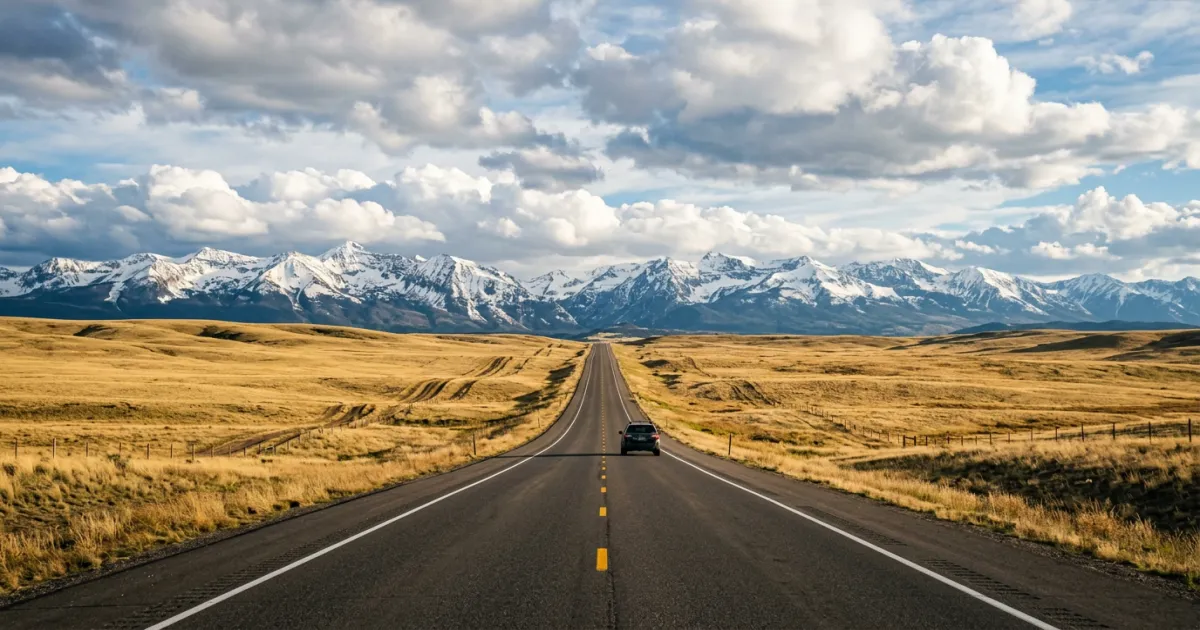
A cross country road trip is one of the most iconic travel experiences in the world. Driving coast to coast across America covers anywhere from 2,500 to 4,500 miles depending on your route, passing through dozens of states, multiple time zones, and landscapes that shift from ocean shorelines to desert mesas to mountain passes. Whether you have one week or three, this guide covers everything you need to plan your 2026 cross country road trip.
The Ultimate American Road Trip
Driving across America is a rite of passage that millions of travelers undertake every year. The sheer size of the United States means you will encounter dramatically different terrain, weather, culture, and cuisine as you travel from one coast to the other. A cross country road trip typically spans 2,500 to 4,500 miles and takes anywhere from 7 to 21 or more days, depending on your chosen route and how many stops you want to make along the way.
The beauty of a cross country road trip is the freedom to go at your own pace. You can blast through on the interstate in under a week, or you can meander along back roads for a month, discovering small towns, roadside attractions, and natural wonders that most travelers never see. There is no wrong way to drive across America, only your way.
If you are new to trip planning in general, our guide on how to plan a trip covers the fundamentals that apply to any adventure. For road trip specifics, check out our dedicated road trip planning guide.
Best Routes Across America
There are four major corridors for crossing the country by car. Each one offers a completely different experience, and your choice depends on the season, your interests, and how much time you have.
Northern Route: East Coast to Pacific Northwest
Starting from Boston or New York City and ending in Seattle or Portland, the northern route runs roughly 3,000 to 3,500 miles. You will drive along the Great Lakes through upstate New York and Michigan, cross the wide open plains of Wisconsin and Minnesota, pass through the Badlands of South Dakota, and enter Montana with its jaw-dropping mountain scenery near Glacier National Park. The final stretch takes you through Idaho and Washington State, with the Cascade Range as your backdrop.
This route is best from late May through September. Winter driving through Montana, the Dakotas, and the northern Rockies can be treacherous due to snow and ice. Summer brings long daylight hours that maximize your driving and sightseeing time.
Southern Route: Southeast to Southern California
Starting from Florida or Savannah and ending in San Diego or Los Angeles, the southern route covers roughly 2,500 to 3,000 miles. You will pass through the deep South, stopping in New Orleans for some of the best food in America, cross the wide expanse of Texas (which alone can take a full day of driving), explore the desert landscapes of New Mexico and Arizona, and arrive on the Southern California coast.
This route works well year-round, though summer temperatures in Texas, New Mexico, and Arizona regularly exceed 100 degrees Fahrenheit. Spring and fall offer the most comfortable driving conditions across the southern states.
I-80 Central Route: New York to San Francisco
The I-80 corridor runs roughly 2,900 miles from New York City to San Francisco. This route takes you through Pennsylvania, Ohio, Indiana, Iowa, Nebraska, Wyoming, Utah (passing near Salt Lake City), Nevada, and finally into California. You will cross the Appalachian Mountains, the flat farmland of the Midwest, the high plains of Wyoming, the Bonneville Salt Flats, and the Sierra Nevada range before descending into the Bay Area.
The I-80 central route is the most efficient cross country option for many drivers. Interstate highways make for fast, straightforward driving, though you can easily detour to national parks and interesting towns along the way. Be aware that I-80 through Wyoming can experience sudden winter storms and strong crosswinds, even in spring and fall.
Route 66: Chicago to Los Angeles
The most famous road trip in America runs about 2,400 miles from Chicago to the Santa Monica Pier in Los Angeles. Route 66 is a category unto itself, with its own culture, history, and roadside attractions. We have created a separate Route 66 road trip guide that covers this classic route in detail.
Pacific Coast Route with Eastern Extension
If you want to include the stunning Pacific Coast Highway in your cross country trip, you can drive from Los Angeles to Seattle along US-101 and Highway 1 (about 1,650 miles of coastline), then head east through the mountains toward your starting point or a central destination. Alternatively, reverse the direction and save the coast for a grand finale. The Pacific Coast stretch alone takes 3 to 5 days if you want to enjoy it properly.
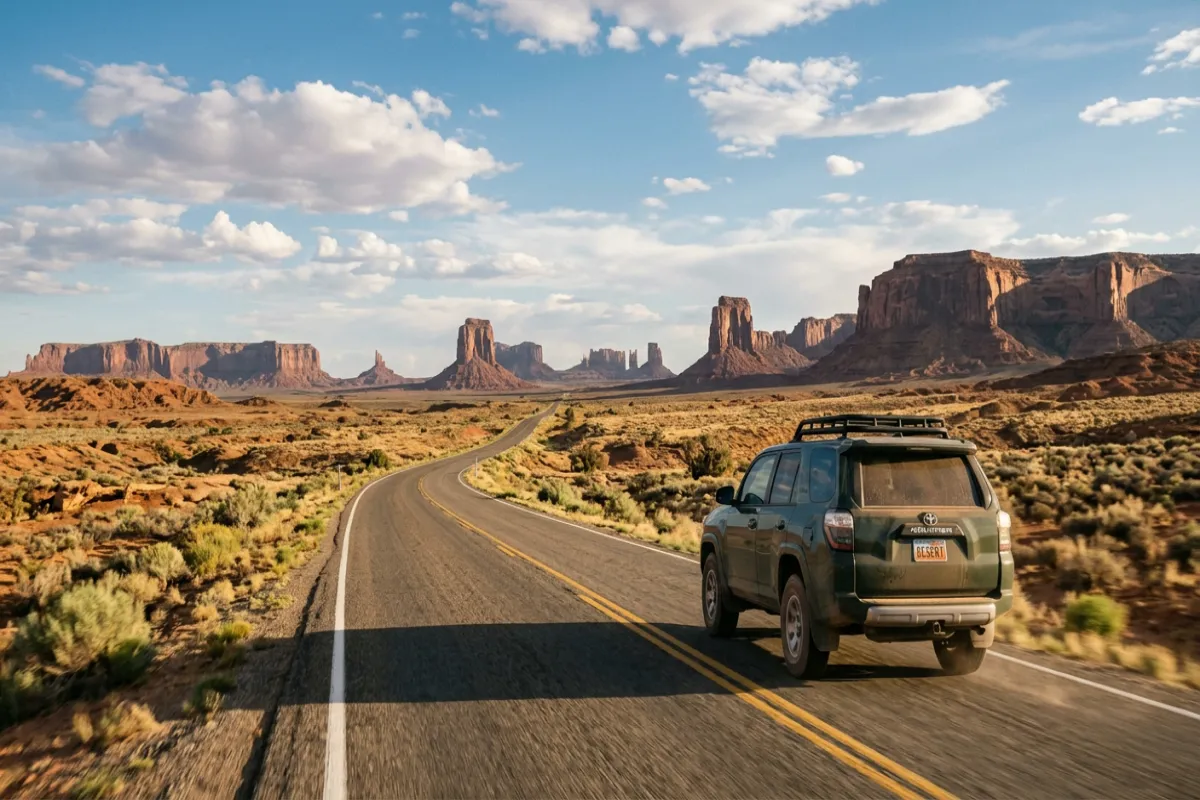
How Long Do You Need for a Cross Country Road Trip?
The amount of time you need depends entirely on what kind of experience you want. Here is a realistic breakdown:
- 7 days (minimum, direct/rush): Possible but exhausting. You will be driving 6 to 8 hours every day with minimal sightseeing stops. This is more about getting from A to B than experiencing the journey.
- 14 days (comfortable with stops): The sweet spot for most travelers. You can drive 4 to 5 hours per day, stop at major attractions, explore a few cities, and still feel relaxed.
- 21 to 30 days (thorough exploration): This gives you time to take detours, spend extra days in places you love, hike in national parks, and truly soak in the diversity of the country.
A good rule of thumb is to plan for a maximum of 300 to 400 miles (roughly 5 to 6 hours of driving) per day. This leaves time for stops, meals, fuel, and the unexpected discoveries that make road trips memorable. If you try to push much beyond that consistently, fatigue becomes a real safety concern.
Cross Country Road Trip Budget (2026)
Your total cost depends on your style of travel, vehicle, and how many days you are on the road. Here is what to budget for a 2 to 3 week trip in 2026:
Gas: $500 to $1,000
As of early 2026, the average price for regular gasoline in the United States is around $3.50 to $4.00 per gallon. For a vehicle averaging 25 miles per gallon on a 3,000 mile trip, expect to spend roughly $420 to $480 on fuel alone. Add detours, city driving (which burns more gas), and higher prices in certain states like California, and the total easily climbs toward $600 to $1,000. Gulf Coast states like Texas, Louisiana, and Mississippi tend to have the cheapest gas prices in the country.
Accommodation: $50 to $150 per Night
Budget motels along the interstate run $50 to $80 per night. Mid-range hotels cost $100 to $150. Camping can bring costs down to $20 to $40 per night at established campgrounds. Mixing accommodation types is the smartest strategy: a few nights camping, a few at motels, and a splurge hotel in a major city.
Food: $30 to $60 per Day
Packing a cooler with groceries is the single best way to keep food costs down. Budget $15 to $25 per day if you cook or prepare most of your own meals and eat out once. If you eat every meal at restaurants, expect $40 to $60 per day. Do not skip the regional specialties though, as part of the cross country experience is eating barbecue in Texas, seafood in New England, and green chile in New Mexico.
Activities and Entrance Fees
National park entrance fees run $30 to $35 per vehicle. If you plan to visit multiple parks, the America the Beautiful annual pass costs $80 and covers entrance to all national parks and federal recreation areas for a full year. City attractions, guided tours, and experiences vary widely.
Total Budget
For a 2 to 3 week cross country road trip, budget approximately $3,000 to $8,000 total for two people. Solo travelers can do it for less, while families should plan for more. Use our travel budget template to build your custom estimate.
Choosing Your Vehicle
The vehicle you drive shapes your entire cross country experience. Here are your main options:
Your Own Car
Driving your own vehicle is the cheapest option since you avoid rental fees entirely. You know your car, you know its quirks, and you already have insurance. The downside is putting thousands of miles of wear on your personal vehicle and the need for a thorough maintenance check before departure.
Rental Car
Renting gives you the option of choosing a vehicle suited for the trip (better gas mileage, more cargo space, or all-wheel drive for mountain passes). However, one-way rental fees can be steep, sometimes adding $200 to $500 or more to the cost. Book well in advance and compare rates across multiple companies. Some rental agreements restrict which states you can drive through, so read the fine print.
RV or Campervan
An RV combines transportation and accommodation into one, which can save money on lodging while giving you flexibility to camp almost anywhere. Gas costs are significantly higher since most RVs get 8 to 15 miles per gallon. For a complete breakdown of the RV option, see our RV road trip planner.
Regardless of what you drive, make sure you have enough cargo space for luggage, a cooler, emergency supplies, and souvenirs you will inevitably pick up along the way.
Planning Your Stops
The key to a great cross country road trip is balancing structure with spontaneity. Plan your major stops in advance but leave room for unplanned detours.
- Mix cities and nature: Alternate between urban stops (restaurants, museums, nightlife) and natural attractions (national parks, scenic overlooks, hiking trails). This variety keeps the trip feeling fresh.
- Rest every 2 to 3 hours: Get out of the car, stretch your legs, and walk around. Rest stops, small town main streets, and scenic pulloffs all work.
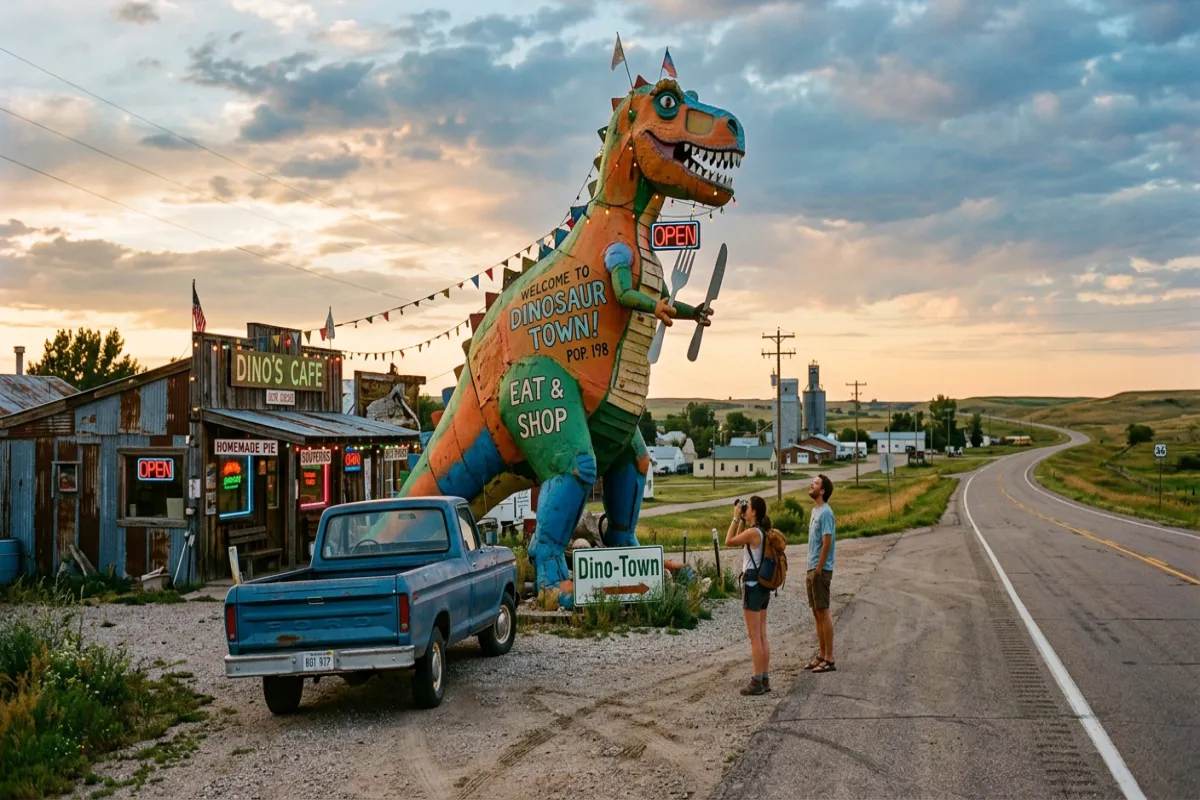
- Explore interesting small towns: Some of the best cross country memories come from places you have never heard of. A quirky diner in rural Nebraska, a perfectly preserved main street in a small Iowa town, or a roadside attraction in Arizona can be highlights of the entire trip.
- Do not skip the so-called flyover states: The Midwest and Great Plains states surprise many travelers with their beauty, hospitality, and unique attractions. The Badlands, the Flint Hills of Kansas, and the sand dunes of Nebraska are genuinely stunning landscapes.
Our road trip itinerary template can help you organize your stops day by day.
Accommodation Strategy
A smart accommodation strategy mixes different options to balance comfort with budget:
- Book your first and last nights: You want certainty at the start and end of your trip. A confirmed hotel after a long travel day (especially if you are flying to your starting point) removes stress.
- Keep the middle flexible: For the days in between, you can book as you go based on how far you actually drive and what you discover along the way. Apps like HotelTonight and Booking.com offer same-day deals.
- Mix it up: Alternate between hotels, motels, campgrounds, and the occasional Airbnb. Each offers a different experience and price point.
- Camping saves money: National forest land and Bureau of Land Management (BLM) land offer free dispersed camping in many western states. Established campgrounds in national parks and state parks typically run $20 to $40 per night.
- Truck stops for quick naps: If you are tired and just need a short rest, many truck stops have well-lit parking areas where you can safely nap for an hour or two before continuing.
Essential Preparations Before You Leave
A cross country road trip puts serious miles on your vehicle. Preparing properly before you leave prevents breakdowns in the middle of nowhere.
Vehicle Maintenance Checklist
- Tires: Check tread depth and pressure on all four tires plus the spare. Replace any tires that are worn or close to the end of their life. You do not want a blowout in rural Wyoming.
- Oil change: Get fresh oil and a new filter before departure, especially if you are due or close to due.
- Brakes: Have a mechanic inspect brake pads and rotors. Mountain driving puts extra stress on brakes.
- Fluids: Top off coolant, brake fluid, power steering fluid, and windshield washer fluid.
- Belts and hoses: A visual inspection can catch cracked belts or worn hoses before they fail on the road.
- Battery: Test your battery, especially if it is more than 3 years old. Extreme heat in the South and Southwest accelerates battery failure.
Memberships and Safety
- AAA or roadside assistance: A membership (around $60 to $100 per year) provides towing, flat tire service, lockout assistance, and fuel delivery anywhere in the country. This is non-negotiable for a cross country trip.
- Emergency kit: Pack jumper cables, a flashlight, basic tools, a first aid kit, reflective triangles or flares, and a blanket. Add water and non-perishable snacks.
- Phone mount: A sturdy phone mount keeps your navigation visible without holding your phone. Many states have strict hands-free laws.
State-by-State Speed Limits and Laws
Speed limits vary significantly from state to state, and knowing the differences can save you from expensive tickets:
- Rural interstates: Speed limits range from 65 mph (eastern states like Vermont, Connecticut) to 80 mph (Utah, Wyoming, Montana, Nevada, South Dakota) and even 85 mph on certain toll roads in Texas.
- Urban interstates: Typically 55 to 65 mph in and around cities regardless of state.
- California truck speeds: Trucks are limited to 55 mph on all California roads, regardless of the posted limit for passenger vehicles.
Laws That Vary by State
- Right on red: Legal in all 50 states unless posted otherwise, but New York City prohibits it within city limits unless a sign specifically allows it.
- Move-over laws: All 50 states require you to move over one lane or slow down when passing stopped emergency vehicles with flashing lights. Penalties range from fines to license suspension depending on the state.
- Seatbelt laws: All states except New Hampshire require seatbelt use. Enforcement varies between primary (police can stop you for seatbelt alone) and secondary (must have another reason to stop you).
- Cannabis laws: Even in states where cannabis is legal, driving under the influence is illegal everywhere, and transporting cannabis across state lines is a federal offense. If you are driving through states with different cannabis laws, know the rules for each state you enter.
Practical Tips for Driving Across America
These tips come from experienced cross country drivers and can make the difference between a great trip and a stressful one:
- Gas up at a quarter tank in rural areas: In parts of Nevada, Wyoming, Montana, and West Texas, gas stations can be 50 to 100 miles apart. Do not let your tank get low in these stretches.
- Never drive tired: Drowsy driving is as dangerous as drunk driving. If you feel fatigued, pull over and rest. No destination is worth risking your life.
- Weather varies dramatically: You can start your day in desert heat and end it in mountain snow, especially in the western states. Pack layers and check weather forecasts for each region you will pass through.
- Time zones matter: The continental US spans four time zones (Eastern, Central, Mountain, Pacific). You will gain or lose hours as you cross each boundary, which affects daylight, restaurant hours, and hotel check-in times.
- Truck stops have clean bathrooms: Major truck stop chains like Pilot, Flying J, and Love’s maintain cleaner restrooms than most highway rest areas, and they are open 24 hours.
- Listen to local radio: Tuning into local stations gives you weather updates, traffic information, and a feel for the region you are driving through. It is a surprisingly good way to experience local culture.
- Download offline maps: Cell coverage is spotty in rural areas of the West and Midwest. Download Google Maps or Apple Maps for your route before you leave home.
- Keep a fuel efficiency sweet spot: Most vehicles achieve their best fuel efficiency around 50 to 55 mph. Driving 75 mph instead of 55 mph can cost you an extra 5 miles per gallon, which adds up over thousands of miles.
Sample 14-Day Northern Route Cross Country Itinerary
This sample itinerary covers the northern route from New York City to Seattle, averaging about 250 to 350 miles per driving day:
- Day 1: New York City to Niagara Falls, NY (400 miles, 6.5 hours). Drive across upstate New York on I-90. Spend the evening at Niagara Falls.
- Day 2: Niagara Falls to Cleveland, OH (200 miles, 3.5 hours). Short drive along the Lake Erie shore. Explore the Rock and Roll Hall of Fame.
- Day 3: Cleveland to Chicago, IL (340 miles, 5 hours). Drive through northern Indiana farmland. Spend the evening exploring Chicago deep-dish pizza and the lakefront.
- Day 4: Chicago day. No driving. Explore Millennium Park, the Art Institute, and neighborhoods like Wicker Park.
- Day 5: Chicago to Minneapolis, MN (410 miles, 6 hours). Cross Wisconsin with a possible stop in Madison. Evening in Minneapolis.
- Day 6: Minneapolis to Badlands National Park, SD (360 miles, 5.5 hours). Drive across the South Dakota prairie. Afternoon exploring the Badlands formations.
- Day 7: Badlands to Billings, MT (400 miles, 5.5 hours). Optional detour to Mount Rushmore (add 1 hour). Cross into Montana and the wide-open Big Sky Country.
- Day 8: Billings to Glacier National Park, MT (350 miles, 5 hours). Drive the stunning Going-to-the-Sun Road (open late June through mid-October).
- Day 9: Glacier National Park day. No driving. Hike, take a boat tour on one of the glacial lakes, and watch for wildlife.
- Day 10: Glacier to Missoula, MT (150 miles, 2.5 hours). Short, relaxed drive. Explore Missoula’s downtown, breweries, and the Clark Fork River.
- Day 11: Missoula to Coeur d’Alene, ID (200 miles, 3.5 hours). Drive through the Idaho panhandle. Lake Coeur d’Alene is one of the most beautiful lakes in the West.
- Day 12: Coeur d’Alene to Spokane to Grand Coulee Dam, WA (230 miles, 4 hours). Cross into Washington and visit the massive Grand Coulee Dam.
- Day 13: Grand Coulee to North Cascades area (150 miles, 3 hours). Drive through the apple orchards of central Washington. Explore the North Cascades Highway if open (seasonal).
- Day 14: North Cascades to Seattle, WA (120 miles, 2.5 hours). Arrive in Seattle. Celebrate at Pike Place Market.
Total distance: approximately 3,300 miles. This itinerary includes two rest days with no driving, which helps prevent fatigue and lets you truly enjoy the highlights.
Planning Tools and Resources
Several tools can help you plan and organize your cross country road trip:
- Yopki AI Travel Planner: Our AI travel planner can help you build custom itineraries, research destinations, and organize your trip details.
- Roadtrippers: A popular road trip planning app that maps your route and shows you attractions, restaurants, and hotels along the way.
- GasBuddy: Find the cheapest gas prices along your route. This app is especially useful for spotting price differences between states.
- FuelEconomy.gov Trip Calculator: The government’s fuel economy site lets you estimate fuel costs based on your specific vehicle and route.
- iOverlander: Useful for finding free camping spots, including BLM land and dispersed camping areas in the western states.
Frequently Asked Questions
What is the cheapest way to drive across the country?
Drive your own fuel-efficient car, camp as much as possible, cook your own meals from a cooler, and avoid toll roads. A budget cross country trip for a solo driver can cost as little as $1,500 to $2,000 over two weeks.
Is it safe to drive across America alone?
Yes, driving across America is generally very safe. Stick to well-traveled routes, keep your car in good condition, let someone know your rough itinerary, and avoid driving at night in remote areas. Millions of people do solo cross country road trips every year without incident.
What is the best time of year for a cross country road trip?
Late spring (May to June) and early fall (September to October) offer the best combination of comfortable temperatures, manageable crowds, and scenic beauty. Summer works well for northern routes but brings extreme heat to southern routes. Winter cross country trips are possible on southern routes but risky on northern routes due to snow and ice.
Do I need a special license to drive across state lines?
No. A valid driver’s license from any US state is accepted in all 50 states. International visitors can drive with a valid foreign license in most states, though some states recommend or require an International Driving Permit alongside your home country license.
How do I handle tolls across multiple states?
Many eastern and midwestern states have toll roads. An E-ZPass electronic toll transponder works in 19 states, primarily in the eastern half of the country. Without one, you can pay cash at most toll booths or use the pay-by-plate system that mails you a bill. Toll costs from New York to Chicago can add $30 to $50 to your trip.
Can I use my rental car for a cross country road trip?
Most major rental companies allow cross country trips, but one-way rentals incur additional fees of $200 to $500 or more. Some companies restrict which states you can drive through or charge extra for exceeding mileage limits. Always read the rental agreement carefully and call the company to confirm their cross country policy before booking.