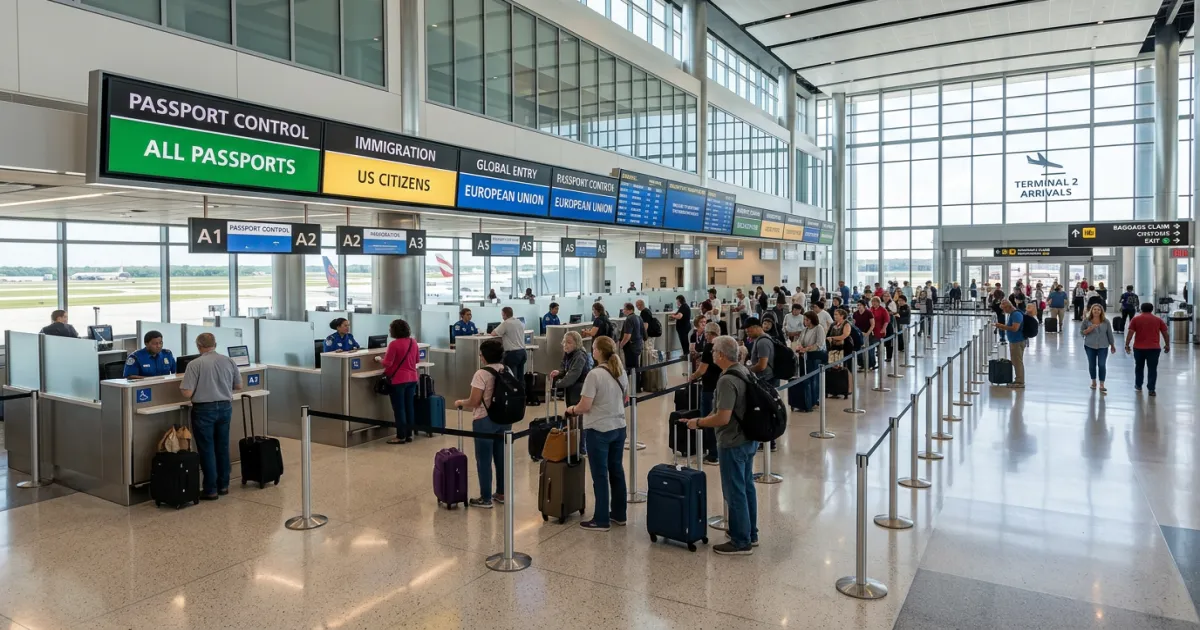
You just booked an international trip with a layover, and now you are wondering: do you actually have to go through customs during your connection? The short answer is it depends on which country you are connecting through, whether you need to collect your bags, and whether you are on a single ticket or separate bookings.
This guide breaks down exactly when you will clear customs on a layover, which countries require it, and how to prepare so the process goes smoothly.
Quick Answer: It Depends on the Country
Not all layovers require you to go through customs. In many countries, airports have sterile transit zones (also called international transit areas) that let you walk directly from one gate to another without ever entering the country. You stay “airside” the entire time, which means no passport control and no customs inspection.
However, several major countries have no airside transit option at all. The United States, Canada, Australia, and New Zealand all require every arriving international passenger to clear immigration and customs, even if you are just connecting to another flight.
Domestic Layovers: No Customs, Ever
If your entire trip is within a single country, customs is never part of the equation. A layover in Dallas on a flight from New York to Los Angeles involves nothing more than walking to your next gate. The same applies to domestic connections in any country. Customs and immigration only come into play when you cross an international border.
The one exception is returning to your home country from abroad with a domestic connection. For example, flying from London to Chicago with a layover in New York means you clear customs in New York (your first U.S. port of entry), then proceed to your domestic connection.
International Transit Without Leaving the Airport
Most major international airports maintain transit zones where connecting passengers can move between flights without formally entering the country. If you stay in the transit zone, you typically do not go through immigration or customs.
This is the standard setup at major hubs across Europe, the Middle East, and much of Asia. For example, if you are flying from New York to Mumbai with a layover in Dubai, you stay in the transit area at Dubai International Airport. You never enter the UAE, never show your passport to immigration, and never go through customs.
Keep in mind that some countries require certain nationalities to obtain an airside transit visa even when staying in the transit zone. The EU Schengen area and the United Kingdom both maintain lists of nationalities that need this visa. Check your transit country’s requirements before you fly.
When You MUST Clear Customs on a Layover
Several countries require all international passengers to clear customs and immigration, regardless of whether they have a connecting flight. Here are the most important ones:
United States
The U.S. has no international transit zones at any airport. Every passenger arriving on an international flight must clear U.S. Customs and Border Protection (CBP) at their first U.S. port of entry. This applies even if you are just connecting to another international flight.
The process works like this:
- Your plane lands at your first U.S. airport
- You go through passport control and immigration
- You collect your checked bags from the carousel
- You carry your bags through the customs inspection area
- You re-check your bags for your connecting flight
- You go through TSA security screening again
- You proceed to your gate for the next flight
This process adds significant time to your connection. Budget at least 2 to 3 hours for an international connection through a U.S. airport, especially at busy hubs like JFK, LAX, or Miami.
CBP Preclearance: If you depart from one of the 16 airports with U.S. Customs and Border Protection preclearance facilities (including all major Canadian airports, Dublin, Shannon, and Abu Dhabi), you complete the customs and immigration process before boarding your flight. When you land in the U.S., you are treated as a domestic arrival and can connect directly to your next flight without going through customs again.
Canada
Canada follows a similar model to the United States. All international passengers must clear customs and immigration at their first Canadian airport. You collect your bags, go through customs, then re-check your luggage if you have a connecting flight.
However, Canada also participates in the U.S. preclearance program. If you are flying from Canada to the United States, you clear U.S. customs and immigration at the Canadian airport before departure. This means when you land in the U.S., you skip the customs process entirely.
Australia
Australia requires all arriving international passengers to clear immigration and customs, including transit passengers in most cases. All travelers must complete an Incoming Passenger Card before landing. You will present your passport, your visa or Electronic Travel Authority (ETA), and your completed card to a Border Force officer. Australia’s biosecurity screening is particularly thorough due to its strict rules about food, plant material, and animal products entering the country.
New Zealand
New Zealand allows airside transit only at Auckland International Airport, and only under specific conditions. You must have a connecting international flight departing within 24 hours, and you must remain in the transit area. If your connection requires changing terminals or collecting bags, you will need to clear immigration and customs. Transit passengers who stay airside do not need to complete the New Zealand Traveller Declaration, but they also cannot collect checked luggage.
Country-by-Country Breakdown
Here is how customs and immigration work at the most common layover destinations around the world:
United States
As covered above, customs clearance is mandatory at your first U.S. airport. No exceptions. Allow 2 to 3 hours minimum for international connections. Plan your trip with enough layover time to account for this process.
Canada
Mandatory customs clearance at first Canadian airport. U.S.-bound passengers clear U.S. preclearance before departure. Budget at least 90 minutes for connections.
EU and Schengen Area
The 27 Schengen countries share a common border. You clear immigration at your first Schengen airport (for example, if flying from New York to Rome via Frankfurt, you clear immigration in Frankfurt). After that, your Frankfurt-to-Rome leg is treated like a domestic flight. If you are only transiting through the Schengen area to a non-Schengen destination and remain airside, you generally do not need to clear immigration. However, nationals of certain countries need an Airport Transit Visa (ATV).
United Kingdom
The UK allows airside transit at Heathrow and Manchester airports. If you stay airside, you do not go through UK border control. However, nationals of about 70 countries need a Direct Airside Transit Visa (DATV) even to transit without entering the UK. You are exempt from the DATV requirement if you hold a valid visa or permanent residence from the U.S., Canada, Australia, New Zealand, or an EU/EEA country. The DATV costs approximately 35 GBP and allows stays of up to 24 hours. Read our London Heathrow layover guide for more details on transiting through LHR.
Dubai (DXB)
Dubai International Airport has excellent transit facilities. Connecting passengers remain airside and do not need to clear immigration or customs. Most nationalities can also enter the UAE visa-free for 30 to 90 days if they want to leave the airport during a longer layover. The airport offers lounges, restaurants, duty-free shopping, and even a hotel inside the transit area.
Doha (DOH)
Hamad International Airport in Doha is designed as a transit hub. Connecting passengers stay airside with no customs or immigration required. Qatar also offers a visa-free transit program for over 80 nationalities, allowing you to leave the airport and explore the city for up to 96 hours at no cost. See our Doha layover guide for what to do during a stopover.
Singapore (SIN)
Changi Airport has a large transit area with gardens, a swimming pool, movie theater, and extensive shopping. Transit passengers do not go through customs or immigration. If you want to leave the airport, most nationalities receive 30 days visa-free entry. Singapore also offers a free guided city tour for transit passengers with layovers of 5.5 hours or more.
Hong Kong (HKG)
Hong Kong International Airport allows airside transit without clearing immigration or customs. Most nationalities can also enter Hong Kong visa-free for 7 to 180 days if they choose to leave the airport during a longer layover.
Tokyo (NRT and HND)
Japan allows airside transit at both Narita (NRT) and Haneda (HND) airports. If you remain in the international transit area, you do not clear immigration or customs. If you want to leave the airport, most Western passport holders receive 90 days visa-free entry.
Istanbul (IST)
Istanbul Airport has a modern transit zone where connecting passengers can remain airside. No customs or immigration required for transit. Turkish Airlines offers a free stopover program called “Touristanbul” that includes a guided city tour for passengers with layovers of 6 hours or more.
Customs vs. Immigration: What Is the Difference?
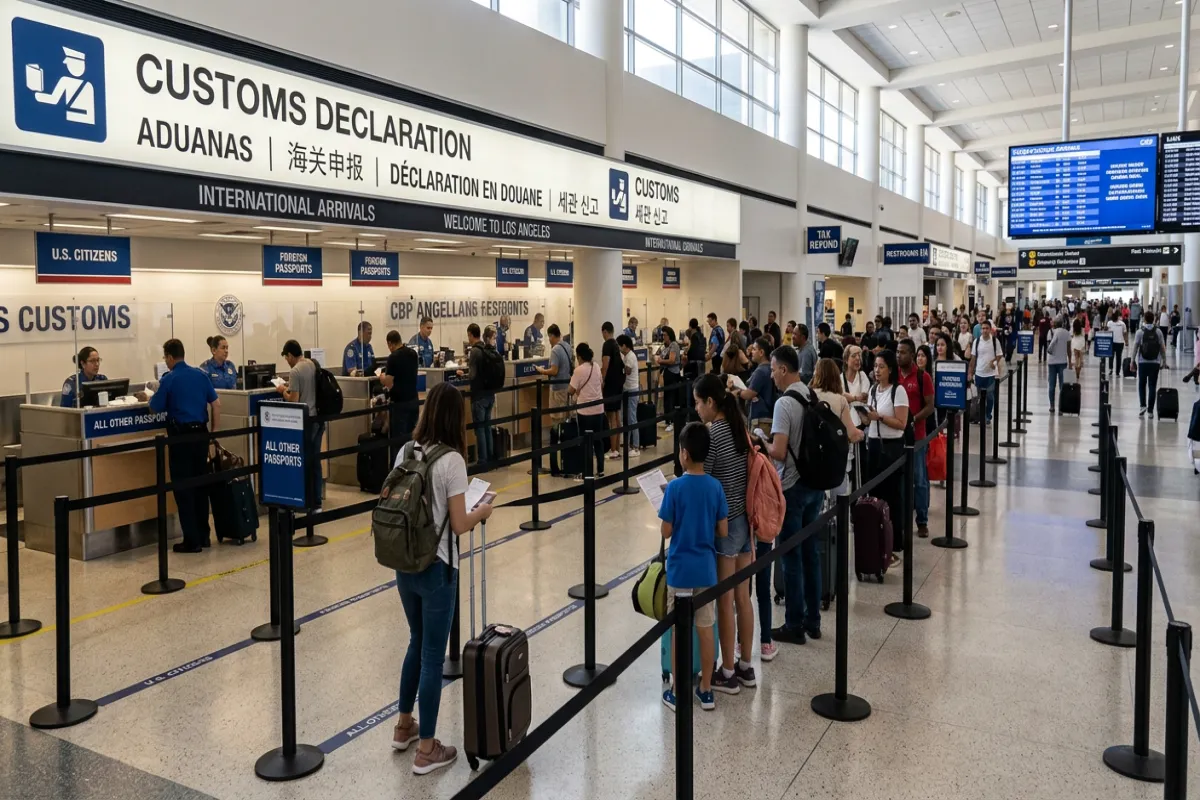
People often use “customs” and “immigration” interchangeably, but they are two separate processes:
Immigration (passport control) is where a border officer checks your passport and visa to determine whether you are allowed to enter the country. This is about who you are and whether you have permission to be there.
Customs is where authorities check what you are bringing into the country. This is about what you are carrying, specifically whether you have goods that need to be declared, restricted items, or amounts of currency above reporting thresholds.
You always go through immigration first, then customs. In some countries, you might clear immigration but bypass customs (for example, walking through a “nothing to declare” green lane). In practice, when people ask about “going through customs on a layover,” they usually mean the entire border crossing process, which includes both immigration and customs.
At some airports, you might clear immigration without clearing formal customs. For example, when entering the Schengen area, you go through passport control but typically walk through a customs area with minimal checks. In the United States, you always go through both steps at your first port of entry.
What to Expect When You Go Through Customs
If your layover requires clearing customs, here is what the process typically looks like:
Immigration (Passport Control)
- Join the queue for your passport type (most countries have separate lines for citizens and visitors)
- Present your passport, visa (if required), and any landing cards or arrival forms
- The officer may ask about the purpose of your visit, your final destination, and how long you are staying
- Your passport gets stamped (in most countries)
Baggage Collection
After immigration, you collect your checked bags from the carousel. Even if your bags are tagged to your final destination, some countries (like the U.S. and Canada) require you to collect them before customs and re-check them afterward.
Customs Inspection
Most airports use a channel system:
- Green channel (Nothing to Declare): Walk through if you have no restricted or taxable goods above the duty-free allowance
- Red channel (Goods to Declare): Use this if you are carrying goods above the duty-free limits, restricted items, or large amounts of cash (usually over $10,000 USD or equivalent)
- Blue channel: In EU countries, this is for passengers arriving from another EU country
Customs officers may randomly select you for secondary screening even in the green channel. If selected, they will ask you to open your bags and may ask questions about specific items.
How Long Does Customs Take?
The time varies widely depending on the airport, time of day, and how many flights are arriving simultaneously:
- Best case (quiet period, automated gates): 15 to 30 minutes total
- Average: 30 to 60 minutes
- Busy periods (multiple arrivals, peak season): 60 to 90 minutes or more
- With secondary screening: Add 15 to 45 minutes
For U.S. arrivals specifically, CBP recommends allowing at least 90 minutes for the entire process. At busy airports like JFK or LAX during peak hours, it can take even longer.
Ways to Speed Up Customs
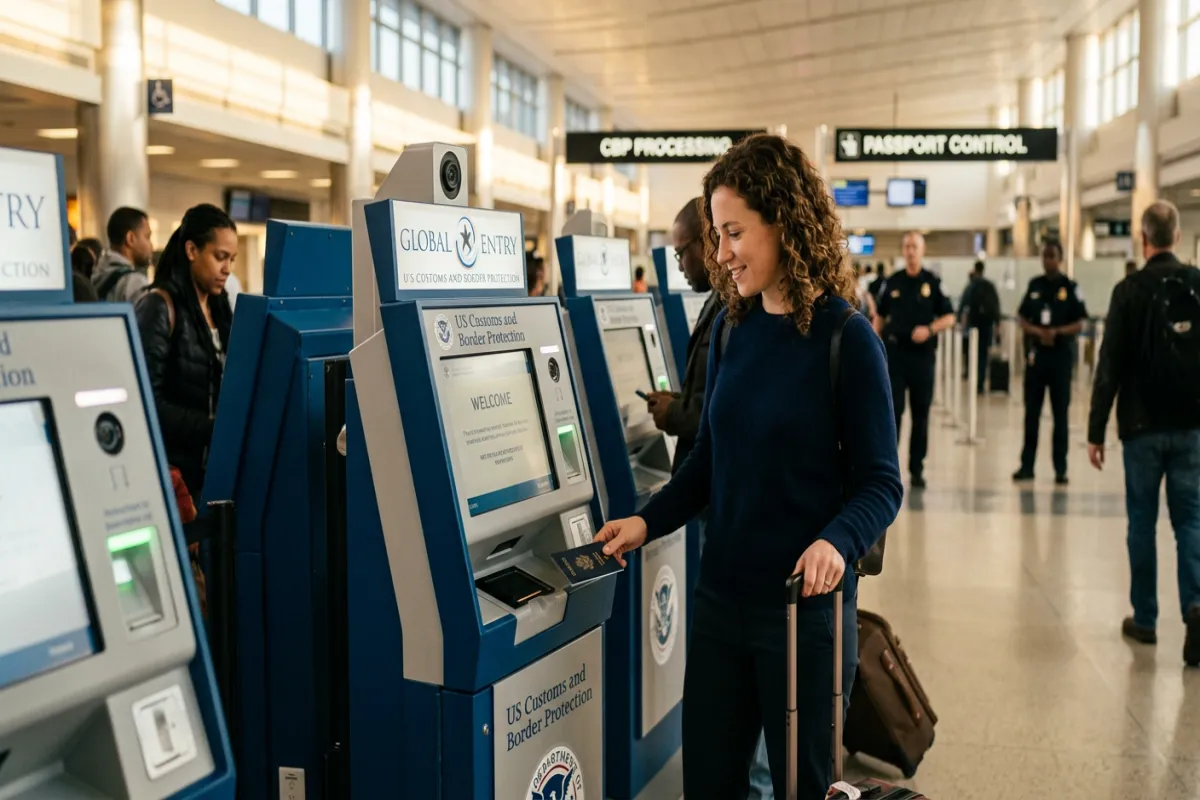
- Global Entry (U.S.): Pre-approved travelers use dedicated kiosks and skip the main immigration line. Processing often takes under 5 minutes. Costs $100 for 5 years and includes TSA PreCheck. Apply through the CBP Trusted Traveler Programs website.
- Mobile Passport Control (U.S.): A free app for U.S. and Canadian citizens that lets you submit your customs declaration before landing. You get a dedicated shorter queue. Your submission is valid for 4 hours after you submit it.
- ePassport gates: Many countries (UK, EU, Australia, Japan) offer automated passport gates for eligible travelers. These are faster than staffed booths.
- NEXUS (U.S./Canada): For frequent travelers between the U.S. and Canada, this program provides expedited border crossings in both countries.
Self-Connecting Flights: A Special Case
“Self-connecting” means your flights are on separate tickets rather than a single booking. This is increasingly common when travelers book through budget airlines or mix carriers to save money. When you self-connect, you always have to clear customs and immigration at your connecting airport, regardless of the country’s normal transit rules.
Here is why: with separate tickets, the airline has no obligation to transfer your bags or hold your connecting flight. You are essentially arriving as a regular passenger, collecting your luggage, exiting the airport (or at least the arrivals area), then checking in again as a new departing passenger.
If you are self-connecting, budget extra time:
- Allow at least 3 to 4 hours between flights
- You will need to collect your bags, clear customs/immigration, then check in again and go through security
- If your first flight is delayed, the second airline is not responsible for rebooking you
- Consider travel insurance that covers missed connections
Even at airports that normally allow airside transit (like Dubai or Singapore), self-connecting passengers must exit the transit area, clear customs, collect bags, and start the departure process from scratch. Learn more about what you can do during a layover to make the most of this time.
Tips for Smooth Customs Processing During a Layover
Before Your Flight
- Check visa requirements: Some countries require a visa even for transit. Verify before you book.
- Know your layover airport’s layout: Research whether you need to change terminals, which adds time.
- Book adequate layover time: At least 2 hours for international connections where customs is required, 3 hours in the U.S.
- Fill out forms in advance: Many countries now accept digital arrival forms. The U.S. has the CBP One app and Mobile Passport Control app. Australia has the Incoming Passenger Card available online.
Documents to Have Ready
- Passport (valid for at least 6 months beyond your travel date for most countries)
- Visa or electronic travel authorization if required
- Boarding pass for your connecting flight
- Completed customs/arrival forms
- Proof of onward travel (return ticket or ticket to your next destination)
- Hotel reservation or address where you are staying (some countries ask for this)
At the Airport
- Follow signs for “Connecting Flights” or “Transfer” rather than “Arrivals” or “Exit” if you are staying airside
- If you must clear customs, follow the “All Passengers” or “Arrivals” signs
- Have your documents in hand before you reach the front of the line
- Be honest on your customs declaration. Penalties for failing to declare items are steep.
- Keep prohibited items out of your carry-on. Know the biosecurity rules for countries like Australia and New Zealand.
Planning Your Layover
Whether or not you need to clear customs can significantly affect how much layover time you need. Use these guidelines when booking:
- No customs required (airside transit): 1 to 2 hours is usually sufficient
- Customs required (U.S., Canada, Australia): 2 to 3 hours minimum
- Self-connecting (separate tickets): 3 to 4 hours minimum
- Want to leave the airport: 5+ hours for a short city visit
Start planning your trip with layover times that account for customs, and explore our layover guides for specific airports to know exactly what to expect at your connecting city.
Frequently Asked Questions
Do you go through customs on a domestic layover?
No. Customs only applies when crossing an international border. Domestic layovers never involve customs or immigration, regardless of the country.
Do I need to collect my bags during a layover?
It depends. If you are on a single ticket and transiting through a country that allows airside connections (like Dubai or Singapore), your bags are typically transferred automatically. In the U.S., Canada, and Australia, you must collect your bags and carry them through customs, even on a single ticket. If you have separate tickets, you always collect your bags.
Can I leave the airport during a customs layover?
If you have already cleared customs and immigration, yes, you can usually leave the airport, provided you have the right visa or visa-free access. Make sure you have enough time to get through security again before your next flight.
What happens if I miss my connecting flight because customs took too long?
If both flights are on the same ticket, the airline will typically rebook you on the next available flight at no charge. If you booked separate tickets, the second airline has no obligation to accommodate you. This is one of the risks of self-connecting flights.
Do I go through customs at my layover city or my final destination?
You go through customs at the first country you enter. If you fly from Tokyo to London with a layover in Dubai and stay airside in Dubai, you clear customs in London. If you fly from London to Chicago with a layover in New York, you clear customs in New York because the U.S. requires it at the first port of entry.
Is immigration the same as customs?
No. Immigration checks who you are (passport and visa). Customs checks what you are bringing into the country (goods and currency). You go through immigration first, then customs. Both happen at the border, but they serve different purposes.
Do I need a transit visa for my layover?
It depends on your nationality and the transit country. Most countries allow transit without a visa if you stay airside. However, the U.S. requires almost everyone to have a visa even for transit. The UK and Schengen area require certain nationalities to have airside transit visas. Always check requirements for your specific nationality and transit country before traveling.