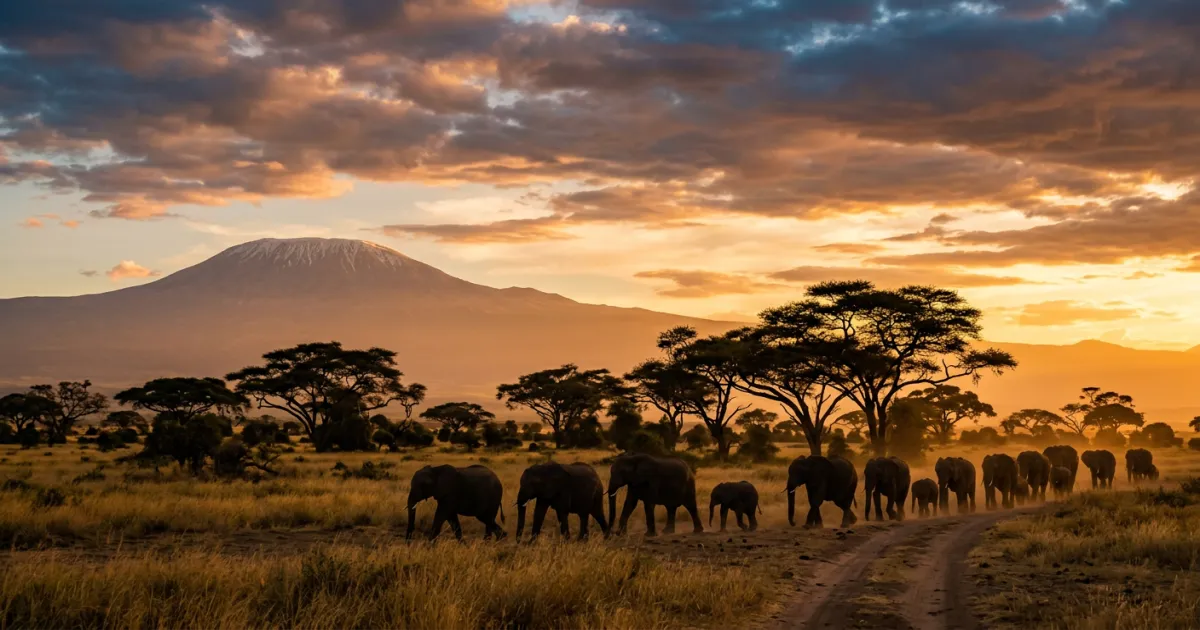
Africa is not one destination. It is 54 countries spanning deserts, rainforests, savannas, volcanic highlands, and thousands of miles of coastline. Planning a trip here can feel overwhelming, but with the right approach, it becomes one of the most rewarding travel experiences on Earth. Whether you are dreaming of watching elephants cross the Serengeti, exploring the souks of Marrakech, or relaxing on a white-sand beach in Zanzibar, this guide covers everything you need to know to plan your 2026 Africa trip with confidence.
Quick Facts About Traveling to Africa
- Countries: 54 recognized nations, each with its own culture, currency, and entry requirements
- Languages: Over 2,000 languages spoken across the continent, with English, French, Arabic, Swahili, and Portuguese widely used in tourism
- Visas: Requirements vary by country. Many popular destinations offer visa-free entry, e-visas, or visas on arrival for US citizens
- Currencies: Each country has its own currency, though US dollars are widely accepted in tourist areas across East and Southern Africa
- Best time to visit: Varies dramatically by region and activity. There is no single “best time” for all of Africa
- Time zones: The continent spans four time zones, from UTC+0 (Morocco) to UTC+3 (East Africa)
Before diving into specifics, it helps to have a general trip planning framework in place. Africa travel requires more advance preparation than most destinations, but the payoff is extraordinary.
Choosing Your Destination
The biggest decision you will make is which part of Africa to visit. Your choice depends on what kind of experience you want. Here are the four main categories travelers typically fall into.
Safari and Wildlife
If seeing wild animals in their natural habitat is your priority, focus on East and Southern Africa. The top safari destinations include:
- Kenya: Home to the Masai Mara, one of the world’s greatest wildlife reserves. The Great Migration, where over 1.5 million wildebeest cross from Tanzania’s Serengeti into the Mara, peaks from July through October. Kenya also offers excellent conservancies that limit visitor numbers for a more exclusive experience.
- Tanzania: The Serengeti and Ngorongoro Crater are iconic. The Ngorongoro Crater is essentially a self-contained ecosystem inside a collapsed volcano, teeming with lions, elephants, flamingos, and black rhinos. Tanzania also gives you access to Mount Kilimanjaro and the beaches of Zanzibar.
- South Africa: Kruger National Park is one of the most accessible safari destinations in the world. You can even self-drive through the park on paved roads, making it perfect for independent travelers and families. The country also offers Cape Town, the Garden Route, and wine regions.
- Botswana: Known for exclusivity and pristine wilderness. The Okavango Delta is a UNESCO World Heritage Site where you can explore waterways by traditional mokoro canoe. Chobe National Park has the highest concentration of elephants in Africa.
Beaches and Islands
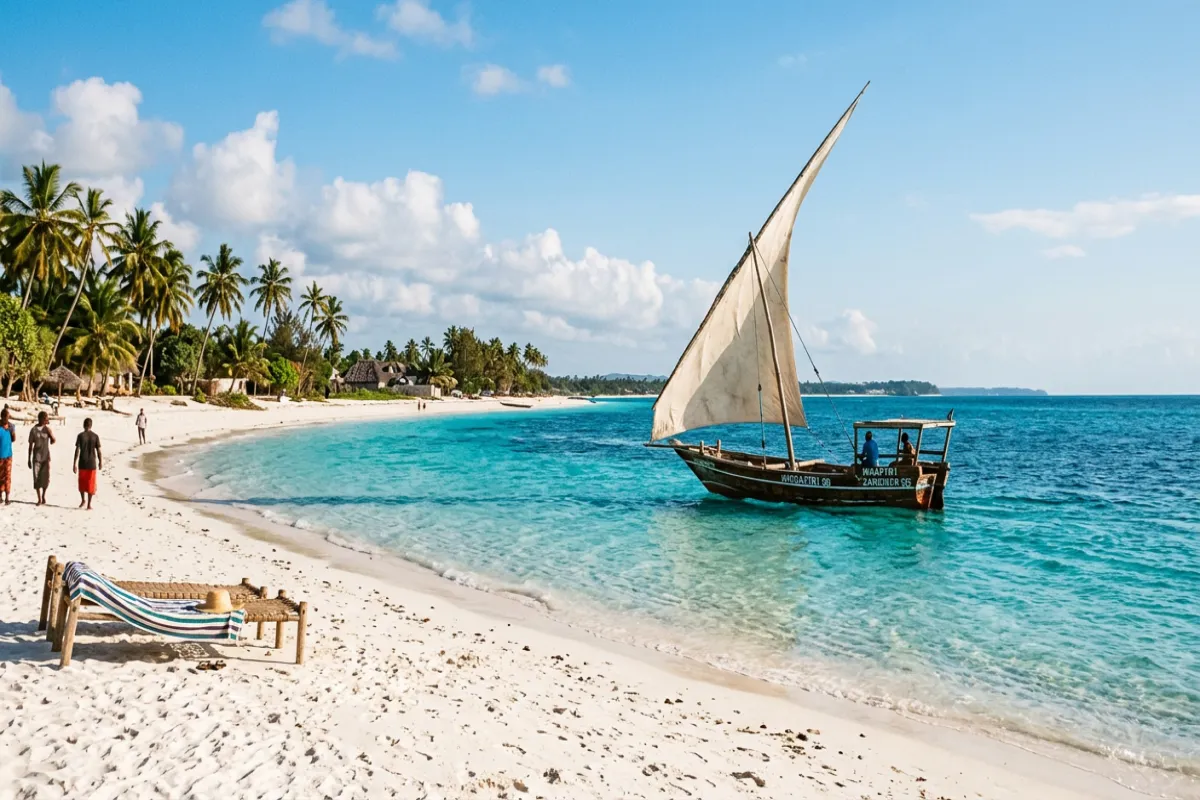
- Zanzibar (Tanzania): A spice island with turquoise waters, coral reefs, and Stone Town, a UNESCO World Heritage Site. Easily combined with a mainland Tanzania safari.
- Mauritius: A luxury island destination in the Indian Ocean with world-class resorts, hiking, and water sports. Visa-free for US citizens.
- Seychelles: Pristine granite islands with some of the most beautiful beaches on Earth. Ideal for honeymoons and couples.
- Cape Verde: Off the west coast of Africa, offering year-round warm weather, volcanic landscapes, and a unique Creole culture.
Culture and History
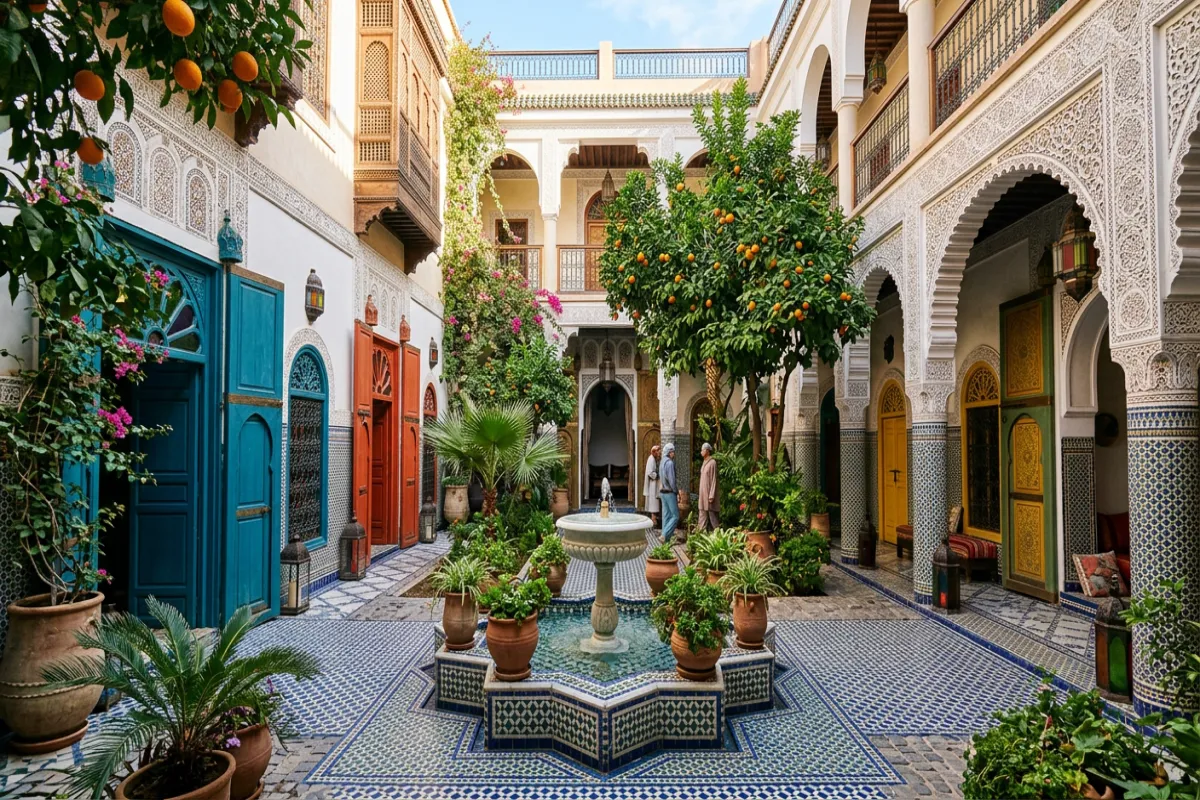
- Morocco: A sensory overload in the best way. Explore the medinas of Marrakech and Fez, trek the Atlas Mountains, sleep in a desert camp in the Sahara, and enjoy some of the world’s finest cuisine.
- Egypt: The pyramids of Giza, the temples of Luxor, a Nile River cruise, and the diving in the Red Sea. Egypt combines ancient history with natural beauty.
- Ethiopia: Home to ancient rock-hewn churches in Lalibela (a UNESCO World Heritage Site), the Simien Mountains, and a coffee culture that predates the rest of the world. Ethiopia is also the only African country never colonized by a European power.
- Ghana: A growing destination for cultural tourism, especially for visitors from the African diaspora. Cape Coast Castle, Kakum National Park, and the vibrant arts scene in Accra make Ghana an excellent introduction to West Africa.
Adventure
- Mount Kilimanjaro (Tanzania): Africa’s tallest peak at 5,895 meters (19,341 feet). Climbed by roughly 35,000 people per year, it requires no technical climbing skills but demands solid fitness and proper acclimatization over 6 to 8 days.
- Victoria Falls (Zambia/Zimbabwe): One of the Seven Natural Wonders of the World. The falls span 1,708 meters wide and drop 108 meters. Activities include bungee jumping, white-water rafting, and helicopter flights over the gorge.
- Gorilla Trekking (Uganda/Rwanda): Tracking endangered mountain gorillas through bamboo forests is a once-in-a-lifetime experience. Permits cost $700 in Uganda and $1,500 in Rwanda, and each gorilla family receives only 8 visitors per day.
Best Time to Visit by Region
Timing your trip correctly can make a significant difference in both your experience and your budget.
- East Africa (Kenya, Tanzania, Uganda, Rwanda): The dry season from June through October is peak safari time. Wildlife gathers around water sources, making animals easier to spot. The Great Migration river crossings happen from July through September. Short rains in November offer good wildlife viewing with fewer crowds.
- Southern Africa (South Africa, Botswana, Namibia, Zimbabwe, Zambia): The dry winter months from May through September are best for safaris. Victoria Falls is most dramatic from February through May after the rainy season. Cape Town is best from November through March (Southern Hemisphere summer).
- North Africa (Morocco, Egypt): Spring (March through May) and fall (September through November) offer comfortable temperatures. Summer can bring extreme heat, especially in Egypt’s interior.
- West Africa (Ghana, Senegal, Nigeria): The dry season from November through March is most comfortable. The rainy season from June through September brings heavy humidity and downpours.
- Indian Ocean Islands (Zanzibar, Mauritius, Seychelles): Generally pleasant year-round, but the driest months are June through October.
How Long Should You Plan For?
Africa is vast, and distances between attractions are often significant. Here are general guidelines:
- Single-country safari: 7 to 10 days allows you to visit two or three parks or reserves with reasonable travel time between them
- Safari plus beach combo: 10 to 14 days is the sweet spot. For example, a week on safari in Tanzania’s northern circuit followed by 3 to 4 days in Zanzibar
- Multi-country trip: 14 to 21 days if combining countries like Kenya and Tanzania, or South Africa and Botswana
- Cultural trip (Morocco or Egypt): 7 to 10 days covers the highlights comfortably
Use a vacation itinerary template to map out your day-by-day plan once you have settled on dates and destinations.
Budget: What Does an Africa Trip Actually Cost?
Africa travel costs span an enormous range depending on your destination, accommodation style, and activities. Here is a realistic breakdown for 2026.
Safari Costs Per Person Per Day
- Budget safari: $150 to $300 per day. Group tours, shared vehicles, basic camping or guesthouses. South Africa’s Kruger is the most affordable option, where self-drive safaris let you skip guide fees entirely.
- Mid-range safari: $375 to $600 per day. Private or semi-private game vehicles, comfortable lodges or tented camps with en-suite bathrooms, experienced guides.
- Luxury safari: $600 to $1,500 per day. All-inclusive lodge stays with gourmet meals, premium game vehicles, private guides, and often a plunge pool on your deck.
- Ultra-luxury safari: $1,800 to $5,000+ per day. Exclusive-use villas, helicopter transfers, private concessions with no other tourists, and dedicated staff.
Total Trip Budget Ranges (Per Person, 10 Days)
- Budget: $1,500 to $3,000 (excluding international flights)
- Mid-range: $4,000 to $7,000
- Luxury: $8,000 to $15,000
- Ultra-luxury: $18,000 to $35,000+
Other Daily Costs by Country
- Morocco: $50 to $150 per day for food, transport, and accommodation outside of tours
- Egypt: $40 to $120 per day. One of the most affordable destinations in Africa for non-safari travel
- South Africa (non-safari): $60 to $150 per day for Cape Town and the Garden Route
- Kenya/Tanzania (non-safari days): $30 to $80 per day in towns and beach areas
Park and Conservation Fees
Most national parks and reserves charge daily entry fees that are typically included in safari package prices but worth knowing about:
- Serengeti National Park: $70 per adult per day
- Ngorongoro Crater: $70 per adult per entry
- Kruger National Park: approximately $25 per adult per day
- Masai Mara National Reserve: $80 per adult per day
A travel budget template can help you track and plan your spending across multiple destinations and categories.
Getting There: Flights and Major Hubs
International flight costs are a significant part of your Africa travel budget. Round-trip economy flights from the US typically range from $600 to $1,200 depending on the destination and season.
Major African Airport Hubs
- Johannesburg (JNB), South Africa: The busiest airport in Africa and the primary gateway to Southern Africa. Served by multiple US carriers and major international airlines.
- Nairobi (NBO), Kenya: The main hub for East Africa. If you are heading to Kenya, Tanzania, Uganda, or Rwanda, Nairobi is your likely entry point. If you have a layover in Nairobi, there is plenty to do near the airport.
- Cairo (CAI), Egypt: Gateway to North Africa and the Middle East. EgyptAir offers direct flights from New York (JFK).
- Casablanca (CMN), Morocco: Royal Air Maroc operates direct flights from several US cities including New York, Washington DC, and Miami.
- Addis Ababa (ADD), Ethiopia: Ethiopian Airlines, a Star Alliance member, operates one of Africa’s largest route networks. Addis is a major connecting hub for reaching destinations across the continent, often at competitive prices.
Booking Tips
- Book international flights 3 to 6 months in advance for the best prices
- Consider flying into one city and out of another to avoid backtracking (for example, into Nairobi and out of Kilimanjaro)
- Internal flights between parks are common in East Africa and can save significant driving time. Budget $150 to $400 per flight segment
- Ethiopian Airlines often offers free stopovers in Addis Ababa on connecting itineraries
Health and Safety
Health preparation is essential for Africa travel and should begin 6 to 8 weeks before departure to allow time for vaccinations and medication.
Vaccinations and Medications
- Yellow fever: Required for entry into several countries (Kenya, Tanzania, Uganda, Rwanda, Ethiopia) if arriving from or transiting through an endemic country. Some countries require proof of vaccination regardless of your origin. Get this at least 10 days before travel.
- Malaria prophylaxis: Malaria is present in most of sub-Saharan Africa. Common preventive medications include Malarone (atovaquone-proguanil), doxycycline, and mefloquine. Consult a travel medicine specialist for the best option for your destination.
- Routine vaccinations: Ensure your hepatitis A, hepatitis B, typhoid, and tetanus vaccinations are current.
- Other considerations: Depending on your itinerary, your doctor may recommend meningitis, rabies, or cholera vaccines.
Travel Insurance
Travel insurance is not optional for Africa. At minimum, ensure your policy covers emergency medical evacuation, as many safari camps and lodges are remote. Medical evacuation by air ambulance can cost $50,000 or more without insurance. Look for policies that specifically include:
- Emergency medical evacuation
- Trip cancellation and interruption
- Coverage for adventure activities if you plan to climb, raft, or dive
- 24/7 assistance hotline
Safety Tips
- Check country-specific travel advisories on the US State Department website before booking
- Use common sense in cities: avoid displaying expensive jewelry or electronics, stay aware of your surroundings, and use reputable transport
- Safari camps and lodges in national parks are generally very safe
- Always follow your guide’s instructions around wildlife. Keep a safe distance and never leave your vehicle on game drives unless your guide says it is safe
Your Safari Guide: What to Know Before You Go
Types of Safari Accommodation
- Permanent lodges: Brick-and-mortar buildings with hotel-like amenities including pools, restaurants, and full electricity. Great for families and those who prefer comfort.
- Luxury tented camps: Canvas tents on raised platforms with proper beds, en-suite bathrooms, and often outdoor showers. The classic safari experience that blends comfort with closeness to nature.
- Budget camping safaris: Basic tents pitched at designated campsites. You may help with camp setup. The most affordable way to experience the bush.
- Mobile camps: Move with the wildlife, particularly during the Great Migration. These offer a more adventurous and immersive experience.
The Big Five
The term “Big Five” originally referred to the five most difficult animals to hunt on foot. Today, it describes the five most sought-after animals to see on safari: lion, leopard, rhinoceros, elephant, and Cape buffalo. The best chances of seeing all five on a single trip are in South Africa’s Kruger National Park, Tanzania’s Ngorongoro Crater, and Kenya’s Masai Mara.
What to Expect on a Game Drive
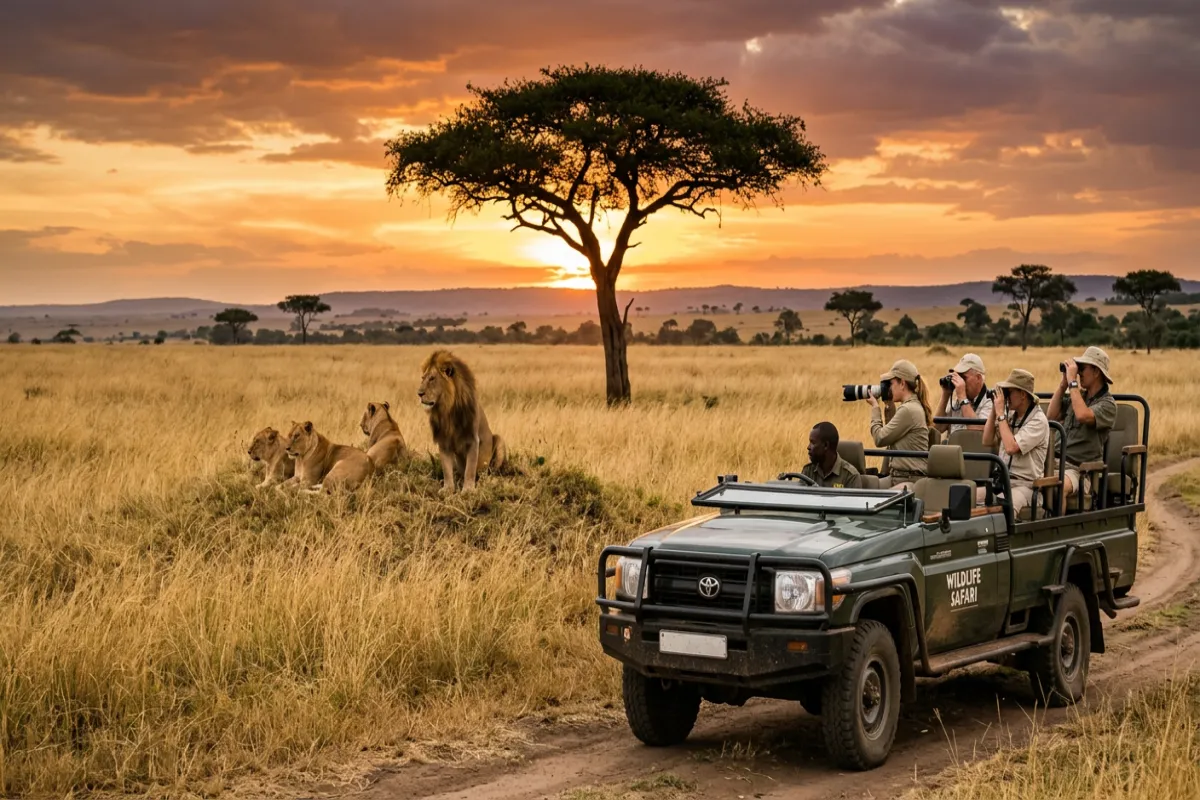
Most safaris follow a similar daily pattern. You wake before dawn for a morning game drive (typically 6:00 AM to 10:00 AM) when animals are most active. After brunch and a midday rest, an afternoon drive runs from about 3:30 PM to sunset. Some lodges offer night drives with spotlights to see nocturnal animals like aardvarks, bush babies, and civets.
Packing for Safari
- Neutral-colored clothing (khaki, olive, tan). Avoid white (it gets dusty fast) and dark blue or black (attracts tsetse flies in some areas).
- Layers for early morning drives when temperatures can drop to 5 to 10 degrees Celsius (40 to 50 degrees Fahrenheit)
- A good pair of binoculars and a camera with a zoom lens (200mm minimum, 400mm recommended)
- Sunscreen, sunglasses, and a wide-brimmed hat
- Insect repellent with DEET
- A headlamp or small flashlight for camps without full electricity
- Soft-sided luggage (required for bush flights on small aircraft)
Best Countries for First-Time Visitors
If this is your first trip to Africa, these destinations offer the best combination of accessibility, safety, infrastructure, and unforgettable experiences.
South Africa: The Easiest Introduction
South Africa is consistently recommended as the best starting point for first-time Africa visitors. English is widely spoken. Roads are excellent. ATMs and credit card acceptance are widespread. You can combine Kruger safaris with Cape Town’s Table Mountain, the Winelands, and the Garden Route on a single trip. US citizens do not need a visa for stays up to 90 days.
Kenya and Tanzania: The Classic Safari
For the quintessential African wildlife experience, Kenya and Tanzania deliver. The Masai Mara and Serengeti form the stage for the Great Migration, arguably the greatest wildlife spectacle on Earth. Both countries have well-established tourism infrastructure with options at every budget level. Kenya requires a $30 Electronic Travel Authorization (ETA). Tanzania offers visas on arrival or via e-visa.
Morocco: Culture Without Compromise
Morocco is North Africa’s most visited country and one of the safest on the continent. It offers an entirely different experience from the safari-focused destinations. US citizens do not need a visa for stays up to 90 days. The country is well connected by direct flights from multiple US cities.
Egypt: Ancient History Meets Modern Tourism
Egypt’s tourism infrastructure is well developed for first-timers. Organized Nile cruises handle all logistics for you, and guided tours of the pyramids and temples are widely available. US citizens can obtain a visa on arrival for $25 or apply online in advance.
Practical Tips for Africa Travel
- Visa requirements vary widely: Check each country individually. South Africa, Botswana, Morocco, and Mauritius are visa-free for US citizens. Kenya uses an ETA system ($30). Tanzania and Egypt offer visas on arrival. Uganda and Rwanda require e-visas in advance. Always verify current requirements before booking, as rules change frequently.
- Power adapters: Africa uses several different plug types. South Africa uses its own unique three-prong plug (Type M). Most of East Africa uses the British three-pin plug (Type G). North Africa typically uses European two-pin plugs (Type C). Bring a universal adapter.
- Bargaining is expected: In markets and with informal vendors across most of Africa, prices are negotiable. Start at about half the asking price and negotiate from there. Fixed-price shops and restaurants are the exception.
- Respect local customs: Dress modestly when visiting religious sites, especially in Muslim-majority countries like Morocco and Egypt. Ask permission before photographing people. Learn a few basic phrases in the local language. Greetings are important across African cultures.
- Photography permissions: In some countries, photographing government buildings, military installations, airports, and bridges is restricted or prohibited. Always ask before photographing people, and be prepared to offer a small tip in tourist areas.
- Connectivity: Most tourist areas have reasonable cell coverage. Purchase a local SIM card at the airport for affordable data. Safari lodges in remote areas may have limited or no Wi-Fi.
- Tipping: Tipping is customary. On safari, a common guideline is $10 to $20 per person per day for your safari guide and $5 to $10 for camp staff.
Sample 12-Day Kenya and Tanzania Safari Itinerary
This sample itinerary combines two of Africa’s greatest safari destinations with a beach finish. It works best during the dry season from June through October.
Days 1 to 3: Nairobi and Amboseli National Park
Arrive in Nairobi. Spend your first afternoon visiting the David Sheldrick Elephant Orphanage or the Giraffe Centre. The next morning, drive or fly to Amboseli National Park (about 4 hours by road). Amboseli is famous for its views of Mount Kilimanjaro rising behind herds of elephants. Spend two nights here with morning and afternoon game drives.
Days 4 to 6: Masai Mara National Reserve
Fly from Amboseli to the Masai Mara (about 1.5 hours). The Mara is Kenya’s premier wildlife destination, with enormous concentrations of lions, cheetahs, and leopards year-round. During migration season (July through October), witness wildebeest river crossings. Stay three nights in a tented camp or lodge. Consider a dawn hot-air balloon ride over the savanna.
Days 7 to 9: Serengeti National Park
Cross into Tanzania (your tour operator will handle border logistics). The Serengeti’s endless plains are home to the largest terrestrial mammal migration on Earth. Depending on the time of year, the herds may be in different parts of the park. Your camp location will follow the wildlife. Spend three nights exploring different sections of the park.
Day 10: Ngorongoro Crater
Drive to the Ngorongoro Conservation Area. Descend into the crater for a full-day game drive. The crater floor covers 260 square kilometers and supports roughly 25,000 animals, including the rare black rhino. This is one of the best places in Africa to see the Big Five in a single day.
Days 11 to 12: Zanzibar
Fly from the Ngorongoro area to Zanzibar (about 2 hours via Arusha). Spend your final days unwinding on white-sand beaches, snorkeling in coral reefs, and exploring the narrow streets and spice markets of Stone Town. Depart from Zanzibar’s airport.
You can adjust this itinerary using our AI travel planner to customize it for your specific dates, interests, and budget.
Planning Tools and Resources
Getting your Africa trip organized does not have to be stressful. Use these tools to build your plan step by step:
- How to Plan a Trip – Our comprehensive planning guide that walks you through budgeting, booking, and organizing any international trip
- AI Travel Planner – Get a personalized Africa itinerary based on your preferences, budget, and travel dates
- Vacation Itinerary Template – Organize your day-by-day Africa schedule with our free downloadable template
- Travel Budget Template – Track safari costs, flights, visas, and daily expenses in one place
If you are also considering other continents, our guide to planning a trip to Europe covers a similar step-by-step approach for European destinations.
Frequently Asked Questions
Is Africa safe for tourists?
The most popular tourist destinations in Africa are generally safe for visitors who take standard precautions. Countries like Botswana, Namibia, Rwanda, Mauritius, and Morocco have excellent safety records. Safari camps and national parks are very secure. As with any travel, check current State Department advisories for your specific destinations and use common sense in urban areas.
Do I need special vaccinations for Africa?
Yes. At minimum, consult a travel medicine specialist 6 to 8 weeks before departure. Yellow fever vaccination may be required depending on your itinerary. Malaria prophylaxis is recommended for most sub-Saharan destinations. Ensure routine vaccinations (hepatitis A and B, typhoid, tetanus) are current.
How far in advance should I book an Africa safari?
Book 6 to 12 months in advance for peak season (June through October), especially for popular lodges and camps in the Masai Mara, Serengeti, and Okavango Delta. Gorilla trekking permits in Rwanda and Uganda should be booked as early as possible, as they sell out months ahead. Budget and shoulder-season trips can sometimes be arranged 2 to 3 months out.
Can I plan an Africa trip independently or do I need a tour operator?
It depends on the destination. South Africa is very easy to explore independently with rental cars and self-booked accommodation. Morocco and Egypt are also manageable for independent travelers. For East African safaris, most travelers use a tour operator or safari company because logistics (permits, park fees, guides, camp bookings, internal flights) are complex. A reputable operator handles all of this and can significantly improve your experience.
What is the best first safari destination?
South Africa’s Kruger National Park is widely considered the best for first-timers due to its affordability, accessibility, excellent roads, and high density of wildlife including the Big Five. For those seeking a more classic safari atmosphere with open savanna and migration wildlife, Kenya’s Masai Mara or Tanzania’s Serengeti are the top choices.
Is Africa expensive to visit?
Africa offers options at every price point. Budget safaris start around $150 per person per day, while luxury lodges can exceed $2,000 per day. Non-safari destinations like Morocco and Egypt are very affordable, with daily costs of $40 to $150. The biggest expenses are typically international flights and safari accommodation. Traveling during shoulder season (November or March through May) can reduce costs by 20 to 40 percent.