| Amalfi Coast Quick Facts | |
|---|---|
| Country | Italy (Campania region) |
| Currency | Euro (EUR) |
| Language | Italian. English in tourist areas |
| Time Zone | CET (UTC+1), CEST (UTC+2) in summer |
| Visa (US) | Not required for stays under 90 days (Schengen Area) |
| Daily Budget | $100 to $500+ per person |
| Best Time | May to June, September to October |
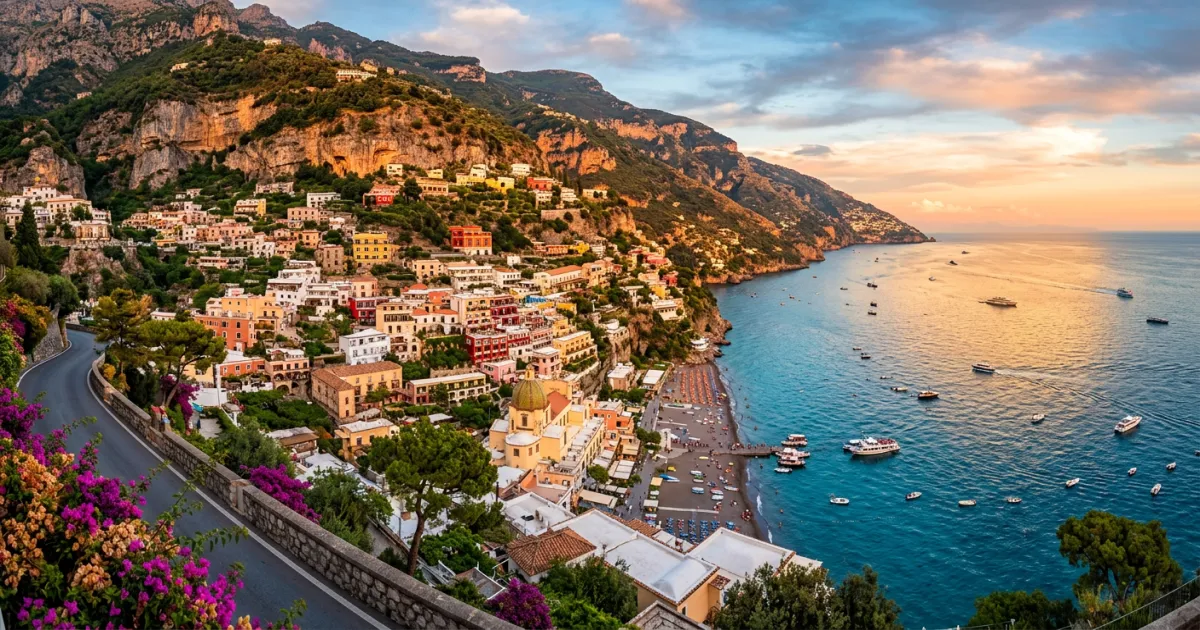
The Amalfi Coast is a 30-mile stretch of southern Italian coastline where mountains plunge into the Mediterranean and pastel-colored villages cling to cliffs above turquoise water. It is one of the most dramatic landscapes in Europe and a UNESCO World Heritage Site. Positano is the most photographed town, Ravello sits high above with legendary gardens and views, and Amalfi itself has a stunning cathedral and a more accessible vibe. The coast is connected by a single narrow road (SS163) that is both thrilling and terrifying to drive, and by ferries and buses that provide a more relaxing alternative.
For a broader framework for organizing any trip, our how to plan a trip guide covers the fundamentals.
Best Time to Visit Amalfi Coast
May through June and September through October are ideal. Late spring offers warm weather (70s F), fewer crowds than summer, and lower prices. September and October bring warm sea temperatures (perfect for swimming), golden light, and local grape and lemon harvests. July and August are peak season: hot (85 to 90 F), crowded, expensive, and the narrow road becomes a parking lot. April is pleasant but some hotels and restaurants are still opening for the season.
Getting to Amalfi Coast
The nearest airport is Naples International (NAP), about 40 miles north. From Naples, you can take a ferry to the coast (seasonal, about $15 to $25), the SITA bus to Amalfi or Positano (about $3), or arrange a private transfer ($100 to $150). From Rome, take the high-speed train to Naples (1 hour 10 minutes, $15 to $40) and then continue to the coast. Driving the SS163 is not recommended for first-time visitors: the road is narrow, winding, with blind turns and aggressive local bus drivers. Use ferries and buses instead.
Top Things to Do in Amalfi Coast
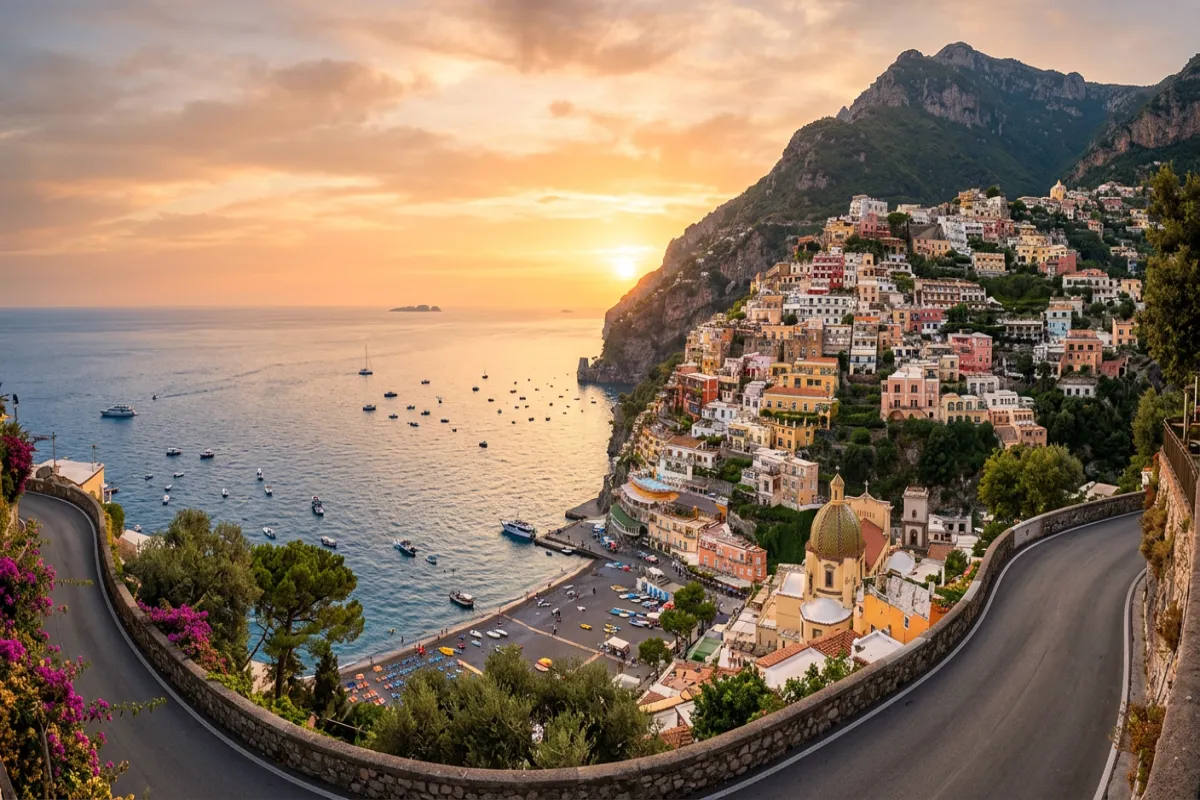
- Positano: The most iconic Amalfi Coast town with cascading pastel buildings, the church dome of Santa Maria Assunta, and a pebble beach. Walk the steep lanes, shop for handmade sandals, and watch the sunset with a limoncello.
- Path of the Gods (Sentiero degli Dei): A spectacular cliff-top hiking trail from Agerola to Nocelle (about 4.5 miles, 2 to 3 hours). Views of the entire coast from 1,500 feet above the sea. Take the bus to Agerola and hike downhill to Nocelle, then take steps or a bus to Positano.
- Ravello: A hilltop town above Amalfi known for its gardens and music festivals. Villa Rufolo and Villa Cimbrone have terraced gardens with views that seem to float above the coast. The Ravello Festival (July) features classical concerts.
- Amalfi Town and Cathedral: The town that gives the coast its name. The 9th-century cathedral has a striking facade and the Cloister of Paradise. The town is less vertical than Positano and easier to walk. Good base for day trips.
- Boat Tour Along the Coast: Private or shared boat tours run between towns, visiting sea caves, hidden coves, and the Li Galli islands. A boat tour is the best way to see the coast from the water ($60 to $200 per person).
- Lemon Groves and Limoncello: The Amalfi Coast is famous for its oversized lemons. Visit a lemon grove and taste fresh limoncello (many offer free tastings). Lemon everything (granita, pasta, cake) is on every menu.
Where to Stay
Positano is the most glamorous and most expensive. Hotels with sea views run $200 to $600+ per night. Budget options exist but are a steep walk from the beach. Amalfi is more centrally located and slightly more affordable ($120 to $350). Ravello is quieter with fewer budget options but unbeatable views ($150 to $400). Praiano and Minori are smaller towns between the big three with better value ($80 to $200). Book accommodations 2 to 3 months ahead for May through October.
Sample 3-Day Amalfi Coast Itinerary
- Day 1 – Positano: Arrive from Naples by ferry or bus. Settle into your hotel and walk down to the beach through the narrow lanes. Explore the shops and the church. Sunset aperitivo at a terrace bar overlooking the water. Dinner at a restaurant with coastal views.
- Day 2 – Path of the Gods and Amalfi: Morning bus to Agerola to start the Path of the Gods hike. Arrive in Nocelle and take the steps or bus down to Positano. Afternoon ferry to Amalfi town. Visit the cathedral and walk the waterfront. Return by ferry.
- Day 3 – Ravello and Boat Tour: Morning bus or taxi to Ravello. Visit Villa Rufolo and Villa Cimbrone gardens. Lunch at a restaurant with a view. Afternoon boat tour along the coast from Amalfi (stop at sea caves and coves). Evening limoncello tasting and farewell dinner.
Budget Estimate
The Amalfi Coast is one of the more expensive destinations in Italy. Budget travelers can manage on $100 to $150 per day by staying in smaller towns (Praiano, Minori), eating at trattorias away from the waterfront, and using SITA buses ($2 to $3 per ride) instead of taxis or boats. Mid-range travelers should plan for $200 to $350 covering a hotel with views, restaurant meals ($15 to $30 per meal), ferry tickets, and the Path of the Gods (free, just bus fare to the start). Luxury travelers will spend $500+ for Positano hotels with terraces, private boat tours, and fine dining.
Planning Tools
Ready to start building your Amalfi Coast trip? Our free AI trip planner can generate a custom itinerary based on your dates, budget, and interests.
Frequently Asked Questions
How many days do you need on the Amalfi Coast?
Three days covers the main towns (Positano, Amalfi, Ravello) and the Path of the Gods. Five days lets you add Sorrento, Capri, and Pompeii as day trips. Two days works but feels rushed. The coast is best enjoyed at a slow pace.
Should I stay in Positano or Amalfi?
Positano is more photogenic and glamorous but more expensive and involves a lot of stairs. Amalfi is more centrally located on the coast, easier to walk, and has better ferry and bus connections. For a first visit, Amalfi offers better value and convenience. For a splurge, Positano delivers the quintessential Amalfi Coast experience.
Can you drive the Amalfi Coast road?
You can, but it is not recommended for most visitors. The SS163 is narrow, winding, with sheer drops and no guardrails in places. Local buses take up most of the road, and finding parking in the towns is nearly impossible. Ferries between towns (April through October) and SITA buses are more practical and less stressful.