| Aruba Quick Facts | |
|---|---|
| Country | Aruba (constituent country of the Kingdom of the Netherlands) |
| Currency | Aruban Florin (AWG). 1 USD = 1.79 AWG. USD widely accepted |
| Language | Papiamento, Dutch, English, Spanish (all widely spoken) |
| Time Zone | Atlantic Standard Time (AST, no DST) |
| Visa (US) | Not required for stays under 90 days |
| Daily Budget | $120 to $500+ per person |
| Best Time | Year-round (outside the hurricane belt) |
Aruba sits outside the hurricane belt in the southern Caribbean, which means sunny weather nearly every day of the year. The island is small (19 miles long, 6 miles wide) but delivers a polished travel experience: wide white-sand beaches, warm turquoise water, a walkable resort area, and a food scene that draws on Dutch, Caribbean, and Latin American influences. Eagle Beach routinely ranks among the best beaches in the world. The arid landscape on the north and east coasts, with cactus fields and rugged limestone cliffs, provides a striking contrast to the calm resort beaches on the west coast.
For a broader framework for organizing any trip, our how to plan a trip guide covers the fundamentals.
Best Time to Visit Aruba
Aruba is a year-round destination. Temperatures stay between 80 and 90 F every month. The island sits below the hurricane belt, so storm risk is minimal. January through March is the busiest period with the highest hotel rates. April through August offers slightly lower prices with the same great weather. September through November is the quietest period with occasional brief rain showers and the best hotel deals. Trade winds keep the humidity comfortable throughout the year.
Getting to Aruba
Queen Beatrix International Airport (AUA) has direct flights from Miami (about 3 hours), New York (about 4.5 hours), Atlanta, Charlotte, Houston, and other US cities. The airport is close to the resort area; a taxi to the high-rise hotel zone is about $25 to $30. US Customs pre-clearance is available at AUA, meaning you clear US customs before boarding your return flight and arrive in the US as a domestic passenger. Within Aruba, taxis, rental cars, and the Arubus public bus system cover the island.
Top Things to Do in Aruba
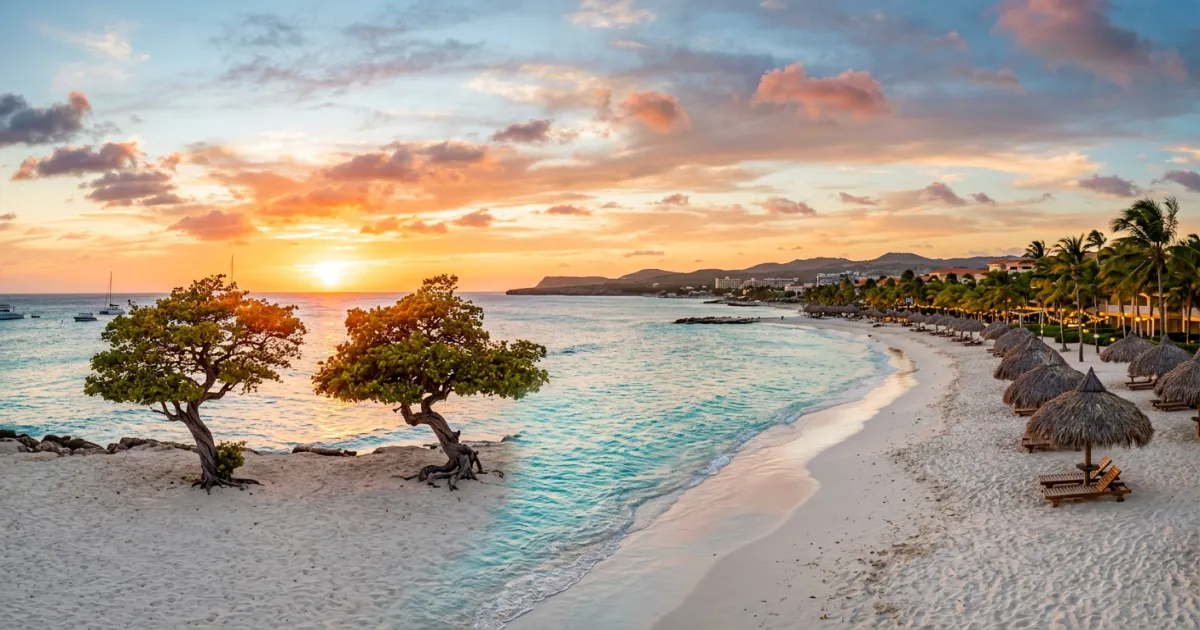
- Eagle Beach: Frequently ranked the best beach in the Caribbean. Wide, white sand, calm water, and the iconic fofoti (divi-divi) trees. Less crowded than Palm Beach and free to access. Bring your own chairs and umbrella, or rent on site.
- Palm Beach: The main resort beach lined with high-rise hotels. Beach bars, water sports rentals, and lively atmosphere. Good for people who want beach and activities in one spot.
- Arikok National Park: Covers 20% of the island with desert landscapes, caves with Arawak petroglyphs, natural pools, and hiking trails. The Natural Pool (Conchi) requires a 4×4 or guided tour to reach.
- Snorkeling and Diving: Malmok Beach and Arashi Beach offer excellent shore snorkeling with clear visibility and reef life. The SS Antilla shipwreck, the largest wreck in the Caribbean, is a popular dive and snorkel site.
- Oranjestad Downtown: The colorful capital city with Dutch colonial architecture, the Renaissance Marina for shopping, and the linear park for walking. The Fort Zoutman historical museum covers Aruba’s history.
- Sunset Catamaran Cruise: Sailing cruises depart from Palm Beach for sunset views, open bar, and snorkeling stops. A popular Aruba experience costing $50 to $90 per person.
Where to Stay
The high-rise hotel zone along Palm Beach has the most hotels, including Marriott, Hyatt, Hilton, and Riu properties. Rooms run $200 to $500+ per night. The low-rise hotel zone along Eagle Beach is quieter and more charming, with boutique hotels and resorts ($150 to $400). Oranjestad has a few downtown hotels at lower prices with easy bus access to the beaches. All-inclusive resorts like Divi and Tamarijn are popular ($300 to $600 per person per day including meals and drinks). Airbnb and vacation rentals in the Noord area offer budget alternatives ($80 to $150 per night).
Sample 5-Day Aruba Itinerary
- Day 1 – Beach: Settle in and head to Eagle Beach for a relaxed afternoon. Swim, walk the beach, and watch the sunset. Dinner at a restaurant in the low-rise hotel area.
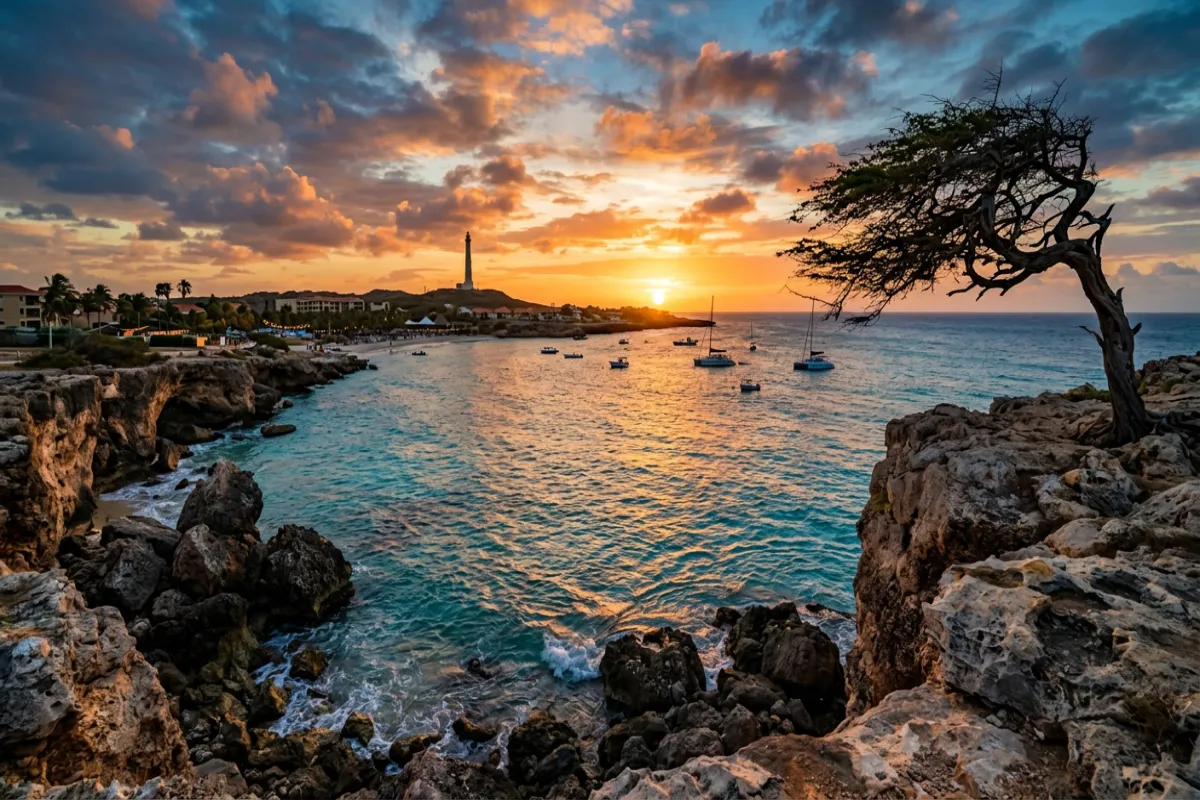
- Day 2 – Snorkeling and Coast: Morning snorkeling at Malmok Beach or a boat trip to the Antilla shipwreck. Afternoon exploring the north coast: Natural Bridge, California Lighthouse, and Alto Vista Chapel. Sunset catamaran cruise from Palm Beach.
- Day 3 – Arikok National Park: Rent a 4×4 or join a guided tour to Arikok National Park. Visit the caves, hike to the Natural Pool, and explore the rugged east coast. Afternoon back at Palm Beach for water sports or relaxation.
- Day 4 – Oranjestad and Culture: Morning in Oranjestad: Fort Zoutman museum, the colorful downtown streets, and the Renaissance Marina shops. Afternoon at Baby Beach at the southern tip of the island (calm, shallow water, excellent snorkeling).
- Day 5 – Relaxation: Final beach morning at your favorite spot. Late morning shopping or spa time. Farewell lunch at a beachfront restaurant before heading to the airport. Pre-clear US customs at AUA.
Budget Estimate
Budget travelers can manage on $120 to $180 per day with a vacation rental, cooking some meals, and sticking to free beaches and affordable local restaurants (warung-style eateries). Mid-range travelers should plan for $250 to $400 covering a comfortable hotel, restaurant meals ($20 to $40 per person for dinner), a snorkeling trip ($40 to $60), and a sunset cruise ($60 to $90). All-inclusive travelers will spend $300 to $600+ per person per day. Aruba is more expensive than many Caribbean islands due to its popularity, but tips are already included in most restaurant bills (15% service charge).
Planning Tools
Ready to start building your Aruba trip? Our free AI trip planner can generate a custom itinerary based on your dates, budget, and interests.
Frequently Asked Questions
Is Aruba safe?
Aruba is one of the safest Caribbean islands and has very low violent crime rates. Standard precautions apply: lock your rental car, don’t leave valuables on the beach unattended, and stick to well-lit areas at night. The tourist areas along Palm Beach and Eagle Beach are well-policed and feel very safe at all hours.
Should I use US dollars or Aruban florins?
US dollars are accepted almost everywhere on the island, including restaurants, hotels, shops, and taxis. You may receive change in florins. ATMs dispense florins but you rarely need them. Credit cards are widely accepted. There is no practical need to exchange currency before your trip.
Is Aruba affected by hurricanes?
Aruba sits below the hurricane belt in the southern Caribbean, making it one of the safest Caribbean islands from storms. Direct hurricane hits are extremely rare. The island occasionally sees effects from nearby tropical systems (wind and rain), but this is uncommon. This is a major reason Aruba is popular for travel during the June-November hurricane season when other Caribbean islands carry more weather risk.