Australia is one of those destinations that sits on almost every traveler’s bucket list. An entire continent wrapped into a single country, it offers everything from world-class cities and ancient rainforests to the planet’s largest coral reef system. But planning a trip to Australia takes more preparation than your average vacation. The distances are vast, the flights are long, and costs add up fast if you don’t plan ahead.
This guide covers everything you need to know to plan your 2026 trip to Australia, from visa requirements and budgets to a ready-to-use 14-day itinerary.
Quick Facts About Australia
- Visa: US citizens need an Electronic Travel Authority (ETA, subclass 601). Apply through the official Australian ETA app for AUD $20 (~USD $13). Approved almost instantly. Valid for 12 months with stays up to 90 days per visit.
- Currency: Australian Dollar (AUD). Credit cards and contactless payments accepted almost everywhere.
- Language: English
- Time zones: Three main zones. Australian Eastern Standard Time (AEST, UTC+10), Australian Central Standard Time (ACST, UTC+9:30), and Australian Western Standard Time (AWST, UTC+8). Some states observe daylight saving time.
- Cost level: Expensive destination. Plan accordingly.
- Seasons: Reversed from the Northern Hemisphere. December through February is summer, June through August is winter.
- Driving: Left side of the road
Best Time to Visit Australia
Because Australia spans such a massive area, there is no single “best time” that works for every region. That said, two shoulder seasons stand out for most travelers.
September through November (spring) brings warm temperatures, wildflower blooms (especially in Western Australia), and manageable crowds. This is arguably the best window for visiting Sydney, Melbourne, and the southern coastline.
March through May (fall) offers comfortable weather across most of the country, lower prices, and fewer tourists than the peak summer months.
December through February (summer) is peak season. Expect hot temperatures, crowded beaches, and higher prices, but it is also prime time for beach holidays and outdoor festivals.
Regional considerations: Tropical North Queensland (Cairns, Daintree, Great Barrier Reef) has a wet season from November through April with heavy rainfall, humidity, and marine stingers in the water. The dry season (May through October) is the preferred time to visit the Top End and tropical regions. For the Red Centre (Uluru), the cooler months of April through September are most comfortable, as summer temperatures regularly exceed 40C (104F).
How Long Should You Spend in Australia?
Australia is roughly the same size as the contiguous United States. Let that sink in before you try to see “everything” in a week.
- Minimum: 10 days. Enough to experience two or three regions without feeling completely rushed.
- Ideal: 2 to 3 weeks. This gives you time to see the major highlights along the east coast plus one or two off-the-beaten-path destinations.
- Extended: 4+ weeks. If you want to include Western Australia, Tasmania, or the Top End, you will need the extra time.
The biggest mistake first-time visitors make is underestimating distances. Sydney to Melbourne is a 9-hour drive. Sydney to Cairns is a 3-hour flight. Plan fewer stops with more time at each rather than trying to check every box.
Budget: What Does a Trip to Australia Cost?
Australia is not a cheap destination. Accommodation, food, and domestic travel all run higher than most of Southeast Asia or even parts of Europe. Here is what to expect per person, per day in AUD.
| Category | Budget | Mid-Range | Comfort |
|---|---|---|---|
| Daily total | $70-100 AUD | $150-250 AUD | $300-500 AUD |
| Accommodation | $20-50 (hostels/camping) | $120-200 (hotels/Airbnb) | $250-500 (boutique/luxury) |
| Food | $15-30 (cooking + cheap eats) | $50-80 (restaurants) | $100+ (fine dining) |
| Transport | $10-20 (buses/trains) | $30-60 (rental car + fuel) | $50-100 (domestic flights) |
Round-trip flights from the US typically cost between $800 and $2,000 depending on your departure city, time of year, and how far in advance you book. Budget carriers occasionally offer deals under $700 round-trip from the West Coast.
Money-saving tips: Cook some of your own meals (supermarkets like Woolworths and Coles are everywhere), travel during shoulder season, book domestic flights early, and consider a campervan for road trip segments to combine transport and accommodation costs.
Getting There and Getting Around
Getting There
The flight from the US to Australia is one of the longest you can take. From Los Angeles, expect about 15 hours direct to Sydney. From the East Coast, total travel time is typically 20 to 22 hours with a connection through Los Angeles, San Francisco, Dallas, or a Pacific hub like Fiji or Auckland.
Major airlines serving this route include Qantas, United, American Airlines, Delta (via partner airlines), and budget-friendly options like Fiji Airways with a Nadi stopover.
Jet lag tip: The time difference from the US West Coast is 17 to 18 hours depending on daylight saving. Arrive a day early in Sydney or Melbourne and give yourself time to adjust before diving into activities.
Getting Around
- Domestic flights: The most practical way to cover large distances. Qantas, Jetstar, Virgin Australia, and Rex Airlines connect major cities. Book early for the best fares, as last-minute domestic flights can be surprisingly expensive.
- Rental cars: Essential for road trips like the Great Ocean Road or driving between wine regions. Remember, you drive on the left side. International Driving Permits are recommended alongside your US license.
- Trains: Limited but scenic. The Indian Pacific (Sydney to Perth) and The Ghan (Adelaide to Darwin) are bucket-list rail journeys, but they are slow and expensive. Urban trains and light rail work well in Sydney, Melbourne, and Brisbane.
- Buses: Greyhound Australia runs intercity routes along the east coast. Affordable but slow.

Where to Stay
Australia has accommodation options for every budget, from $20-a-night hostel bunks to $1,000-a-night luxury lodges.
Sydney: For first-timers, stay near Circular Quay or The Rocks for walking distance to the Opera House and Harbour Bridge. Surry Hills and Darlinghurst offer great restaurants and a more local vibe. Bondi and Manly are perfect if you want beach access. Budget travelers should look at hostels in Kings Cross or Glebe.
Melbourne: The CBD puts you close to laneways, restaurants, and public transport. Fitzroy and Collingwood are the artsy neighborhoods. St Kilda has a beach-town feel. South Yarra is upscale with great shopping.
Cairns: Most visitors use Cairns as a base for the Great Barrier Reef. The Esplanade area has plenty of hostels and mid-range hotels. Port Douglas, about an hour north, offers a more upscale alternative.
Tips: Book accommodation well ahead for December and January (peak summer holiday). Airbnb is widely available and often cheaper than hotels for longer stays. Holiday parks and caravan parks with cabins are a uniquely Australian option that works well for families.
Must-See Destinations
Sydney
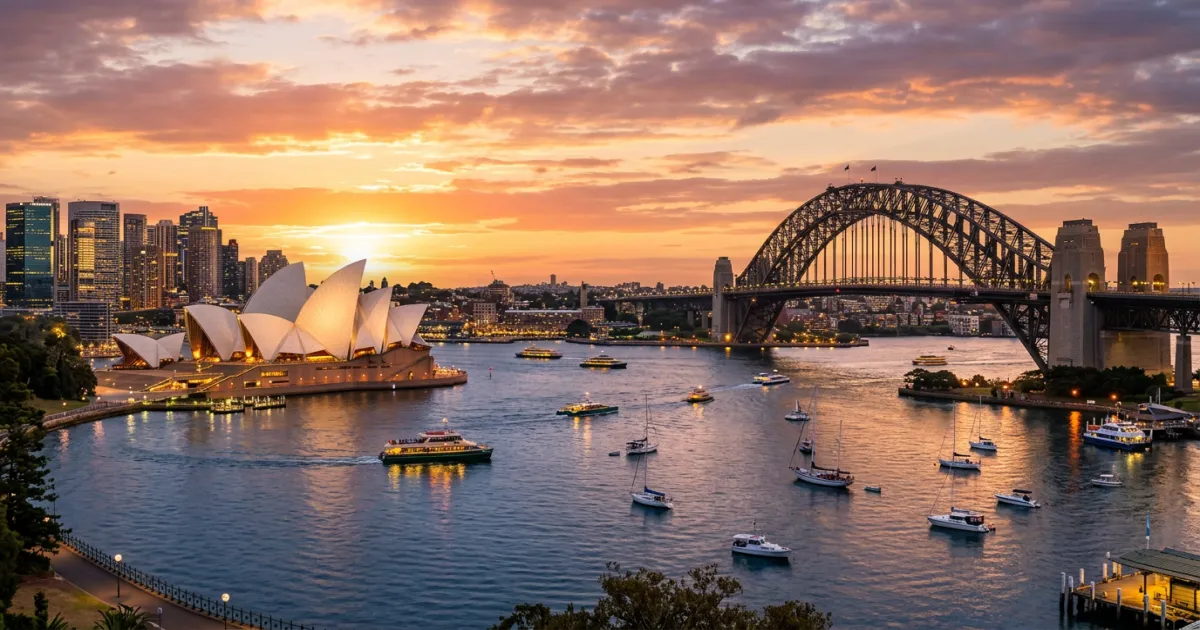
The Sydney Opera House and Harbour Bridge are the postcard images of Australia, and they genuinely deliver in person. Walk across the bridge or book a bridge climb for panoramic harbour views. Explore the Royal Botanic Garden, wander through The Rocks neighborhood, catch the ferry to Manly Beach, and spend a day at Bondi Beach with the famous Bondi to Coogee coastal walk.
If you have a layover at Sydney Airport, check our guide for tips on making the most of your time.
Great Barrier Reef
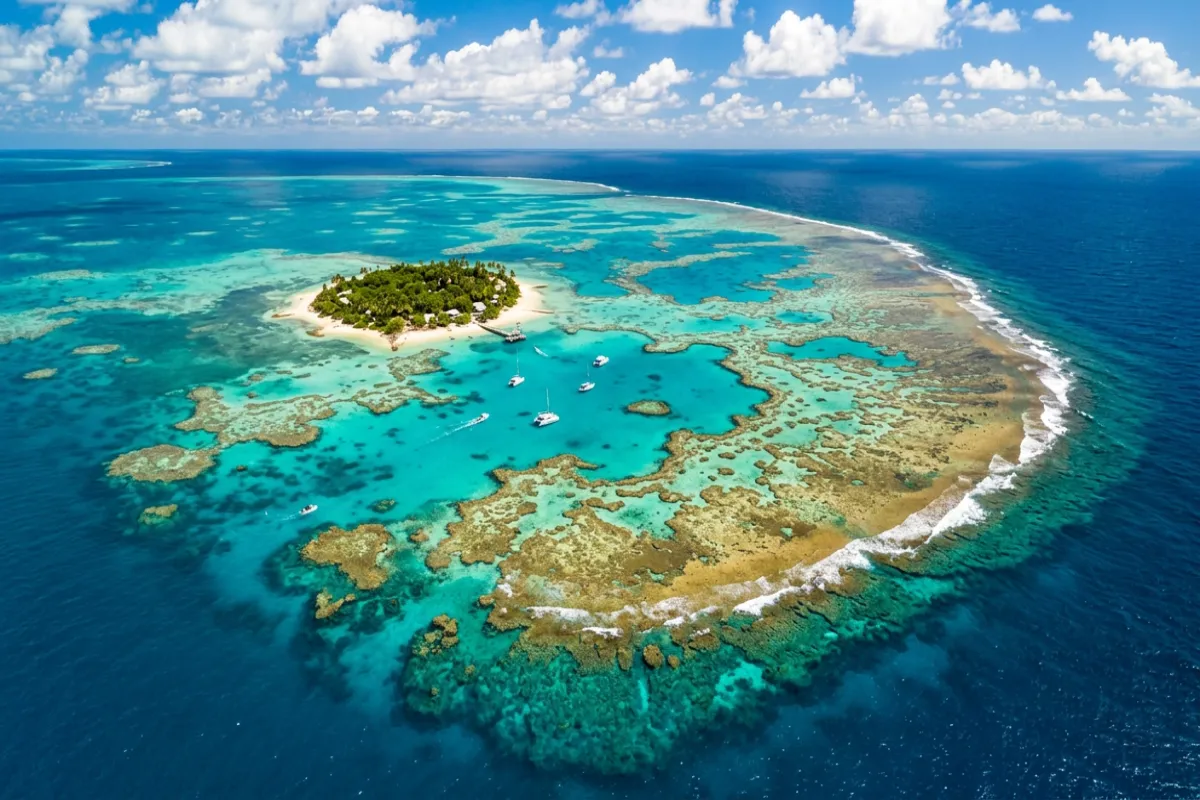
The world’s largest coral reef system stretches over 2,300 kilometers along the Queensland coast. Snorkeling and diving trips depart from Cairns and Port Douglas daily. Choose a day trip to the outer reef for the best coral and visibility, or spend a night on a liveaboard for a deeper experience. The reef is a living ecosystem under pressure from climate change, so choose reef-safe sunscreen and responsible tour operators.
Uluru (Ayers Rock)
Rising 348 meters from the flat red desert, Uluru is one of the most recognizable natural landmarks on the planet. It is sacred to the Anangu Aboriginal people, and climbing is prohibited. Instead, walk the 10-kilometer base loop at sunrise or sunset when the rock glows red and orange. Nearby Kata Tjuta (the Olgas) offers the Valley of the Winds walk, which many visitors say is equally impressive.
Melbourne
Australia’s cultural capital is famous for its laneway street art, cafe culture, live music scene, and world-class food. Explore Hosier Lane, visit the Queen Victoria Market, catch a game of Australian Rules Football at the MCG, and spend an evening in one of the rooftop bars. Melbourne consistently ranks among the world’s most livable cities, and you will quickly see why.
Great Ocean Road
This 243-kilometer coastal drive from Torquay to Allansford is one of the world’s great road trips. The Twelve Apostles limestone stacks are the headline attraction, but the entire route offers dramatic cliffs, surf beaches, rainforest walks, and small seaside towns. Allow at least two days to drive it properly.
More Must-See Destinations
- Blue Mountains: Just 90 minutes west of Sydney. Dramatic sandstone cliffs, eucalyptus forests, and the famous Three Sisters rock formation.
- Daintree Rainforest: The world’s oldest tropical rainforest, north of Cairns. Zip-lining, river cruises, and beaches where the rainforest meets the reef.
- Kangaroo Island: Off the coast of South Australia. Wildlife encounters with sea lions, koalas, and echidnas in their natural habitat.
- Tasmania: Often overlooked, Tasmania offers Cradle Mountain, the Bay of Fires, MONA (Museum of Old and New Art), and some of Australia’s best hiking.
- Whitsunday Islands and Whitehaven Beach: Stunning white silica sand beach accessible by boat from Airlie Beach. Often ranked among the world’s best beaches.
Wildlife: What to See (and What to Watch For)
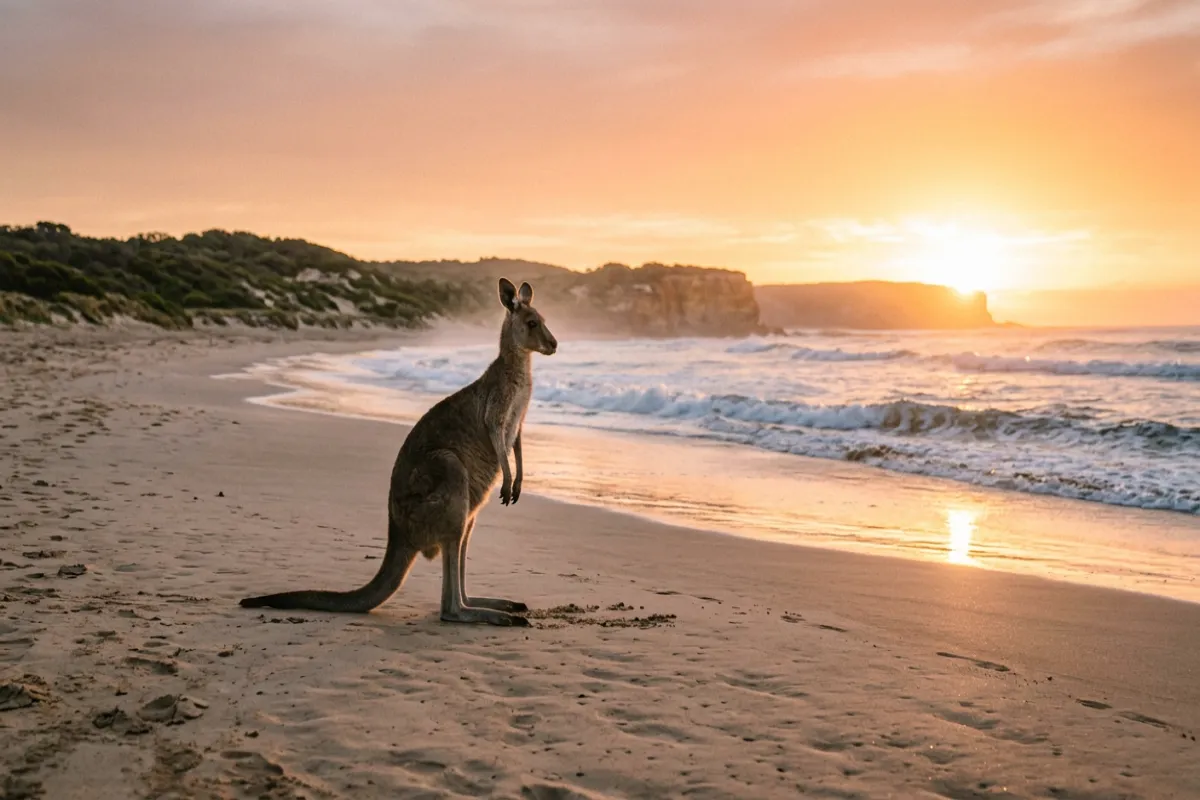
Australia’s wildlife is unlike anything else on earth. You will almost certainly encounter kangaroos and wallabies, whether in the wild or at wildlife sanctuaries. Koalas are harder to spot in the wild, but sanctuaries in Queensland and South Australia offer guaranteed sightings. If you are lucky, you might spot a platypus at dawn in rivers around Eungella National Park in Queensland or in Tasmanian streams.
Safety warnings:
- Snakes: Australia has many venomous species, but bites are rare. Stick to paths, wear closed shoes in bushland, and never reach into logs or rock crevices.
- Spiders: The funnel-web and redback are the ones to know about. Shake out shoes left outside and check under outdoor furniture.
- Box jellyfish: Present in tropical waters (north of Bundaberg) from October through May. Swim only at patrolled beaches with stinger nets, or wear a full-body stinger suit.
- Saltwater crocodiles: Found in rivers, estuaries, and coastal waters across Northern Australia. Obey warning signs, never swim in unmarked waterways in the Top End, and keep your distance from water edges.
Despite Australia’s reputation, most travelers never have a dangerous wildlife encounter. Use common sense and follow local signage.
Food and Drink
Australia’s food scene has evolved dramatically. Major cities, especially Melbourne and Sydney, are among the best food destinations in the world.
- Cafe culture: Australians take coffee seriously. Flat whites, long blacks, and specialty roasts are everywhere. Melbourne’s cafe scene is legendary, and even small towns often have excellent coffee.
- Must-try foods: Meat pies (a national staple available from bakeries everywhere), barramundi (Australia’s signature fish), Tim Tams (chocolate biscuits), Vegemite on toast (an acquired taste, start with a thin layer), and fish and chips by the harbour.
- Wine regions: Australia is one of the world’s great wine countries. The Barossa Valley (South Australia) is known for Shiraz, Hunter Valley (New South Wales) for Semillon, and Margaret River (Western Australia) for Cabernet Sauvignon and Chardonnay. Most regions offer cellar door tastings.
- Tipping: Not expected or required in Australia. Hospitality workers earn a living wage. You can round up a restaurant bill or leave 10% for exceptional service, but nobody will look sideways if you don’t tip.
Practical Tips for First-Time Visitors
- Sunscreen is not optional. Australia sits under a thinner ozone layer, and UV radiation is significantly stronger than in the US or Europe. Use SPF 50+ broad-spectrum sunscreen, reapply every two hours, and wear a hat. Sunburn can happen in as little as 15 minutes during summer, even on overcast days.
- Distances are deceptive. Always check Google Maps before planning a drive. What looks like a short hop on the map can be a 5-hour journey through empty countryside. Plan fuel stops in advance for remote areas.
- Driving on the left. If you are renting a car, take extra care at intersections and roundabouts. The most common mistake American drivers make is turning into the wrong lane. Kangaroo collisions are also a real risk at dawn and dusk in rural areas.
- Don’t swim at unmarked beaches. Rip currents, marine stingers, and crocodiles (in the north) make unpatrolled beaches genuinely dangerous. Always swim between the red and yellow flags at patrolled beaches.
- Phone coverage: Telstra has the best network coverage across Australia, including rural and remote areas. Optus and Vodafone work fine in cities but drop off quickly outside metro zones. Buy a prepaid SIM at the airport on arrival.
- Power outlets: Australia uses Type I plugs (angled two or three pins). Bring a universal adapter.
- Tap water: Safe to drink throughout Australia.
- Emergency number: 000 (triple zero) for police, fire, or ambulance.
Sample 14-Day East Coast Australia Itinerary
This itinerary covers the most popular highlights along the east coast. Adjust timing based on your interests and pace.
Days 1-3: Sydney
Arrive and recover from jet lag. Visit the Opera House and Harbour Bridge, explore The Rocks and Circular Quay, walk the Bondi to Coogee coastal trail, visit Taronga Zoo by ferry, and spend an afternoon in the Blue Mountains (day trip). Sydney’s airport is well connected to the city center via train (about 15 minutes to Central Station).
Days 4-6: Cairns and the Great Barrier Reef
Fly from Sydney to Cairns (about 3 hours). Take a full-day reef snorkeling or diving trip. Visit the Daintree Rainforest on a day tour from Cairns or Port Douglas. Spend a morning at the Cairns Esplanade Lagoon, a free public swimming area right on the waterfront.
Days 7-8: Uluru
Fly from Cairns to Uluru (Ayers Rock Airport). Watch sunset over Uluru on arrival day. Walk the base trail at sunrise the next morning. Visit the Uluru-Kata Tjuta Cultural Centre to learn about Anangu culture, then hike the Valley of the Winds at Kata Tjuta in the afternoon. Fly out the next morning.
Days 9-11: Melbourne
Fly from Uluru to Melbourne. Explore the laneways (Hosier Lane, Centre Place, Degraves Street), visit Queen Victoria Market, catch live music in Fitzroy, tour the Melbourne Cricket Ground, and eat your way through the restaurant scene. Take a half-day trip to the Yarra Valley wine region if time allows.
Days 12-13: Great Ocean Road
Rent a car and drive the Great Ocean Road. Stop at Bells Beach, Lorne, Apollo Bay, and the Twelve Apostles. Stay overnight in Apollo Bay or Port Campbell. Return to Melbourne via the inland route for a different perspective.
Day 14: Departure
Final morning in Melbourne for last-minute shopping or a farewell flat white. Fly home from Melbourne or connect through Sydney.
Estimated budget for this itinerary: $3,500 to $6,000 USD per person (excluding international flights), depending on accommodation choices and activity preferences.
Planning Tools
Getting organized before a trip this big saves you time and money. These free tools can help.
- How to plan a trip covers the step-by-step process from choosing a destination to boarding your flight.
- Yopki’s AI Travel Planner can generate a day-by-day itinerary for your Australia trip in seconds.
- Our vacation itinerary template helps you organize flights, hotels, and activities in one document.
- Use the travel budget template to estimate and track your spending across accommodations, food, transport, and activities.
For more country-specific planning advice, check out our guide to planning a trip to Japan, another bucket-list destination that pairs well with an Australia visit thanks to convenient flight connections through Tokyo or Osaka.
Frequently Asked Questions
Do I need a visa to visit Australia from the US?
Yes. US citizens need an Electronic Travel Authority (ETA, subclass 601). Apply through the official Australian ETA app. The fee is AUD $20 (~USD $13), and approval is usually instant. The ETA allows multiple entries over 12 months with stays up to 90 days each.
How much does a trip to Australia cost?
A two-week trip to Australia typically costs $3,500 to $6,000 USD per person (excluding international flights) for mid-range travel. Budget travelers can spend less by using hostels, cooking their own meals, and taking buses. International round-trip flights from the US range from $800 to $2,000.
Is Australia safe for tourists?
Australia is one of the safest travel destinations in the world. Petty theft can occur in tourist areas, so use standard precautions. The main risks come from the natural environment: strong sun, ocean currents, and wildlife. Follow local safety signage and swim at patrolled beaches.
What is the best time of year to visit Australia?
September through November (spring) and March through May (fall) offer the best combination of good weather, fewer crowds, and reasonable prices for most regions. Summer (December through February) is peak season with the highest prices and crowds.
How far in advance should I book?
Book international flights 3 to 6 months ahead for the best prices. Accommodation in popular areas (Sydney during New Year’s, any coastal town in January) should be booked at least 2 to 3 months in advance. Great Barrier Reef tours and popular experiences can sell out in peak season, so book those as soon as your dates are confirmed.
Can I drink the tap water in Australia?
Yes. Tap water is safe to drink throughout Australia. Bring a reusable water bottle to save money and reduce plastic waste.
Do I need travel insurance for Australia?
Travel insurance is strongly recommended. Australia has excellent healthcare, but medical costs for non-residents are high. A hospital visit without insurance can cost thousands of dollars. Make sure your policy covers medical evacuation if you plan to visit remote areas.