| Azores Quick Facts | |
|---|---|
| Country | Portugal (autonomous region) |
| Currency | Euro (EUR) |
| Language | Portuguese. English in tourist areas |
| Time Zone | AZOT (UTC-1), one hour behind mainland Portugal |
| Visa (US) | Not required for stays under 90 days (Schengen Area) |
| Daily Budget | $60 to $200+ per person |
| Best Time | June to September |
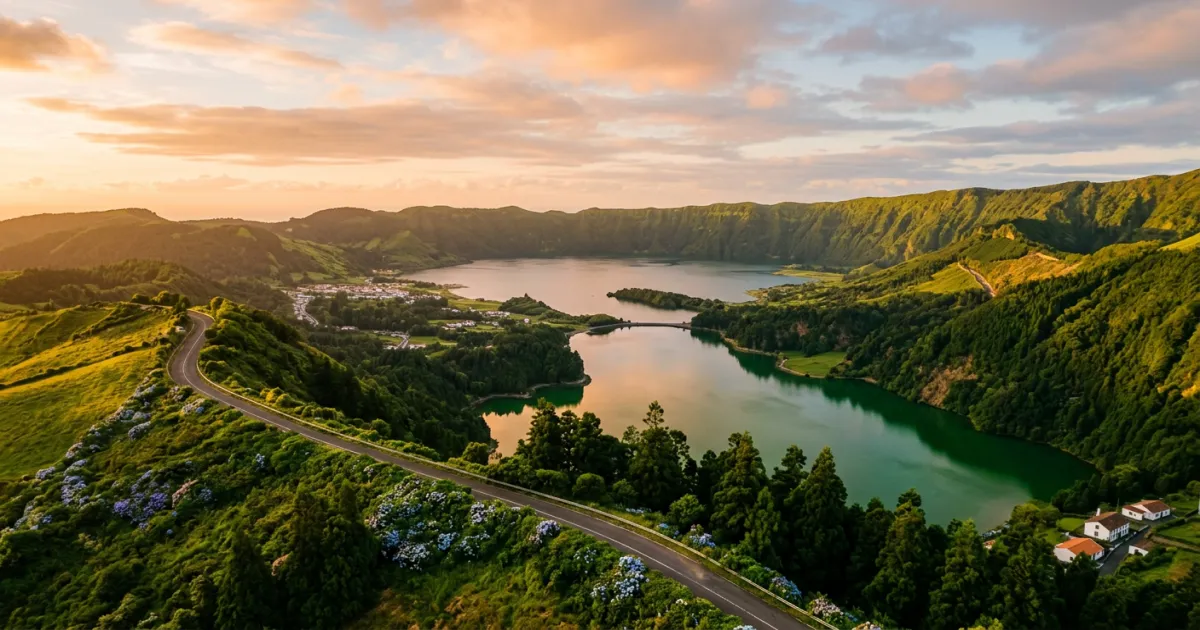
The Azores are a chain of nine volcanic islands in the middle of the Atlantic Ocean, about 900 miles west of mainland Portugal. Think of them as the Hawaii of Europe: lush green landscapes, volcanic crater lakes, hot springs, whale watching, and a pace of life that feels completely removed from the rest of the continent. Sao Miguel, the largest island, is where most visitors start, with its dramatic calderas, thermal pools, and tea plantations (the only ones in Europe). The Azores have become increasingly popular with adventure travelers and nature lovers looking for a European destination that feels genuinely wild and uncrowded.
For a broader framework for organizing any trip, our how to plan a trip guide covers the fundamentals.
Best Time to Visit Azores
June through September is the warmest and driest season with temperatures in the upper 60s to mid-70s F. Even in summer, expect some clouds and occasional rain as the Azores have a famously changeable climate (locals say you can experience four seasons in one day). April through May brings hydrangea blooms and whale watching season (sperm whales are present year-round, but blue whales visit from March through June). Winter (November through February) is cooler (55 to 60 F) and wetter but still mild, and hotel rates drop significantly.
Getting to Azores
Direct flights from the US to Ponta Delgada (PDL) on Sao Miguel operate from Boston (about 4.5 hours), New York, and other East Coast cities on Azores Airlines and SATA. The Azores are actually closer to the US East Coast than any other European destination. From mainland Portugal, TAP and Ryanair fly to Ponta Delgada in about 2.5 hours. Inter-island flights and ferries connect the nine islands (SATA Air Acores handles most inter-island flights). A rental car is essential on each island.
Top Things to Do in Azores
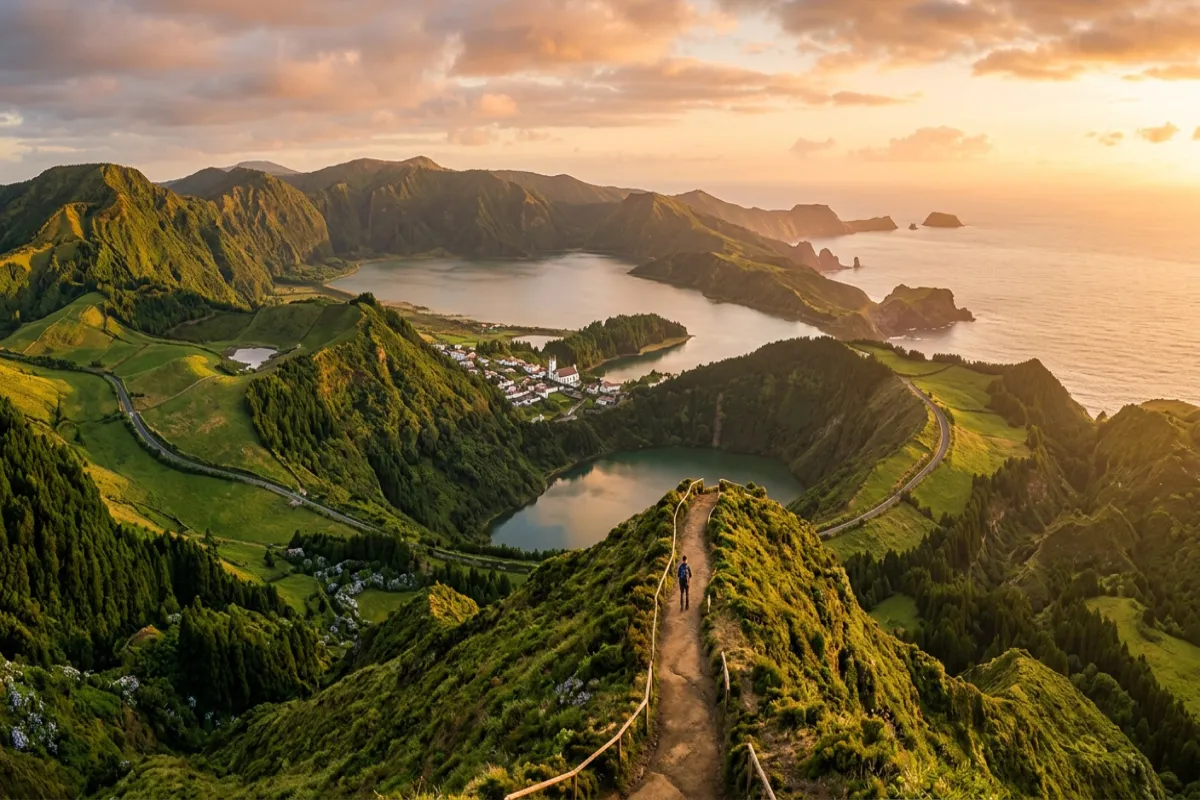
- Sete Cidades Twin Lakes: Two crater lakes, one green and one blue, inside a massive caldera on the western end of Sao Miguel. The viewpoint at Vista do Rei is one of the most photographed spots in the Azores. Hike down to the lakes or drive around the rim.
- Furnas Valley Hot Springs: A volcanic valley with bubbling fumaroles, hot springs, and the famous Terra Nostra Park with its iron-rich thermal pool (golden-brown water, naturally heated). Cozido, a traditional stew cooked underground by volcanic heat, is a must-try.
- Whale Watching: The Azores are one of the best whale watching destinations in the world. Over 20 species pass through, including sperm whales (year-round), blue whales (spring), and several dolphin species. Tours run from Ponta Delgada and other ports ($50 to $80).
- Lagoa do Fogo: A pristine crater lake surrounded by endemic vegetation in the center of Sao Miguel. The hike down to the lake (about 1 hour round trip) leads to a secluded shore. Often shrouded in clouds, which adds to the mystique.
- Tea Plantations: Gorreana and Porto Formoso are the only tea plantations in Europe, operating since the 1800s. Tour the factory, taste the tea, and walk through the green rows of tea plants. Both are free to visit.
- Islet of Vila Franca: A volcanic crater partially submerged in the ocean, creating a natural swimming pool off the southeast coast of Sao Miguel. Access by boat in summer only (limited daily visitors). One of the most unique swimming spots in Europe.
Where to Stay
On Sao Miguel, Ponta Delgada is the main base with the most hotels, restaurants, and services. Hotels range from $60 to $200 per night mid-range. Furnas is a good base for the eastern part of the island and hot springs ($50 to $150). Rural guesthouses and Airbnbs across the island offer atmospheric stays from $40 to $100. On other islands, accommodation is more limited and should be booked ahead. Overall, the Azores are very affordable by European standards.
Sample 5-Day Azores Itinerary
- Day 1-2: Ponta Delgada and West: Arrive in Ponta Delgada. Explore the waterfront and historic center. Day 2: drive west to Sete Cidades for the twin lakes viewpoint. Hike down to the lakes or around the crater rim. Visit a pineapple greenhouse (a local specialty) on the way back.
- Day 3: Furnas Valley: Drive east to Furnas. Visit Terra Nostra Park for a soak in the thermal pool. Walk through the fumarole area at Caldeiras. Try cozido das furnas for lunch. Afternoon at Lagoa das Furnas and the botanical garden.
- Day 4: Central Sao Miguel: Hike to Lagoa do Fogo (crater lake). Visit the Gorreana tea plantation. Afternoon on the coast at Ribeira Grande or the natural pools at Ponta da Ferraria (geothermally heated ocean water).
- Day 5: Ocean Day: Morning whale watching tour from Ponta Delgada or Vila Franca. Afternoon swimming at Islet of Vila Franca (summer) or exploring the east coast. Farewell seafood dinner in Ponta Delgada.
Budget Estimate
The Azores are among the most affordable destinations in Western Europe. Budget travelers can manage on $60 to $90 per day with guesthouses, bakery and cafe meals, and free hikes. Mid-range travelers should plan for $120 to $200 covering a comfortable hotel, restaurant meals, a whale watching tour ($50 to $80), car rental ($25 to $40 per day), and thermal pool entries ($8 to $10). Luxury is limited on the islands but high-end options exist in Ponta Delgada ($200 to $350). Food is excellent and cheap: a full meal with wine costs $12 to $25.
Planning Tools
Ready to start building your Azores trip? Our free AI trip planner can generate a custom itinerary based on your dates, budget, and interests.
Frequently Asked Questions
How many days do you need in the Azores?
Five days on Sao Miguel covers the highlights: crater lakes, hot springs, whale watching, and the coast. Seven to ten days lets you visit a second island (Faial for the marina and volcano, Flores for waterfalls, Pico for the mountain). Some travelers spend 2 weeks exploring multiple islands.
Is it hard to get to the Azores from the US?
Not at all. Direct flights from Boston take about 4.5 hours, making the Azores the closest European destination to the US East Coast. Flights from New York are about 5 hours. Azores Airlines and SATA operate the routes. Prices are often competitive, especially in shoulder season.
What is the weather really like in the Azores?
Changeable. The Azores sit in the mid-Atlantic and weather can shift quickly. You might have sunshine in the morning, fog at a crater lake, and clear skies again by afternoon. Layers and a rain jacket are essential even in summer. Temperatures are mild year-round (55 to 75 F) and it rarely gets truly hot or cold.