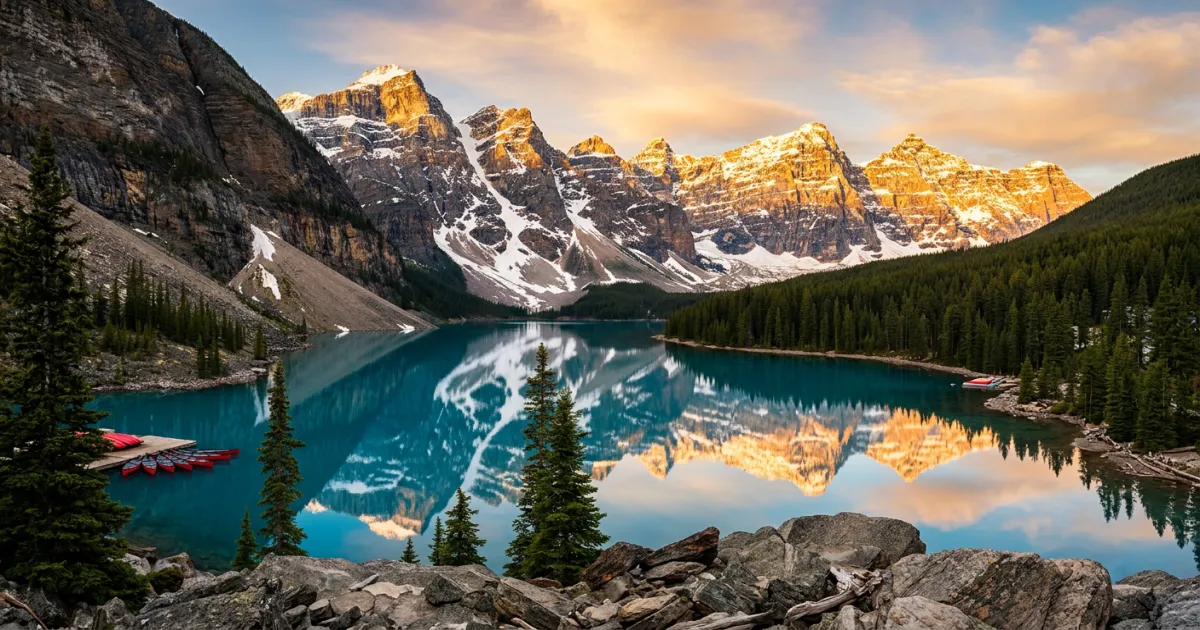
Banff National Park in the Canadian Rockies is one of the most stunning mountain destinations on earth. Turquoise glacial lakes, towering peaks, world-class hiking, and wildlife encounters make it a bucket-list trip for good reason. But Banff requires more planning than the average vacation, especially during peak season when shuttle reservations and parking restrictions are in play. This guide covers everything you need to plan your 2026 Banff trip, from park passes and shuttle systems to daily budgets and a 5-day itinerary.
If you are new to planning a big trip, start with our step-by-step guide to planning a trip for a framework you can apply to any destination.
Quick Facts
- Location: Alberta, Canada, within the Canadian Rocky Mountains
- Size: 2,564 square miles (6,641 square kilometers), Canada’s first national park (established 1885)
- Currency: Canadian Dollar (CAD). Most places accept credit cards, but carry some cash for smaller vendors.
- Visa: U.S. citizens do not need a visa. A valid passport is required. Citizens of most other countries need an Electronic Travel Authorization (eTA) or visa.
- Time zone: Mountain Standard Time (MST), same as Denver and Calgary
- Park pass required: Yes, a Parks Canada pass is needed for all visitors
- Elevation: Banff townsite sits at 4,537 feet (1,383 meters). Many trails and passes exceed 7,000 feet.
- Language: English (French also official in Canada, but English is universal in Alberta)
Best Time to Visit Banff
Banff is a year-round destination, but the experience changes dramatically with the seasons.
Summer (June to September)
June through September is prime season. Trails are snow-free, lakes thaw to their famous turquoise color, and daylight stretches past 9 PM. July and August are the warmest months, with daytime highs around 68 to 77 degrees Fahrenheit (20 to 25 Celsius) at lower elevations. These are also the busiest months, with packed parking lots and sold-out accommodations.
Shoulder months (June and September) are ideal for visitors who want good weather without peak crowds. Lake Louise and Moraine Lake typically thaw by mid-June. September brings fall colors, thinner crowds, and cooler temperatures around 50 to 60 degrees Fahrenheit (10 to 15 Celsius).
Winter (December to March)
Winter transforms Banff into a ski and snowboard destination. Three world-class resorts operate within the park: Sunshine Village, Lake Louise Ski Resort, and Mt. Norquay. Temperatures regularly drop below zero Fahrenheit (minus 18 Celsius), but the snow-covered peaks and frozen lakes are breathtaking. The Banff Upper Hot Springs are especially popular in winter.
Shoulder Seasons (April to May, October to November)
Spring and late fall are the quietest and cheapest times to visit. Many trails remain snow-covered, and some roads and facilities close. These months suit travelers who want solitude and lower prices but can handle unpredictable weather.
How Long to Spend in Banff
Plan 3 to 5 days to see Banff’s highlights at a comfortable pace. Three days covers Lake Louise, Moraine Lake, Johnston Canyon, and the Banff townsite area. Five days lets you add longer hikes, the Banff Gondola, Lake Minnewanka, and more time at each stop without rushing.
If you want to drive the Icefields Parkway to Jasper, add 2 to 3 more days. The 144-mile (232 km) highway from Lake Louise to Jasper is one of the most scenic drives in the world, and rushing it defeats the purpose. A full Banff-plus-Jasper trip runs 7 to 10 days.
Use our free road trip itinerary template to map out your daily stops and driving times.
Budget and Costs
Park Pass Fees (2026)
- Daily pass (adult): $12.25 CAD per person
- Daily pass (family/group, up to 7 in one vehicle): $22.50 CAD
- Youth (17 and under): Free
- Annual Discovery Pass (adult): $83.50 CAD
- Annual Discovery Pass (family/group): $167.50 CAD
Important for 2026: Parks Canada is offering free admission from June 19 to September 7, 2026, through the Canada Strong Pass initiative. This covers entry to all national parks, including Banff. If your trip falls within these dates, you will not need to purchase a park pass, but you should still confirm details on the Parks Canada website before your trip.
Daily Budget Ranges
- Budget ($80 to $120 CAD/day per person): Camping ($25 to $40/night per site), cooking your own meals, free hiking and wildlife viewing. Groceries are pricier in Banff townsite, so stock up in Calgary or Canmore.
- Mid-range ($250 to $350 CAD/day per person): Hotels in Banff townsite or Canmore ($200 to $400/night), restaurant meals ($50 to $80/day), and a mix of free and paid activities.
- Luxury ($500+ CAD/day per person): Fairmont properties like the Chateau Lake Louise or Banff Springs Hotel ($500 to $1,000+/night), fine dining ($100 to $200/day), guided tours, helicopter sightseeing.
Track your spending with our free travel budget template so you know where your money is going.
Getting to Banff
By Air
Fly into Calgary International Airport (YYC), the closest major airport to Banff. The drive from Calgary to Banff takes about 1 hour and 30 minutes (90 miles / 145 km) west on the Trans-Canada Highway (Highway 1). Calgary has direct flights from most major North American cities and several international routes.
Car Rental vs. Shuttle
A rental car is essential for the full Banff experience. You need a car to drive the Icefields Parkway, reach many trailheads, and explore at your own pace. Pick up your rental at Calgary Airport. Note that winter driving in the Rockies requires winter tires (required by law from November 1 to March 31) and comfort with mountain roads.
If you plan to stay in Banff townsite and use shuttles for Lake Louise and Moraine Lake, you can get by without a car. Several shuttle services run between Calgary Airport and Banff, including Brewster Express and On-It Regional Transit (though On-It is not operating during the 2026 summer season, so plan accordingly).
Getting Around the Park
Roam Transit operates bus routes within Banff, to Canmore, and between Banff and Lake Louise. It is a solid option for getting around the townsite and reaching some popular spots without a car. However, many trailheads and viewpoints are only accessible by car.
Where to Stay
Banff Townsite
The town of Banff is the main hub, with the widest selection of hotels, restaurants, shops, and services. Staying here puts you within walking distance of Bow Falls, the Banff Gondola, and multiple trailheads. Hotels range from budget-friendly hostels like HI Banff Alpine Centre ($40 to $80/night in dorms) to mid-range options ($200 to $400/night) and the iconic Fairmont Banff Springs Hotel ($500 to $1,000+/night).
Lake Louise Area
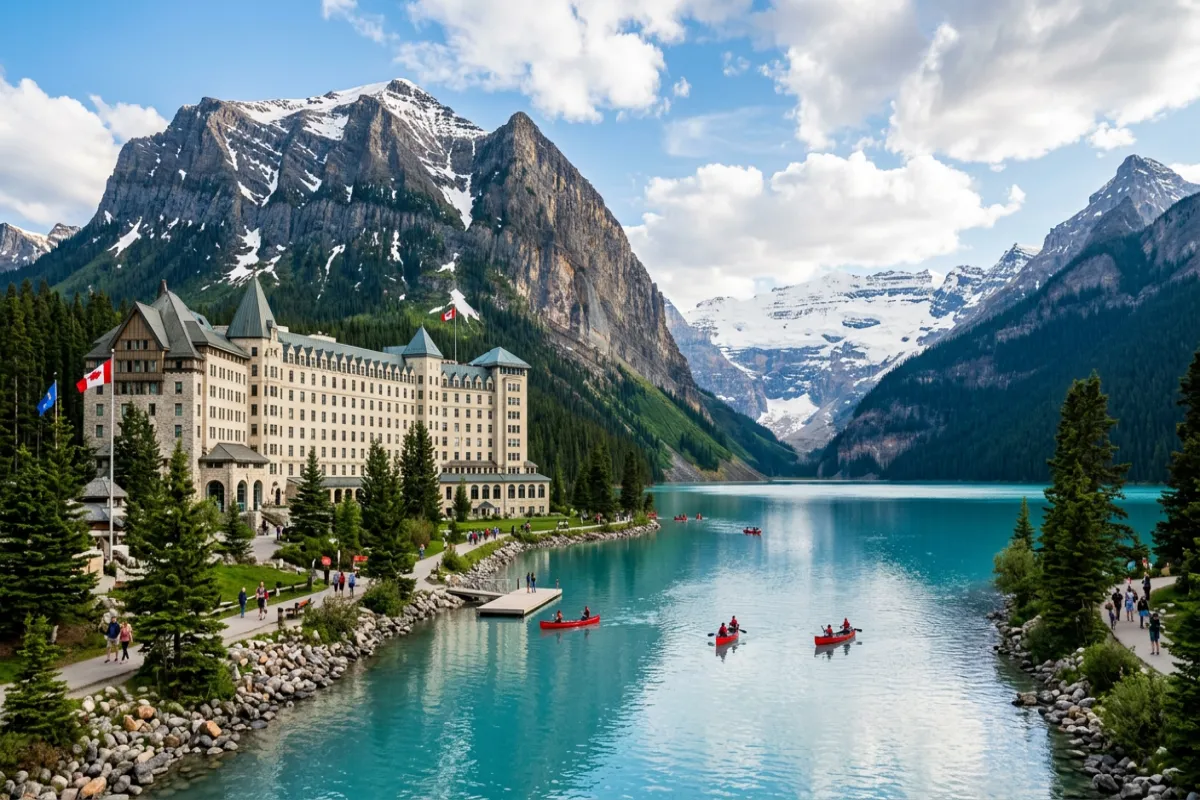
Staying near Lake Louise puts you closer to Moraine Lake, the Plain of Six Glaciers trail, and the start of the Icefields Parkway. Options include the Fairmont Chateau Lake Louise (splurge), Lake Louise Inn (mid-range), and the HI Lake Louise Alpine Centre (budget). Availability is limited, so book well in advance for summer dates.
Canmore
Canmore sits just outside the park boundary, about 20 minutes east of Banff townsite. It is a popular base because accommodations cost 20 to 40 percent less than comparable options in Banff. Canmore has its own dining scene, grocery stores, and outdoor activities. The trade-off is the daily drive into the park.
Camping
Banff has multiple frontcountry campgrounds, including Tunnel Mountain (closest to Banff townsite), Two Jack Lakeside, and Lake Louise Campground. Sites cost $25 to $40 CAD per night and fill up fast. Book through the Parks Canada reservation system as soon as dates open. Backcountry camping requires a wilderness pass ($10.50/night) and reservations.
Must-See Attractions
Lake Louise
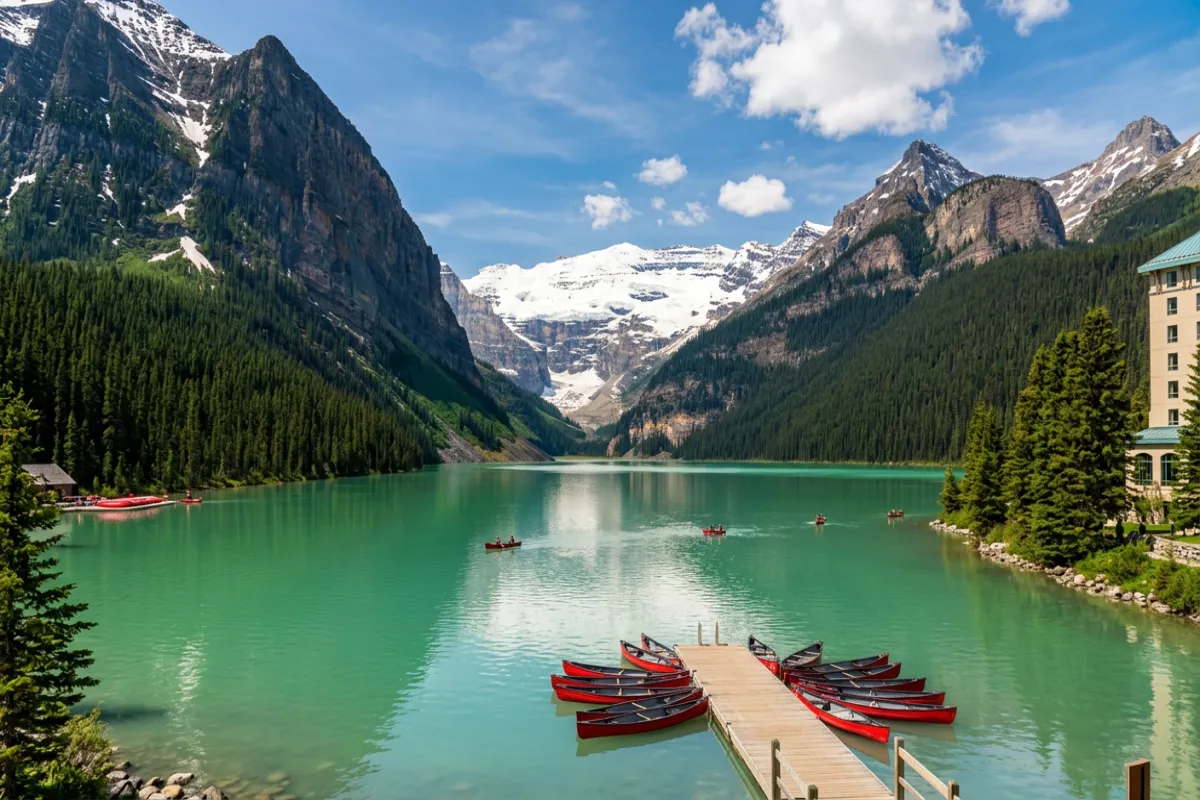
The most photographed lake in Canada. Its vivid turquoise water comes from glacial rock flour suspended in the meltwater from Victoria Glacier. Walk along the lakeshore, take the trail to the Plain of Six Glaciers Tea House, or simply sit and take in one of the most iconic views in the Rockies.
Moraine Lake
Often called the most beautiful lake in the world, Moraine Lake sits in the Valley of the Ten Peaks. The view from the Rockpile trail at the lake’s edge is the scene that used to appear on the Canadian $20 bill. Moraine Lake Road is closed to personal vehicles. You must take a Parks Canada shuttle or a commercial shuttle to visit (more on this in the Practical Tips section below).
Johnston Canyon
A paved and boardwalk trail through a limestone canyon with waterfalls at both the Lower Falls (1.1 km, about 30 minutes) and Upper Falls (2.7 km, about 1 hour). This is one of the most accessible and popular hikes in Banff. Go early in the morning or later in the evening to avoid crowds.
Banff Gondola
An 8-minute ride to the summit of Sulphur Mountain (7,486 feet / 2,281 meters), where you get panoramic views of six mountain ranges, the Bow Valley, and the town of Banff far below. There is a boardwalk at the top, a restaurant (Sky Bistro), and interpretive exhibits. Parking costs $17.50 CAD between mid-May and mid-October.
Icefields Parkway (Highway 93 North)
The 144-mile (232 km) drive from Lake Louise to Jasper is one of the world’s great road trips. You pass massive glaciers, waterfalls, turquoise lakes, and some of the tallest peaks in the Rockies. Major stops include Peyto Lake, the Columbia Icefield, Athabasca Falls, and Mistaya Canyon. Allow a full day each way to do it justice.
Peyto Lake
A turquoise lake shaped roughly like a wolf’s head, viewed from a lookout point along the Icefields Parkway. The short walk to the viewpoint takes about 15 minutes from the parking lot. The color is most intense in June and July when glacial meltwater peaks.
Bow Falls
A short, easy walk from Banff townsite along the Bow River leads to these wide, thundering falls. They are not tall, but the volume of water rushing over the rock shelf is impressive, especially in June when snowmelt is at its peak. This is a quick stop you can fit in before or after dinner.
Lake Minnewanka
The largest lake in Banff National Park, stretching 13 miles (21 km) through the mountains. Popular for boat cruises, fishing (permit required), and the lakeside trail. The drive from Banff townsite takes about 15 minutes.
Banff Upper Hot Springs
A natural hot spring pool at the base of Sulphur Mountain, with water temperatures around 98 to 104 degrees Fahrenheit (37 to 40 Celsius). The facility includes change rooms, lockers, and swimsuit rentals. It is a perfect way to end a long hiking day. Located near the Banff Gondola base station.
Hiking in Banff
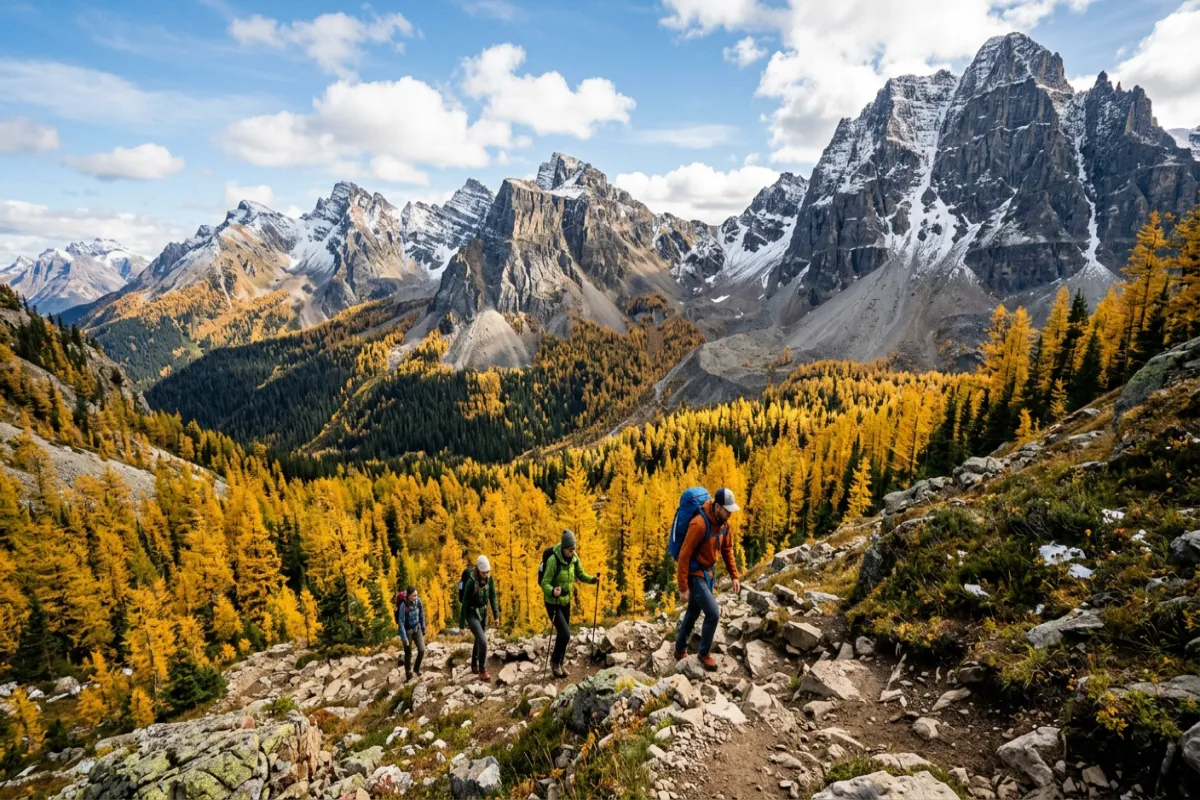
Banff has over 1,600 km (1,000 miles) of hiking trails ranging from flat lakeside strolls to serious alpine scrambles. Here are standout options by difficulty level.
Easy Hikes
- Johnston Canyon to Lower Falls: 1.1 km one way, paved and boardwalk trail through a slot canyon to a waterfall. Family-friendly and wheelchair-accessible for most of the route.
- Bow Falls Trail: 1.5 km one way from downtown Banff along the river. Flat, paved, and scenic.
- Lake Louise Lakeshore: 2 km one way along the north shore of Lake Louise. Flat gravel path with views of Victoria Glacier.
- Moraine Lake Rockpile: A short 300-meter trail to the classic viewpoint over Moraine Lake and the Valley of the Ten Peaks.
Moderate Hikes
- Plain of Six Glaciers: 5.3 km one way from the Chateau Lake Louise, ending at a historic tea house with views of Victoria Glacier. Elevation gain of about 365 meters.
- Sentinel Pass: 5.8 km one way from Moraine Lake, climbing to 2,611 meters (8,566 feet). One of the highest points reachable by maintained trail in the Canadian Rockies. Steep switchbacks but extraordinary views.
- Johnston Canyon to Ink Pots: 5.8 km one way, continuing past the Upper Falls to a meadow with colorful cold-water springs. Less crowded than the canyon itself.
Challenging Hikes
- Cory Pass Loop: 13 km loop near the town of Banff with 915 meters of elevation gain. Scrambling sections, exposed ridges, and incredible views of Mount Louis.
- Mount Temple Scramble: The highest peak in the Lake Louise area at 3,544 meters. A long day (about 15 km round trip with 1,700 meters of elevation gain). Requires scrambling experience and an early start.
- Skoki Loop: A multi-day backcountry route through alpine meadows, past glacial lakes, with a stay at the historic Skoki Lodge (one of the most remote commercial lodges in the Rockies).
Bear Safety on Trails
Banff is home to both grizzly and black bears. Carry bear spray on every hike and know how to use it. Make noise on the trail, especially around blind corners and near streams where bears cannot hear you approach. Never run from a bear. If you encounter a grizzly, speak calmly and back away slowly. Parks Canada sometimes closes trails due to bear activity, so check trail conditions before heading out.
Wildlife in Banff
Banff is one of the best places in North America to see large wildlife in their natural habitat.
- Grizzly bears: Found throughout the park, especially in alpine meadows and avalanche slopes. Keep at least 100 meters (330 feet) away at all times.
- Black bears: More common than grizzlies, often spotted along roadsides and in forested areas. Same 100-meter distance rule applies.
- Elk: Frequently seen in Banff townsite, on lawns, and near the Bow River. They look docile but can be aggressive, especially during the fall rut (September and October). Keep at least 30 meters away.
- Mountain goats: Look for them on rocky cliffs and alpine slopes, especially around Lake Louise and along the Icefields Parkway.
- Bighorn sheep: Often spotted along Highway 1 between Banff and Lake Louise, and near the Minnewanka Loop road.
- Moose, wolves, and cougars: Present but rarely seen. You are more likely to encounter them in the Icefields Parkway corridor and backcountry areas.
Never feed wildlife. It is illegal in national parks and dangerous for both animals and people. Fines for feeding or approaching wildlife can exceed $25,000 CAD.
Practical Tips for Visiting Banff
Moraine Lake Shuttle System
Moraine Lake Road has been closed to personal vehicles since 2023. The only way to reach Moraine Lake is by Parks Canada shuttle or a licensed commercial shuttle. The Parks Canada shuttle runs daily from June 1 to October 12, 2026, departing every 30 minutes between 6:30 AM and 6:00 PM. Shuttle reservations open on April 15, 2026, through the Parks Canada Reservation Service. Parks Canada releases 40 percent of tickets for the full season on that date, with the remaining 60 percent released on a rolling window at 8:00 AM. Book early because summer dates sell out fast.
Lake Louise Parking
Parking at Lake Louise Lakeshore is extremely limited and costs $42 CAD per vehicle per day (May 15 to October 13, 2026). The better option is the free Park and Ride lot at the Lake Louise Ski Resort (1 Whitehorn Road), where you can park for free and take a shuttle to the lake. The Park and Ride lot has ample space and is the recommended approach for most visitors.
Altitude and Weather
Banff townsite sits at 4,537 feet, and many trails and mountain passes exceed 7,000 feet. Most people adjust to this elevation without issues, but stay hydrated and take it easy on your first day if you are coming from sea level. Weather in the Rockies changes fast. Pack layers, rain gear, and warm clothing even in July and August. Snow is possible at higher elevations in any month.
Cell Service
You will have cell service in Banff townsite, Canmore, and Lake Louise village. Once you leave the main corridors, coverage becomes spotty or nonexistent, especially on the Icefields Parkway and backcountry trails. Download offline maps before you go.
Bear Spray
Carry bear spray on every hike, no exceptions. You can buy or rent canisters in Banff townsite at outdoor shops. Bear spray is not permitted on commercial flights, so plan to purchase it locally. Most shops sell canisters for $40 to $60 CAD.
Drones
Drones are completely prohibited in all Canadian national parks, including Banff. There are no exceptions for recreational or commercial use. Fines can reach $25,000 CAD plus equipment confiscation.
Sample 5-Day Banff Itinerary
Day 1: Arrive and Explore Banff Townsite
Fly into Calgary (YYC) and drive 90 minutes to Banff. Check into your hotel and spend the afternoon exploring the town. Walk along Banff Avenue, visit the shops and restaurants, then take the easy trail to Bow Falls before dinner. If you have energy, drive 15 minutes to the Vermilion Lakes viewpoint for sunset over the Rockies.
Day 2: Lake Louise and Moraine Lake
Start early. Take the shuttle to Moraine Lake first (book the earliest time slot you can get). Walk the Rockpile trail and spend time at the lakeshore. Return via shuttle and head to Lake Louise. Walk the lakeshore trail and, if you are up for more, hike the Plain of Six Glaciers trail (5.3 km one way) to the tea house. This is a full day, so pack lunch and plenty of water.
Day 3: Johnston Canyon and Banff Gondola
Head to Johnston Canyon early in the morning before the crowds arrive. Hike to the Lower Falls (30 minutes), continue to the Upper Falls (about 1 hour total), and optionally push on to the Ink Pots (about 2 hours total). In the afternoon, ride the Banff Gondola to the top of Sulphur Mountain for panoramic views. End the day at the Banff Upper Hot Springs, which are right next to the gondola base station.
Day 4: Lake Minnewanka and Two Jack Lake
Drive the Minnewanka Loop. Stop at Two Jack Lake for photos (the view of Mount Rundle reflected in the water is a classic shot), then continue to Lake Minnewanka for a boat cruise or lakeside hike. In the afternoon, explore the Cave and Basin National Historic Site, where the natural hot springs that led to the park’s creation were first discovered by railway workers in 1883. Use the evening for a wildlife drive along the Bow Valley Parkway, where elk, deer, and sometimes bears are active at dusk.
Day 5: Icefields Parkway or Departure
If you are extending your trip, start the Icefields Parkway drive toward Jasper. Stop at Peyto Lake (15-minute walk to viewpoint), Mistaya Canyon, the Columbia Icefield, and Athabasca Falls. If this is your last day, spend the morning on a final hike or revisit a favorite spot, then drive back to Calgary for your flight. Allow at least 2 hours for the drive to the airport, plus extra time for traffic and car return.
Planning Tools
Use our AI travel planner to build a custom Banff itinerary based on your dates, interests, and budget. It can help you figure out the right number of days, suggest hikes that match your fitness level, and map out a day-by-day plan.
If you are considering other mountain or nature destinations, our guides to Glacier National Park and Alaska cover similar planning details for two other incredible wilderness trips in North America.
Frequently Asked Questions
Do I need a passport to visit Banff?
Yes. Banff is in Alberta, Canada. U.S. citizens need a valid passport (no visa required). Citizens of most other countries need either a visa or an Electronic Travel Authorization (eTA) to enter Canada. Check the Government of Canada website for requirements specific to your nationality.
Can I visit Moraine Lake without a reservation?
It is very difficult. Moraine Lake Road is closed to personal vehicles, and the Parks Canada shuttle requires a reservation. Some commercial shuttle operators sell same-day tickets, but availability is limited, especially in July and August. Your best bet is to book Parks Canada shuttle reservations as soon as they open.
Is Banff worth visiting in winter?
Absolutely, if you enjoy skiing, snowboarding, snowshoeing, or winter photography. The three ski resorts in the park (Sunshine Village, Lake Louise, Mt. Norquay) offer excellent terrain. The hot springs, frozen waterfalls, and quieter trails are a different experience from summer, but equally beautiful.
How far is Banff from Jasper?
About 180 miles (290 km) via the Icefields Parkway (Highway 93 North). The drive takes roughly 3.5 to 4 hours without stops, but you should plan a full day to stop at viewpoints and short hikes along the way.
Do I need bear spray?
Yes. Parks Canada strongly recommends carrying bear spray on all hikes. Banff has healthy populations of both grizzly and black bears. Buy a canister when you arrive (you cannot fly with it) and keep it accessible, not buried in your pack.
Is the water in the lakes really that blue?
Yes. The intense turquoise color comes from rock flour, which is finely ground glacial sediment suspended in the meltwater. The color is most vivid from mid-June through August when glacial melt is highest. Earlier or later in the season, the lakes may appear more green or even gray.