| Charleston, South Carolina Quick Facts | |
|---|---|
| State | South Carolina, USA |
| Currency | US Dollar (USD) |
| Language | English |
| Time Zone | Eastern Time (ET) |
| Daily Budget | $100 to $400+ per person |
| Best Time | March to May, September to November |
| Getting There | Charleston International Airport (CHS) |
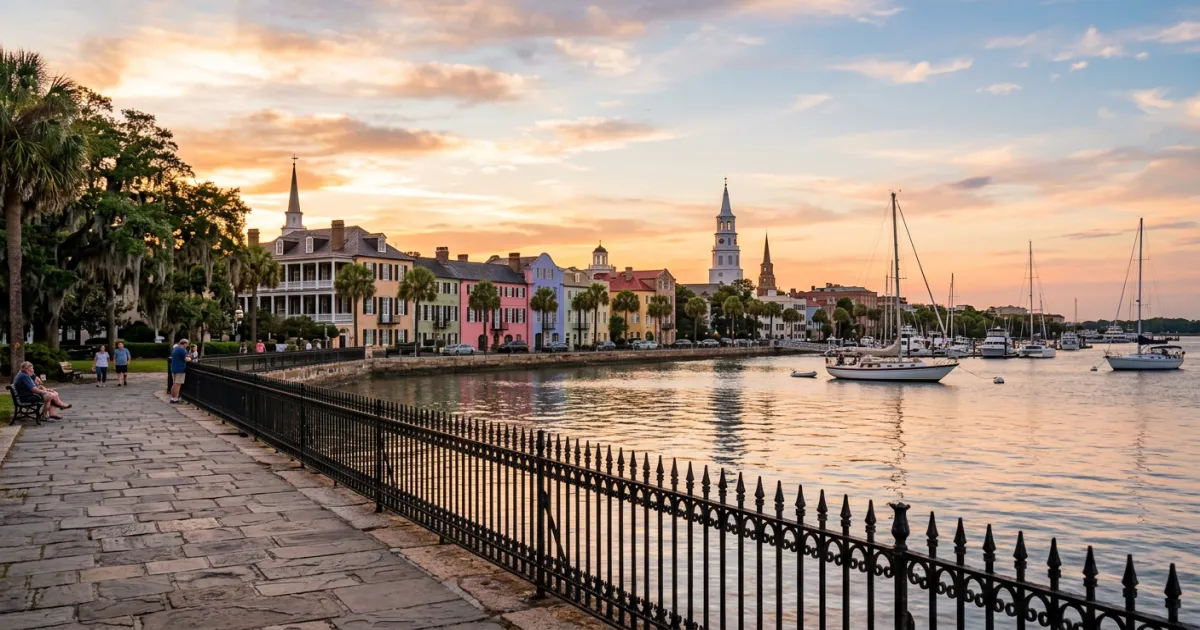
Charleston consistently ranks among the best cities in the United States for food, history, and charm, and once you visit, it is easy to understand why. The city’s historic district is a living museum of antebellum architecture, with pastel-colored houses, cobblestone streets, church steeples, and hidden gardens behind wrought-iron gates. The restaurant scene has earned national recognition, blending Lowcountry tradition with modern technique. Add in nearby beaches, a walkable downtown, and warm Southern hospitality, and Charleston delivers one of the most satisfying city trips on the East Coast.
For a broader framework for organizing any trip, our how to plan a trip guide covers the fundamentals.
Best Time to Visit Charleston, South Carolina
March through May and September through November are the best times to visit. Spring brings azalea and wisteria blooms, temperatures in the 70s, and the Spoleto Festival USA (late May through mid-June). Fall offers comfortable 70s weather, fewer crowds, and lower hotel rates. Summer (June through August) is hot and humid with highs in the 90s and frequent afternoon thunderstorms, plus the start of hurricane season. Winter (December through February) is mild by Northern standards with highs in the 50s to 60s, making it a pleasant off-season option.
Getting to Charleston, South Carolina
Charleston International Airport (CHS) is about 12 miles from downtown with direct flights from most major US cities. From the airport, the drive to downtown takes about 20 minutes. If driving, Charleston is roughly 5 hours south of Washington DC, 4 hours east of Atlanta, and 2 hours south of Myrtle Beach. Within downtown Charleston, walking is the best way to get around. The historic district is compact and flat. For beaches and outlying neighborhoods, a car or rideshare is needed.
Top Things to Do in Charleston, South Carolina
- Historic District Walking Tour: Walk the streets south of Broad (known locally as SOB) to see Rainbow Row, the Battery waterfront promenade, and dozens of historic churches. Guided walking tours cover history from Colonial era through Civil War.
- King Street Shopping and Dining: Charleston’s main commercial street divided into three sections: Upper King (restaurants, bars), Middle King (fashion, boutiques), and Lower King (antiques, galleries). Great for an afternoon stroll.
- Fort Sumter National Monument: Where the first shots of the Civil War were fired. Accessible only by ferry from Liberty Square or Patriots Point. The 30-minute boat ride across Charleston Harbor is scenic on its own.
- Charleston City Market: A historic open-air market dating to the 1790s spanning four city blocks. Local artisans sell sweetgrass baskets (a Gullah tradition), art, jewelry, and food. Open daily.
- Magnolia Plantation and Gardens: One of the oldest plantations in the South, with 60 acres of romantic-style gardens, a nature center, and boat tours through the swamp. About 20 minutes from downtown.
- Folly Beach: The closest beach to downtown Charleston, about 20 minutes south. A laid-back beach town with surfing, a fishing pier, and casual restaurants. Sullivan’s Island and Isle of Palms are other nearby beach options.
- Lowcountry Cuisine: Charleston’s food is reason enough to visit. Must-try dishes include shrimp and grits, she-crab soup, Lowcountry boil, and biscuits. Husk, FIG, and The Ordinary are among the most celebrated restaurants.
Where to Stay
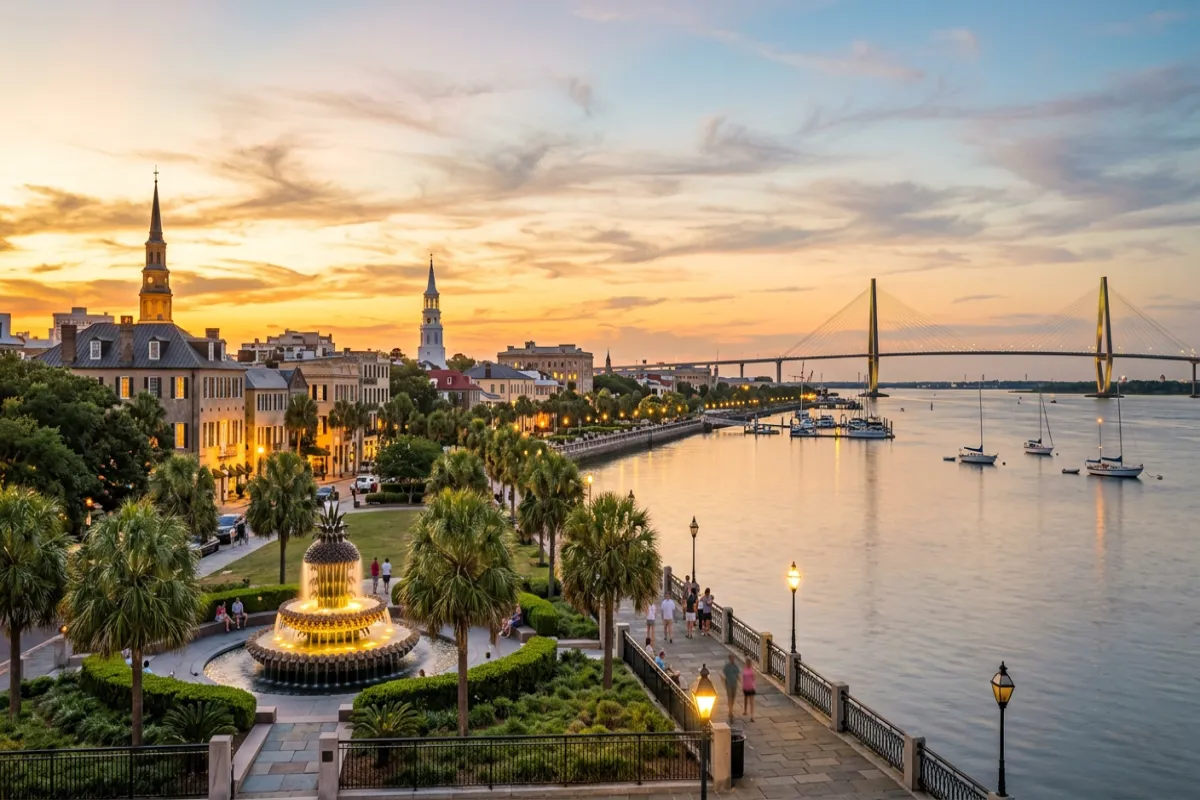
The Historic District (especially south of Calhoun Street) is the best area for first-time visitors. Walking distance to all major sights and restaurants. Boutique hotels and B&Bs in converted historic houses are the quintessential Charleston experience. Upper King Street is ideal if you want to be near the restaurant and bar scene. Mount Pleasant across the Cooper River is more affordable with chain hotels and easy access to Sullivan’s Island. Expect to pay $150 to $250 per night mid-range in the historic district, $250 to $500+ for boutique hotels, less in Mount Pleasant.

Sample 3-Day Charleston, South Carolina Itinerary
- Day 1 – Historic Downtown: Morning walk through the historic district: Rainbow Row, the Battery, and St. Michael’s Church. Midday visit to the Charleston City Market. Lunch on King Street. Afternoon tour of a historic house museum (Nathaniel Russell House or Edmondston-Alston House). Evening dinner at one of Charleston’s top restaurants. Reserve well in advance for Husk or FIG.
- Day 2 – Fort Sumter and Culture: Morning ferry to Fort Sumter National Monument (about 2.5 hours total including the visit). Afternoon at Magnolia Plantation and Gardens or the Charleston Museum. Evening cocktails at a rooftop bar, then dinner in the Upper King Street area.
- Day 3 – Beach Day: Morning drive to Folly Beach or Sullivan’s Island. Spend the day on the beach, grab fish tacos or a po’boy for lunch. Return to Charleston for final shopping on King Street. Farewell dinner featuring shrimp and grits or Lowcountry boil.
Budget Estimate
Budget travelers can manage on $100 to $150 per day with a hotel outside the historic district, casual restaurant meals, free walking tours, and free beach days. Mid-range travelers should plan for $200 to $350 covering a historic district hotel, restaurant meals including at least one upscale dinner, Fort Sumter ferry ($28 per adult), and a plantation tour ($15 to $25). Luxury travelers will spend $400 and up for boutique hotels, chef-driven dining, and private carriage tours. Free activities include walking the historic district, visiting churches, and strolling the City Market.
Planning Tools
Ready to start building your Charleston, South Carolina trip? Our free AI trip planner can generate a custom itinerary based on your dates, budget, and interests.
Frequently Asked Questions
How many days do you need in Charleston?
Three days is the sweet spot. That gives you a full day for the historic district, a day for Fort Sumter and a plantation, and a day for the beach. Two days works if you skip the beach. Four to five days lets you add Kiawah Island, a food tour, and deeper exploration of the outlying plantations and Lowcountry towns like Beaufort.
What is the best time of year for Charleston weather?
March through May and September through November are ideal with temperatures in the 70s and lower humidity. Summer (June through August) is very hot and humid with highs in the 90s. Winter is mild but some outdoor activities are less enjoyable. Spring is particularly beautiful with flowering gardens and outdoor festivals.
Is Charleston walkable?
The historic district and downtown are very walkable and flat. You can reach most major sights, restaurants, and shops on foot within the peninsula. A car or rideshare is needed for beaches (Folly Beach is about 20 minutes), plantations, and Mount Pleasant.