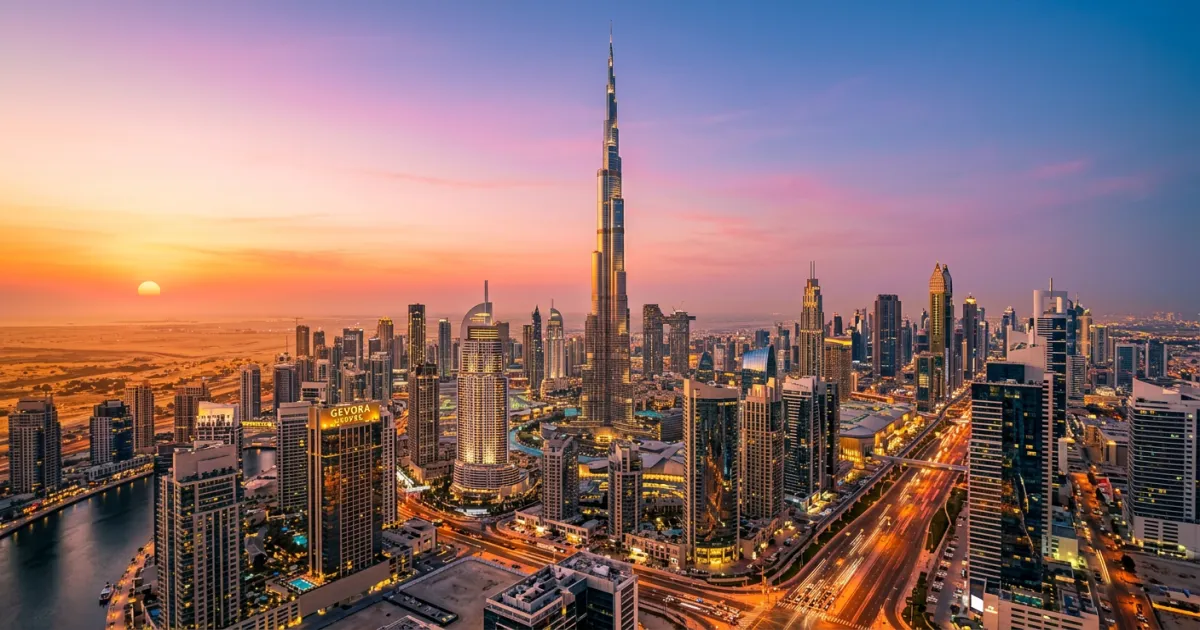
Dubai sits on the southeastern coast of the Persian Gulf, a city that has transformed from a small fishing and trading port into one of the world’s most visited destinations. With its record-breaking skyscrapers, desert adventures, world-class shopping, and beaches that stretch for miles, Dubai offers something for every type of traveler. Whether you are planning a luxury escape or a budget-friendly adventure, this guide covers everything you need to know to plan your Dubai trip in 2026.
Quick Facts About Dubai
- Country: United Arab Emirates (UAE)
- Currency: UAE Dirham (AED). 1 USD = approximately 3.67 AED (fixed peg)
- Language: Arabic is the official language, but English is widely spoken throughout the city
- Time Zone: Gulf Standard Time (UTC+4), no daylight saving time
- Climate: Hot desert climate with extremely hot summers and warm, pleasant winters
- Visa: US citizens receive a visa on arrival, valid for up to 90 days (no pre-approval needed)
- Passport: Must be valid for at least 6 months beyond your entry date
Planning your first international trip? Start with our step-by-step trip planning guide for a general framework before diving into Dubai specifics.
Best Time to Visit Dubai
Dubai’s weather plays a major role in when you should visit. The city essentially has two seasons: hot and hotter.
Peak Season: November through March
This is the ideal window for visiting Dubai. Daytime temperatures range from 70 to 85 degrees Fahrenheit (21 to 30 degrees Celsius), making outdoor activities comfortable. Skies are clear almost every day. This is also when Dubai hosts major events like the Dubai Shopping Festival (December through January) and the Dubai World Cup horse race. Hotel prices are at their highest during this period, especially around New Year’s Eve and the holiday season.
Shoulder Season: April and October
Temperatures climb to around 90 to 100 degrees Fahrenheit. It is still manageable if you plan outdoor activities for early morning or evening. Hotel prices drop noticeably, and attractions are less crowded. This is a smart window for travelers who want decent weather with lower costs.
Summer: May through September
Temperatures regularly exceed 110 degrees Fahrenheit (43 degrees Celsius) with high humidity. Outdoor sightseeing becomes difficult during midday hours. However, hotels slash prices by 40 to 60 percent, and indoor attractions like malls, Ski Dubai, and the Museum of the Future are perfectly comfortable. If you can handle the heat and plan around air-conditioned spaces, summer offers genuine deals.
Ramadan
In 2026, Ramadan runs from approximately February 18 through March 19. During this period, eating, drinking, and smoking in public during daylight hours is restricted out of respect for those fasting. Most restaurants in hotels remain open but may use screens or curtains. It is a culturally rich time to visit if you are respectful of local customs, and prices tend to be lower.
How Long to Spend in Dubai
Four to five days gives you enough time to hit the major highlights without feeling rushed. With that timeframe, you can explore Downtown Dubai, spend a day at the beach, take a desert safari, visit the souks, and still have time for a day trip to Abu Dhabi. If you are focused only on city highlights, three days works. For a deeper exploration including Abu Dhabi and more beach time, consider a full week.
Dubai Trip Budget: What to Expect
Dubai has a reputation as an expensive destination, but it is more flexible than most people assume. You can spend thousands per night at a luxury resort or find clean, comfortable hotels for under $100.
Daily Budget Ranges (Per Person)
- Budget traveler: $50 to $80 per day. Stay in hostels or budget hotels, eat shawarma and street food, use the Metro, and stick to free attractions like beaches, the Dubai Fountain, and mall exploration.
- Mid-range traveler: $150 to $250 per day. Stay in a 3 or 4-star hotel, enjoy a mix of casual and sit-down restaurants, use taxis, and visit 1 to 2 paid attractions daily.
- Luxury traveler: $500+ per day. Five-star resorts, fine dining, private desert safaris, and premium experiences throughout.
Keep in mind that many of Dubai’s best experiences are free: public beaches, the Dubai Fountain show, walking through the Gold Souk, exploring massive malls, and watching the sunset from various waterfront promenades.
Use our free travel budget template to map out your spending before you go.
Getting to Dubai and Getting Around
Flying In
Dubai International Airport (DXB) is one of the world’s busiest international airports, with direct flights from most major cities globally. Emirates, the city’s flagship carrier, operates a massive hub here. From the US, expect flight times of 12 to 16 hours depending on your departure city. Al Maktoum International Airport (DWC) handles some budget carriers but is farther from the city center.
Getting Around Dubai
- Dubai Metro: Clean, modern, air-conditioned, and cheap. The Red and Green lines connect most major attractions. A single ride costs 3 to 7.5 AED ($0.80 to $2). Buy a reloadable Nol card at any station.
- Taxis: Metered, affordable by Western standards, and widely available. A typical ride across the city costs 30 to 60 AED ($8 to $16). The starting fare is 12 AED.
- Uber and Careem: Both work reliably throughout Dubai and are often the easiest option.
- Water taxis and abras: Traditional wooden abra boats cross Dubai Creek for just 1 AED ($0.27). Water taxis also connect the Marina with other waterfront areas.
- Tram: The Dubai Tram runs through the Marina and JBR area, connecting to the Metro.
You do not need a rental car for a typical Dubai visit. The Metro and ride-hailing apps cover nearly everything.
Where to Stay in Dubai
Dubai is a spread-out city. Choosing the right neighborhood saves you time and money on transportation.
Downtown Dubai
Home to the Burj Khalifa, Dubai Mall, and the Dubai Fountain. This is the most central location for sightseeing. Hotels range from mid-range to ultra-luxury. Best for first-time visitors who want to be close to the main landmarks.
Dubai Marina and JBR
Dubai Marina is a waterfront district packed with restaurants, cafes, and a beautiful walkway. Jumeirah Beach Residence (JBR) sits right next door with direct beach access. This area has strong nightlife and dining options. Great for travelers who want a mix of beach time and city exploration.
Old Dubai (Deira and Bur Dubai)
The cultural heart of the city. Here you will find the Gold Souk, Spice Souk, and traditional architecture along Dubai Creek. Hotels are significantly cheaper than in newer areas. Ideal for budget travelers and those interested in Dubai’s history and authentic local culture.
Palm Jumeirah
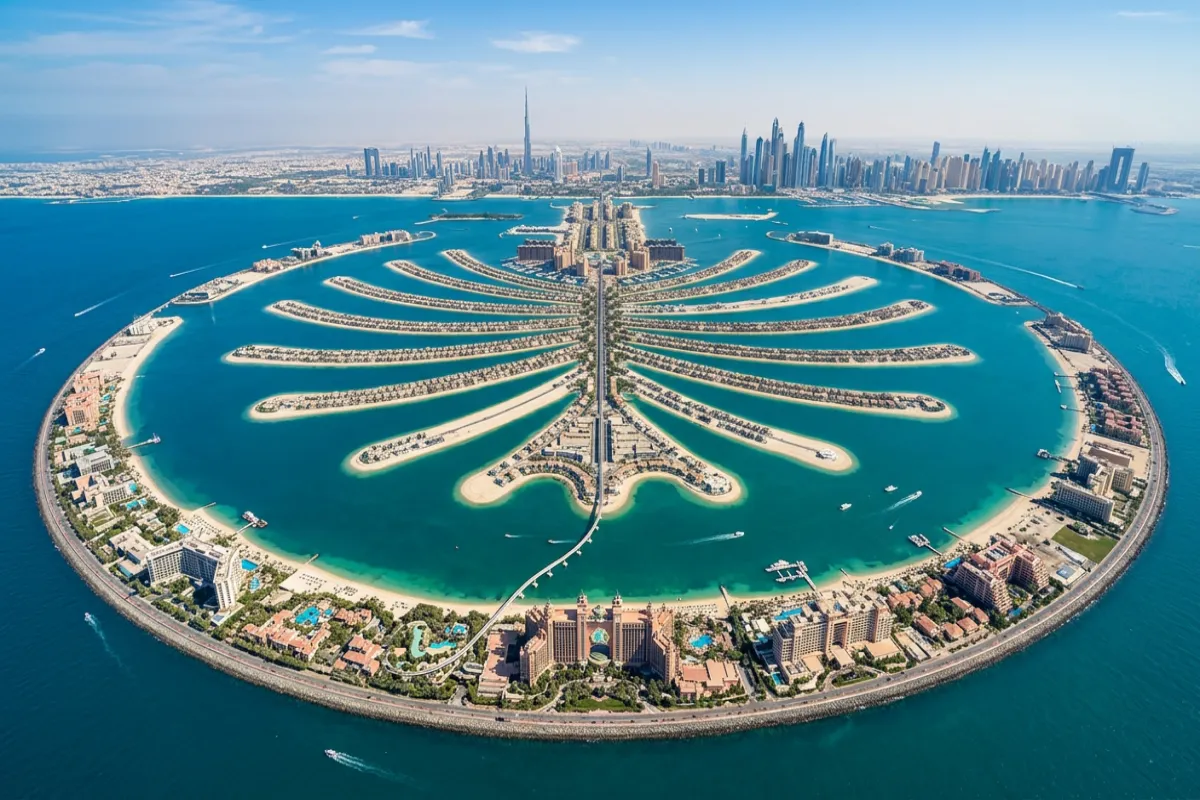
The iconic artificial island is home to luxury resorts including Atlantis The Palm and The Royal Atlantis. Staying here means resort-style living with private beaches. It is farther from city center attractions but connected by the Palm Monorail.
Must-Do Experiences in Dubai
Burj Khalifa
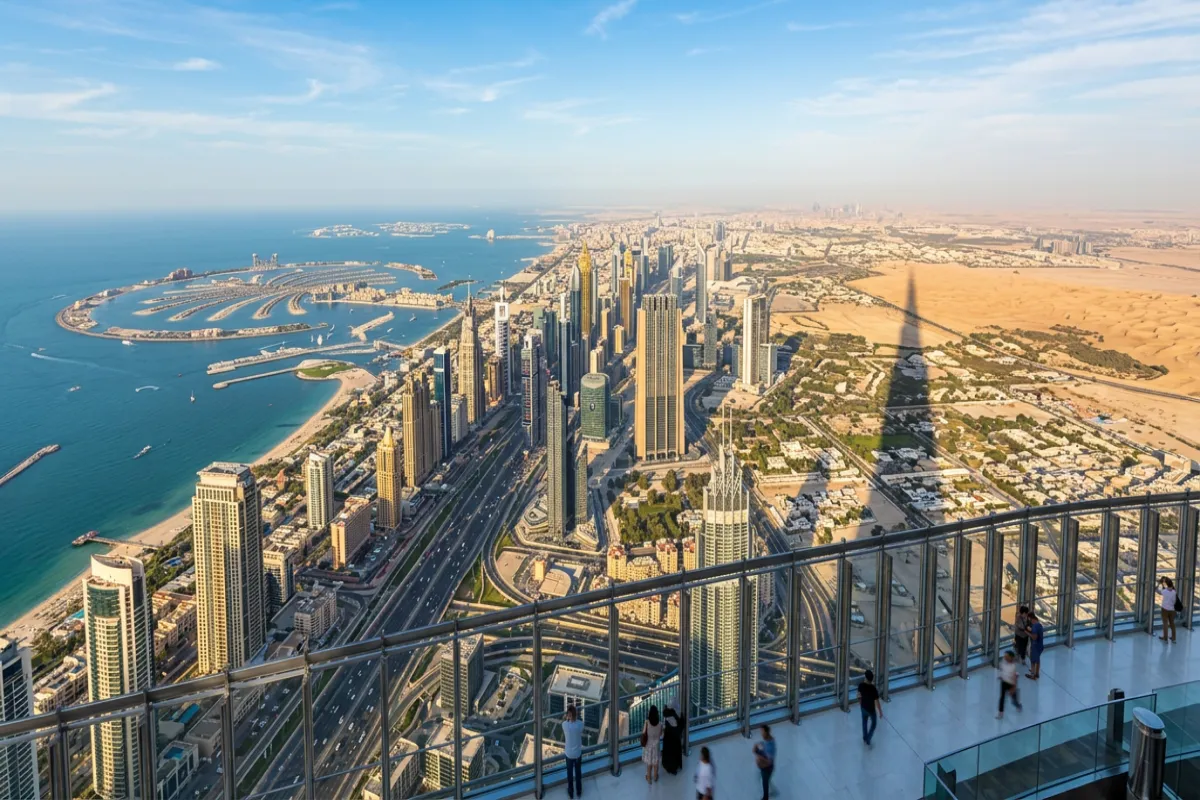
The world’s tallest building at 828 meters (2,717 feet). The observation deck on the 124th and 125th floors offers panoramic views of the entire city, desert, and ocean. Book tickets online in advance as they sell out quickly, especially for sunset time slots. The “At the Top SKY” experience on the 148th floor is pricier but less crowded.
Dubai Mall and the Dubai Fountain
One of the largest malls in the world with over 1,200 stores, an Olympic-sized ice rink, and the Dubai Aquarium and Underwater Zoo (visible for free through the glass panels, paid entry for the tunnel walk). The Dubai Fountain puts on a free water and light show every 30 minutes starting at 6 PM, set to music with jets shooting water up to 500 feet. Do not miss this.
Desert Safari
A quintessential Dubai experience. Most tours include dune bashing in a 4×4, camel riding, sandboarding, a traditional Bedouin-style camp dinner, and entertainment. Afternoon and evening safaris are the most popular. Expect to pay $40 to $80 for a standard group tour or $200+ for a private experience.
Gold Souk
Located in Deira, this covered market has hundreds of shops displaying gold jewelry, precious stones, and luxury watches. Bargaining is expected. Even if you are not buying, walking through the souk is a visual experience unlike anything else. Prices here are often lower than retail due to minimal markups on gold weight.
Dubai Frame
A 150-meter-tall picture frame-shaped structure that offers views of both old and new Dubai from its glass-floored sky bridge. One side looks out at the modern skyline, the other at historic Dubai. Entry costs around 50 AED ($14).
Museum of the Future
One of Dubai’s newest landmarks, this torus-shaped building is as impressive outside as inside. The immersive exhibits explore future technologies, sustainability, and space exploration. Allow 2 to 3 hours for the full experience. Tickets cost approximately 149 AED ($41).
Ski Dubai
An indoor ski resort inside the Mall of the Emirates featuring real snow, a ski slope, and a penguin encounter. Temperatures inside sit at around 30 degrees Fahrenheit (-1 Celsius) while it may be 110 degrees outside. Packages start around 200 AED ($55).
Jumeirah Beach
Dubai’s public beaches are free, clean, and well-maintained. Jumeirah Beach and JBR Beach are the most popular. The water is warm most of the year, and the views of the skyline from the beach are spectacular.
Dhow Dinner Cruise
Board a traditional wooden dhow boat for a dinner cruise along Dubai Creek or the Marina. Most cruises include a buffet dinner, live entertainment, and views of the illuminated skyline. Prices range from 100 to 250 AED ($27 to $68) depending on the operator and route.
Abu Dhabi Day Trip
The UAE capital is about 90 minutes from Dubai by car. Highlights include the Sheikh Zayed Grand Mosque (free entry, one of the most beautiful mosques in the world), the Louvre Abu Dhabi, and Yas Island (home to Ferrari World). Many tour operators run day trips from Dubai.
Food and Dining in Dubai
Dubai’s food scene reflects its international population, which draws from over 200 nationalities.
Must-Try Foods
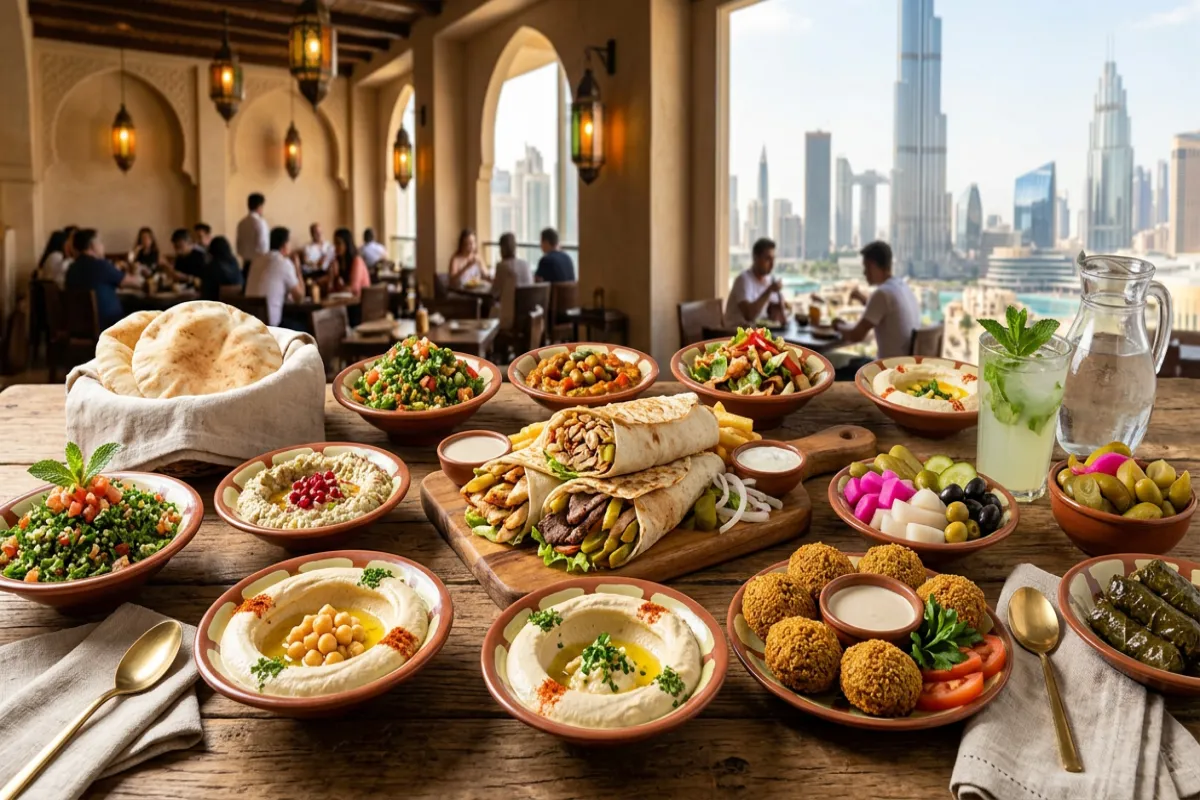
- Shawarma: Available everywhere from street stands to upscale restaurants. A good chicken or lamb shawarma wrap costs 5 to 15 AED ($1.50 to $4).
- Lebanese cuisine: Hummus, falafel, grilled meats, and fresh flatbreads. Lebanese restaurants are abundant and consistently excellent.
- Indian food: Dubai has one of the best Indian food scenes outside India, thanks to the large South Asian population. Head to Bur Dubai or Karama for authentic and affordable options.
- Emirati cuisine: Try machboos (spiced rice with meat), luqaimat (sweet dumplings), and karak chai (spiced tea with condensed milk).
Brunch Culture
Friday brunch is a Dubai institution. Hotels and restaurants offer elaborate all-you-can-eat and drink packages that can stretch for hours. Brunches range from 200 to 700 AED ($55 to $190) per person depending on the venue and beverage package. It is a social event as much as a meal. Book in advance for popular spots.
Dining Tips
- Dubai’s Michelin dining scene has grown rapidly, with the 2025 guide featuring over 100 listed restaurants.
- Alcohol is only available at licensed venues, which are mostly hotel restaurants and bars. You cannot buy alcohol at regular grocery stores (only at designated liquor stores with a permit).
- Street food areas like Al Dhiyafah Street in Satwa offer excellent, affordable meals.
Practical Tips for Visiting Dubai
Dress Code
Dubai is more relaxed than other parts of the Middle East, but modesty is still expected in public spaces. At the beach or pool, swimwear is fine. In malls, restaurants, and public areas, cover your shoulders and knees. Religious sites require conservative dress for both men and women.
Laws and Customs to Know
- Public displays of affection: Holding hands is generally tolerated for married couples, but kissing and hugging in public can result in fines or legal issues.
- Alcohol: Legal only at licensed hotels, restaurants, and bars. Being drunk in public is an offense. The legal drinking age is 21.
- Photography: Always ask permission before photographing people, especially local Emirati women. Do not photograph government buildings, military installations, or airports.
- Ramadan etiquette: During Ramadan, do not eat, drink, or smoke in public during fasting hours (dawn to sunset). Many restaurants set up screened areas for non-fasting guests.
- Profanity and rude gestures: These can lead to fines or arrest. This applies to in-person interactions and social media posts while in the UAE.
Weekend and Working Hours
The UAE weekend is Saturday and Sunday (changed from the traditional Friday-Saturday in 2022). Friday remains significant for prayer, and some businesses may close during Friday afternoon prayer time. Malls typically open around 10 AM and stay open until 10 PM or midnight.
Tipping
Tipping is appreciated but not mandatory. A 10 to 15 percent tip at restaurants is standard. Many restaurants add a service charge to the bill already. Round up taxi fares or tip 5 to 10 AED for good service.
Connectivity
Free Wi-Fi is widely available in malls, hotels, and many public areas. For mobile data, purchase a local SIM card at the airport from du or Etisalat. Tourist SIM packages start around 50 AED for data and local calls.
Sample 5-Day Dubai Itinerary
Day 1: Downtown Dubai
Arrive and settle into your hotel. Head to the Dubai Mall in the afternoon for the aquarium and some shopping. Watch the Dubai Fountain show at sunset. End the evening with dinner at a restaurant overlooking the Burj Khalifa.
Day 2: Old Dubai and Culture
Start at the Dubai Museum in Al Fahidi Fort (check reopening status as it has been under renovation). Walk through the Al Fahidi Historical Neighbourhood. Take an abra across Dubai Creek to Deira. Explore the Gold Souk and Spice Souk. Visit the Dubai Frame in the afternoon. Dinner in Bur Dubai at an Indian or Lebanese restaurant.
Day 3: Beach and Marina
Morning at JBR Beach or Jumeirah Beach. Walk along the Marina Walk for lunch. Visit the Palm Jumeirah and walk through Atlantis The Palm. Afternoon at Ski Dubai or the Mall of the Emirates. Evening dhow dinner cruise in the Marina.
Day 4: Desert and Adventure
Morning visit to the Museum of the Future. Afternoon desert safari with dune bashing, camel riding, and sandboarding. Stay for the evening camp experience with dinner, traditional performances, and stargazing in the desert.
Day 5: Abu Dhabi Day Trip or Flexible Day
Option A: Day trip to Abu Dhabi to visit the Sheikh Zayed Grand Mosque, the Louvre Abu Dhabi, and the Corniche. Option B: Spend the day revisiting favorite spots, shopping for souvenirs, or relaxing at the hotel pool before your flight.
Build out your day-by-day plan with our free vacation itinerary template.
Planning Tools
Getting organized before your trip makes everything smoother once you land in Dubai.
- Yopki AI Travel Planner: Build a personalized Dubai itinerary in minutes with AI-powered suggestions for activities, restaurants, and logistics.
- Travel Budget Template: Track your Dubai spending across flights, hotels, food, activities, and shopping.
- Vacation Itinerary Template: Organize your daily schedule with morning, afternoon, and evening blocks.
If you have a layover at Dubai International Airport, check out our complete DXB layover guide for tips on making the most of your time between flights.
Considering other destinations? Our guide to planning a trip to Europe covers everything from visa requirements to sample itineraries across the continent.
Frequently Asked Questions
Do US citizens need a visa to visit Dubai?
No. US citizens receive a visa on arrival at no cost, allowing stays of up to 90 days. Your passport must be valid for at least 6 months beyond your arrival date.
Is Dubai safe for tourists?
Dubai is considered one of the safest cities in the world for tourists. Petty crime is rare, and the city is heavily monitored. Use the same common-sense precautions you would anywhere.
Can you drink alcohol in Dubai?
Yes, but only at licensed venues such as hotel restaurants, bars, and clubs. You cannot drink in public or purchase alcohol from regular stores. The legal drinking age is 21.
What should I wear in Dubai?
Swimwear is fine at beaches and pools. In public spaces like malls, restaurants, and streets, cover your shoulders and knees. At mosques, women should cover their hair, arms, and legs.
Is Dubai expensive?
It can be, but budget-friendly options exist. Budget travelers can manage on $50 to $80 per day using the Metro, eating at local restaurants, and visiting free attractions like beaches and the Dubai Fountain.
What is the best area to stay in Dubai for first-time visitors?
Downtown Dubai puts you closest to the Burj Khalifa, Dubai Mall, and other major landmarks. Dubai Marina and JBR are great alternatives if you want beach access with a lively atmosphere.
How many days do you need in Dubai?
Four to five days covers the main highlights comfortably. Add extra days if you want to include an Abu Dhabi day trip or spend more time at the beach.