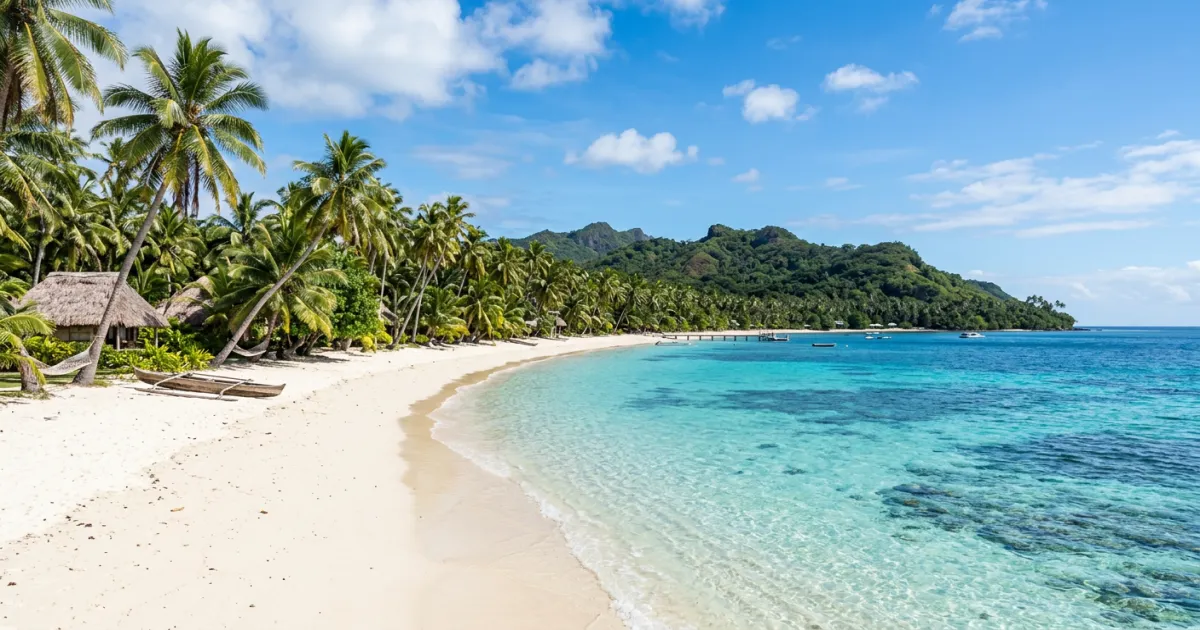
Fiji is an archipelago of 333 islands in the South Pacific, where turquoise lagoons, coral reefs, and some of the warmest, most welcoming people in the world create a tropical paradise that lives up to the postcards. From luxury overwater bures in the Mamanuca Islands to budget-friendly island-hopping through the Yasawas, snorkeling with reef sharks, and experiencing authentic Fijian village culture, Fiji offers a range of experiences at every price point. This guide covers everything you need to plan your trip. For a broader approach, see our step-by-step trip planning guide.
Key Planning Facts
- Location: South Pacific Ocean, about 1,770 miles north of New Zealand
- Currency: Fijian Dollar (FJD). Approximately 2.3 FJD per 1 USD
- Language: English, Fijian, and Hindi. English is widely spoken throughout the country
- Visa for U.S. citizens: Not required. 4-month visitor permit issued on arrival. Valid passport (6+ months), return ticket, and accommodation confirmation required
- Best months to visit: May to October (dry season, cooler temperatures, clearest water)
- Average daily budget: $80 to $300 per person depending on island and accommodation style
- Time zone: Fiji Time (FJT, UTC+12)
- Flight time from U.S.: 10 to 12 hours from West Coast (direct flights from Los Angeles via Fiji Airways)
- Islands: 333 islands, about 110 inhabited
Best Time to Visit Fiji
Dry Season (May to October)
The best overall time. Lower humidity, less rain, cooler temperatures (23 to 28 degrees Celsius, or 73 to 82 degrees Fahrenheit), and the clearest water for snorkeling and diving. July and August are the busiest months. This is peak season with higher prices. Visibility on the reef can reach 40 meters.
Wet Season (November to April)
Warmer (27 to 33 degrees Celsius) and more humid with occasional tropical rain (usually short bursts). Cyclone season runs November to April. Prices drop 20 to 40 percent. Fewer tourists. Many resorts offer wet season deals. The rain keeps the landscapes lush and green.
Shoulder Months (April and November)
Good value with transitional weather. April often still has dry-season conditions. November marks the start of the wet season but usually without heavy rain.
How Long to Spend in Fiji
7 to 10 days is ideal for island-hopping across 2 to 3 island groups. 4 to 5 days works for a single island resort stay. 2 weeks lets you explore the Mamanucas, Yasawas, and add the Coral Coast or Taveuni (the “Garden Island” with some of Fiji’s best diving). A 3 to 4 day stopover from the U.S. to Australia or New Zealand is also popular.
Budget and Costs
Fiji spans a wide range from budget backpacker to ultra-luxury resort.
Daily Budget Ranges
- Budget: $50 to $100 per person per day. Hostel dorm beds ($15 to $30 per night), local restaurants and markets, public buses on the main island, Bula Pass island-hopping
- Mid-range: $120 to $250 per person per day. Mid-range resort or bure ($80 to $180 per night), restaurant meals, snorkeling tours, island transfers
- Luxury: $350 to $800+ per person per day. Private island resort ($300 to $800+ per night), all-inclusive packages, diving, spa, premium experiences
Key Costs
- Yasawa Flyer (island-hopping ferry): “Bula Pass” offers unlimited hopping for 5, 7, 11, or 14 days. Excellent value for backpackers. Individual one-way fares: $50 to $100 FJD depending on distance
- Snorkeling trip: $30 to $60 FJD per person. Many resorts include complimentary snorkeling. Shark snorkeling at Kuata Island is a unique experience
- Diving: $150 to $250 FJD per 2-tank dive. PADI certification available
- Meals: Local Fijian meal: $10 to $15 FJD. Resort restaurant: $30 to $60 FJD. Resort all-inclusive meal plans save money if you plan to eat on-island
- SIM card: Digicel SIM at Nadi Airport: about $22 USD for 100GB data. Much cheaper than resort Wi-Fi
- Flights: Los Angeles to Nadi direct on Fiji Airways: $600 to $1,200 round trip
Use our free travel budget template to plan your Fiji expenses.
Getting There and Getting Around
Flying In
Nadi International Airport (NAN) is the main gateway. Fiji Airways operates direct flights from Los Angeles (about 10 hours). Flights also connect through Auckland, Sydney, or Honolulu. Nearly all international flights arrive in Nadi.
Getting to the Islands
Mamanuca Islands: Fast boat from Port Denarau (near Nadi) takes 30 minutes to 2 hours depending on the island. South Sea Cruises and Malolo Cat are the main operators.
Yasawa Islands: The Yasawa Flyer catamaran departs Port Denarau daily at 8:45 AM, stopping at islands throughout the Yasawa chain. The full journey to the northern Yasawas takes about 5 hours. The Bula Pass offers unlimited hopping.
Domestic flights: Fiji Airways links Nadi to Suva, Taveuni, and other islands (30 to 60 minutes).
On Viti Levu (Main Island)
Public buses connect Nadi, Suva, and the Coral Coast (cheap, $1 to $4 FJD). Taxis and rideshare in Nadi and Suva. Rental cars available but roads can be rough outside main highways.
Where to Go
Mamanuca Islands
The most accessible island group, 30 minutes to 2 hours by boat from Nadi. Range of resorts from budget to luxury. The Mamanucas have picture-perfect beaches and calm lagoons. Cloud 9 (a floating bar and pizza restaurant in the middle of the ocean) is iconic. The movie “Cast Away” was filmed on Monuriki Island. Snorkeling is good but water clarity is better in the Yasawas.
Yasawa Islands
A chain of 20 volcanic islands stretching north from the Mamanucas. Less developed, more authentic Fijian culture. The best snorkeling and diving in Fiji. Swim with reef sharks at Kuata Island. The Blue Lagoon (made famous by the 1980 film) is here. Mix of budget hostels and mid-range resorts. Fewer luxury options than the Mamanucas.
Coral Coast (Viti Levu)
The southern coast of the main island. Beach resorts, Sigatoka Sand Dunes National Park, and the Arts Village cultural center. More affordable than the outer islands. Good base for exploring Fijian culture on the mainland.
Taveuni
The “Garden Island” with lush rainforest and some of Fiji’s best diving (Rainbow Reef, the “Soft Coral Capital of the World”). Bouma National Heritage Park has waterfalls and hiking. More remote and less touristy. Requires a domestic flight or ferry.
Must-See Experiences
Island Hopping
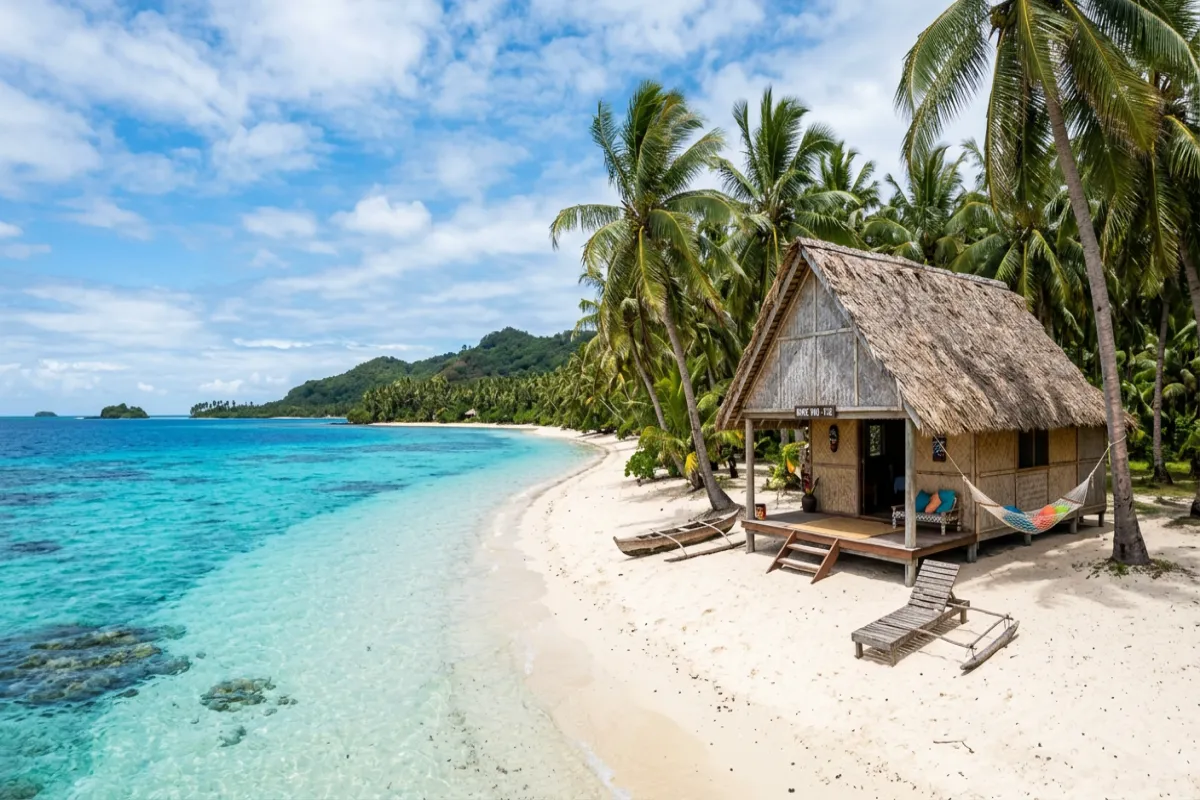
The quintessential Fiji experience. Use the Yasawa Flyer and Bula Pass to hop between islands, spending 1 to 3 nights on each. Each island has its own character, from party hostels to secluded bures on the beach.
Snorkeling with Reef Sharks
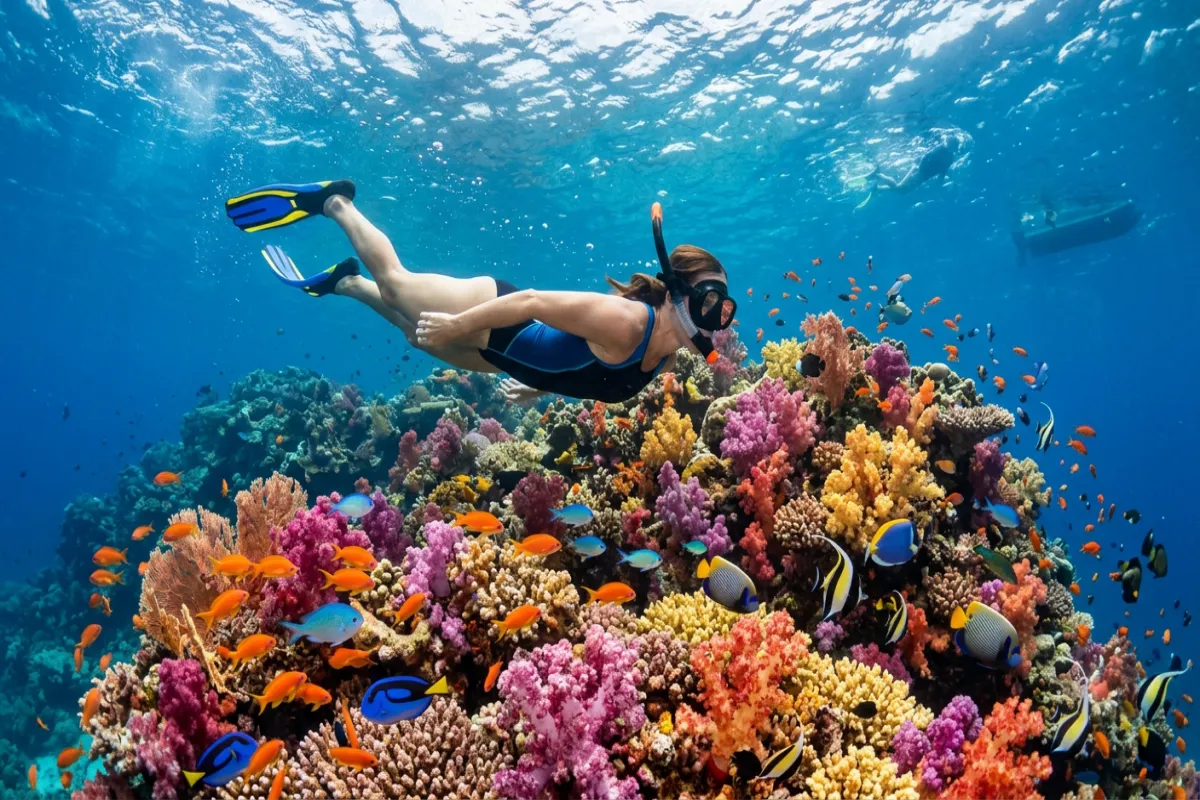
Kuata Island in the Yasawas offers guided snorkeling with blacktip and whitetip reef sharks twice daily. The sharks are wild, not fed, and the experience is safe and thrilling. One of the most unique snorkeling experiences in the South Pacific.
Village Visit
Many islands arrange visits to traditional Fijian villages. Participate in a kava ceremony (a traditional drink made from the root of the kava plant), watch meke (traditional dance and song), and learn about Fijian customs. Bring a gift of kava root (sevusevu) as a respectful gesture. Dress modestly (cover shoulders and knees).
Blue Lagoon
A stunning natural lagoon in the Yasawa Islands with crystal-clear turquoise water. Swimming, snorkeling, and kayaking in one of the most beautiful natural pools in the Pacific. Several resorts and hostels surround the lagoon.
Cloud 9
A floating bar, restaurant, and lounge platform anchored in the Mamanuca Islands. Pizza, cocktails, and music surrounded by open ocean. Day trips available from Port Denarau ($100 to $150 FJD including boat transfer).
Food and Dining
- Kokoda: Fiji’s national dish. Raw fish marinated in lime juice and coconut cream, similar to ceviche. Fresh and delicious
- Lovo: Traditional Fijian feast cooked in an underground earth oven. Meats, fish, and root vegetables wrapped in banana leaves and slow-cooked on hot stones. Often part of village visits and resort cultural nights
- Cassava and taro: Starchy root vegetables that are staples of the Fijian diet. Served with most traditional meals
- Curry: Fiji’s large Indo-Fijian community means excellent Indian curries, roti, and dal are widely available, especially on the main island
- Fiji Gold beer: The local lager. Light and refreshing
- Kava: A traditional Fijian ceremonial drink made from the kava root. Mildly numbing, earthy flavor. Shared communally in a coconut shell (bilo). Participating in a kava ceremony is an important cultural experience
Tipping: Not expected in Fiji. A small tip for exceptional service is appreciated but not customary. Resort staff may have a communal tip jar.
Safety and Practical Tips
- Safety: Fiji is very safe for tourists. Crime is rare on the outer islands. Standard precautions in Nadi and Suva (lock valuables, be aware of surroundings)
- “Bula!”: The Fijian greeting (“hello,” “welcome,” “cheers”). You will hear it everywhere. Fijians are among the friendliest people in the world. Say “Bula!” back
- Village etiquette: When visiting a village, dress modestly (cover shoulders and knees), remove hats and sunglasses, and bring a gift of kava root (available at markets). Ask before taking photos of people
- Sun: Equatorial sun is intense. Reef-safe sunscreen (SPF 50+), hat, and rash guard for snorkeling
- Coral protection: Do not touch, stand on, or take coral. Wear reef shoes in shallow areas. Use reef-safe sunscreen only
- Water: Drink bottled water on most islands. Resort water is usually filtered
- Cyclone season: November to April. Risk is real but low for any specific trip. Travel insurance recommended
- Electricity: 240V with Type I plugs (same as Australia). Bring an adapter from the U.S.
- Emergency number: 911 (police), 910 (ambulance)
Sample 10-Day Fiji Itinerary
Day 1: Arrive in Nadi
Fly into Nadi International Airport (NAN). Transfer to a hotel near Port Denarau or on the Coral Coast. Rest and adjust. Evening: walk the Nadi town market.
Days 2 to 4: Mamanuca Islands
Boat from Port Denarau to a Mamanuca Island resort. Day 2: snorkeling, beach time, settle in. Day 3: visit Cloud 9 floating bar, kayaking, paddleboarding. Day 4: island-hop to a second Mamanuca island or relax.
Days 5 to 8: Yasawa Islands
Take the Yasawa Flyer north into the Yasawas. Day 5: arrive at a Yasawa island (Kuata for shark snorkeling, or Blue Lagoon area). Day 6: shark snorkeling at Kuata or reef snorkeling. Day 7: village visit and kava ceremony. Blue Lagoon swimming. Day 8: hop to another Yasawa island, beach day, sunset.
Day 9: Return to Main Island
Yasawa Flyer back to Port Denarau. Afternoon: visit Sigatoka Sand Dunes or the Garden of the Sleeping Giant (orchid garden near Nadi). Farewell dinner.
Day 10: Departure
Morning: last swim or market shopping in Nadi. Head to airport. Fly home from NAN.
Planning Your Fiji Trip
Start building your custom itinerary with our free AI trip planner.
For more trip planning resources:
- Plan a Trip to Bora Bora
- Plan a Trip to New Zealand
- Plan a Trip to Australia
- Free Travel Budget Template
Frequently Asked Questions
Do U.S. citizens need a visa for Fiji?
No. A 4-month visitor permit is issued on arrival. Valid passport (6+ months), return ticket, and accommodation confirmation required.
What is the best time to visit Fiji?
May to October (dry season). Cooler temperatures, less rain, clearest water for snorkeling. November to April is wet season with lower prices. Cyclone season Nov to April.
How expensive is Fiji?
Ranges widely. Budget backpackers $50 to $100 per day (hostels, local food, Bula Pass). Mid-range $120 to $250 (resort bures, meals, tours). Luxury $350 to $800+ (private island resorts, all-inclusive).
Mamanuca or Yasawa Islands?
Mamanucas are closer to Nadi (easy access), more resort options, calmer water. Yasawas are more remote, better snorkeling/diving, more authentic Fijian culture, and the Blue Lagoon. Choose Mamanucas for convenience and luxury; Yasawas for adventure and culture.
Can I swim with sharks in Fiji?
Yes. Kuata Island in the Yasawas offers guided snorkeling with blacktip and whitetip reef sharks. The sharks are wild, not fed, and the experience is safe. One of the most unique in the Pacific.
What is kava?
A traditional Fijian ceremonial drink made from the kava root. Mildly numbing, earthy flavor. Shared communally. Participating in a kava ceremony is an important cultural experience. Bring kava root as a gift when visiting a village.
How do I get between islands?
Yasawa Flyer catamaran (daily from Port Denarau, Bula Pass for unlimited hopping). Fast boats to Mamanucas. Domestic flights to remote islands (Taveuni, etc.).
Is Fiji safe?
Very safe for tourists. Crime is rare on outer islands. Standard precautions in Nadi and Suva. Fijians are among the friendliest people in the world.
What should I wear at villages?
Dress modestly: cover shoulders and knees. Remove hats and sunglasses when entering a village. This shows respect for Fijian customs.
What should I pack?
Light clothing, swimsuit, reef-safe sunscreen SPF 50+, rash guard, water shoes, insect repellent, rain jacket (wet season), Australian-style power adapter (Type I, 240V), dry bag for boat trips, and a sarong (useful for village visits and beach cover-up).