| Florida Keys Quick Facts | |
|---|---|
| State | Florida, USA |
| Currency | US Dollar (USD) |
| Language | English, Spanish widely spoken |
| Time Zone | Eastern Time (ET) |
| Daily Budget | $120 to $450+ per person |
| Best Time | November to April |
| Getting There | Miami (MIA) or Key West (EYW) |
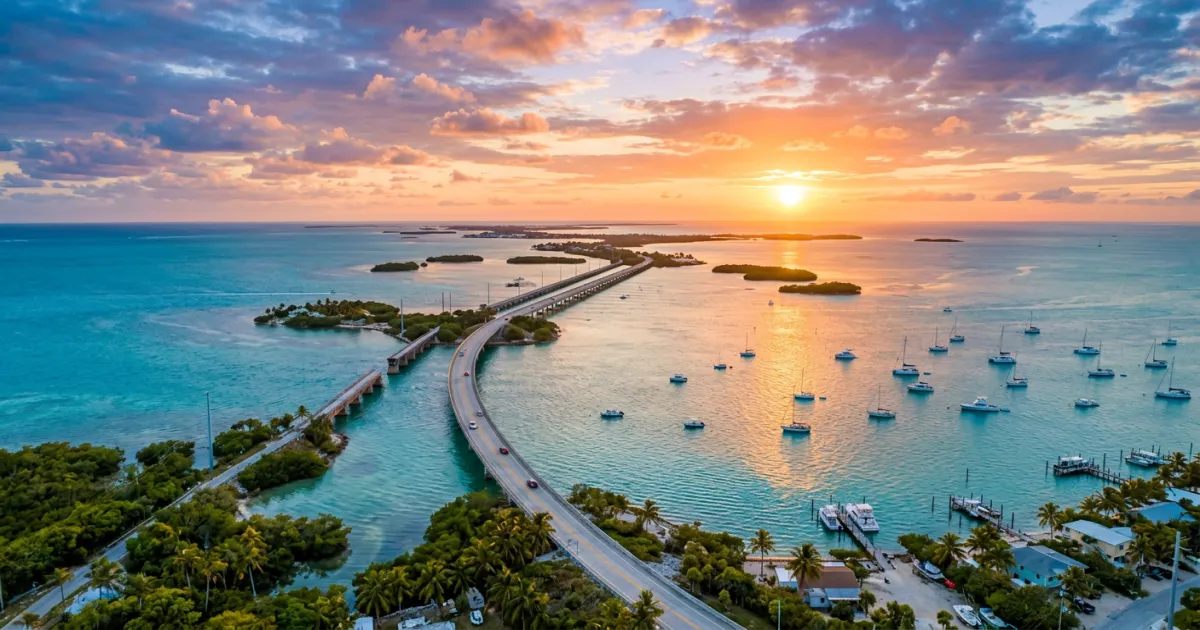
The Florida Keys are a 120-mile chain of islands stretching from the southern tip of mainland Florida to Key West, connected by the Overseas Highway (US-1) and 42 bridges. The drive itself is one of the most scenic in America, with open ocean views on both sides and the feeling that you are driving across the water. Each section of the Keys has its own character: Key Largo for diving, Islamorada for fishing, Marathon for family-friendly beaches, and Key West for history, nightlife, and sunset celebrations at Mallory Square.
For a broader framework for organizing any trip, our how to plan a trip guide covers the fundamentals.
Best Time to Visit Florida Keys
November through April is the ideal season. Winter and spring bring dry weather, comfortable temperatures in the 75 to 85 F range, and lower humidity. This is also peak season with the highest prices and most visitors, especially February through April. May through October is the off-season with hotter, more humid weather (85 to 95 F), afternoon thunderstorms, and hurricane risk (June through November). Hotel prices drop 30 to 50% in summer. The water is warm enough for snorkeling year-round (75 to 85 F).
Getting to Florida Keys
Most visitors fly into Miami International Airport (MIA) and drive south. The drive from Miami to Key Largo is about 1 hour, to Marathon about 2 hours, and to Key West about 3.5 to 4 hours (longer on busy weekends). Key West International Airport (EYW) has direct flights from Miami, Fort Lauderdale, Atlanta, Dallas, and other cities. You can also fly into Fort Lauderdale (FLL) and drive. A rental car is essential for the Keys road trip experience.
Top Things to Do in Florida Keys
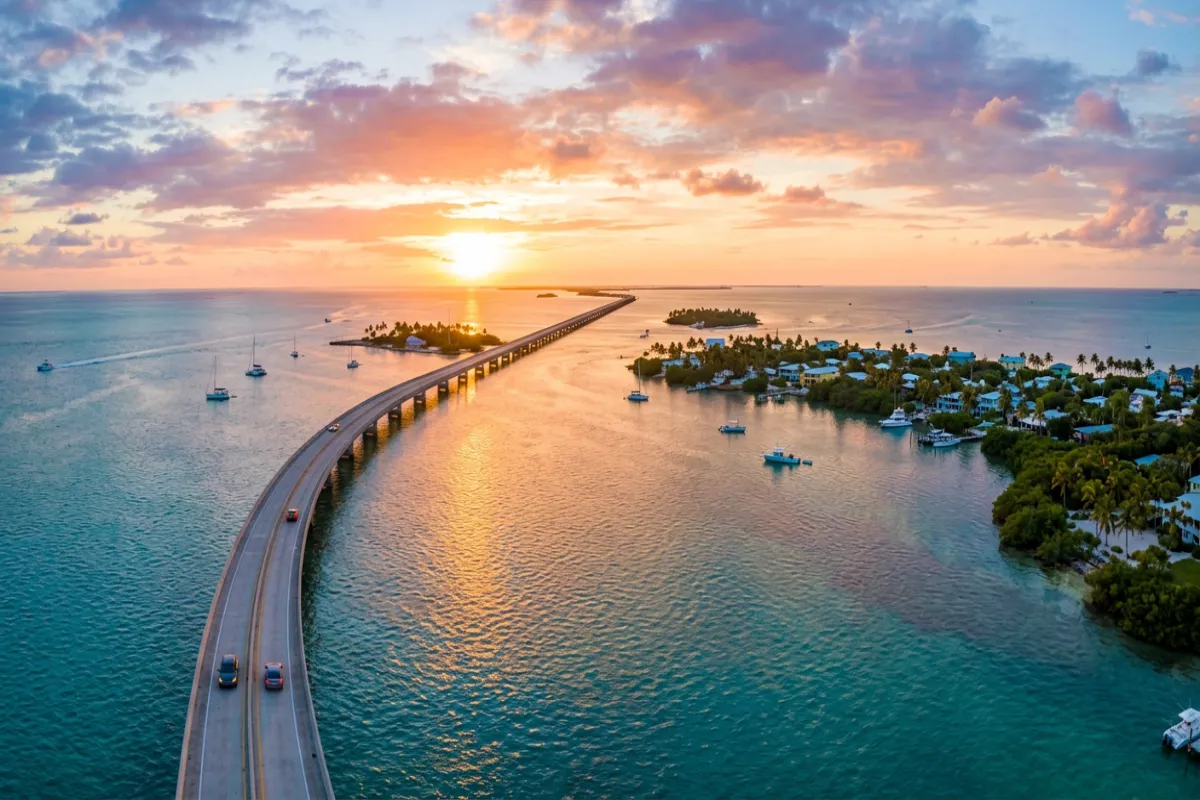
- Overseas Highway Drive: The road trip itself is the main event. US-1 crosses 42 bridges, including the famous Seven Mile Bridge at Marathon. Stop at scenic overlooks, roadside seafood shacks, and small marinas along the way.
- John Pennekamp Coral Reef State Park (Key Largo): The first underwater park in the US. Snorkel or dive on the only living coral barrier reef in North America. Glass-bottom boat tours available for non-swimmers. The Christ of the Abyss underwater statue is a popular dive site.
- Bahia Honda State Park (Big Pine Key): Home to one of the best beaches in the Keys with clear water and sandy shores. The old Bahia Honda Bridge provides a dramatic backdrop. Kayak and snorkel gear available for rent.
- Robbie’s of Islamorada: Feed giant tarpon from the dock ($4 for a bucket of fish). A quirky Keys institution with a market of local vendors and boat rentals for backcountry exploration.
- Key West Sunset at Mallory Square: Every evening, the waterfront at Mallory Square transforms into a sunset celebration with street performers, food vendors, and crowds watching the sun drop into the Gulf of Mexico.
- Dry Tortugas National Park: A remote island fort 70 miles west of Key West, accessible by ferry or seaplane. Fort Jefferson is a massive Civil War-era brick fort surrounded by pristine snorkeling waters. A full-day trip from Key West.
Where to Stay
Key Largo is the most affordable and closest to Miami, with motels and dive resorts from $120 to $250 per night. Islamorada has charming fishing lodges and boutique resorts ($150 to $400). Marathon is family-friendly with vacation rentals and modest hotels. Key West has the most variety from hostels to luxury resorts ($150 to $500+ per night). Many Keys accommodations are small, independent properties rather than chain hotels. Book early for December through April, as the Keys have limited room inventory.
Sample 3-Day Florida Keys Itinerary
- Day 1 – Key Largo and Islamorada: Drive from Miami to Key Largo. Snorkel at John Pennekamp Coral Reef State Park or take a glass-bottom boat tour. Continue to Islamorada for lunch at a waterfront restaurant. Stop at Robbie’s to feed the tarpon. Overnight in Islamorada.
- Day 2 – Marathon and Lower Keys: Drive to Bahia Honda State Park for a beach morning and snorkeling. Cross the Seven Mile Bridge (stop for photos at the old bridge overlook). Continue to Key West. Afternoon exploring Duval Street. Sunset at Mallory Square.
- Day 3 – Key West: Morning walk through the historic district: Hemingway House, Truman Little White House, and the southernmost point buoy. Afternoon snorkeling trip or, if time and budget allow, the Dry Tortugas ferry (full day, book well ahead). Evening dinner and nightlife on Duval Street. Drive back to Miami or fly out of EYW.
Budget Estimate
The Florida Keys are one of the more expensive domestic destinations. Budget travelers can manage on $120 to $180 per day by staying in the Upper Keys, eating at casual seafood shacks, and sticking to free beaches and affordable snorkel spots. Mid-range travelers should plan for $250 to $400 covering a comfortable hotel, restaurant meals, a snorkel or dive trip ($50 to $100 per person), and the Overseas Highway experience. Key West is the priciest part of the Keys for both lodging and dining. Gas stations are spaced out along US-1, so fill up when you can. The Dry Tortugas ferry is about $200 per person round trip.
Planning Tools
Ready to start building your Florida Keys trip? Our free AI trip planner can generate a custom itinerary based on your dates, budget, and interests.
Frequently Asked Questions
How many days do you need for the Florida Keys?
Three days covers the highlights: one day for the Upper Keys (Key Largo, Islamorada), one day for the drive through the Middle Keys to Key West, and one day in Key West itself. Five to seven days lets you slow down, snorkel more, visit Dry Tortugas, and enjoy the laid-back pace the Keys are known for.
Is it worth driving the Overseas Highway or should I fly to Key West?
Driving is highly recommended at least one way. The Overseas Highway is one of the most scenic drives in America, and the small towns along the way have great food and activities you would miss by flying. If time is tight, fly to Key West and spend all your time there.
What is the best snorkeling in the Florida Keys?
John Pennekamp Coral Reef State Park in Key Largo has the best reef snorkeling, including the Christ of the Abyss statue. Bahia Honda State Park in the Lower Keys has excellent shore snorkeling. Dry Tortugas, accessible by ferry from Key West, offers the clearest water and most pristine reefs in the area.