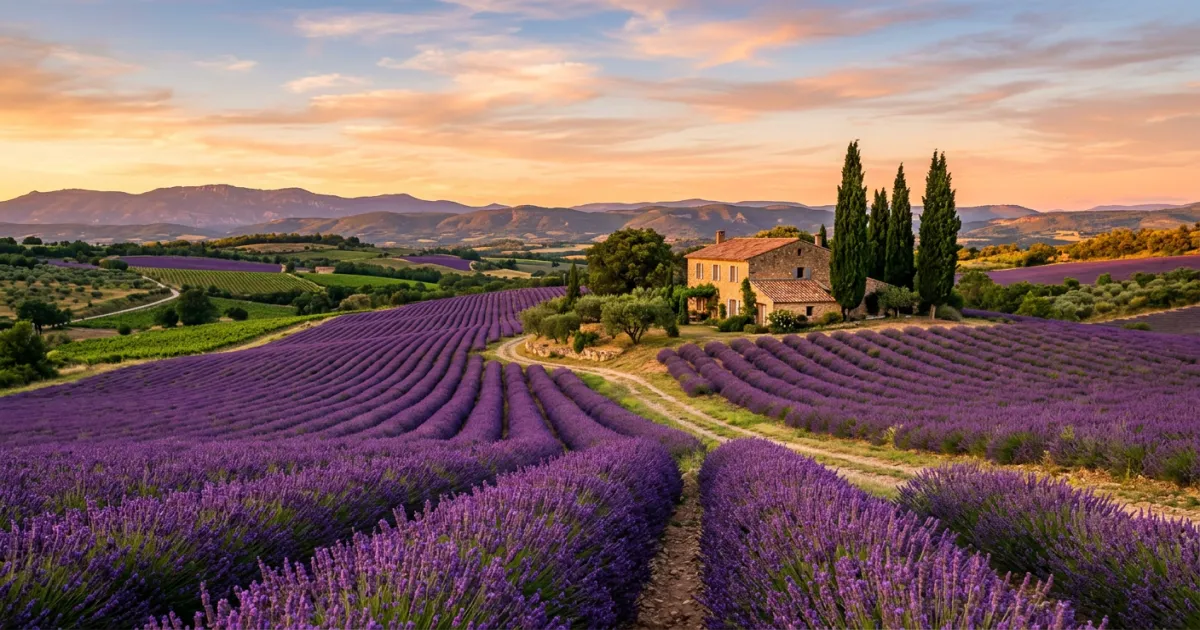
France is the most visited country on Earth, and for good reason. Beyond the Eiffel Tower and Parisian boulevards, you will find lavender-covered hills in Provence, medieval villages along the Loire River, sun-drenched beaches on the Riviera, and world-class vineyards stretching across Bordeaux and Burgundy. Planning a trip to France means deciding which of its incredibly diverse regions to explore, and this guide will help you do exactly that.
Whether you are visiting France for the first time or returning to discover a new corner of the country, this 2026 guide covers everything from budget and transportation to regional highlights and a ready-to-use 14-day itinerary. If you are new to trip planning in general, start with our complete guide to planning a trip, then come back here for France-specific details.
Quick Facts About France
- Currency: Euro (EUR)
- Language: French (English widely spoken in tourist areas, less so in small towns)
- Time Zone: Central European Time (CET), UTC+1 (UTC+2 in summer)
- Visa: Part of the Schengen Area. US, UK, Canadian, and Australian citizens can visit visa-free for up to 90 days within any 180-day period
- Capital: Paris (population 2.1 million city, 12 million metro area)
- Size: Largest country in Western Europe, roughly the size of Texas
- Electricity: 230V, Type C and E plugs (round two-pin)
France is an extraordinarily diverse country. The north feels different from the south, the Atlantic coast differs from the Mediterranean, and the Alps and Pyrenees add mountain culture to the mix. That diversity is what makes planning important: each region has its own cuisine, climate, and character.
Best Time to Visit France
May through June and September through October are the sweet spots for visiting France. You get warm weather, manageable crowds, and lower prices than peak summer. Temperatures sit comfortably in the low 20s Celsius (70s Fahrenheit) across most of the country.
July and August bring the hottest weather, the largest crowds, and the highest prices. This is also when the French themselves take vacation, and the Mediterranean coast and Riviera become packed. Southern France regularly hits 35C (95F) or higher in summer. However, these months are ideal for Provence lavender fields (late June through mid-July) and outdoor festivals across the country.
Winter (December through February) is quieter and cheaper for most regions, though Paris stays busy year-round. The French Alps come alive during ski season from December through April, with resorts like Chamonix and Val d’Isere drawing skiers from across Europe. Christmas markets in Alsace (especially Strasbourg) are another winter highlight.
Spring (March through April) can be unpredictable with rain, but the countryside begins to bloom and tourist sites are blissfully uncrowded.
How Long to Spend in France
France rewards longer stays because its regions are so different from one another.
- 7 days: Enough for Paris plus one additional region (the Loire Valley, Normandy, or Provence)
- 10 to 14 days: The ideal length for a first trip beyond Paris. You can cover three or four regions at a comfortable pace
- 3 weeks or more: Lets you slow down and experience regional life, smaller villages, and deeper wine country exploration
Do not try to see everything in one trip. France has too much to offer, and rushing through regions means missing what makes each one special. Use our vacation itinerary template to map out your days before you go.
France Trip Budget: What to Expect in 2026
France sits in the mid-range for Western European destinations. Paris is the most expensive city, but costs drop noticeably once you leave the capital.
Daily Budget Ranges (Per Person)
- Budget traveler: 80 to 120 EUR per day (hostels, picnic lunches from markets, free attractions, regional trains)
- Mid-range traveler: 150 to 250 EUR per day (3-star hotels, restaurant lunches and dinners, paid attractions, TGV trains)
- Luxury traveler: 400+ EUR per day (4 and 5-star hotels, fine dining, private tours, car rental)
Typical Costs
- Accommodation: Budget hotels and B&Bs outside Paris run 70 to 120 EUR per night. Paris hotels start around 120 EUR for basic options and 200+ EUR for well-located 3-star rooms. The Riviera is similarly expensive in summer
- Meals: A boulangerie breakfast (croissant and coffee) costs 4 to 6 EUR. A bistro lunch set menu (formule dejeuner) runs 14 to 22 EUR for two or three courses, which is a much better deal than dinner pricing. Restaurant dinners with wine range from 30 to 60 EUR per person
- Transportation: Paris Metro single ticket is 2.55 EUR in 2026. TGV high-speed train tickets range from 19 EUR (booked well in advance) to 120+ EUR (last-minute, peak routes)
- Attractions: The Louvre costs 22 EUR, Versailles is 21 EUR, Mont Saint-Michel abbey is 13 EUR. Many churches and smaller museums are free
Track your spending with our travel budget template to stay on target throughout your trip.
Getting There and Getting Around France
Flying In
Most international visitors arrive through Paris, which has two major airports. Charles de Gaulle (CDG) handles the majority of international flights and sits 25 km northeast of the city center. Orly (ORY) is smaller and closer to downtown, serving many European and domestic routes.
If you are heading directly to southern France, consider flying into Nice (NCE), Lyon (LYN), or Marseille (MRS) to skip the Paris connection entirely. Budget airlines like easyJet and Transavia connect many European cities to regional French airports. If you have a layover at CDG, check out our Paris CDG layover guide to make the most of your time.
Trains: France’s Best Transportation
France has one of Europe’s best rail networks, and the TGV (Train a Grande Vitesse) high-speed system is the backbone of long-distance travel. TGV trains run at up to 320 km/h and connect Paris to most major cities efficiently:
- Paris to Lyon: 2 hours
- Paris to Marseille: 3 hours
- Paris to Bordeaux: 2 hours
- Paris to Strasbourg: 1 hour 45 minutes
- Paris to Nice: 5 hours 30 minutes
In 2026, SNCF is rolling out new fifth-generation TGV INOUI trains with 20% more seats, improved comfort, and 50% lower carbon emissions compared to earlier models. Book through SNCF Connect or Trainline for the best prices, and reserve as early as possible since fares increase significantly closer to departure. OUIGO is SNCF’s low-cost TGV option with tickets starting as low as 10 EUR.
Driving
A rental car is valuable for exploring the countryside, especially in Provence, the Loire Valley, Dordogne, and Alsace where villages and vineyards sit along quiet roads between towns. The autoroute (highway) system is excellent but uses tolls that add up. A drive from Paris to Nice costs roughly 70 EUR in tolls alone. Fuel prices in France run around 1.80 to 2.00 EUR per liter.
In cities, parking is expensive and streets are narrow. Train into cities, and rent a car only for rural stretches.
France’s Regions: Where to Go
France is divided into distinct regions, each with its own personality. Here are the ones most worth your time.
Paris and Ile-de-France
The capital needs no introduction. The Louvre, Eiffel Tower, Notre-Dame (reopened in late 2024 after the fire), Montmartre, the Marais, and world-class dining make Paris essential for any first visit. Day trips to Versailles, Giverny (Monet’s garden), and Fontainebleau expand the experience. For a deep dive, see our complete Paris planning guide.
Provence
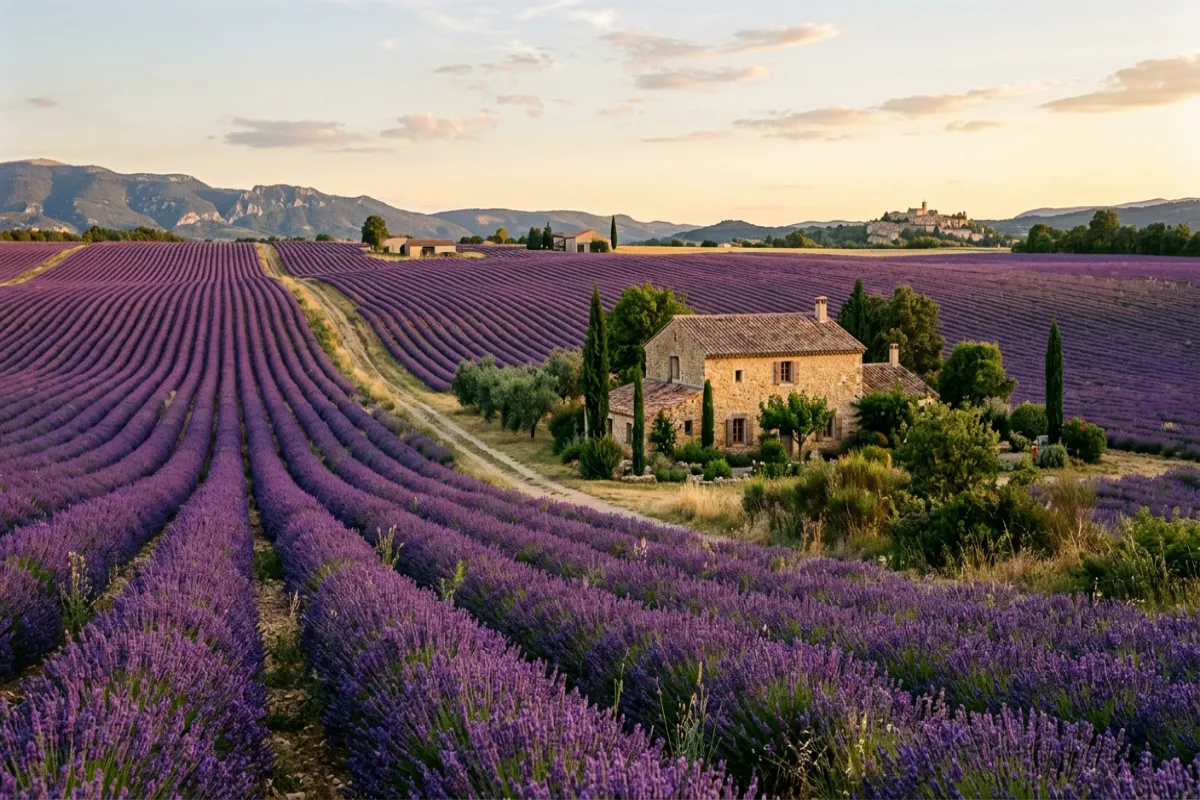
Rolling lavender fields, olive groves, and golden-stone villages define Provence. Aix-en-Provence offers elegant streets and Cezanne’s studio. Avignon has the famous Papal Palace and a lively Old Town. The hilltop villages of Gordes, Roussillon, and Bonnieux feel like stepping back in time. Lavender blooms peak from late June through mid-July. Marseille sits on the coast and serves as the gateway to the Calanques, stunning limestone fjords along the Mediterranean.
French Riviera (Cote d’Azur)
The stretch from Marseille to the Italian border is one of Europe’s most glamorous coastlines. Nice combines beach life with Old Town charm and excellent museums. Cannes is famous for its film festival but also has beautiful beaches and a charming old quarter called Le Suquet. Monaco packs casinos, the royal palace, and the Oceanographic Museum into just 2 square kilometers. Antibes, Saint-Paul-de-Vence, and Eze offer quieter alternatives with stunning views.
Loire Valley
The “Garden of France” is famous for its Renaissance chateaux. Chambord is the largest and most dramatic. Chenonceau spans the River Cher and is arguably the most beautiful. Amboise has royal connections and Leonardo da Vinci’s final home. Villandry is known for its extraordinary gardens. The region also produces excellent wines, especially Vouvray, Sancerre, and Chinon. Two to three days lets you visit three or four major chateaux comfortably.
Bordeaux and Wine Country
Bordeaux itself has been transformed in recent years. The renovated waterfront, the Cite du Vin wine museum, and excellent restaurants make the city worth visiting even if you do not drink wine. But the real draw is the surrounding vineyards: Saint-Emilion (a UNESCO World Heritage village), Medoc, Pauillac, and Graves offer cellar tours and tastings. Many chateaux welcome visitors by appointment.
Normandy
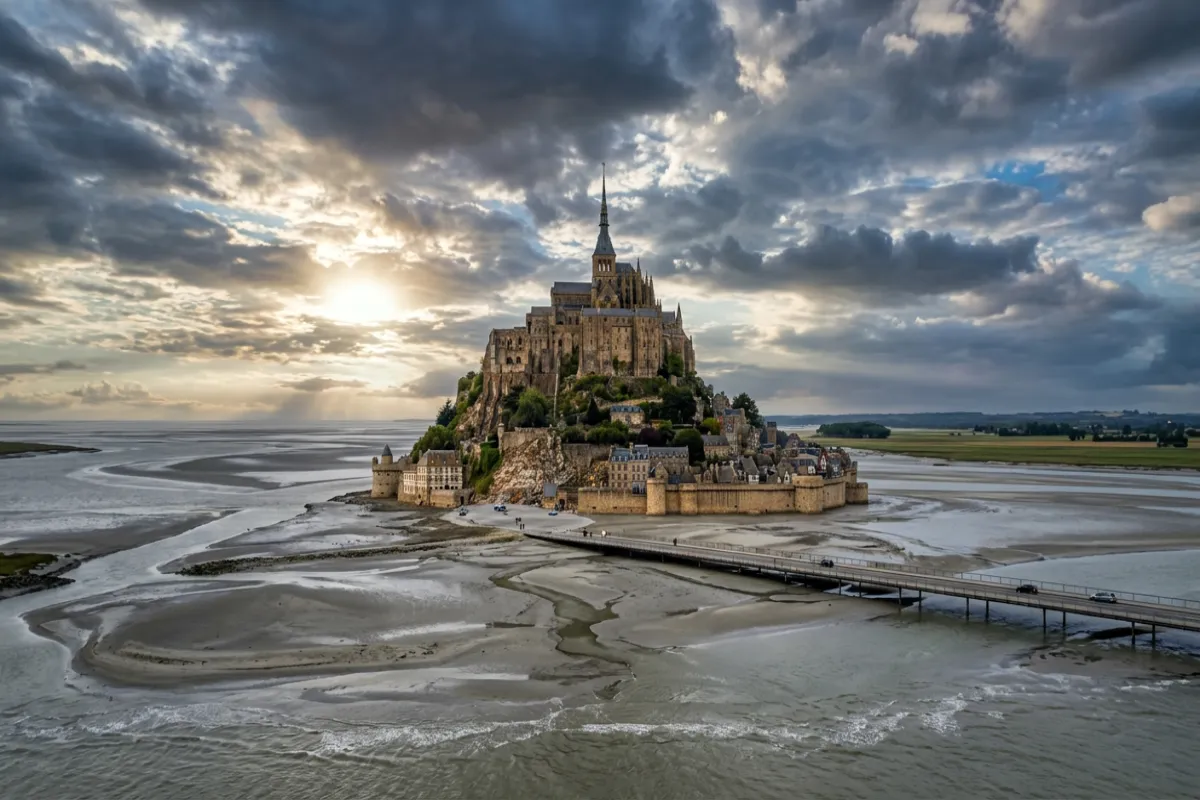
Normandy combines dramatic coastal scenery with some of Europe’s most significant history. The D-Day beaches (Omaha, Utah, Juno, Gold, Sword) and the American Cemetery at Colleville-sur-Mer are deeply moving. Mont Saint-Michel, the tidal island topped by a medieval abbey, is one of France’s most iconic sights. The charming port town of Honfleur, the Bayeux Tapestry, and the apple cider and Camembert cheese of the countryside round out the experience.
Champagne
Just 45 minutes by TGV from Paris, the Champagne region centers on Reims and Epernay. The great Champagne houses, including Moet et Chandon, Veuve Clicquot, Taittinger, and Ruinart, offer cellar tours through kilometers of underground chalk tunnels. Reims Cathedral, where French kings were crowned for centuries, is a Gothic masterpiece. A day trip from Paris works, but an overnight stay lets you explore smaller producers and the surrounding vineyards.
Alsace
Tucked along the German border, Alsace feels different from the rest of France. Half-timbered houses, Germanic architecture, and a unique food culture (choucroute, tarte flambee, kugelhopf) reflect centuries of cultural blending. Strasbourg has a stunning cathedral and the European Parliament. Colmar looks like a storybook with its canals and painted facades. The Alsace Wine Route runs 170 km through vineyard-covered hills and picture-perfect villages.
Burgundy
Burgundy is quieter than Bordeaux but equally important for wine. The Cote d’Or vineyards between Dijon and Beaune produce some of the world’s most celebrated Pinot Noir and Chardonnay. Beaune’s Hotel-Dieu (a medieval hospital with a stunning tiled roof) is the region’s must-see building. Dijon offers mustard shops, excellent markets, and a walkable old town. The region is also known for boeuf bourguignon and coq au vin.
French Alps
Chamonix sits at the base of Mont Blanc, Western Europe’s highest peak, and draws skiers in winter and hikers in summer. The Aiguille du Midi cable car climbs to 3,842 meters for jaw-dropping views. Annecy, with its pristine lake and medieval old town, is one of France’s most beautiful small cities. The Alps also offer cycling, paragliding, and some of the best mountain cuisine in Europe.
Must-See Experiences Beyond Paris
If you only have time for highlights outside of Paris, prioritize these:
- Mont Saint-Michel: The tidal island abbey is unlike anything else in Europe. Visit early morning or late afternoon to avoid the biggest crowds
- Loire Valley chateaux: Chambord and Chenonceau together give you the full Renaissance castle experience in a single day
- Provence villages: Gordes, Roussillon, and the lavender fields around Valensole are quintessential southern France
- Nice and the Riviera coast: The Promenade des Anglais, Old Town markets, and the views from Eze village
- Bordeaux vineyards: A half-day in Saint-Emilion combines wine tasting with a beautiful medieval setting
- Chamonix and the Alps: The Aiguille du Midi cable car delivers some of Europe’s most spectacular mountain scenery
- Champagne houses in Reims: Tour the underground chalk cellars and taste Champagne where it is made
- Normandy’s D-Day beaches: A guided tour of the landing sites and American Cemetery is a profound experience
- Strasbourg: The cathedral, Petite France quarter, and Alsatian food culture feel like a different country
French Food and Dining Culture
Food in France is not just sustenance. It is a central part of daily life, and regional cuisines vary enormously across the country.
Regional Specialties
- Provence: Bouillabaisse (fish stew from Marseille), ratatouille, tapenade, rose wine
- Southwest: Cassoulet (white bean and meat stew), duck confit, foie gras
- Brittany: Crepes and galettes (buckwheat crepes), cider, butter-rich pastries
- Normandy: Camembert cheese, apple cider, Calvados brandy, cream sauces
- Alsace: Choucroute (sauerkraut with sausages), tarte flambee, Riesling and Gewurztraminer wines
- Burgundy: Boeuf bourguignon, escargot, coq au vin, Dijon mustard
- Lyon: Known as France’s gastronomic capital, famous for its bouchons (traditional restaurants) serving quenelles, andouillette, and praline tart
Dining Tips
Boulangeries (bakeries) are everywhere, and the morning croissant or pain au chocolat is a daily ritual. Look for the “Artisan Boulanger” sign, which means bread is made on-site.
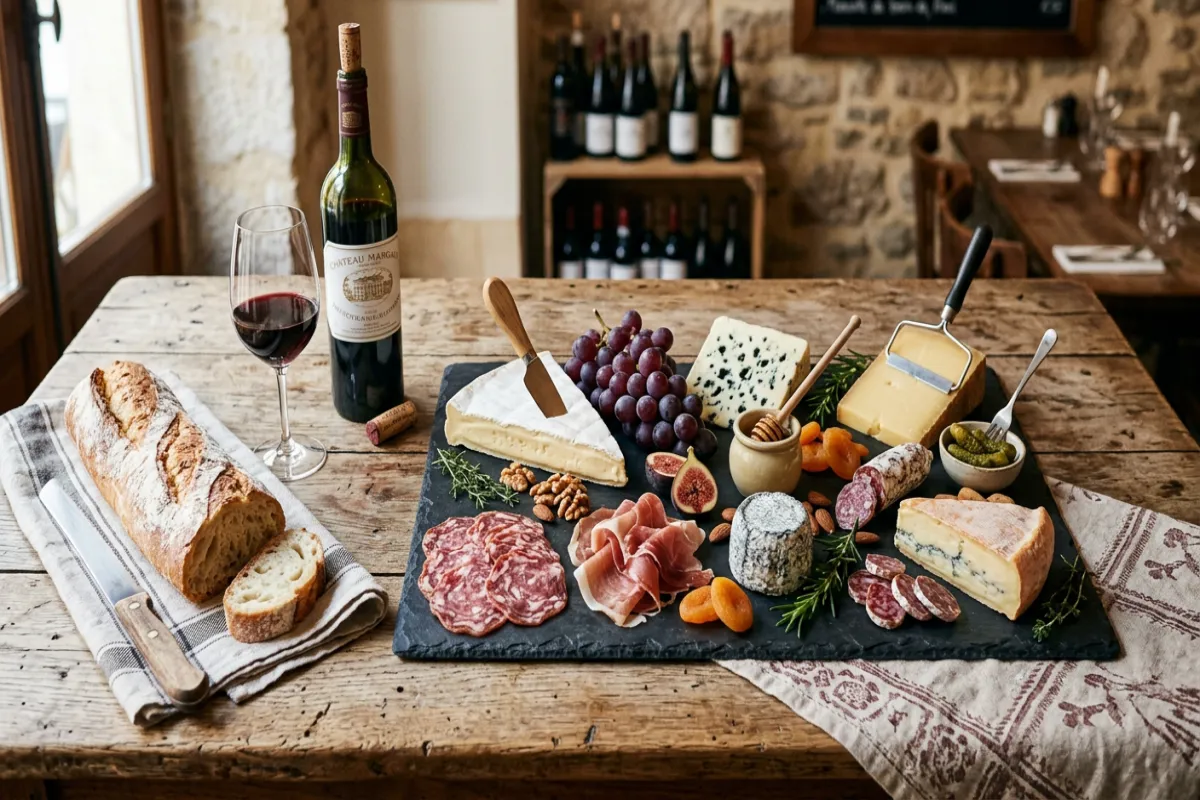
Market culture thrives across France. Nearly every town has at least a weekly outdoor market selling fresh produce, cheese, charcuterie, and prepared foods. Markets are the best place to assemble a picnic lunch.
Meal times matter. Lunch runs from noon to 2 PM, and dinner starts around 7:30 or 8 PM. Many restaurants close between lunch and dinner service. Showing up at 3 PM expecting a hot meal will leave you disappointed in most places outside Paris.
Wine is everywhere. France produces more wine variety than any other country, and ordering local wine with your meal is both expected and affordable. A glass of regional wine at a restaurant typically costs 4 to 8 EUR. The wine regions (Bordeaux, Burgundy, Champagne, Rhone, Loire, Alsace, Languedoc, Provence) each have distinct styles worth exploring.
Cheese course: The cheese course comes after the main dish and before dessert. France produces over 400 varieties of cheese, and trying regional varieties is one of the great pleasures of traveling here.
Michelin dining: France has more Michelin-starred restaurants than any other country. A one-star lunch menu can be surprisingly accessible, often running 40 to 80 EUR, which is far less than dinner service.
Practical Tips for Visiting France
- Learn basic French: The French genuinely appreciate visitors who try to speak French, even badly. Start every interaction with “Bonjour” and learn please (s’il vous plait), thank you (merci), and excuse me (excusez-moi). In smaller towns especially, a few words of French go a long way
- August closures: Many small shops, restaurants, and even some businesses close for part or all of August when the French take their annual vacation. Paris empties out of locals, and coastal areas fill up. Plan accordingly
- Sunday closures: In small towns and even medium-sized cities, most shops and many restaurants close on Sundays. Grocery stores may open Sunday morning but close by 1 PM. Stock up on Saturday if you are in the countryside
- Tipping: Service is included in all restaurant bills (service compris). You do not need to tip, though leaving a euro or two for good service or rounding up the bill is a nice gesture. There is no expectation of 15 to 20 percent tips like in the US
- Pharmacies: Look for the green cross sign. French pharmacists are highly trained and can recommend treatments for minor ailments. Pharmacies are found in every town
- Water: Tap water is safe and free. Ask for “une carafe d’eau” at restaurants instead of paying for bottled water
- Safety: France is generally very safe for tourists. Pickpocketing is common in Paris (Metro, tourist sites) and on the Riviera. Keep valuables secure and be aware of your surroundings in crowded areas
- Strikes: France has a tradition of periodic strikes (greves) that can affect trains and public services. Check SNCF and local news before travel days. Strikes are usually announced in advance
Sample 14-Day France Itinerary
This itinerary covers the country’s highlights at a comfortable pace, using TGV trains for long distances and a rental car for Provence.
Days 1 to 4: Paris
Arrive and settle in. Cover the major landmarks (Eiffel Tower, Louvre, Notre-Dame, Sacre-Coeur), explore neighborhoods like the Marais and Saint-Germain, and take a day trip to Versailles. Use our Paris planning guide for a detailed breakdown.
Days 5 to 6: Loire Valley
Take a morning train to Tours (1 hour 15 minutes from Paris). Rent a car or join guided tours to visit Chambord, Chenonceau, and Amboise. Stay in Tours or Amboise. Enjoy Loire wines in the evening.
Days 7 to 8: Bordeaux
TGV from Tours area to Bordeaux (approximately 2.5 hours with connection). Explore the renovated waterfront and Cite du Vin. Take a half-day trip to Saint-Emilion for wine tasting in the UNESCO-listed village.
Days 9 to 11: Provence
TGV from Bordeaux to Aix-en-Provence or Avignon (approximately 4 hours). Pick up a rental car. Explore Aix-en-Provence, drive through the Luberon villages (Gordes, Roussillon, Bonnieux), visit Avignon and the Pont du Gard Roman aqueduct. If visiting in late June or early July, drive to the Valensole plateau for lavender fields.
Days 12 to 13: Nice and the French Riviera
Drive from Provence to Nice (2.5 hours) or take a train from Aix. Walk the Promenade des Anglais, explore Vieux Nice, and visit the Matisse or Chagall museum. Take a day trip along the coast to Eze, Monaco, or Antibes.
Day 14: Departure
Fly out of Nice airport (NCE) to avoid backtracking to Paris, or take the TGV back to Paris CDG (5.5 hours) if your flight departs from there.
Planning Tools
Use these resources to organize your France trip:
- Yopki AI Travel Planner for personalized itinerary suggestions
- Vacation itinerary template to structure your daily plans
- Travel budget template to estimate and track your spending
- How to plan a trip to Europe for broader European travel tips
Frequently Asked Questions
Do I need to speak French to visit France?
No, but learning basic phrases makes a big difference. In Paris and major tourist areas, many people speak some English. In smaller towns and rural areas, English is less common. Starting conversations with “Bonjour” and making an effort in French, however imperfect, will be warmly received.
Is France expensive to visit?
France is mid-range for Western Europe. Paris and the Riviera are the most expensive areas. Outside those zones, accommodation and dining costs drop significantly. Set lunch menus (formule dejeuner) and market picnics are excellent ways to eat well on a budget.
What is the best way to get around France?
The TGV high-speed train network is excellent for traveling between major cities. For rural areas like Provence, the Loire Valley, and Alsace, renting a car gives you the most flexibility. Within cities, public transit (Metro in Paris, trams in many cities) works well.
How far in advance should I book?
Book TGV trains 2 to 3 months ahead for the best fares. Hotels in Paris and the Riviera should be reserved at least 6 to 8 weeks in advance for summer travel. Popular restaurants with Michelin stars may need reservations months ahead.
Is it safe to drink tap water in France?
Yes. Tap water in France is safe and well-regulated. Restaurants are required to provide free tap water (ask for “une carafe d’eau”). The only exception is if a fountain or source is marked “eau non potable.”
Can I use credit cards everywhere?
Credit and debit cards are widely accepted in France, including contactless payments. Smaller villages, markets, and some cafes may be cash-only. Carry some cash for markets and small purchases, but you will not need large amounts.