| Galapagos Islands Quick Facts | |
|---|---|
| Country | Ecuador |
| Currency | US Dollar (USD) |
| Language | Spanish. English on tour boats |
| Time Zone | GALT (UTC-6) |
| Visa (US) | Not required for stays under 90 days |
| Daily Budget | $150 to $600+ per person |
| Best Time | June to November (dry), December to May (warm) |
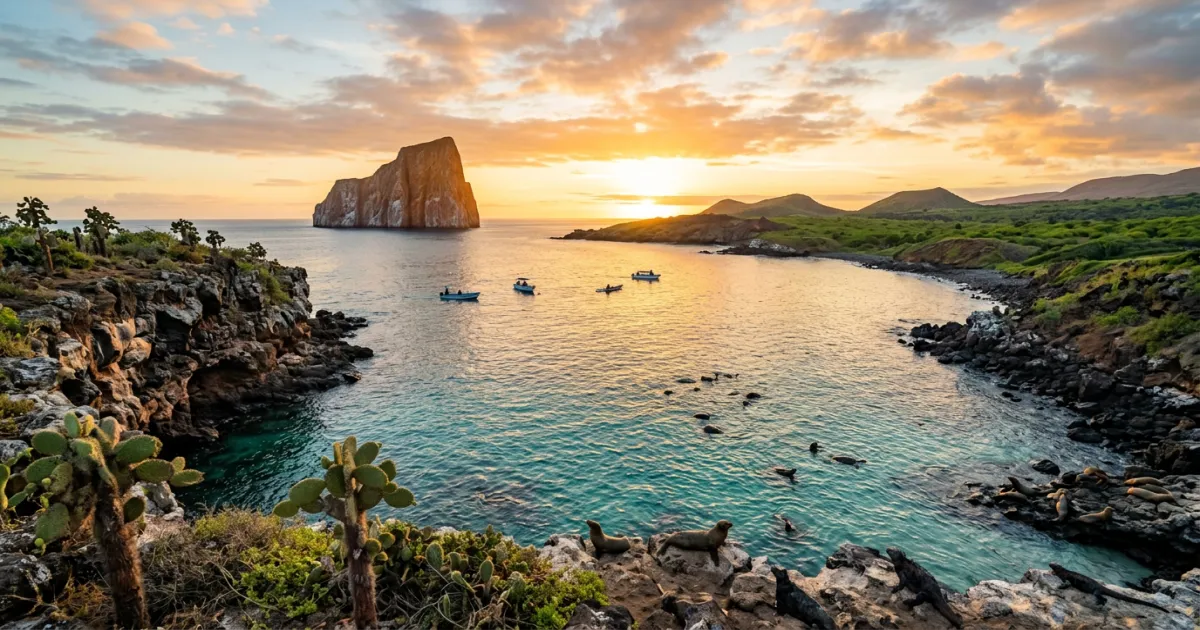
The Galapagos Islands are one of the few places on Earth where wildlife has no fear of humans. Giant tortoises, marine iguanas, blue-footed boobies, and sea lions go about their business while you stand feet away. This volcanic archipelago 600 miles off the coast of Ecuador inspired Charles Darwin’s theory of evolution, and the islands remain one of the best-preserved marine ecosystems on the planet. Visiting requires some planning due to permits, park fees, and limited access, but the experience is genuinely life-changing.
For a broader framework for organizing any trip, our how to plan a trip guide covers the fundamentals.
Best Time to Visit Galapagos Islands
The Galapagos has two seasons. The dry/cool season (June through November) brings cooler air (65 to 75 F), rougher seas, and the best snorkeling visibility. This is when Humboldt penguins are most active and whale sharks appear. The warm/wet season (December through May) has warmer water (75 to 80 F), calmer seas, more rain, and green landscapes. Sea turtles nest and marine iguanas are most colorful. Both seasons offer excellent wildlife viewing. There is no bad time to visit.
Getting to Galapagos Islands
Fly from mainland Ecuador. Quito (UIO) or Guayaquil (GYE) to Baltra (GPS) or San Cristobal (SCY). Flights take about 2 hours. Avianca and LATAM operate daily flights. Upon arrival you pay the $100 Galapagos National Park entry fee (cash) and a $20 transit control card. Most visitors explore by multi-day cruise (the most efficient way to see multiple islands) or by island hopping with day tours from Santa Cruz, San Cristobal, or Isabela.
Top Things to Do in Galapagos Islands
- Wildlife Viewing: Blue-footed boobies, giant tortoises, marine iguanas, sea lions, frigatebirds, and flightless cormorants. Animals are approachable but must not be touched. Every island has unique species.
- Snorkeling with Sea Lions: Kicker Rock off San Cristobal and Las Tintoreras off Isabela offer world-class snorkeling with sea lions, sharks, rays, and sea turtles. Wetsuits recommended in the cool season.
- Charles Darwin Research Station: Located in Puerto Ayora on Santa Cruz. See giant tortoises in breeding programs and learn about conservation efforts. Free entry.
- Isabela Island: The largest island with volcanic landscapes, flamingos at wetlands, penguins at Las Tintoreras, and the Sierra Negra volcano hike (one of the largest calderas in the world).
- Bartolome Island: Iconic viewpoint with Pinnacle Rock and two beaches. Snorkel with penguins. Accessible only by cruise or day tour from Santa Cruz.
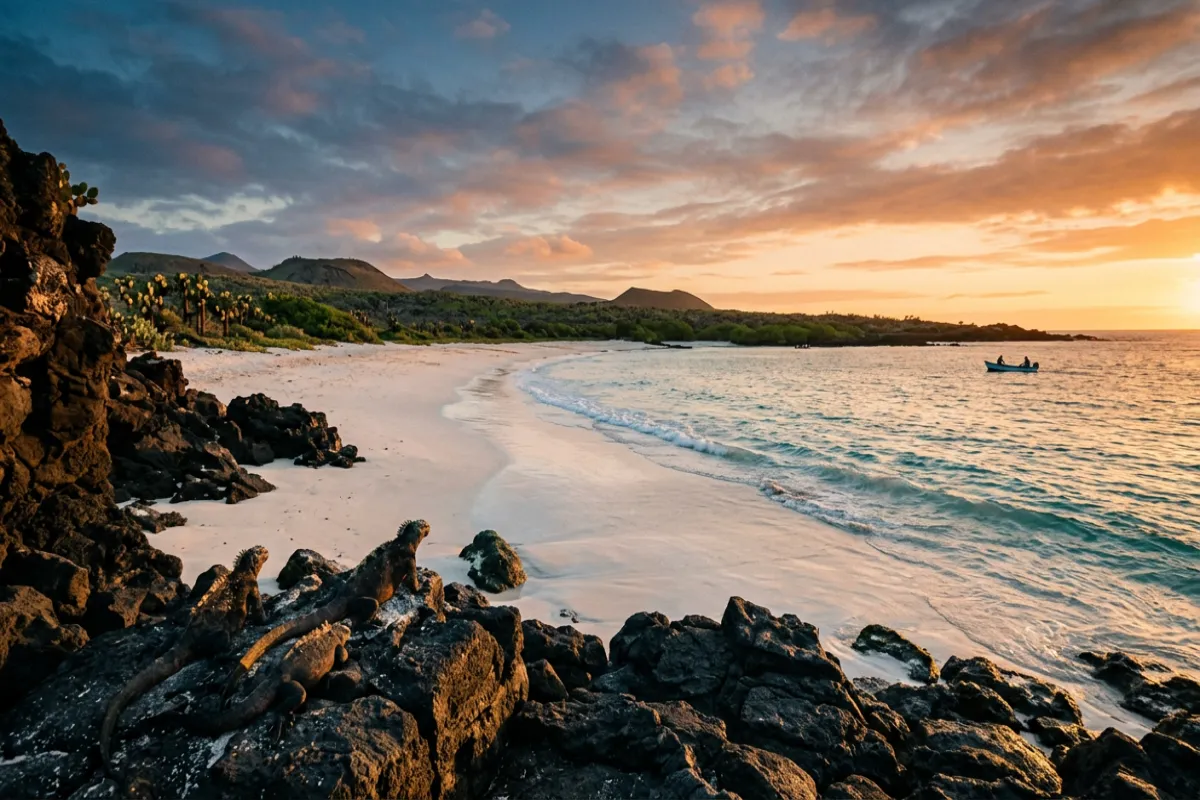
- Kayaking and Paddleboarding: Explore mangrove-lined bays and volcanic coastlines. Tortuga Bay on Santa Cruz has calm water perfect for kayaking alongside marine iguanas.
Where to Stay
Cruises (5 to 8 days) are the classic way to visit, covering remote islands inaccessible by day trip. Budget cruises start at $250 per person per day; luxury vessels run $600 to $1,000+. For island hopping, stay in Puerto Ayora (Santa Cruz), Puerto Baquerizo Moreno (San Cristobal), or Puerto Villamil (Isabela). Hotels range from $40 to $200 per night. Hostels from $15 to $30. Book cruises 3 to 6 months ahead for peak season.
Sample 5-Day Galapagos Islands Itinerary
- Day 1-2: Santa Cruz: Arrive at Baltra, transfer to Puerto Ayora. Visit the Charles Darwin Research Station and Tortuga Bay beach. Day 2: highland tortoise reserve and lava tunnels.
- Day 3-4: Isabela: Ferry to Isabela (2.5 hours). Snorkel at Las Tintoreras with penguins and sharks. Hike Sierra Negra volcano. Visit the flamingo wetlands and the Wall of Tears.
- Day 5: San Cristobal: Ferry to San Cristobal. Snorkel at Kicker Rock (day tour). Walk the waterfront with sea lions lounging on benches. Visit the Interpretation Center.
Budget Estimate
The Galapagos is expensive. Budget travelers (island hopping) can manage on $150 to $200 per day with hostels, local restaurants, and booking day tours individually. Mid-range runs $250 to $400 covering comfortable hotels, guided day tours, and inter-island ferries ($30 per trip). Cruise travelers spend $300 to $1,000+ per day all-inclusive. The $100 park fee and $20 transit card are mandatory. Bring cash; ATMs exist but are unreliable.
Planning Tools
Ready to start building your Galapagos Islands trip? Our free AI trip planner can generate a custom itinerary based on your dates, budget, and interests.
Frequently Asked Questions
How many days do you need in the Galapagos?
Five to seven days is ideal. Five days covers three islands with island hopping. A 7 to 8 day cruise visits more remote sites. Even 3 to 4 days gives you incredible wildlife encounters on Santa Cruz and one other island.
Is the Galapagos worth the cost?
Yes. The wildlife experience is unlike anywhere else on Earth. Animals are completely unafraid of humans, and the snorkeling is world-class. It is expensive but most visitors consider it a once-in-a-lifetime trip that delivers.
Do I need to book a cruise or can I island hop?
Both work. Cruises cover more ground and reach remote islands. Island hopping is cheaper and more flexible but limits you to the three main inhabited islands and their day-tour radius. Many travelers combine 2 to 3 days of island hopping with a short cruise.