| Ghana Quick Facts | |
|---|---|
| Country | Ghana (West Africa) |
| Currency | Ghanaian Cedi (GHS). 1 USD = roughly 14 GHS |
| Language | English (official). Twi, Ga, Ewe widely spoken |
| Time Zone | GMT (UTC+0) |
| Visa (US) | Required. Apply at the Ghana embassy or e-visa. $75+ |
| Daily Budget | $40 to $200+ per person |
| Best Time | November to March (dry season) |
Ghana is one of the most welcoming and accessible countries in West Africa for first-time visitors. English is the official language, the people are famously friendly, and the country has a rich history that connects to the transatlantic slave trade, powerful Ashanti kingdoms, and vibrant modern culture. Cape Coast and Elmina castles are sobering UNESCO sites that every visitor should see. The Kakum National Park canopy walkway takes you 130 feet above the rainforest floor. Accra, the capital, has a growing food and art scene. Ghana is often called the Gateway to Africa, and the name is well-earned.
For a broader framework for organizing any trip, our how to plan a trip guide covers the fundamentals.
Best Time to Visit Ghana
November through March is the main dry season with sunny skies, lower humidity, and the most comfortable conditions for travel. December and January are the best months overall. July through August is a secondary dry season that works for travel. The rainy seasons (April through June and September through October) bring heavy afternoon downpours but also green landscapes and fewer tourists. The north (Tamale, Mole) is drier overall. Temperatures are warm year-round (75 to 95 F).
Getting to Ghana
Kotoka International Airport (ACC) in Accra has direct flights from New York (about 10 hours) on United and Delta, and connections through European hubs on KLM (Amsterdam), British Airways (London), and Turkish Airlines (Istanbul). From Accra, domestic flights (Africa World Airlines) reach Kumasi and Tamale. Long-distance buses (STC, VIP Bus) connect major cities. Tro-tros (shared minibuses) are cheap but cramped. A mix of domestic flights and private cars is recommended for comfort.
Top Things to Do in Ghana
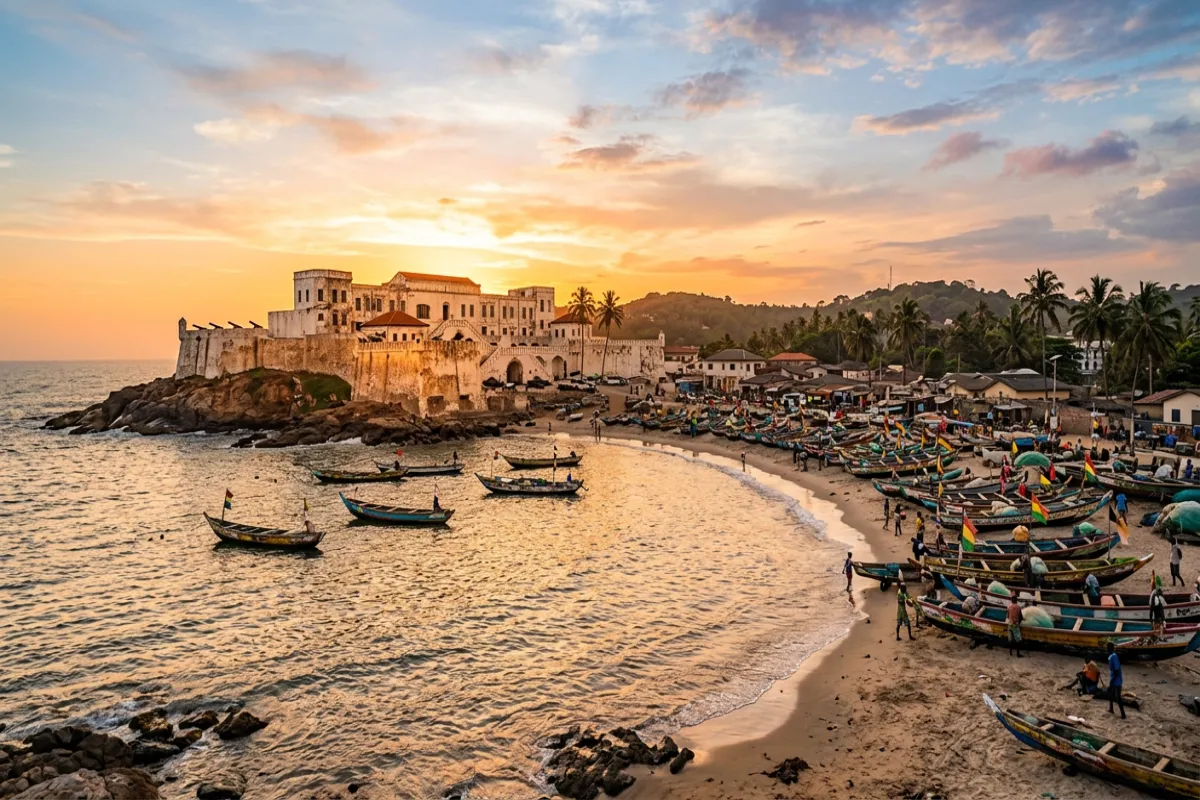
- Cape Coast Castle: A UNESCO World Heritage Site and one of the most significant slave trade sites in Africa. The dungeons where enslaved people were held before being shipped through the Door of No Return are devastating and essential to visit. Allow 1.5 to 2 hours.
- Kakum National Park Canopy Walk: A suspension bridge walkway 130 feet above the tropical rainforest canopy. Seven bridges connect tree platforms with views over the forest. About 30 minutes from Cape Coast. Entry about $5, camera fee $3.
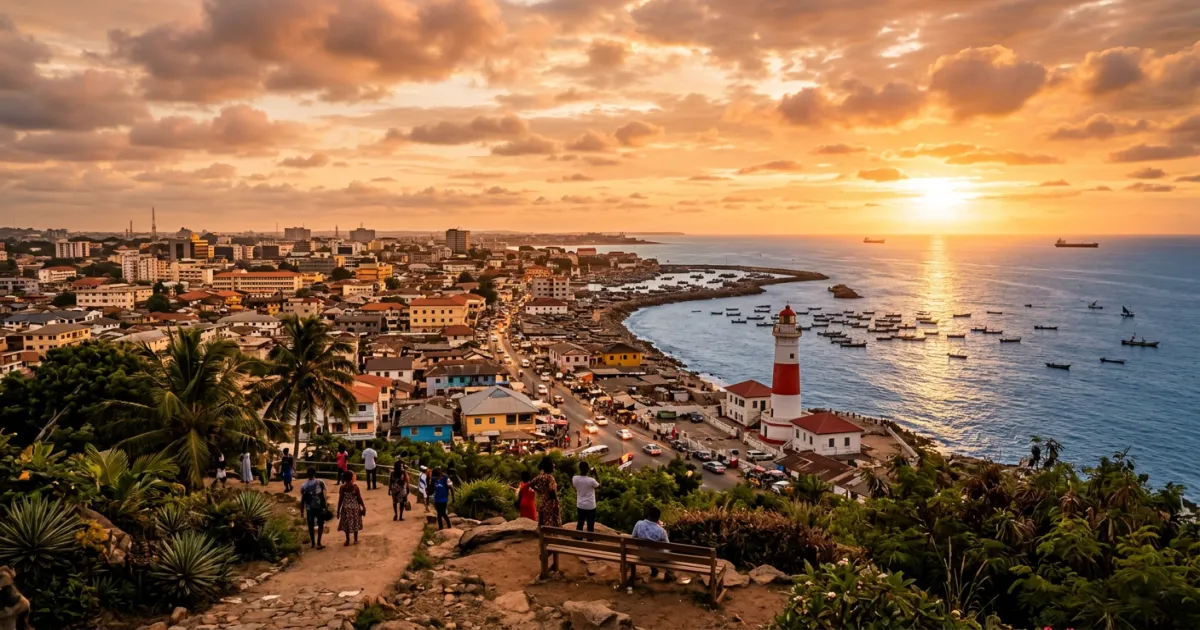
- Accra Street Food and Art: Explore the Jamestown neighborhood for street art and the lighthouse. Visit the Artists Alliance Gallery and the Kwame Nkrumah Memorial Park. Eat at the Osu Night Market or try waakye (rice and beans) from a local chop bar.
- Elmina Castle: The oldest European building in sub-Saharan Africa, built by the Portuguese in 1482. Another slave trade castle with a powerful guided tour. About 10 miles from Cape Coast.
- Mole National Park: Ghana’s largest wildlife reserve in the northern region. Walking safaris with rangers to see elephants, baboons, and antelope. The park lodge has a swimming pool overlooking a waterhole. Accessible by flight to Tamale then bus.
- Ashanti Kingdom (Kumasi): The cultural heart of the Ashanti people. Visit the Manhyia Palace Museum (seat of the Ashanti king), the massive Kejetia Market (one of the largest open-air markets in West Africa), and traditional kente cloth weaving villages.
Where to Stay
In Accra, the Osu and Labone neighborhoods have the best hotels for visitors ($50 to $200 per night). The Labadi Beach Hotel and Kempinski are the luxury options. Budget guesthouses start at $20 to $40. In Cape Coast, accommodation is more basic ($20 to $80). Mole National Park has the Mole Motel inside the park ($30 to $60). Kumasi has mid-range hotels ($30 to $100). Overall, Ghana is very affordable for accommodation.
Sample 5-Day Ghana Itinerary
- Day 1-2: Accra: Explore Accra: Jamestown, Kwame Nkrumah Memorial, National Museum, and the Art Centre Market. Evening street food tour. Day 2: Labadi Beach, the W.E.B. Du Bois Center, and dinner at a local restaurant.
- Day 3-4: Cape Coast and Kakum: Drive to Cape Coast (3 hours). Visit Cape Coast Castle and the Door of No Return. Day 4: morning at Kakum National Park canopy walk. Afternoon visit Elmina Castle. Return to Accra or continue to Kumasi.
- Day 5: Kumasi (optional): Drive or fly to Kumasi. Visit the Manhyia Palace, Kejetia Market, and a kente weaving village. This adds cultural depth beyond the coastal slave trade history.
Budget Estimate
Ghana is very affordable. Budget travelers can manage on $40 to $70 per day with guesthouses, local chop bar meals ($2 to $5), and tro-tro transport. Mid-range travelers should plan for $80 to $150 covering comfortable hotels, restaurant meals ($8 to $15), private car hire ($50 to $80 per day with driver), and site entries. Luxury is limited outside Accra but $200+ per day covers the best available. The main additional cost is the visa ($75+) which must be arranged before arrival.
Planning Tools
Ready to start building your Ghana trip? Our free AI trip planner can generate a custom itinerary based on your dates, budget, and interests.
Frequently Asked Questions
Do I need a visa for Ghana?
Yes. US citizens need a visa. You can apply through the Ghana embassy or consulate, or use the Ghana e-visa system. Single-entry tourist visas cost $75 to $150 and processing takes 1 to 2 weeks. Apply well before your trip. You also need proof of yellow fever vaccination to enter Ghana.
Is Ghana safe for tourists?
Ghana is one of the safest countries in West Africa for tourists. Accra and tourist areas are generally safe, though petty theft can occur in crowded markets and at night. Use common sense, keep valuables secure, and use trusted transportation. Ghanaians are genuinely welcoming and helpful to visitors.
What is the Year of Return?
Ghana declared 2019 the Year of Return, inviting the African diaspora to visit and connect with their heritage. The initiative continues through the Beyond the Return program. The slave castles at Cape Coast and Elmina are central to this experience. Many African Americans have visited Ghana as a deeply personal journey.