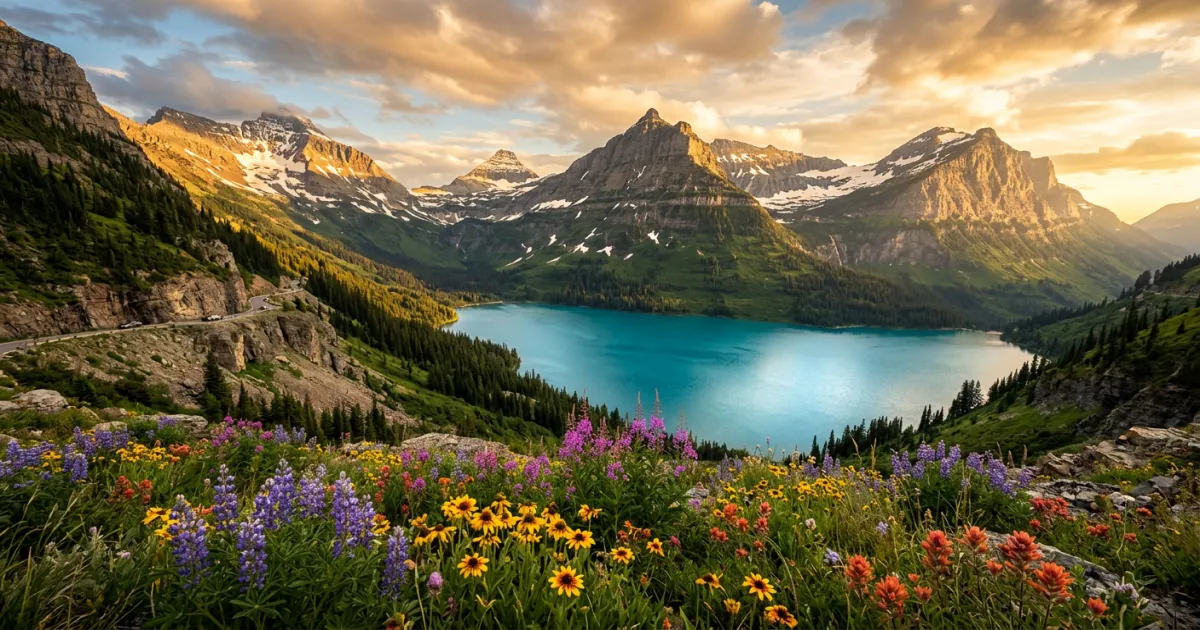
Glacier National Park in northwestern Montana is one of the most spectacular natural landscapes in North America. With over a million acres of pristine wilderness, turquoise alpine lakes, ancient glaciers, and the legendary Going-to-the-Sun Road, it draws visitors from around the world. But a trip to Glacier takes more planning than most national parks. This guide covers everything you need to know to plan your 2026 visit, from entrance fees and vehicle access to hiking trails and a day-by-day itinerary.
If you are just starting your trip planning process, check out our complete guide to planning a trip for a step-by-step framework you can apply to any destination.
Quick Facts
- Location: Northwestern Montana, bordering Canada (Waterton Lakes National Park)
- Size: Over 1 million acres, 700+ miles of hiking trails
- Entrance fee: $35 per vehicle (7-day pass), $20 per person on foot or bicycle. Children under 16 enter free.
- Best time to visit: July through mid-September, when Going-to-the-Sun Road is fully open
- Nearest airports: Glacier Park International (FCA) in Kalispell (30 minutes from West Glacier) and Missoula International (MSO), about 4.5 hours south
- Time zone: Mountain Time
- Elevation range: 3,150 feet to 10,466 feet (Mount Cleveland)
Best Time to Visit Glacier National Park
The prime season for Glacier is July through mid-September. This is when Going-to-the-Sun Road is fully open across Logan Pass, all trails are accessible, and the park’s shuttle system is running. The alpine section of Going-to-the-Sun Road typically opens in early July, though the exact date depends on snowpack and avalanche conditions each year.
July and August offer the warmest weather, the longest days, and full access to every trail and road. Expect daytime highs of 70 to 80 degrees Fahrenheit at lower elevations, but temperatures at Logan Pass (6,646 feet) can be 20 to 25 degrees cooler. Wildflowers peak in late July and early August.
June and late September are shoulder season. You will find fewer crowds and lower prices, but some roads and trails may still be closed due to snow. Going-to-the-Sun Road is typically closed to vehicles at higher elevations during these months, though the lower sections remain open.
Winter (November through April) transforms Glacier into a quiet, snow-covered wilderness. Most roads close, but cross-country skiing and snowshoeing are popular. The entrance fee drops to $25 per vehicle during this period.
How Long to Spend at Glacier
Plan for a minimum of 3 to 5 days to see Glacier’s highlights. A 3-day trip lets you drive Going-to-the-Sun Road, visit Many Glacier, and do a couple of major hikes. Five days gives you time to explore Two Medicine, the North Fork area, and tackle longer trails like Grinnell Glacier or Highline Trail without feeling rushed.
For a thorough visit that covers all major areas of the park plus some backcountry adventures, 7 days is ideal. Many visitors combine Glacier with nearby Flathead Lake, Whitefish, or even a cross-border trip to Waterton Lakes National Park in Alberta, Canada.
Budget and Costs
Entrance Fees (2026)
- Private vehicle (7-day pass): $35
- Motorcycle (7-day pass): $30
- Per person, foot/bicycle (7-day pass): $20
- Glacier Annual Pass: $70
- America the Beautiful Annual Pass: $80 (covers all national parks)
- International visitors: $100 additional per person (age 16+) unless holding an annual pass. Non-US residents can purchase an America the Beautiful Pass for $250 to avoid the surcharge.
Important: Glacier National Park does not accept cash. All transactions are card-only.
Daily Budget Ranges
- Budget ($75 to $120/day per person): Camping ($20 to $35/night per site), cooking your own meals, and free ranger-led programs
- Mid-range ($150 to $250/day per person): Gateway town hotels or Airbnbs ($150 to $250/night), mix of restaurant meals and packed lunches
- Splurge ($300+/day per person): Historic park lodges like Many Glacier Hotel ($250 to $450+/night), guided tours, and dining in the park
Track your spending with our travel budget template to stay on top of costs before and during your trip.
Getting to Glacier National Park
By Air
Glacier Park International Airport (FCA) in Kalispell is the closest airport, just 30 minutes from the West Glacier entrance. Major carriers including Alaska, Delta, United, and Allegiant serve FCA with seasonal and year-round routes. This is the best option for most visitors.
Missoula International Airport (MSO) is about 4.5 hours south and may offer more flight options and lower fares. It works well if you plan to combine Glacier with a broader Montana road trip.
By Train
Amtrak’s Empire Builder is one of the most scenic train routes in the country, running daily between Chicago/Minneapolis and Seattle/Portland. It stops at three stations near the park:
- West Glacier (Belton) at the park’s western entrance
- East Glacier Park (summer only, roughly May through September), less than a mile from the historic Glacier Park Lodge
- Whitefish, about 25 miles from West Glacier with rental car agencies and shuttles
By Car
From Kalispell, take US-2 East about 30 miles to West Glacier. From the east, US-2 or US-89 lead to the East Glacier and St. Mary entrances. If you are driving from Yellowstone, the trip takes about 6 to 7 hours via I-15 and US-2 (or consider our Yellowstone planning guide for combining the two parks on a road trip). Use our road trip itinerary template to map out your driving route.
Where to Stay
Inside the Park
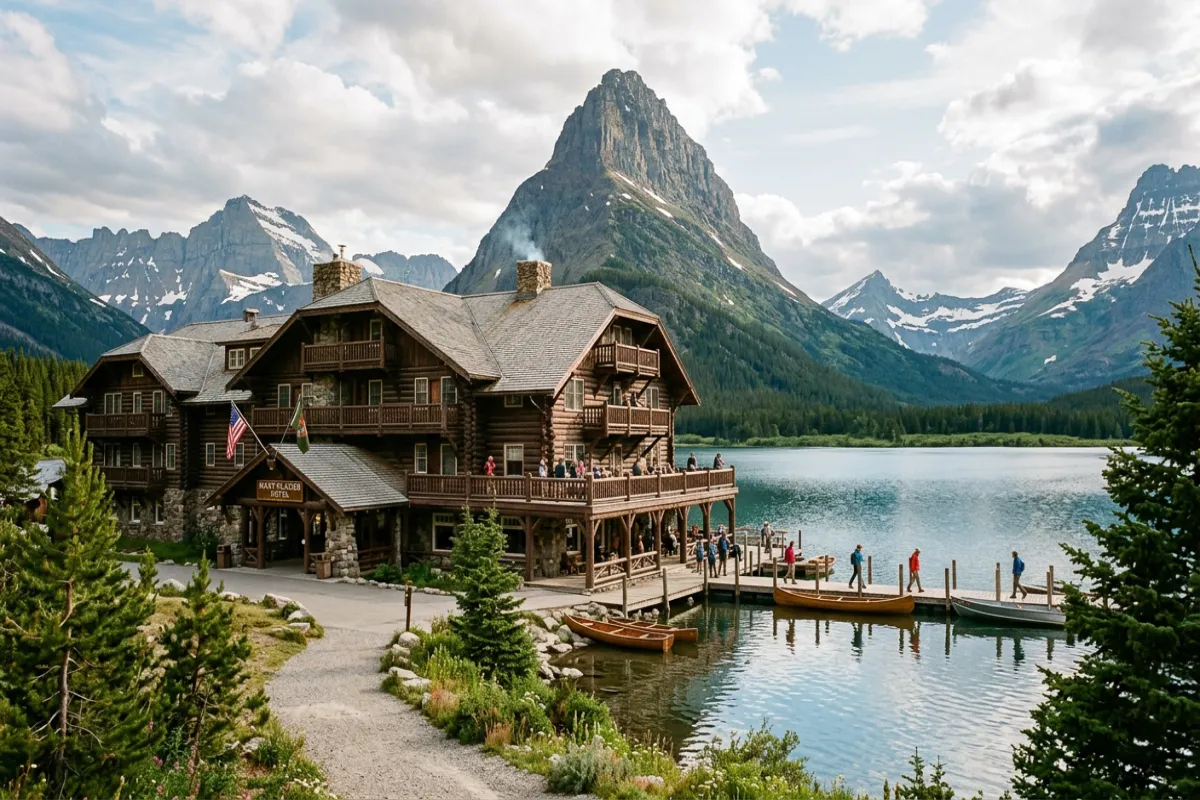
- Many Glacier Hotel: A historic Swiss-style lodge on the shores of Swiftcurrent Lake, with stunning mountain views. Book through glaciernationalparklodges.com as early as 13 months ahead. Rooms sell out fast.
- Lake McDonald Lodge: On the west side of the park along the shore of Lake McDonald. Rustic charm with a mix of lodge rooms and cabins.
- Rising Sun Motor Inn: Simple motel-style rooms on the east side, near St. Mary Lake. A more affordable in-park option.
- Granite Park Chalet: Backcountry chalet accessible only by hiking (7.6 miles from Logan Pass via the Highline Trail). Reservations required well in advance.
Gateway Towns
- Whitefish: The most popular base for Glacier visitors. A charming ski town with restaurants, breweries, and lodging at every price point. About 35 minutes from West Glacier.
- Kalispell: Larger town with more hotel chains and lower prices. About 30 minutes from the park.
- West Glacier: Right at the park entrance. Limited lodging but the most convenient location.
- East Glacier: Quieter, on the Blackfeet Reservation side. Home to the historic Glacier Park Lodge at the Amtrak station.
- St. Mary: Gateway to the east side and Going-to-the-Sun Road’s eastern terminus.
Camping
Glacier has 9 campgrounds, ranging from $15 to $35 per night. Reservable campgrounds can be booked on Recreation.gov on a 6-month rolling basis. The most popular are:
- Many Glacier: Close to the best hiking in the park. Fills up quickly.
- Fish Creek: Near Lake McDonald on the west side. Reservable.
- St. Mary: Large campground near the east entrance. Some first-come, first-served sites.
- Apgar: Near the West Glacier entrance and Apgar Village.
2026 Note: Two Medicine Campground is closed for the entire 2026 season due to construction. Plan accordingly if you were hoping to camp in that area.
Pro tip: Book your camping and lodging reservations at least 6 months in advance. Lodge reservations open 13 months ahead on a rolling monthly basis. Missing these windows often means missing out entirely during peak season.
Must-See Attractions
Going-to-the-Sun Road
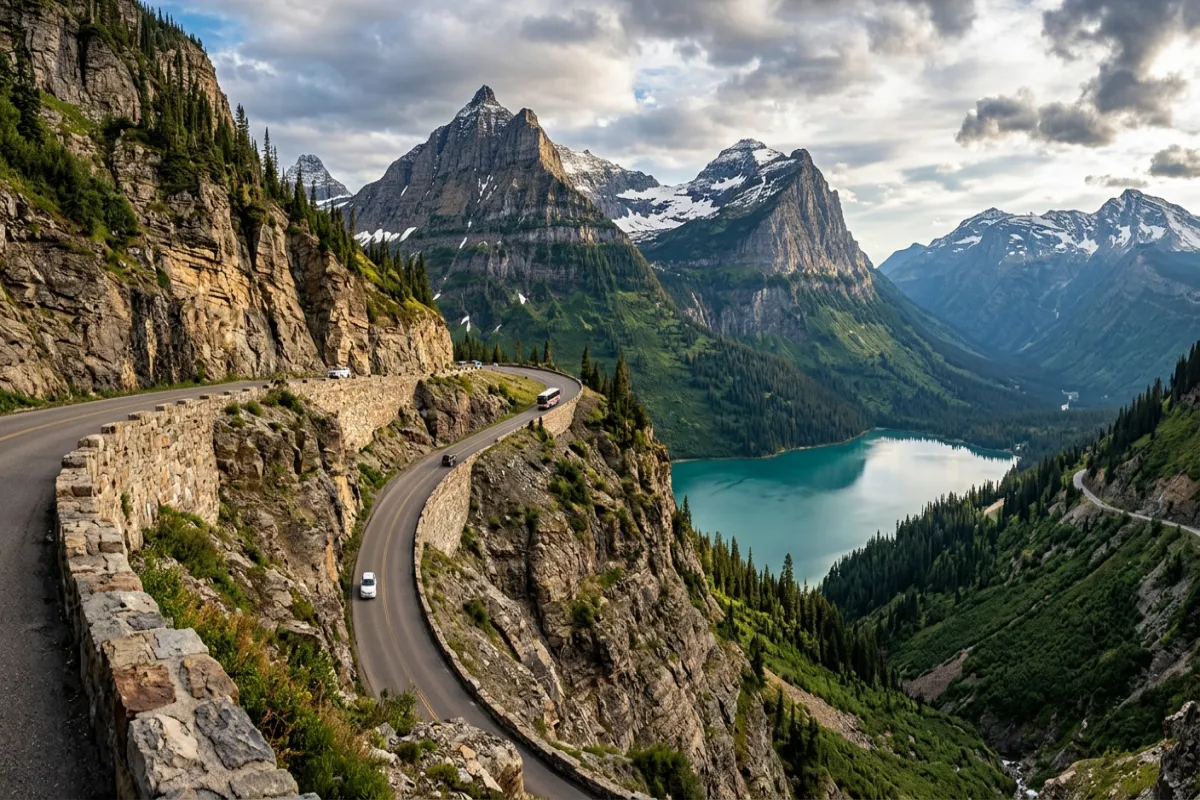
This 50-mile engineering marvel crosses the Continental Divide at Logan Pass (6,646 feet) and is widely considered one of the most beautiful drives in the world. The full road typically opens in early July and closes in mid-October, depending on weather. Plan at least 2 to 3 hours for the drive without stops, or a full day if you want to pull over at viewpoints and take short walks.
2026 Update: Vehicle reservations are not required to drive Going-to-the-Sun Road in 2026. However, beginning July 1, 2026, parking at Logan Pass is limited to 3 hours. If you plan a longer hike from Logan Pass (such as the Highline Trail), you will need to take the park’s hiker express shuttle and book tickets in advance on Recreation.gov.
Many Glacier
Often called the “Switzerland of North America,” Many Glacier is the park’s premier area for hiking and wildlife viewing. The Grinnell Glacier Trail, Iceberg Lake, and Cracker Lake are all accessed from here. Arrive early, as parking fills before 7 a.m. in July and August.
Lake McDonald
The largest lake in the park (10 miles long), located on the west side. Famous for its colorful rocks visible through crystal-clear water. The area around Lake McDonald Lodge offers easy access and gentle trails.
Two Medicine
A quieter section on the park’s southeast side with beautiful alpine lakes and fewer crowds than Many Glacier or Logan Pass. Great for families and those looking for solitude. Note that camping is unavailable here in 2026, but day hiking is still possible.
Avalanche Lake
A 5.9-mile round-trip hike through old-growth forest to a stunning lake surrounded by waterfalls and cliffs. One of the park’s most popular hikes. 2026 Note: Avalanche Lake and the Trail of the Cedars are not accessible by the park shuttle in 2026. You will need to drive and park to access these trails.
Hiking Guide
Easy Trails
- Trail of the Cedars: 0.7 miles, boardwalk loop through ancient western red cedar and hemlock forest. Wheelchair accessible.
- Running Eagle Falls (Trick Falls): 0.6 miles round trip in the Two Medicine area. A waterfall that changes appearance depending on water levels.
- Hidden Lake Overlook: 2.7 miles round trip from Logan Pass. Boardwalk and gravel path to panoramic views of Hidden Lake and the surrounding peaks. One of the best short hikes in the park.
Moderate Trails
- Avalanche Lake: 5.9 miles round trip, 730 feet elevation gain. Through old-growth forest to a glacier-fed lake.
- St. Mary and Virginia Falls: 3.6 miles round trip from the St. Mary Falls trailhead. Two beautiful waterfalls in one hike.
- Grinnell Lake: 6.8 miles round trip in the Many Glacier area. A great “recovery day” hike through evergreen forest to a turquoise lake.
Strenuous Trails
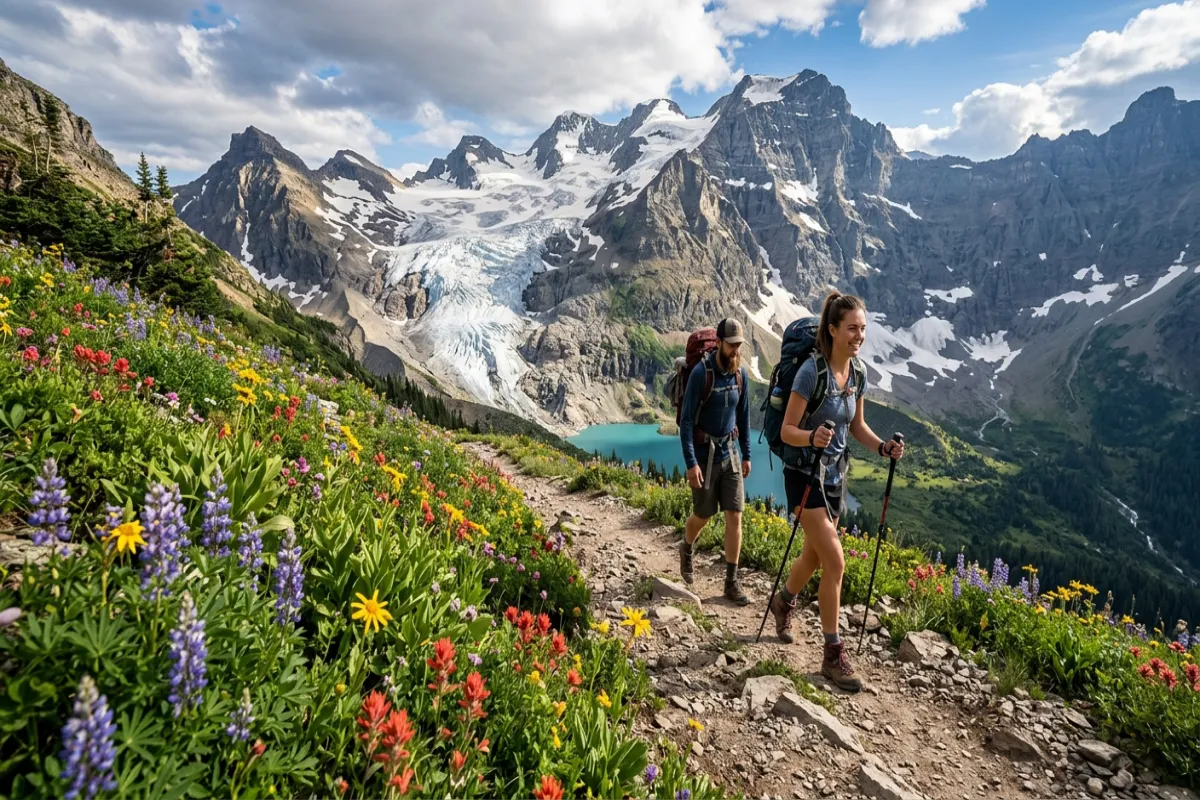
- Grinnell Glacier: 10.6 miles round trip (or 7.2 miles with the boat shuttle across Swiftcurrent Lake and Lake Josephine), 1,600 feet of elevation gain. One of the few trails that leads directly to a glacier viewpoint. Allow 5 to 7 hours. Boat shuttle tickets sell out; purchase in advance.
- Highline Trail: 11.8 miles point-to-point from Logan Pass to The Loop (or continue to Granite Park Chalet). Follows the Continental Divide with jaw-dropping views the entire way. Arrange a shuttle or car shuttle for the return. 2026 Note: Since Logan Pass parking is limited to 3 hours, you must use the hiker express shuttle for this trail.
- Iceberg Lake: 9.7 miles round trip from Many Glacier. A moderately strenuous hike to a lake with floating icebergs well into summer.
Trail Safety
- Always check the NPS trail status reports before heading out, as conditions change rapidly
- Carry bear spray and know how to use it (see Wildlife section below)
- Pack layers regardless of the forecast. Temperatures at higher elevations can be 20 to 25 degrees cooler than the valley floor
- Start early. Trailhead parking fills before 7 a.m. at popular spots in July and August
- Bring plenty of water. There are no water refill stations on most trails
Wildlife
Glacier is home to an extraordinary range of wildlife. Knowing what to expect and how to stay safe makes the experience much better.
- Grizzly bears: An estimated 300+ grizzlies live in and around the park. They are most active in early morning and evening. Make noise while hiking, travel in groups, and never approach a bear.
- Black bears: More common than grizzlies and found throughout the park, especially in forested areas.
- Mountain goats: The park’s unofficial mascot. Commonly seen at Logan Pass, Hidden Lake Overlook, and along the Highline Trail.
- Bighorn sheep: Often spotted along Going-to-the-Sun Road and near Many Glacier.
- Moose: Found in marshy areas, especially around Many Glacier and the North Fork.
- Mountain lions, wolverines, and wolves: Present but rarely seen.
Bear spray is essential. Purchase it at any of the park’s visitor centers or outdoor shops in gateway towns. Keep it accessible (not in your backpack) and know how to deploy it. Bear spray has been shown to be more effective than firearms at stopping bear charges.
Store all food, coolers, and scented items in bear-proof containers or your vehicle’s trunk. Never leave food unattended.
Practical Tips for 2026
- No vehicle reservations required in 2026: Unlike recent years, you do not need a timed-entry reservation to drive Going-to-the-Sun Road. However, parking at Logan Pass is limited to 3 hours starting July 1.
- Shuttle reservations: The park shuttle system is reservation-only in 2026. Tickets are available on Recreation.gov: 60-day advance tickets starting May 2 at 8 a.m. MDT, and next-day tickets at 7 p.m. MDT starting June 30.
- Book lodging 6 to 13 months ahead: Park lodges release reservations 13 months in advance. Gateway town hotels fill up 3 to 6 months ahead for peak season.
- Gas up before entering: There are no gas stations inside Glacier National Park. Fill up in West Glacier, St. Mary, East Glacier, or Whitefish.
- No cell service in most of the park: Don’t rely on your phone for maps or communication. Download offline maps before you arrive and let someone know your hiking plans.
- Altitude awareness: Logan Pass sits at 6,646 feet, and many trails go higher. If you are coming from sea level, take it easy on your first day and stay hydrated.
- Weather changes fast: Even in July and August, sudden storms, hail, and temperature drops are common at higher elevations. Always pack rain gear and warm layers.
- Card-only park: Glacier does not accept cash for entrance fees or services.
- Arrive early: Popular parking areas (Logan Pass, Many Glacier, Avalanche) fill before 7 a.m. in peak season. Arriving by 6 a.m. is not unusual.
Sample 5-Day Glacier Itinerary
Day 1: West Side Arrival
Arrive at Glacier Park International Airport (or drive in). Check into lodging in Whitefish or West Glacier. Drive to Apgar Village for an evening stroll along the shore of Lake McDonald. Stop at the Apgar Visitor Center for maps, trail updates, and bear spray. Watch the sunset over the lake.
Day 2: Going-to-the-Sun Road
Start early (by 6:30 a.m.) and drive the full Going-to-the-Sun Road from west to east. Stop at viewpoints including The Loop, Bird Woman Falls Overlook, and Logan Pass. At Logan Pass, hike the Hidden Lake Overlook trail (2.7 miles round trip, about 90 minutes). Continue east to St. Mary, stopping at Wild Goose Island Overlook and Sun Point. Drive back via the same route or loop around the park’s southern boundary on US-2.
Day 3: Many Glacier
Drive to Many Glacier (enter from Babb on the east side). Arrive before 7 a.m. for parking. Hike the Grinnell Glacier Trail (10.6 miles, 5 to 7 hours) or the shorter Grinnell Lake trail (6.8 miles, 3 to 4 hours). Watch for moose, bears, and mountain goats. End the day at Many Glacier Hotel for a drink on the patio overlooking Swiftcurrent Lake.
Day 4: Two Medicine and East Side
Explore the Two Medicine area. Hike to Running Eagle Falls and then take the boat across Two Medicine Lake to hike to Twin Falls (total about 4 miles round trip with boat). In the afternoon, visit the Museum of the Plains Indian in Browning or simply enjoy a quieter pace. This is a good recovery day after the Grinnell Glacier hike.
Day 5: Highline Trail or Avalanche Lake
For your final day, choose based on your energy. Take the hiker express shuttle to Logan Pass and hike the Highline Trail to Granite Park Chalet and The Loop (11.8 miles point-to-point, arrange a car shuttle or hitch back). Alternatively, drive to the Avalanche Creek trailhead and hike to Avalanche Lake (5.9 miles round trip). Depart in the afternoon or extend your stay.
Use our AI travel planner to customize this itinerary based on your travel dates, fitness level, and interests.
Planning Tools
- How to Plan a Trip (step-by-step guide)
- AI Travel Planner for building a personalized Glacier itinerary
- Travel Budget Template
- Road Trip Itinerary Template
- Recreation.gov for shuttle tickets and campground reservations
- Glacier National Park Lodges for in-park accommodations
Related Guides
- How to Plan a Trip to Yellowstone (combine with Glacier for the ultimate Montana road trip)
- How to Plan a Trip to Alaska
Frequently Asked Questions
Do I need a reservation to drive Going-to-the-Sun Road in 2026?
No. Vehicle reservations are not required in 2026. You can drive Going-to-the-Sun Road freely with a valid park entrance pass. However, parking at Logan Pass is limited to 3 hours starting July 1, and the park shuttle requires advance reservations.
When does Going-to-the-Sun Road fully open?
The full road, including the alpine section over Logan Pass, typically opens in early July. The exact date varies each year depending on snowfall and avalanche conditions. Lower sections of the road are open earlier.
Is bear spray really necessary?
Yes. Bear spray is strongly recommended (and practically considered required) for all hikers. Glacier has one of the highest concentrations of grizzly bears in the lower 48 states. You can purchase bear spray at visitor centers and gateway town outdoor shops. It costs about $40 to $55 per canister.
Can I visit Glacier as a day trip?
You can drive Going-to-the-Sun Road in a single day, but you will only scratch the surface. We recommend at least 3 days to experience the park’s highlights.
What if I am an international visitor?
As of 2026, non-US residents age 16 and older pay an additional $100 per person surcharge on top of the regular entrance fee, unless they hold an Annual or America the Beautiful Pass. The non-resident annual pass costs $250.
Is there cell service in Glacier?
Cell service is extremely limited. You may get a signal at Apgar Village, Lake McDonald Lodge, and some gateway towns, but expect no service on trails or along most of Going-to-the-Sun Road. Download offline maps before you arrive.
How do I get shuttle tickets?
Shuttle tickets for 2026 are available on Recreation.gov for a $1 processing fee. They release in two windows: 60 days in advance (starting May 2 at 8 a.m. MDT on a rolling basis) and next-day tickets at 7 p.m. MDT (starting June 30). All riders age 2 and older need a ticket.