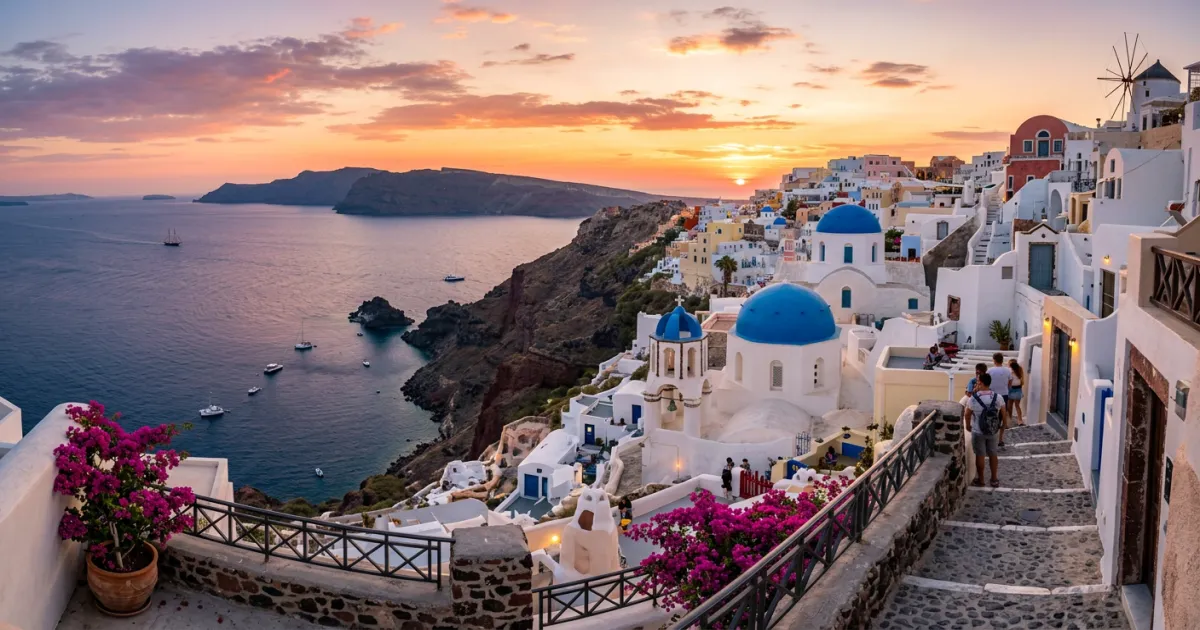
Greece is one of those destinations that lives up to the hype. Ancient ruins sitting next to turquoise water, whitewashed villages perched on volcanic cliffs, and food so fresh it changes how you think about a simple tomato. Whether you want to explore Athens, hop between islands, or do both, this guide covers everything you need to plan your 2026 trip.
| Greece Quick Facts | |
|---|---|
| Visa | No visa needed for US citizens (90 days within 180-day period, Schengen rules). ETIAS pre-authorization (~$23) expected to launch late 2026. |
| Currency | Euro (EUR) |
| Language | Greek (English widely spoken in tourist areas) |
| Time Zone | EET (UTC+2), EEST (UTC+3) in summer |
| Best Time to Visit | May-June and September-October |
| Daily Budget | Budget: ~$55-90/day | Mid-range: ~$110-165/day | Luxury: $220+/day |
| Flight Time from US | 9-12 hours (East Coast nonstop to Athens) |
Best Time to Visit Greece
The sweet spot for visiting Greece is May through June and September through October. During these shoulder months, you get warm weather (mid-70s to mid-80s F), manageable crowds, and better prices on hotels and ferries.
July and August are peak season. Temperatures regularly hit 95-100F, especially in Athens and on southern islands. Prices jump 40-60% compared to shoulder season, and popular spots like Santorini and Mykonos get packed. Ferry tickets sell out, restaurants have long waits, and hotel rates double or triple.
If you can only travel in summer, consider less touristy islands like Naxos, Milos, or the Ionian Islands. They still get busy but nothing like the Santorini crowds.
Winter (November through March) means lower prices and fewer tourists, but many island hotels, restaurants, and ferry routes shut down. Athens and Thessaloniki remain good year-round destinations, and Crete stays relatively mild in winter.
How Long to Stay in Greece
For a first trip, plan at least 7 to 10 days. That gives you enough time for 2-3 days in Athens plus 4-5 days on one or two islands without feeling rushed.
If you want to do a proper island-hopping trip, aim for 14 days. Two weeks lets you explore Athens, visit 3-4 islands at a comfortable pace, and build in buffer time for ferry delays or weather days.
A common mistake is trying to cram too many islands into a short trip. Ferry connections take time (often 2-5 hours between islands), and you lose half a day each time you move. Better to spend 2-3 nights per island than one night at five different stops.
Budget and Costs
Greece is generally cheaper than Western European countries like France, Italy, or the UK, though popular islands like Santorini and Mykonos push prices closer to Western European levels.
Daily Budget Ranges
Budget ($55-90/day): Hostel dorms or budget guesthouses ($16-28/night), street food and taverna meals ($16-28/day for food), public transport, and free beaches. Totally doable on the mainland and less touristy islands.
Mid-range ($110-165/day): Three-star hotels ($75-130/night), sit-down restaurant meals ($38-55/day for food), inter-island ferries ($22-75 per route), and paid archaeological sites ($11-33 per site).
Luxury ($220+/day): Boutique hotels with caldera views ($165-330+/night), fine dining ($90-130/day), private tours, and sunset sailing trips.
Where Your Money Goes
Flights from the US to Athens typically run $500-900 round trip from the East Coast and $650-1,100 from the West Coast, depending on season and how far ahead you book. Booking 3-4 months ahead usually gets the best fares.
Island prices vary dramatically. Naxos and Crete can be 40-60% cheaper than Santorini and Mykonos for similar quality hotels and restaurants. If you are on a budget, choosing the right islands makes a huge difference.
A travel budget template can help you track spending across categories and avoid surprises.
Island Hopping Guide
Greek island hopping is the highlight of most trips, and the ferry system makes it surprisingly accessible. Here is a breakdown of the main island groups.
Cyclades
The most popular group, known for whitewashed buildings and blue-domed churches. Key islands include Santorini (dramatic caldera views, sunsets), Mykonos (nightlife, beaches), Naxos (longest beaches, most affordable of the group), Paros (windsurfing, charming villages), and Milos (volcanic beaches, quieter vibe). Ferry connections between Cycladic islands are frequent, especially May through October.
Ionian Islands
On the western side of Greece, these islands are greener and get more rainfall. Corfu has Venetian architecture and lush scenery. Zakynthos is famous for Navagio (Shipwreck) Beach. Kefalonia has dramatic coastlines and was featured in Captain Corelli’s Mandolin. These islands connect by ferry from mainland ports like Patras and Igoumenitsa rather than from Athens.
Dodecanese
Close to Turkey in the southeastern Aegean. Rhodes has a medieval Old Town (a UNESCO World Heritage Site). Kos is known for beaches and the birthplace of Hippocrates. These islands work well if you are also visiting Turkey.
Crete
Greece’s largest island deserves its own category. Crete has enough to fill an entire vacation: the Samaria Gorge (one of Europe’s longest gorges), the Minoan palace at Knossos, beautiful beaches like Elafonisi and Balos, and incredible food. You could spend two weeks on Crete alone and not run out of things to do.
Ferry System
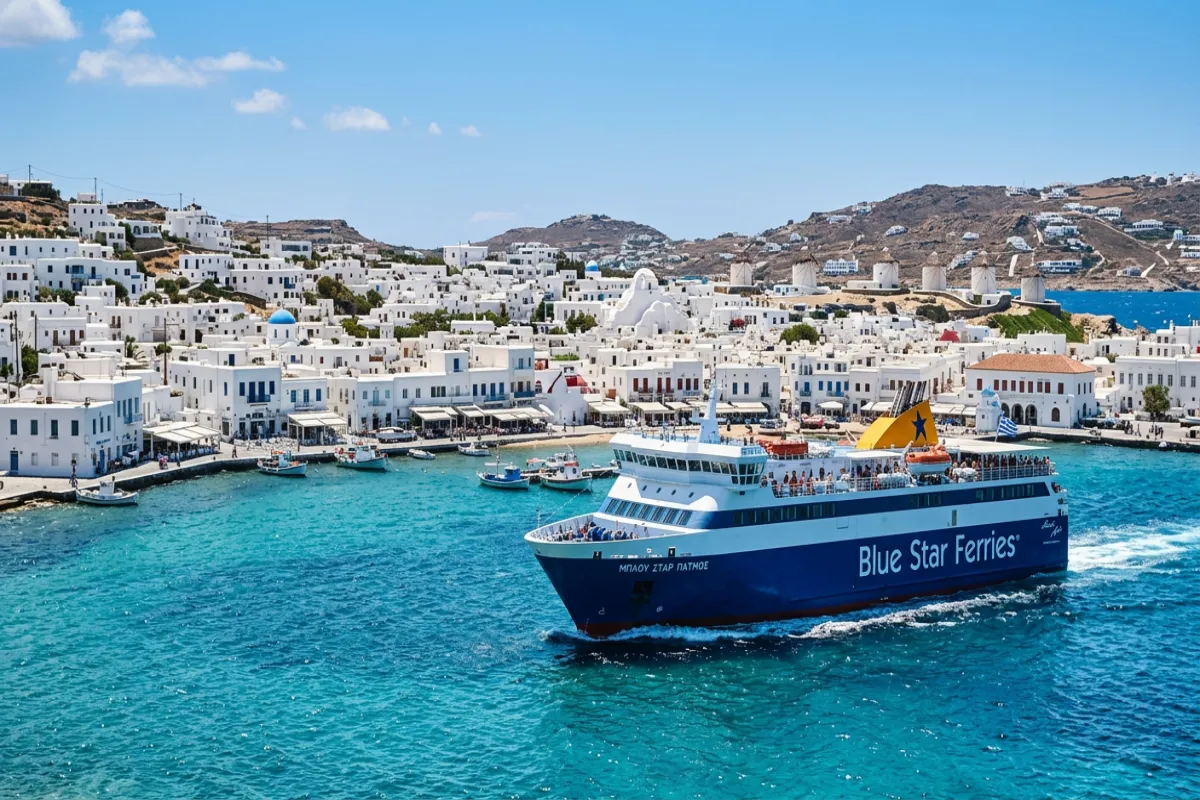
Two main companies dominate: Blue Star Ferries (slower, cheaper, more comfortable for overnight routes) and SeaJets (high-speed catamarans, faster but pricier and rougher in wind). Book through Ferryhopper for easy schedule comparison and booking.
Piraeus (Athens’ main port) is the hub for most island routes, with 12 gates serving different destinations. Rafina port (northeast of Athens) serves Mykonos, Tinos, and Andros with shorter crossing times.
Key tip: Book popular summer routes 2-4 weeks ahead. Ferries from Athens to Santorini can sell out in July and August.
Getting There and Around
Getting to Greece
Athens International Airport (ATH) is the main gateway, with nonstop flights from New York (JFK/EWR), Philadelphia, Chicago, and several other US cities during summer. Many European airlines offer one-stop connections through their hubs year-round.
If you have a layover in Athens, you can see more than you might expect. The city center is just 40 minutes from the airport by metro.
Domestic Flights
Aegean Airlines and Sky Express connect Athens to most major islands in 30-60 minutes. Domestic flights cost $40-150 one way and save significant time versus ferries, especially to distant islands like Crete, Rhodes, or Corfu.
Getting Around Islands
Most islands have local bus systems that cover main routes and beaches. Scooter and ATV rentals are popular on smaller islands ($15-30/day). Car rental works best on larger islands like Crete, Rhodes, and Corfu where distances are greater. Expect to pay $30-60/day for a compact car in summer.
In Athens, the metro system is clean, efficient, and covers most tourist areas. A single ticket costs about $1.50.
Where to Stay
Athens Neighborhoods
Plaka: Charming pedestrian streets right below the Acropolis. Most central location for sightseeing. Expect to pay more for the location.
Monastiraki: Great for nightlife, street food, and the famous flea market. Slightly edgier than Plaka but very convenient.
Koukaki: A quieter residential area just south of the Acropolis. Good value hotels and authentic neighborhood restaurants.
Psyrri: Athens’ creative quarter with street art, craft cocktail bars, and tavernas. Walking distance to most major sites.
Island Accommodation
On Santorini, Oia is famous for sunset views and caldera-edge hotels (premium prices). Fira is the capital and more affordable, with good restaurants and nightlife. Imerovigli offers caldera views at slightly lower prices than Oia.
Across the islands, you will find everything from simple family-run guesthouses ($40-70/night) to luxury boutique hotels ($200+/night). Many smaller islands still have traditional rooms-to-let (“domatia”) where locals rent spare rooms.
Greece has specific regulations on short-term rentals. Airbnb and similar platforms operate legally, but listings must be registered. You will notice registration numbers on legitimate listings.
Must-See and Must-Do
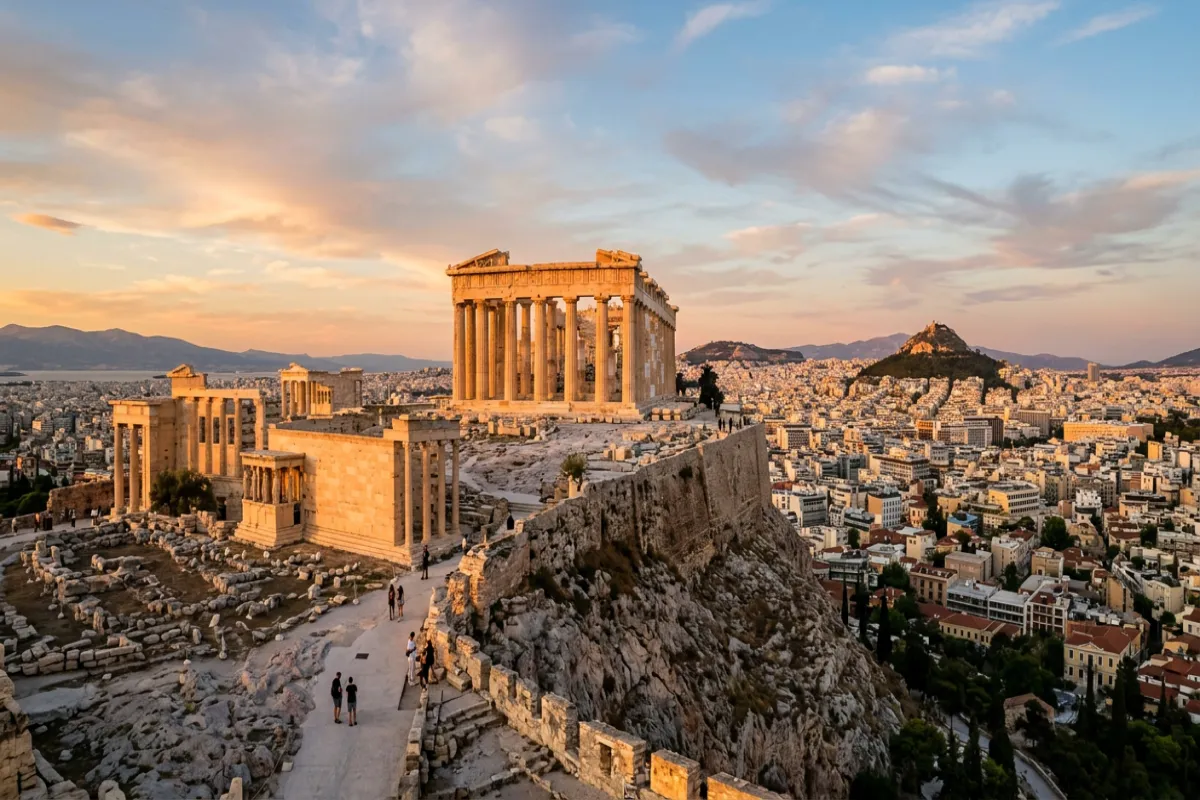
The Acropolis, Athens: No trip to Greece is complete without it. The Parthenon, Erechtheion, and Temple of Athena Nike sit atop the ancient citadel. Visit early morning or late afternoon to avoid crowds and heat. Entry is about $22.
Santorini Sunset: Watch from Oia’s castle ruins for the classic experience, or take a sunset sailing trip around the caldera for something more private.
Meteora: Six monasteries perched on towering rock pillars in central Greece. One of the most dramatic landscapes in Europe. Accessible as a day trip from Athens (about 4.5 hours by train) or as an overnight stop.
Delphi: The ancient “center of the world” with its temple ruins and stunning mountain setting. A popular day trip from Athens (2.5 hours by car).
Samaria Gorge, Crete: A 10-mile hike through one of Europe’s longest gorges, ending at a coastal village. Open May through October. Plan for a full day.
Beach Hopping: Greece has thousands of beaches ranging from organized spots with sunbeds and bars to hidden coves accessible only by boat. Some standouts include Navagio Beach (Zakynthos), Elafonisi (Crete), Sarakiniko (Milos), and Red Beach (Santorini).
Ancient Ruins Beyond Athens: Olympia (birthplace of the Olympics), Epidaurus (ancient theater with perfect acoustics), Mycenae (Bronze Age citadel), and the Temple of Poseidon at Cape Sounion (stunning sunset spot south of Athens).
Food and Dining
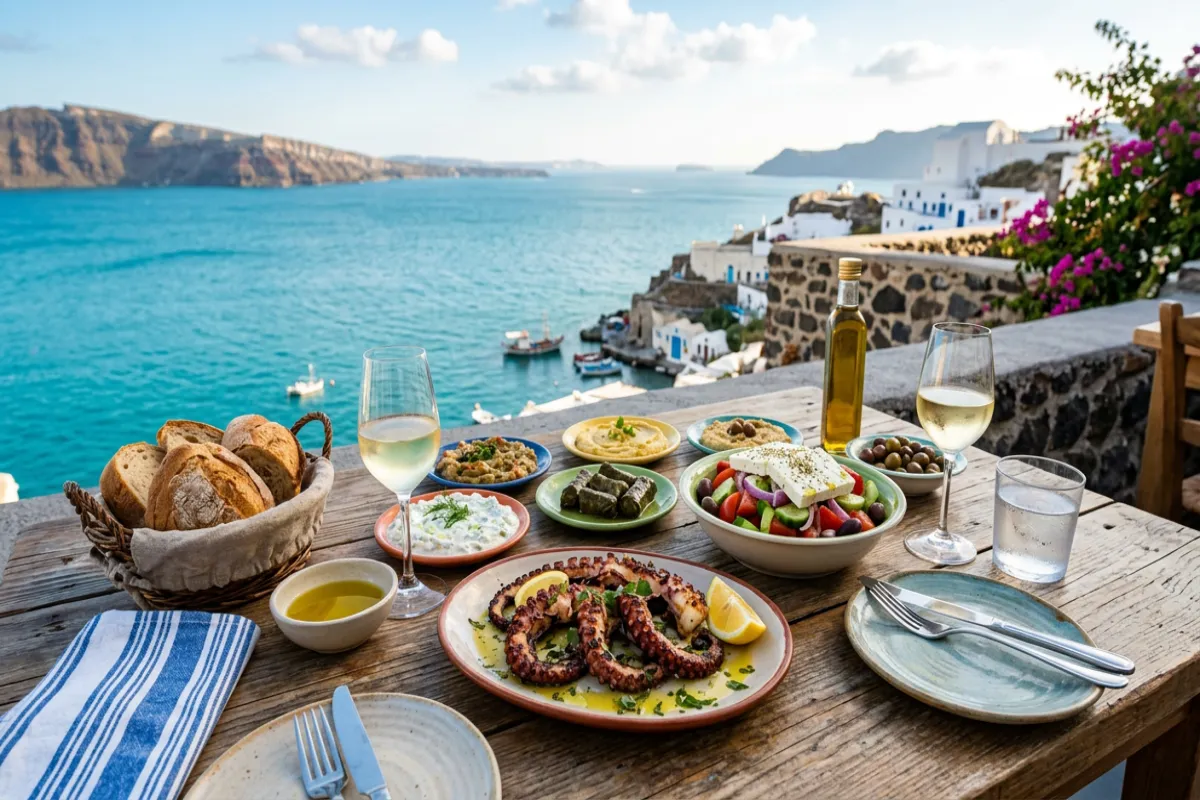
Greek food is one of the best parts of any trip. It is simple, ingredient-driven, and consistently good even at casual spots.
Tavernas are the backbone of Greek dining. These casual restaurants serve traditional dishes at reasonable prices. Look for ones that locals frequent rather than places right on the tourist strip with picture menus.
Must-try dishes: Souvlaki and gyros (the ultimate Greek street food, $3-8), Greek salad with local tomatoes, cucumber, olives, and feta, moussaka (eggplant and meat casserole), fresh grilled fish priced by the kilo (ask the price before ordering), spanakopita (spinach and feta pie), and mezze platters (shared small plates, perfect with ouzo or tsipouro).
Dining customs: Greeks eat late. Lunch is typically 1-3 PM and dinner starts at 9 PM or later. Restaurants stay open late, often past midnight in summer. Tipping is appreciated but not as rigid as in the US. Rounding up the bill or leaving 5-10% is standard. Many tavernas bring a small complimentary dessert (often fruit or a sweet) at the end of the meal.
Drinks: Greek coffee (similar to Turkish coffee) is a ritual worth trying. Freddo espresso and freddo cappuccino are popular cold options. For alcohol, try ouzo (anise-flavored spirit, served with water and ice), tsipouro (grape-based spirit), and local wines from regions like Santorini (Assyrtiko variety) and Nemea on the Peloponnese.
Practical Tips
Siesta hours: Many shops and businesses close between roughly 2-5 PM, especially on islands and in smaller towns. Plan museum visits and shopping around this schedule.
Cash is still important: While Athens and major tourist areas accept cards widely, smaller islands, family tavernas, and local shops often prefer or only accept cash. Carry euros with you, especially when visiting smaller islands.
Sun protection: Greek sun is intense, especially June through September. Bring reef-safe sunscreen (SPF 50+), a hat, and sunglasses. Hydrate constantly. Heatstroke is a real risk during summer sightseeing.
Water safety: Tap water is safe to drink in Athens and most mainland cities. On some islands, tap water is desalinated and safe but may taste different. Bottled water is cheap and widely available.
Power outlets: Greece uses Type C and Type F plugs (standard European two-pin round). Bring a universal adapter if traveling from the US.
Language: English is widely spoken in tourist areas, hotels, and restaurants. Learning a few Greek phrases (yasas for hello, efharisto for thank you, parakalo for please) goes a long way with locals.
SIM cards: Pick up a local prepaid SIM at the airport or any phone shop. Cosmote, Vodafone, and Wind are the main carriers. Data plans for tourists are affordable ($10-20 for a week of data).
Sample 10-Day Greece Itinerary
This itinerary balances Athens history, iconic island scenery, and a less touristy island stop.
Days 1-3: Athens
Arrive and settle into Plaka or Monastiraki. Day 1: Acropolis and Acropolis Museum, wander through Plaka. Day 2: Ancient Agora, National Archaeological Museum, evening in Psyrri. Day 3: Day trip to Cape Sounion for the Temple of Poseidon at sunset, or explore the Monastiraki flea market and try street food.
Day 4: Ferry to Santorini
Take an early ferry from Piraeus (5 hours on a high-speed, 8 hours on a regular ferry) or a 45-minute flight. Check into Fira or Imerovigli. Evening: walk the caldera path between Fira and Oia.
Days 5-6: Santorini
Day 5: Explore Oia, visit the volcanic beaches (Red Beach, Perissa), wine tasting at a local vineyard. Day 6: Sunset sailing trip around the caldera, visit Akrotiri archaeological site (a Bronze Age city preserved under volcanic ash).
Day 7: Ferry to Naxos
A 1-2 hour ferry from Santorini. Naxos is the largest Cycladic island with long sandy beaches (Plaka Beach, Agios Prokopios), the Portara (Apollo’s Temple gateway), and mountain villages. It is also noticeably more affordable than Santorini.
Days 8-9: Naxos
Day 8: Beach day at Plaka or Mikri Vigla, lunch at a beachside taverna. Day 9: Rent a car and explore the mountain villages of Halki and Apiranthos, visit the Temple of Demeter, try local Naxian cheese and kitron liqueur.
Day 10: Return to Athens
Morning ferry back to Piraeus (about 4-5 hours). Last afternoon in Athens for any missed sights or souvenir shopping in Monastiraki before your departure.
You can adjust this by swapping Naxos for Paros (more nightlife, charming Naoussa village) or adding Milos if you have a day or two extra.
Use a vacation itinerary template to map out your day-by-day plan before you go.
Planning Tools
Planning a trip with multiple stops, ferry connections, and island logistics can get complicated. A few tools that help:
- Ferryhopper for comparing and booking Greek ferry routes and schedules.
- Yopki’s AI travel planner to build a personalized Greece itinerary based on your dates, interests, and travel style.
- Budget planner template to estimate and track your trip costs across categories.
- Google Maps offline for navigating islands where cell service can be spotty.
For more general trip planning strategies, our complete trip planning guide walks through the full process from start to finish.
If you are combining Greece with other European stops, check out our Europe trip planning guide for multi-country logistics. And if Italy is on your radar too, our Italy planning guide pairs well with a Greece trip since ferries connect the two countries.
Frequently Asked Questions
Do I need a visa to visit Greece as a US citizen?
No. US citizens can stay in Greece and other Schengen Area countries for up to 90 days within any 180-day period without a visa. Starting late 2026, you will need ETIAS pre-travel authorization (about $23, valid for 3 years), but it is a simple online application, not a visa.
Is Greece expensive compared to other European countries?
Greece is generally cheaper than France, Italy, the UK, and Scandinavia. Mainland Greece and less popular islands are very affordable. Santorini and Mykonos are the exceptions, with prices closer to Western European levels. Budget travelers can comfortably manage on $55-90 per day.
What is the best Greek island for a first-time visitor?
Santorini is the most iconic and delivers the classic Greek island experience, though it is the priciest. Naxos is a great all-rounder with beautiful beaches, good food, and lower prices. Crete offers the most variety with beaches, hiking, history, and excellent food all on one island.
How do I get between the Greek islands?
Ferries are the primary way to island hop. Blue Star Ferries runs conventional (slower, cheaper) routes and SeaJets runs high-speed catamarans. Book through Ferryhopper for the easiest schedule comparison. For distant islands, domestic flights on Aegean Airlines or Sky Express save significant time.
Is it safe to drink tap water in Greece?
Tap water is safe in Athens and most mainland cities. On some islands, water comes from desalination plants and is safe but may taste different. Bottled water is inexpensive and available everywhere. When in doubt on a small island, ask your hotel.