| Iceland Quick Facts | |
|---|---|
| Visa | No visa needed for US/EU/UK citizens (90 days under Schengen). ETIAS authorization expected late 2026. |
| Currency | Icelandic Krona (ISK). Cards accepted almost everywhere, even in remote areas. |
| Languages | Icelandic (official). English is widely spoken across the country. |
| Time Zone | GMT / UTC+0 year-round (no daylight saving time) |
| Best Time | Jun-Aug for midnight sun and road access. Sep-Mar for northern lights. |
| Daily Budget | Budget: $150-200. Mid-range: $250-350. Luxury: $400+. One of Europe’s most expensive countries. |
| Electricity | Type C and F plugs, 230V. US travelers need an adapter. |
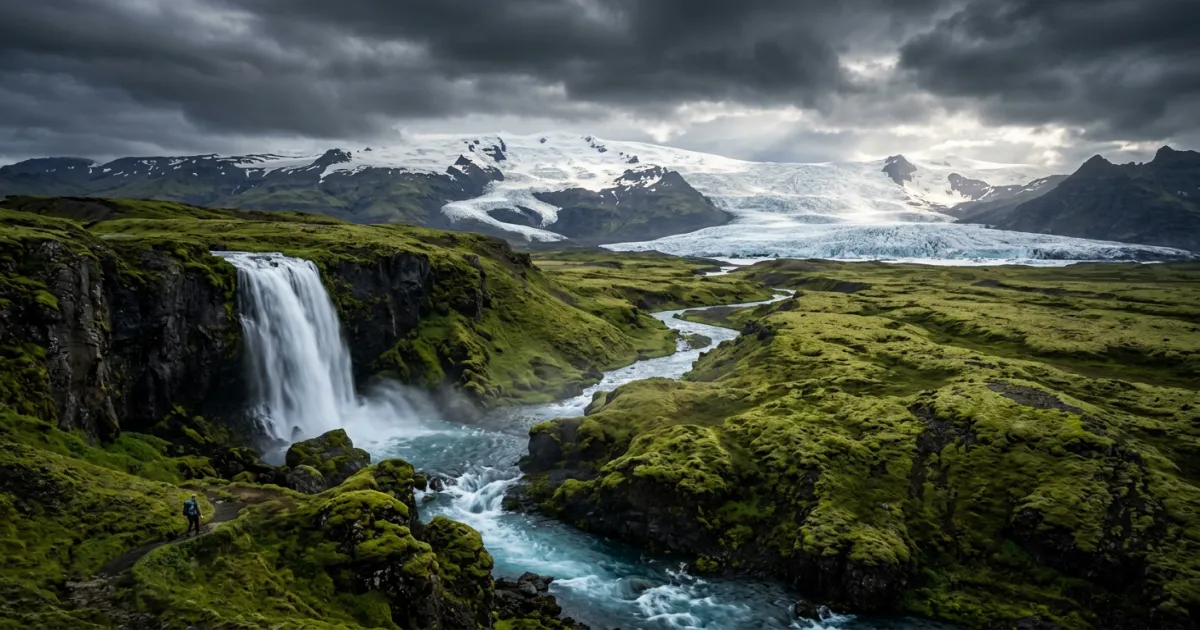
Iceland sits in the middle of the North Atlantic, straddling two tectonic plates, and it shows. Glaciers cover roughly 11% of the country. Waterfalls pour off volcanic cliffs. Geothermal hot springs bubble up from the ground in every region. For a country with a population of about 380,000, it packs an extraordinary amount of natural drama into a landmass slightly smaller than Kentucky.
This guide covers everything you need to plan a trip to Iceland in 2026, from timing and budgets to driving logistics and a day-by-day south coast itinerary. If you are new to trip planning in general, start with our complete guide to planning a trip for the fundamentals.
Best Time to Visit Iceland
Iceland has two distinct travel seasons, and each one offers a completely different experience.
Summer (June through August)
This is peak season, and for good reason. Temperatures hover around 10-15°C (50-59°F), all roads including highland routes are open, and the midnight sun means nearly 24 hours of daylight around the summer solstice. The downside: higher prices, more crowds at popular sites, and accommodations book out months in advance.
A notable event in 2026: on August 12, Iceland will experience a total solar eclipse, the first visible from the country in over 70 years. The Golden Circle region offers excellent viewing, so expect heavy demand for accommodations that week.
Winter (September through March)
Winter brings the northern lights, snow-covered landscapes, and ice cave access. But it also brings limited daylight (4-5 hours in December), potential road closures, and challenging driving conditions. Many highland roads and some Ring Road sections can close temporarily due to storms.
Shoulder Months (May and September)
These months often offer the best balance. May brings longer days and fewer crowds, though some highland roads may still be closed. September marks the start of northern lights season while roads are still mostly accessible and prices begin to drop.
How Long to Stay
Your ideal trip length depends on what you want to cover:
- 4 days minimum: Enough for Reykjavik and the Golden Circle. Tight, but doable for a first taste.
- 5-7 days: The sweet spot for the Golden Circle plus the south coast, including waterfalls, black sand beaches, and Jokulsarlon glacier lagoon. This is the most popular itinerary length.
- 10-14 days: Enough to drive the full Ring Road (Route 1) at a comfortable pace, with time for detours into the Westfjords or Snaefellsnes Peninsula.
Both Icelandair and PLAY airlines offer free stopovers in Iceland on transatlantic flights, which makes even a short 2-3 day visit easy to add to a European trip.
Budget and Costs
Iceland is one of the most expensive countries in Europe. Plan accordingly, and you will avoid sticker shock.
Daily Budget Ranges (per person, 2026 prices)
- Budget ($150-200/day): Hostels or camping, self-catering with groceries from Bonus or Kronan supermarkets, limited paid activities.
- Mid-range ($250-350/day): Guesthouses, rental car split with a travel partner, mix of restaurant meals and self-catering, a few paid tours.
- Luxury ($400+/day): Hotels, fine dining, private tours, and premium experiences like helicopter glacier landings.
Typical Costs
- Accommodation: Hostels from $40-60/night. Hotels in Reykjavik from $150-250/night. Guesthouses along the Ring Road from $120-200/night.
- Car rental: Economy car from $50-80/day in summer. 4×4 from $100-150/day.
- Gas: $8-9 per gallon. Budget roughly $15-25/day for a standard road trip.
- Restaurant meal: $30-50 per person for a sit-down dinner. Fast food or a hot dog around $10-15.
- Blue Lagoon: Starting at roughly $75-90 for standard entry.
Getting to Iceland
Round-trip flights from the US East Coast start around $400-500 in shoulder season on Icelandair or PLAY airlines. Summer peak pricing can push that to $700-900. Icelandair flies from 12 US cities and offers a free stopover of up to 7 days on transatlantic flights. PLAY offers a similar “stayover” program with up to 10 days on each leg at no extra airfare.
Use a travel budget template to map out your Iceland spending before you book.
Getting Around
Rental Car (the Default)
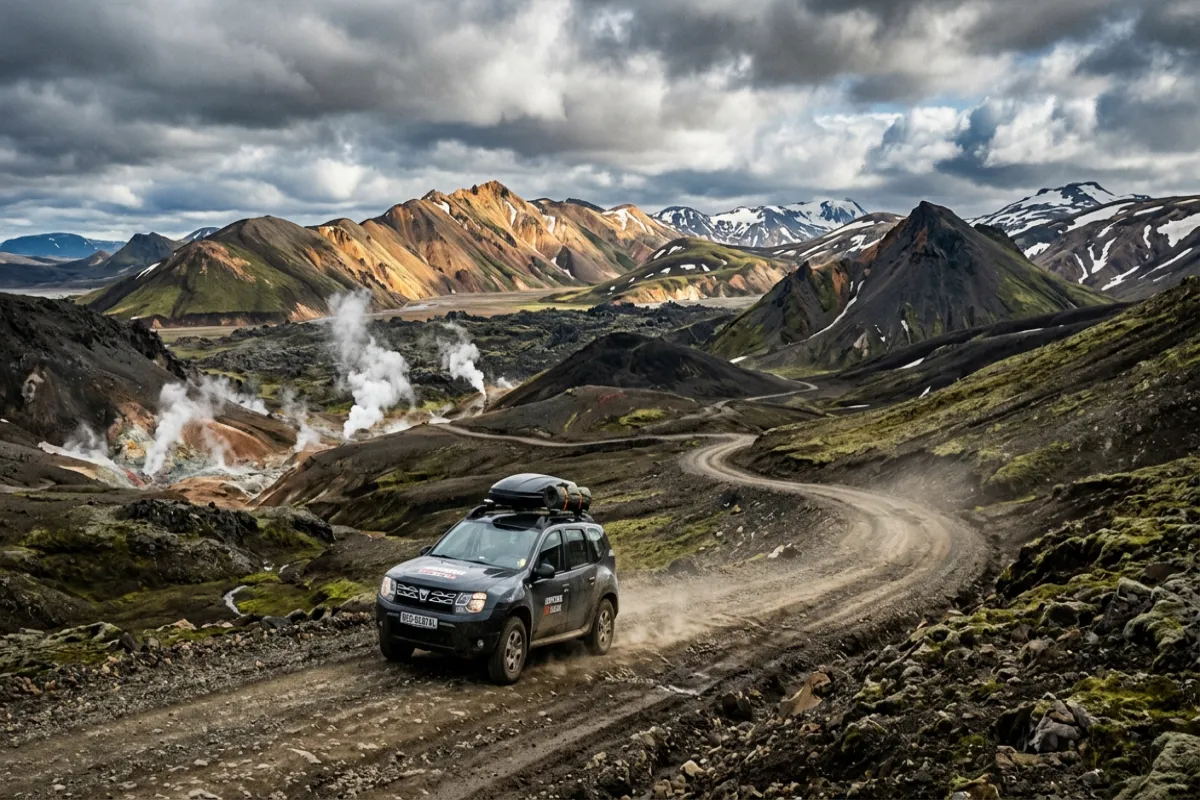
A rental car is the most practical way to see Iceland. The country has no passenger rail system and bus service outside Reykjavik is limited. A standard 2WD car handles the Ring Road and most paved roads without issue. You only need a 4×4 for F-roads (highland interior roads), which are gravel mountain tracks that are off-limits to 2WD vehicles by law.
The Ring Road (Route 1) is the main highway circling the island, covering 1,322 km of mostly paved road. You can drive it in about 17 hours without stops, but plan for 7-10 days minimum to actually enjoy it.
Use our road trip itinerary template to plan your driving route and stops.
Essential Driving Tips
- Check conditions daily. Road.is shows real-time road conditions. Vedur.is provides weather warnings. Both are essential, especially outside summer.
- Wind is the real hazard. Iceland regularly sees wind gusts above 30 m/s (67 mph). Car doors can rip off hinges. Always hold your door when opening, and park facing into the wind when possible.
- Gas stations are sparse. In the north and east, stations can be 100+ km apart. Fill up whenever you see a station, and carry a credit card with a PIN (many rural pumps are unmanned and card-only).
- Single-lane bridges: Common in rural areas. The car closer to the bridge has right of way.
- No off-road driving. Driving off marked roads is illegal and causes lasting damage to fragile moss and vegetation.
Without a Car
Guided day tours from Reykjavik cover the Golden Circle, south coast, and Snaefellsnes. Multi-day tours cover the Ring Road. Public buses run limited schedules in summer through Straeto (Reykjavik metro area) and some rural routes.
Where to Stay
Reykjavik
The capital has the widest range of options, from hostels and Airbnbs to boutique hotels and international chains. The downtown area around Laugavegur street puts you within walking distance of restaurants, shops, and nightlife.
Along the Ring Road
Guesthouses and farm stays are the backbone of rural Icelandic accommodation. They range from basic rooms with shared bathrooms to comfortable en-suite setups with home-cooked breakfast. Hotels exist in larger towns like Akureyri, Vik, and Hofn.
Camping
Iceland has a strong camping culture. Campgrounds are found throughout the country, typically costing $15-25 per person per night. Most have basic facilities (toilets, sometimes showers and cooking areas). Wild camping with a tent is technically allowed on uncultivated land with landowner permission, but designated campgrounds are the better choice. The Camping Card (about $175) gives unlimited stays at roughly 40 campgrounds across the country.
Book Early
For summer travel (especially 2026 with the August solar eclipse), book accommodation 3-6 months ahead. Popular south coast guesthouses sell out even earlier.
Must-See and Must-Do
The Golden Circle
This 300 km loop from Reykjavik hits three of Iceland’s most famous sites and can be done in a single day:
- Thingvellir National Park: A UNESCO World Heritage Site where the North American and Eurasian tectonic plates visibly pull apart. Also the site where Iceland’s parliament, the Althingi, was founded in 930 AD, making it the original location of the world’s oldest existing legislature.
- Geysir Geothermal Area: Home to Strokkur, which erupts every 5-10 minutes, shooting water 20-40 meters into the air. The original Geysir (which gave all geysers their name) is mostly dormant.
- Gullfoss: A massive two-tiered waterfall dropping 32 meters into an ancient canyon, with an average summer flow of 140 cubic meters per second.
Detours worth adding: Kerid volcanic crater (400 ISK entry), Fridheimar tomato farm restaurant, Laugarvatn Fontana geothermal baths, and the Secret Lagoon at Fludir.
South Coast Highlights
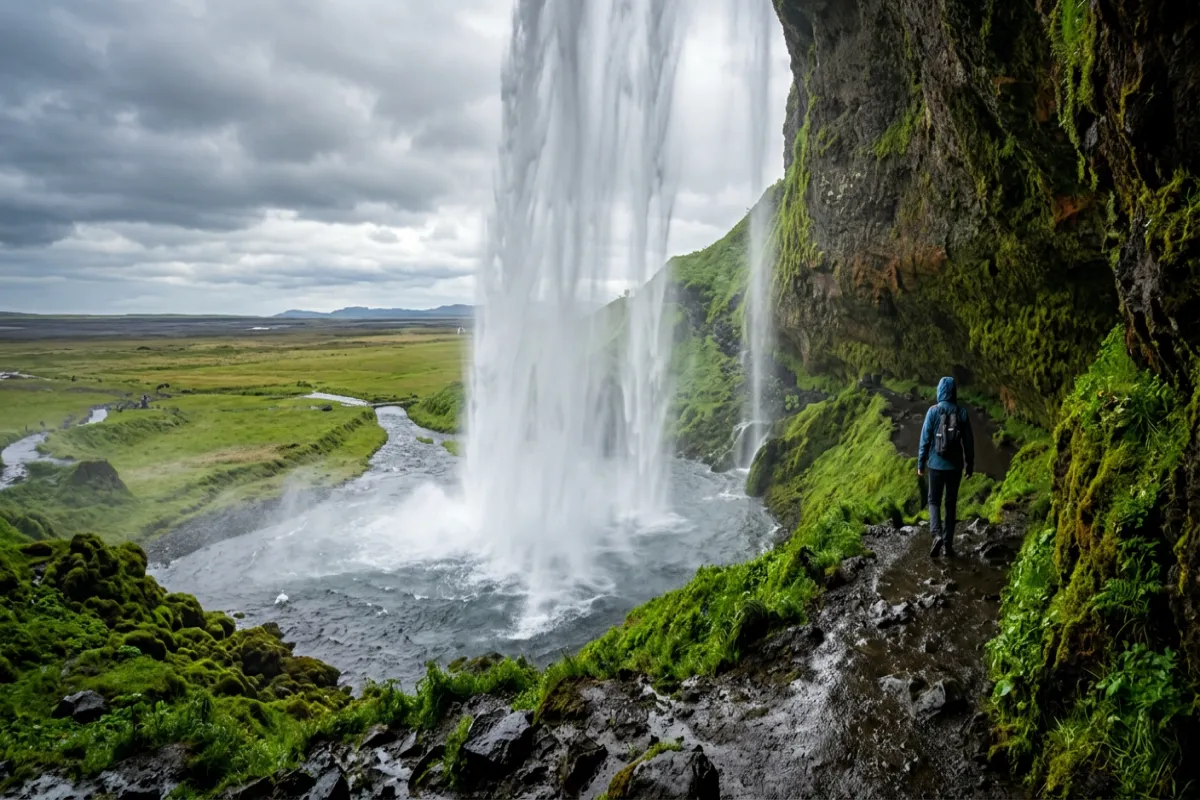
- Seljalandsfoss: A 60-meter waterfall you can walk behind (bring a waterproof jacket).
- Skogafoss: A wide, powerful 60-meter waterfall with a staircase to a viewing platform at the top.
- Reynisfjara Black Sand Beach: Dramatic basalt columns and crashing Atlantic waves near Vik. Stay well back from the waterline. Sneaker waves here are dangerous and have caused fatalities.
- Jokulsarlon Glacier Lagoon: Icebergs calve off Breidamerkurjokull glacier and float through a lagoon toward the sea. Boat tours run in summer.
- Diamond Beach: Just across the road from Jokulsarlon. Ice chunks wash ashore on black sand, glittering in the sunlight.
Geothermal Pools and Lagoons
- Blue Lagoon: The most famous. Located near the airport, convenient for arrival or departure day. Advance booking required.
- Sky Lagoon: A newer option near Reykjavik with an infinity-edge pool overlooking the ocean. Less crowded, more modern design.
- Myvatn Nature Baths: The northern alternative with fewer crowds. Note: the Earth Lagoon Myvatn is expected to reopen in late spring 2026 after renovation.
- Laugaras Lagoon: Opened in late 2025, featuring tiered hot pools, saunas, and cold plunges.
Other Highlights
- Snaefellsnes Peninsula: Often called “Iceland in miniature.” Kirkjufell mountain, Arnarstapi cliffs, lava fields, and the Snaefellsjokull glacier-capped volcano.
- Husavik: The whale watching capital of Iceland. Multiple species including humpbacks, minkes, and occasional blue whales.
- Akureyri: Iceland’s second city in the north, with botanical gardens, good restaurants, and a base for Myvatn and Godafoss waterfall.
Northern Lights Guide
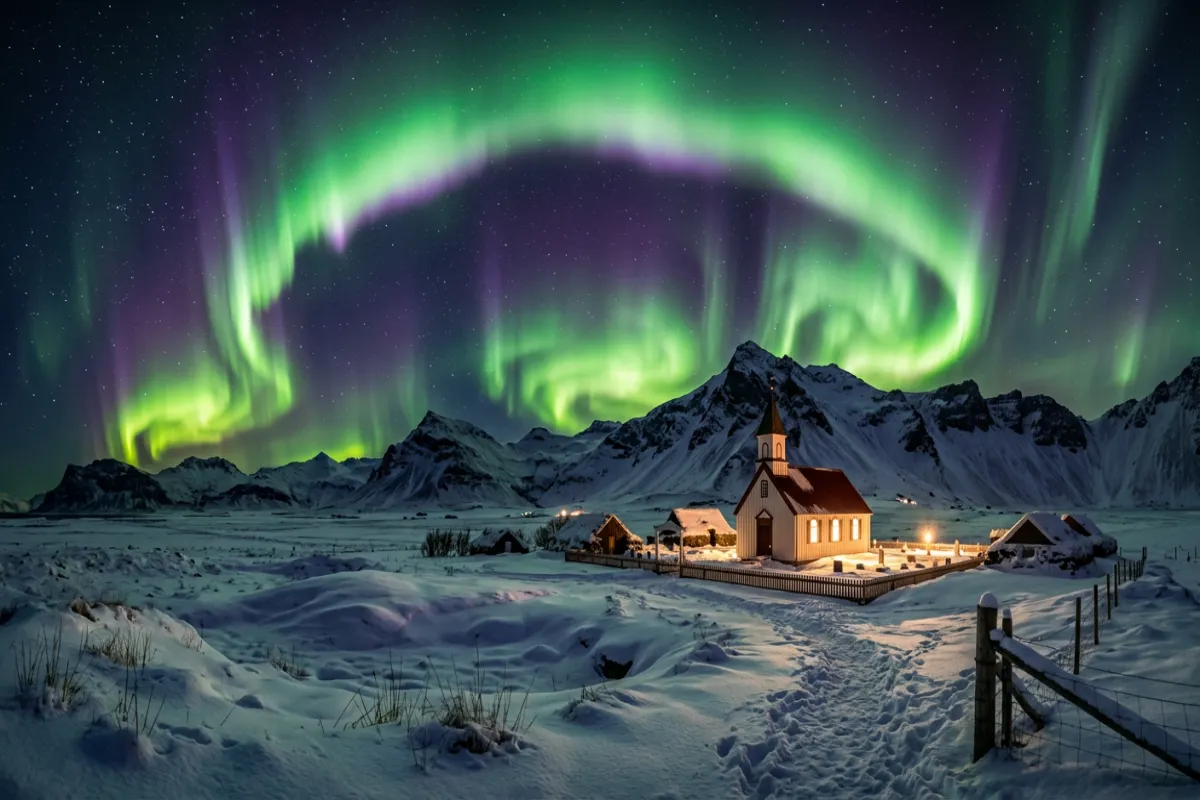
The aurora borealis is visible in Iceland from late August through early April, with peak viewing from September through March.
Why 2026 Is Exceptional
Solar Cycle 25 peaked around mid-2025, and its effects carry into 2026. This means stronger and more frequent aurora displays than in average years. Winter 2025-2026 and into early 2026 is a particularly strong window.
How to See Them
- Get away from city lights. Even Reykjavik’s modest light pollution reduces visibility. Drive 20-30 minutes outside the city for better views.
- Check the forecast. The Icelandic Met Office (vedur.is) publishes a nightly aurora forecast with cloud cover maps. Green areas on the cloud map mean clear skies.
- Prime viewing time: Between 10 PM and 2 AM, though activity can start earlier or run later.
- Be patient. The lights can appear suddenly after hours of nothing. Dress warmly and be prepared to wait.
- Dark, moonless nights help. Check the moon phase before your trip if northern lights are a priority.
Best Viewing Spots
Thingvellir National Park, Vik, the Snaefellsnes Peninsula, and anywhere along the north coast away from towns. Many hotels and guesthouses offer wake-up calls when the lights appear.
Food and Dining
Icelandic food leans heavily on lamb, seafood, and dairy, all of which are locally produced and high quality. Dining out is expensive by any standard.
What to Eat
- Icelandic lamb: Free-range, grass-fed, and excellent. Lamb soup (kjotsupo) is a staple at cafes across the country.
- Seafood: Fresh cod, haddock, Arctic char, and langoustine (especially in Hofn). Fish and chips is widely available.
- Hot dogs: The famous Icelandic hot dog (pylsa) is a lamb-based dog loaded with crispy onions, raw onions, ketchup, sweet mustard, and remoulade. Baejarins Beztu in Reykjavik is the most famous stand. At roughly $4-5, it is the best budget meal in the country.
- Skyr: A thick, protein-rich dairy product similar to yogurt. Available everywhere and makes a cheap, filling breakfast.
- Fermented shark (hakarl): An acquired taste, to put it mildly. Try a small piece at a market if you are curious, but do not order a full plate.
Saving Money on Food
Cooking your own meals saves a significant amount. Bonus (the store with the pig logo) and Kronan are the cheapest supermarket chains. Most guesthouses and hostels have shared kitchens. Budget roughly $10-20 per day if you self-cater versus $30-50+ per restaurant meal.
Tipping is not expected in Iceland. Service charges are included in prices.
Practical Tips
- Weather changes constantly. The old joke is that if you do not like the weather in Iceland, wait five minutes. This is not much of an exaggeration. Pack layers and always carry a waterproof outer shell and wind-resistant jacket, even in summer.
- Wind is the real challenge. More than cold or rain, it is the wind that catches visitors off guard. Secure loose items, hold car doors carefully, and dress in wind-resistant layers.
- Tap water is pure. Iceland’s tap water comes from natural springs and glaciers. It is some of the cleanest drinking water in the world. Do not waste money on bottled water. Note: hot tap water may smell faintly of sulfur due to geothermal heating. This is normal and harmless.
- Credit cards work everywhere. Even small rural gas stations and hot dog stands take cards. You rarely need cash, though having a small amount of ISK can help at a few rural sites.
- Download offline maps. Cell coverage outside Reykjavik and main towns can be spotty. Download Google Maps or Maps.me offline maps before you go.
- Passport validity: Your passport must be valid for at least three months beyond your planned departure date from the Schengen area.
Sample 7-Day South Coast and Golden Circle Itinerary
| Day | Route | Highlights | Stay |
|---|---|---|---|
| 1 | Arrive KEF, drive to Reykjavik | Blue Lagoon or Sky Lagoon (book ahead), explore Laugavegur street, Hallgrimskirkja, Harpa concert hall | Reykjavik |
| 2 | Golden Circle loop | Thingvellir National Park, Geysir/Strokkur, Gullfoss waterfall, optional Kerid crater or Secret Lagoon | Reykjavik or Selfoss |
| 3 | South coast drive | Seljalandsfoss, Skogafoss, Solheimajokull glacier walk (guided tour), Reynisfjara black sand beach | Vik |
| 4 | Vik to Jokulsarlon | Skaftafell/Vatnajokull National Park, Svartifoss waterfall, Jokulsarlon glacier lagoon boat tour, Diamond Beach | Hofn area |
| 5 | Return drive toward Vik | Revisit Jokulsarlon at different light, Fjadrargljufur canyon, Vik exploration, Dyrholaey arch viewpoint | Vik or Hella |
| 6 | Snaefellsnes Peninsula day trip | Kirkjufell mountain, Arnarstapi coastal walk, Djupalonssandur black pebble beach, Snaefellsjokull views | Snaefellsnes or Reykjavik |
| 7 | Reykjavik and departure | Whale watching from Reykjavik harbor, National Museum, last-minute shopping on Laugavegur, drive to KEF | Depart |
Want a customized version of this route? Use the Yopki AI travel planner to build a personalized Iceland itinerary based on your dates, pace, and interests.
Planning Tools
- Yopki AI Travel Planner for building a custom Iceland itinerary
- Travel Budget Template to plan Iceland spending
- Road Trip Itinerary Template for your Ring Road or south coast route
- How to Plan a Trip for general trip planning fundamentals
- How to Plan a Trip to Europe if combining Iceland with other European destinations
- How to Plan a Trip to Ireland for a neighboring island destination
- Road.is for real-time Iceland road conditions
- Vedur.is for weather forecasts and aurora predictions
If your flight routes through Keflavik with a layover, check our Reykjavik layover guide for tips on making the most of a short stop.
Frequently Asked Questions
Is Iceland safe?
Iceland consistently ranks among the safest countries in the world. Violent crime is extremely rare. The main safety concerns are natural: rogue waves at Reynisfjara, slippery trails near waterfalls, and sudden weather changes while driving. Follow posted safety signs and do not underestimate the elements.
Do I need a 4×4?
Not for the Ring Road or south coast. A standard 2WD handles all paved roads. You need a 4×4 only for F-roads (highland interior routes), which are gravel mountain tracks closed in winter and restricted to 4×4 vehicles year-round.
Can I see the northern lights in summer?
No. Summer nights are too bright due to the midnight sun. The northern lights are only visible from late August through early April when nights are dark enough.
Is Iceland expensive for families?
Yes, but camping and self-catering help control costs. Many attractions are free (waterfalls, beaches, geothermal areas), and children often get discounted or free entry to paid sites. A family of four should budget at least $400-600/day for a comfortable trip with a rental car and guesthouses.
How far ahead should I book?
For summer: book flights 3-4 months ahead, accommodation 4-6 months ahead for the south coast and popular areas. For winter: 1-2 months is usually sufficient outside holiday periods. With the August 2026 solar eclipse, book even earlier if you are visiting that month.
What about the 2026 solar eclipse?
On August 12, 2026, a total solar eclipse will be visible from Iceland, the first in over 70 years. The path of totality crosses the country in the late afternoon. Expect very high demand for accommodations and tours around that date. Book as early as possible if you plan to visit for this event.