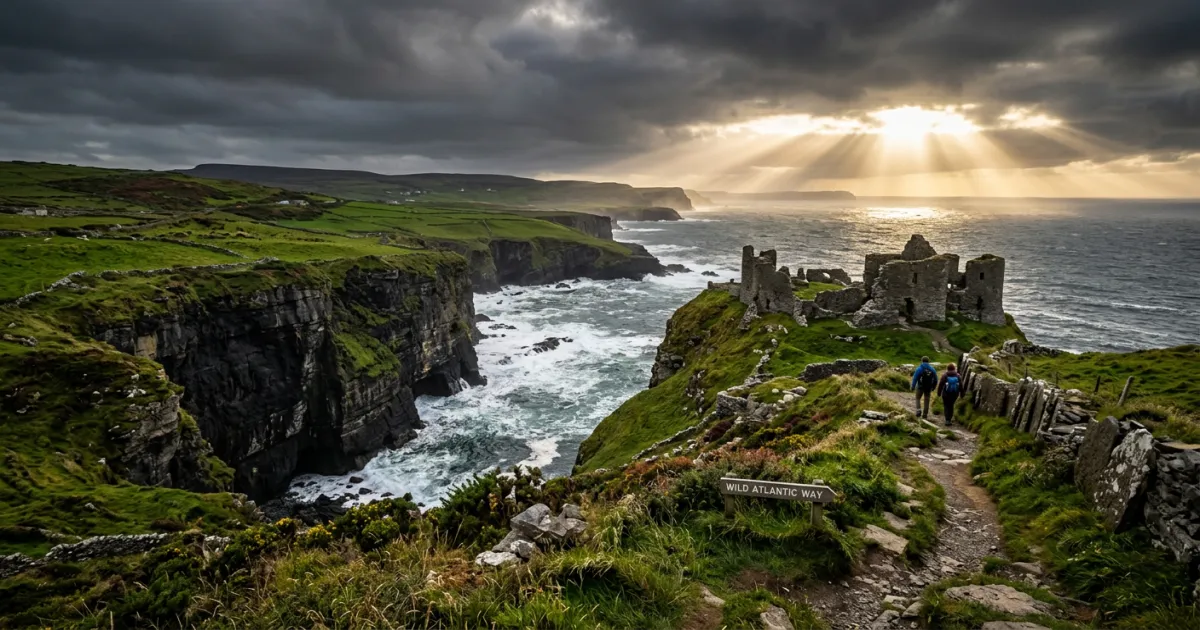
Ireland has a way of getting under your skin. The green hills, the rugged coastline, the warmth of a pub on a rainy evening. If you are planning a trip to Ireland, you are in for one of Europe’s most rewarding travel experiences. This guide covers everything you need to know to plan your trip, from costs and logistics to a full 10-day road trip itinerary.
Quick Facts
| Visa (US Citizens) | No visa required for stays up to 90 days |
| Currency | Euro (EUR) in Republic of Ireland; British Pound in Northern Ireland |
| Language | English and Irish (Gaeilge) |
| Time Zone | GMT (winter) / IST, UTC+1 (summer) |
| Best Time to Visit | May through September |
| Daily Budget | Budget: ~EUR 80/day | Mid-range: EUR 160-250/day | Luxury: EUR 400+/day |
| Driving Side | Left side of the road |
| Tipping | Not expected; 10% at sit-down restaurants is appreciated |
Best Time to Visit Ireland
Ireland’s climate is mild year-round thanks to the Gulf Stream, but “mild” in Ireland still means rain. Lots of rain. The warmest and driest months are May through September, with average highs of 15-20C (59-68F) and daylight lasting until 10pm or later in June and July.
Summer (June to August) brings the longest days, the most festivals, and the biggest crowds. This is peak tourist season, so expect higher prices for flights and accommodation. Book well in advance if you are visiting during this window.
Shoulder season (May and September) is often the sweet spot. You get decent weather, fewer tourists, and lower prices. May is particularly beautiful as the countryside is lush and green from spring rains.
Winter (November to February) is cold, dark, and wet, but you will find the lowest prices and the most authentic pub culture. Some rural attractions close for the season, so plan accordingly.
Keep in mind that St. Patrick’s Day (March 17) is a major event throughout the country. Dublin’s festival runs for several days and draws huge crowds. Book months ahead if you want to be there for the celebrations.
How Long to Stay
For a first trip to Ireland, plan for 7 to 10 days. This gives you enough time to explore Dublin, drive through at least one scenic region (the Ring of Kerry or the Wild Atlantic Way), and soak in the culture without feeling rushed.
With 4 to 5 days, you can cover Dublin plus one region like the Cliffs of Moher and Galway, but you will feel the time pressure. If you have 14 days, you can add Northern Ireland, the Dingle Peninsula, and some off-the-beaten-path stops.
If you are also planning a trip to Europe with multiple countries, Ireland pairs well with the UK or can be a standalone destination. Just note that Ireland is not part of the Schengen zone, so your days here do not count against a Schengen visa limit.
Budget and Costs
Ireland is not a cheap destination, especially Dublin. But with some planning, you can manage costs without sacrificing the experience. Use a travel budget template to track spending before and during your trip.
Accommodation
- Hostels: EUR 25-45 per night for a dorm bed; EUR 60-90 for a private room
- B&Bs: EUR 80-140 per room per night (the quintessential Irish experience)
- Hotels: EUR 120-250+ per night in Dublin; EUR 80-160 in smaller towns
- Airbnb: EUR 70-150 per night depending on location
Food
- Pub meal: EUR 13-20 for a main course
- Mid-range restaurant: EUR 20-35 per person
- Pint of Guinness: EUR 5.50-7.50 (cheaper outside Dublin)
- Coffee: EUR 3-5
- Groceries: EUR 15-20 per day if you self-cater
Transportation
- Rental car: EUR 35-70 per day (manual); EUR 55-100 per day (automatic)
- Petrol: EUR 1.60-1.80 per liter
- Intercity bus: EUR 10-25 per trip
- Train: EUR 15-45 per trip
Flights from the US
Round-trip flights from the US East Coast to Dublin typically run USD 500-900 in shoulder season and USD 700-1,200 in peak summer. Airlines with direct routes include Aer Lingus, Delta, United, and American Airlines. West Coast flights usually require a connection and cost USD 100-300 more.
Getting There and Around
Dublin Airport (DUB) is Ireland’s main international gateway, with direct flights from several US cities including New York (JFK), Boston, Chicago, and Philadelphia. Shannon Airport (SNN) on the west coast is another option, especially if you are heading straight to the Wild Atlantic Way.
Renting a Car
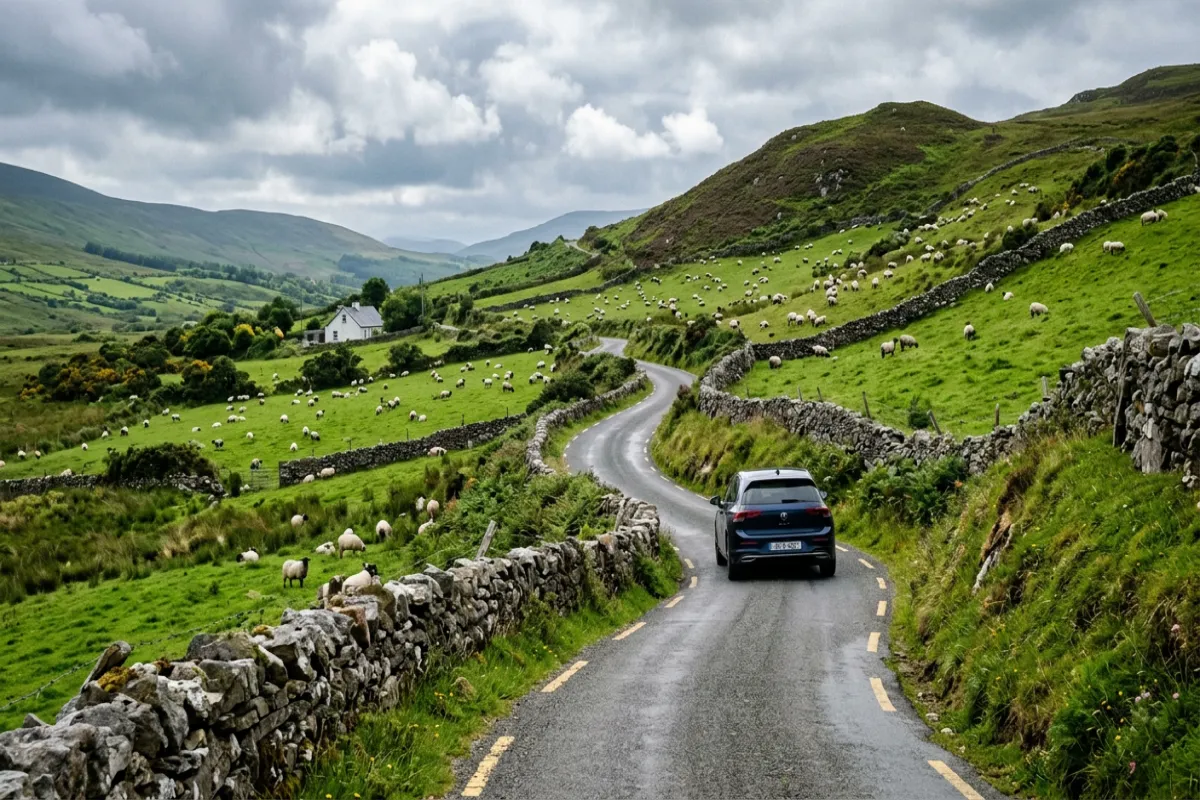
A rental car is the best way to explore Ireland outside of Dublin. The train network is limited and does not reach many of the most scenic areas. If you are planning a road trip along the Wild Atlantic Way or Ring of Kerry, you need a car. Use a road trip itinerary template to map out your route.
Book an automatic transmission if you are not comfortable driving a manual, but know that automatics are more expensive and get booked up quickly. Reserve well in advance, especially for summer travel.
Get the maximum insurance coverage, including glass and tire protection. Irish rural roads are narrow, and windshield and tire damage are common.
Public Transportation
If you prefer not to drive, Bus Eireann and private coaches connect major towns. Irish Rail runs routes between Dublin, Cork, Galway, Limerick, and Belfast. Within Dublin, the Luas tram and Dublin Bus handle city transport well. Day tours from Dublin to popular destinations like the Cliffs of Moher are widely available.
Where to Stay
B&Bs (Bed and Breakfasts) are the classic Irish accommodation. You get a comfortable room in someone’s home, a full Irish breakfast in the morning, and local tips from your host. They are everywhere, from city centers to tiny villages, and they are often the best value for couples and families.
Dublin hotels are the most expensive in the country. Stay in the Temple Bar or St. Stephen’s Green area for walkability, or look slightly outside the center for better rates. In other cities like Galway and Cork, prices are more reasonable.
Airbnb and vacation rentals work well for groups and longer stays. You will find everything from city apartments to countryside cottages.
Castle hotels are a splurge-worthy option. Properties like Ashford Castle, Dromoland Castle, and Ballynahinch Castle offer a truly memorable Irish experience for those with the budget.
Must-See Destinations
Dublin
Ireland’s capital is compact, walkable, and packed with history. Visit Trinity College to see the Book of Kells, tour the Guinness Storehouse, and explore the cobblestone streets of Temple Bar. If you have a layover in Dublin, you can still hit the highlights in a few hours.
Cliffs of Moher
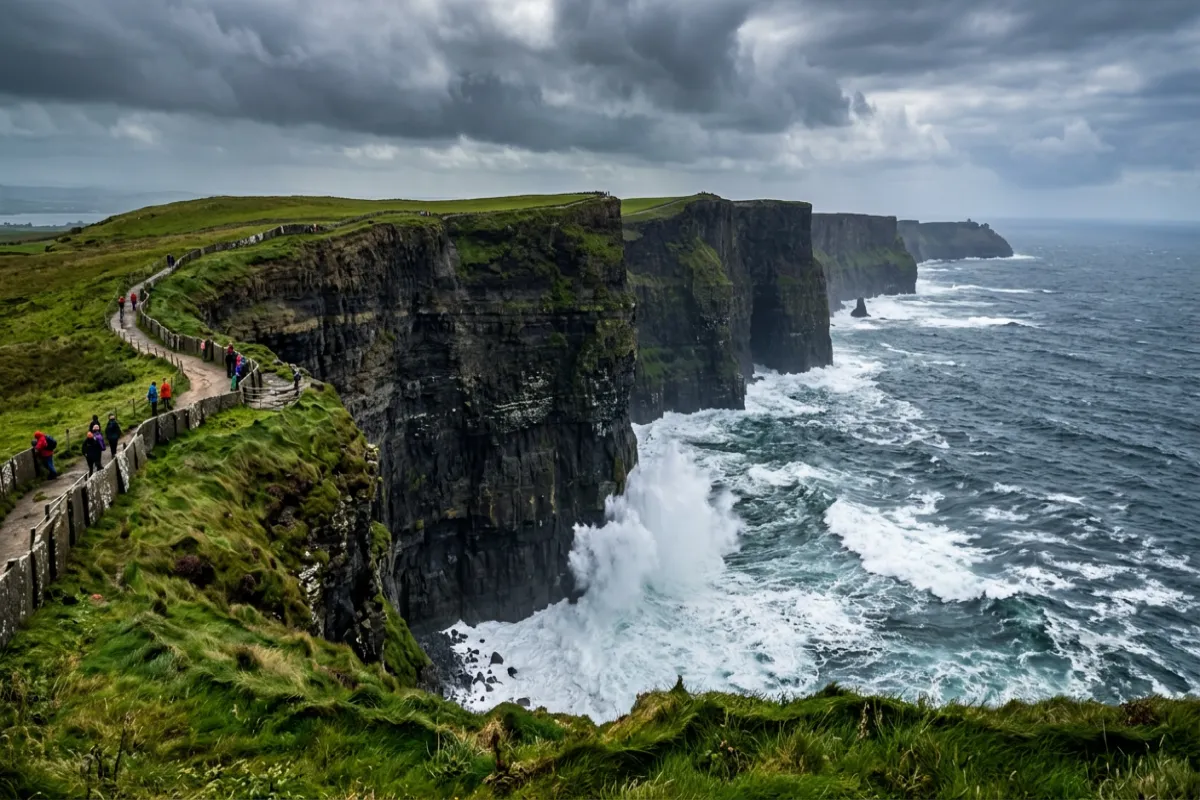
These dramatic sea cliffs rise 214 meters (702 feet) above the Atlantic on Ireland’s west coast. They are Ireland’s most visited natural attraction for good reason. Arrive early or late in the day to avoid the biggest crowds. The cliff walk from the visitor center to Hag’s Head is spectacular.
Ring of Kerry
This 179-kilometer (111-mile) scenic loop in County Kerry passes through some of Ireland’s most stunning landscapes: mountains, lakes, coastline, and charming villages. Drive it counterclockwise (the opposite of tour buses) for a smoother experience. Plan a full day.
Galway
Ireland’s cultural capital sits on the west coast and feels like a festival year-round. Street musicians, colorful shop fronts, and excellent seafood restaurants line the pedestrian streets. Galway is the gateway to Connemara and the Aran Islands.
Giant’s Causeway (Northern Ireland)
About 40,000 interlocking basalt columns formed by ancient volcanic activity create one of the most unusual landscapes in Europe. Located on the Antrim Coast in Northern Ireland, it is a UNESCO World Heritage Site. Note that Northern Ireland uses British Pounds, not Euros.
Killarney and Killarney National Park
Killarney is a popular base for exploring the Ring of Kerry, but the national park itself deserves a day. Take a jaunting car (horse-drawn carriage) ride, visit Ross Castle, and hike to Torc Waterfall.
Dingle Peninsula
Less crowded than the Ring of Kerry but equally beautiful, the Dingle Peninsula offers dramatic coastal scenery, the westernmost point of mainland Ireland, and the charming town of Dingle. This is one of Ireland’s Gaeltacht regions, where Irish is the first language.
Cork
Ireland’s second city is a foodie destination. Visit the English Market (a covered food market dating to 1788), kiss the Blarney Stone at Blarney Castle nearby, and take a day trip to the colorful harbor town of Cobh, the last port of call for the Titanic.
Food and Dining
Irish food has come a long way from its meat-and-potatoes reputation. Here is what to eat and drink:
Full Irish Breakfast: Bacon, sausages, black and white pudding, eggs, toast, grilled tomato, baked beans, and strong tea. You will get this at every B&B, and it will keep you full until dinner.
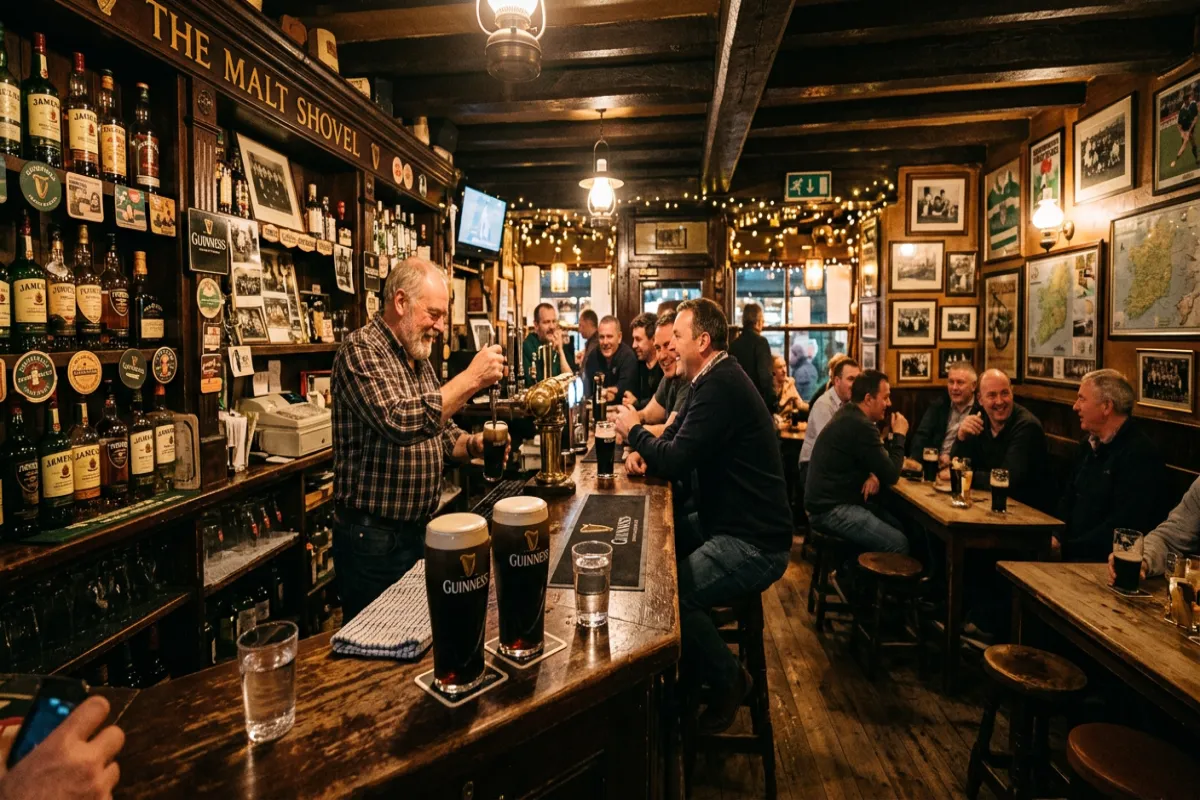
Pub Grub: Irish stew, fish and chips, shepherd’s pie, and boxty (potato pancakes) are hearty and affordable. Pubs are the social center of Irish life, not just drinking establishments.
Seafood: Oysters from Galway, smoked salmon, chowder, and fresh catch of the day. The coastal towns serve some of the best seafood in Europe.
Guinness: It genuinely does taste better in Ireland. The Guinness Storehouse in Dublin is a popular tourist attraction, but your best pint will be in a quiet pub somewhere in the countryside.
Whiskey: Irish whiskey is triple-distilled and smoother than Scotch. Visit distilleries like Jameson in Dublin or Midleton, Teeling in Dublin, or Dingle Distillery on the peninsula.
Tipping: Tipping is not expected in Ireland the way it is in the US. Service charges are sometimes included in restaurant bills. If not, leaving 10% at a sit-down restaurant is a nice gesture. You do not need to tip at pubs or for counter service.
Practical Tips
- Pack rain gear: It rains in Ireland. Often. Bring a waterproof jacket and layers regardless of the season. An umbrella alone will not cut it because the wind makes them useless.
- Driving on the left: If you have never driven on the left, practice in a quiet area before hitting the highways. The driver sits on the right side of the car. Remember: tight left turns, wide right turns. Roundabouts go clockwise, and you yield to traffic coming from the right.
- Cash is still useful: While credit cards are widely accepted in cities and towns, some rural pubs, small shops, and B&Bs may prefer or require cash. Have some euros on hand.
- Pubs close later than you think: Last call in many pubs is around 11:30pm on weeknights and 12:30am on weekends, but some have late licenses. Live music sessions often start around 9:30pm.
- Power adapters: Ireland uses Type G plugs (the same as the UK). Bring an adapter if you are coming from the US.
- Mobile connectivity: Buy a local SIM card or make sure your US plan includes international roaming. Coverage is good in towns but can be patchy in remote areas.
- Northern Ireland is a different jurisdiction: It is part of the United Kingdom. You will cross the border seamlessly (no passport control), but the currency changes to British Pounds and road signs switch to miles.
Sample 10-Day Ireland Itinerary
This road trip itinerary covers Ireland’s highlights at a comfortable pace. Distances are manageable, leaving plenty of time for stops and exploration.
Days 1-2: Dublin
Arrive in Dublin and spend two days exploring the capital. Visit Trinity College and the Book of Kells, the Guinness Storehouse, and St. Patrick’s Cathedral. Walk through St. Stephen’s Green and Grafton Street. Spend an evening in Temple Bar or explore the pubs of the Liberties neighborhood for a more local experience.
Days 3-4: Dublin to Cork and the South Coast
Drive south to Cork (about 2.5 hours). Stop at the Rock of Cashel along the way, a medieval fortress on a hilltop in County Tipperary. Explore Cork’s English Market, then drive to Cobh to see the Titanic Experience. On Day 4, visit Blarney Castle in the morning.
Days 5-6: Ring of Kerry
Drive west to Killarney (about 1.5 hours from Cork). Use Killarney as your base. On Day 5, explore Killarney National Park: Ross Castle, Muckross House, and Torc Waterfall. On Day 6, drive the full Ring of Kerry loop, stopping at viewpoints, villages, and Skellig Ring if time allows.
Days 7-8: Cliffs of Moher and Galway
Drive north to the Cliffs of Moher (about 3 hours). Spend the morning at the cliffs and walk along the cliff path. Continue to Galway (about 1.5 hours) in the afternoon. On Day 8, explore Galway’s Latin Quarter, walk the Long Walk along the harbor, and catch a live music session in one of the pubs. Consider a half-day trip to the Aran Islands if weather permits.
Days 9-10: Northern Ireland
Drive north to Belfast (about 3 hours from Galway). On Day 9, visit the Titanic Belfast museum, explore the Cathedral Quarter, and learn about the city’s history with a Black Cab tour of the murals. On Day 10, drive the Causeway Coastal Route to the Giant’s Causeway. Stop at Carrick-a-Rede rope bridge and the Dark Hedges (made famous by Game of Thrones). Return to Dublin Airport (about 2 hours from the coast) for your departure.
Planning Tools
Use Yopki’s AI trip planner to build a custom Ireland itinerary based on your interests, travel dates, and budget. You can also explore our road trip itinerary template for mapping out your driving route, or use a travel budget template to estimate and track your spending.
If you are combining Ireland with other European destinations, check out our guide to planning a trip to Europe, or see our guide to planning a trip to Italy if the Mediterranean is also on your list.
Frequently Asked Questions
What is the difference between the Republic of Ireland and Northern Ireland?
The Republic of Ireland is an independent country that covers about five-sixths of the island. Northern Ireland is part of the United Kingdom and occupies the northeastern corner. They have different currencies (Euro vs. British Pound), different road sign systems (kilometers vs. miles), and different governments. However, the border between them is open and you can cross freely without passport checks.
Do I need a car to visit Ireland?
For Dublin, no. The city is walkable with good public transport. For the rest of Ireland, a car is strongly recommended. The train network is limited and does not reach many of the most scenic areas like the Ring of Kerry, Dingle Peninsula, or Wild Atlantic Way. Day tours from Dublin or Galway can cover some highlights if you prefer not to drive.
Is Ireland safe for tourists?
Yes. Ireland is considered one of the safest countries in Europe. Violent crime is rare, especially in tourist areas. Standard travel precautions apply: watch your belongings in crowded areas in Dublin, and do not leave valuables visible in your rental car.
Do I need travel insurance for Ireland?
Travel insurance is not required but is strongly recommended. Healthcare in Ireland is not free for US visitors, and a hospital visit can be expensive. A good travel insurance policy also covers trip cancellation, lost luggage, and rental car incidents.
Can I use US dollars in Ireland?
No. Ireland uses the Euro. Exchange currency before you arrive or withdraw euros from ATMs in Ireland. US credit cards are widely accepted, but notify your bank before traveling to avoid fraud holds. Contactless payment is common in urban areas.