| Visa | Not required for US citizens (up to 90 days) |
| Currency | Euro (EUR) |
| Language | Italian (English spoken in tourist areas) |
| Time Zone | CET (UTC+1), CEST (UTC+2) in summer |
| Daily Budget | $75 to $240+ per person |
| Best Time to Visit | May, June, September, October |
| Flight Time from US | ~8.5 hours from East Coast |
Planning a trip to Italy is one of those projects that feels overwhelming at first and then becomes pure excitement once you start putting the pieces together. Italy packs an absurd amount of variety into one country: ancient Roman ruins, Renaissance art, volcanic coastlines, rolling vineyard hills, and some of the best food on the planet. The challenge is not finding things to do. It is narrowing down your list so you actually enjoy the trip instead of sprinting between cities.
This guide walks you through everything you need to know, from choosing the right time of year to getting between cities by train, setting a realistic budget, and building a sample 10-day Italy itinerary. Whether this is your first visit or your third, the practical details here will save you time and money. If you want a broader framework for organizing any international trip, our how to plan a trip guide is a good starting point.
Best Time to Visit Italy
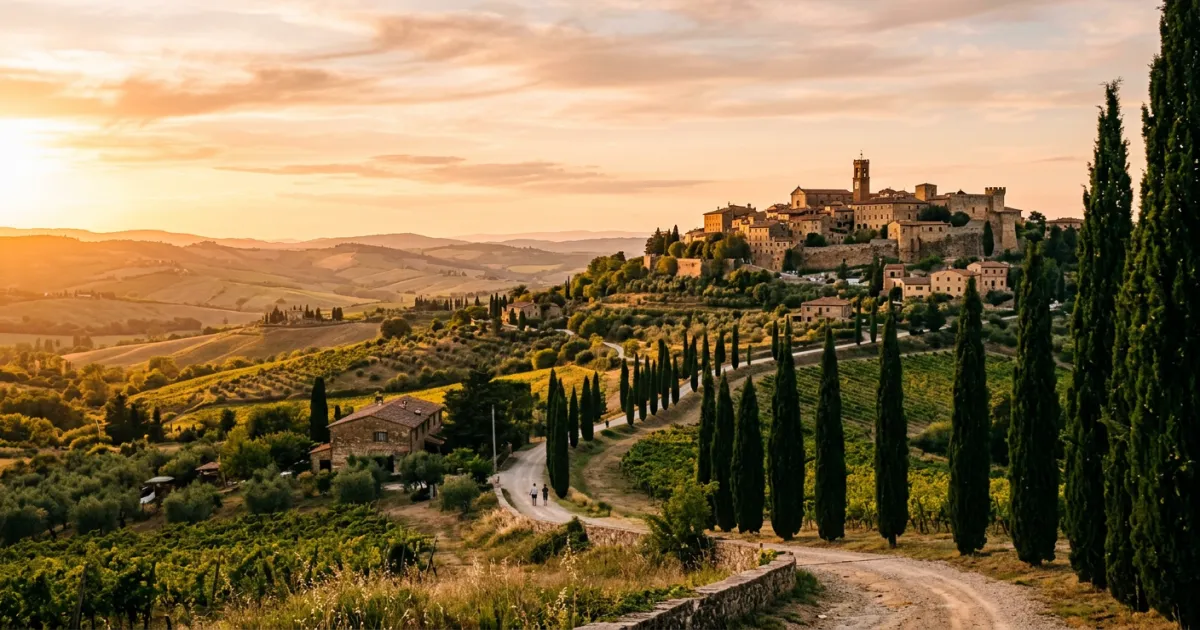
The best time to visit Italy depends on what you want out of the trip. The sweet spot for most travelers is May, June, September, and October. Temperatures hover between 60 and 80 degrees Fahrenheit, crowds are manageable, and prices sit well below peak-season rates. You will have warm weather for walking around Florence or sitting at an outdoor cafe in Rome without the oppressive heat of midsummer.
Spring (April to May) brings mild weather in the 60 to 75 degree range with occasional rain. The countryside is green and blooming, and you will face far fewer crowds at major sites like the Colosseum and Uffizi Gallery. The tradeoff is a bit of unpredictable weather, especially in April.
Summer (July to August) is peak season. Temperatures regularly hit 85 to 95 degrees, especially in southern Italy. Cities are packed with tourists, accommodation prices spike, and popular attractions sell out weeks ahead. If this is your only option, book everything early and plan indoor activities during the hottest afternoon hours.
Fall (September to October) is arguably the best window. The summer crowds thin out, temperatures cool to a comfortable 65 to 80 degrees, and it is harvest season in Tuscany and the wine regions. Expect great food, golden light, and a more relaxed atmosphere everywhere you go.
Winter (November to February) offers the lowest prices and fewest tourists. Northern Italy can be quite cold, with temperatures dropping to 25 to 50 degrees. Southern Italy stays milder. This is a solid option if you are focused on museums, food, and indoor experiences, or if you want to see Venice or Rome without fighting through crowds.
How Much Does a Trip to Italy Cost?
How much does a trip to Italy cost? The answer swings wildly depending on your travel style, the time of year, and which regions you visit. Here is a realistic breakdown per person per day:
- Budget traveler: $75 to $120 per day. Hostels, street food, regional trains, free walking tours.
- Mid-range traveler: $180 to $240 per day. Boutique hotels, sit-down restaurants, high-speed trains, museum tickets.
- Luxury traveler: $460 to $600+ per day. Four-star hotels, private tours, fine dining.
A few factors that move the needle significantly:
Region matters. Southern Italy and smaller towns cost 30 to 40 percent less than Rome, Florence, and Venice. If your budget is tight, spending more time in Naples, Puglia, or Sicily stretches your money considerably.
Season matters. Accommodation averages about $108 per night in low season and jumps to $202 per night during peak summer months. That difference alone can save you $500 or more over a 10-day trip.
Booking early matters. Flights booked 3 to 4 months ahead typically cost 40 to 60 percent less. Accommodation booked 4 to 6 months ahead saves 30 to 50 percent. Procrastinating on bookings is one of the most expensive mistakes you can make.
Flights from the US
Round-trip flights from major US hubs to Italy average $1,200 to $1,600. Budget fares during off-peak months can drop as low as $230 to $315 if you are flexible on dates and willing to fly into Milan Malpensa, which is often the cheapest gateway. The average flight time from the East Coast is about 8.5 hours.
If you are flying into Milan but your trip starts in Rome, that is perfectly fine. A high-speed train from Milan to Rome takes about 3 hours and early-bird fares start at 10 to 19 euros. Sometimes flying into the cheaper airport and taking the train saves you hundreds compared to a direct flight to your first destination.
Track your spending with our travel budget template to make sure you stay on target throughout the planning process.
Getting Around Italy: Trains, Cars, and Regional Transport
Italy has one of the best train networks in Europe, and trains should be your primary mode of transport between cities. You have two main options for long-distance travel.
High-Speed Trains
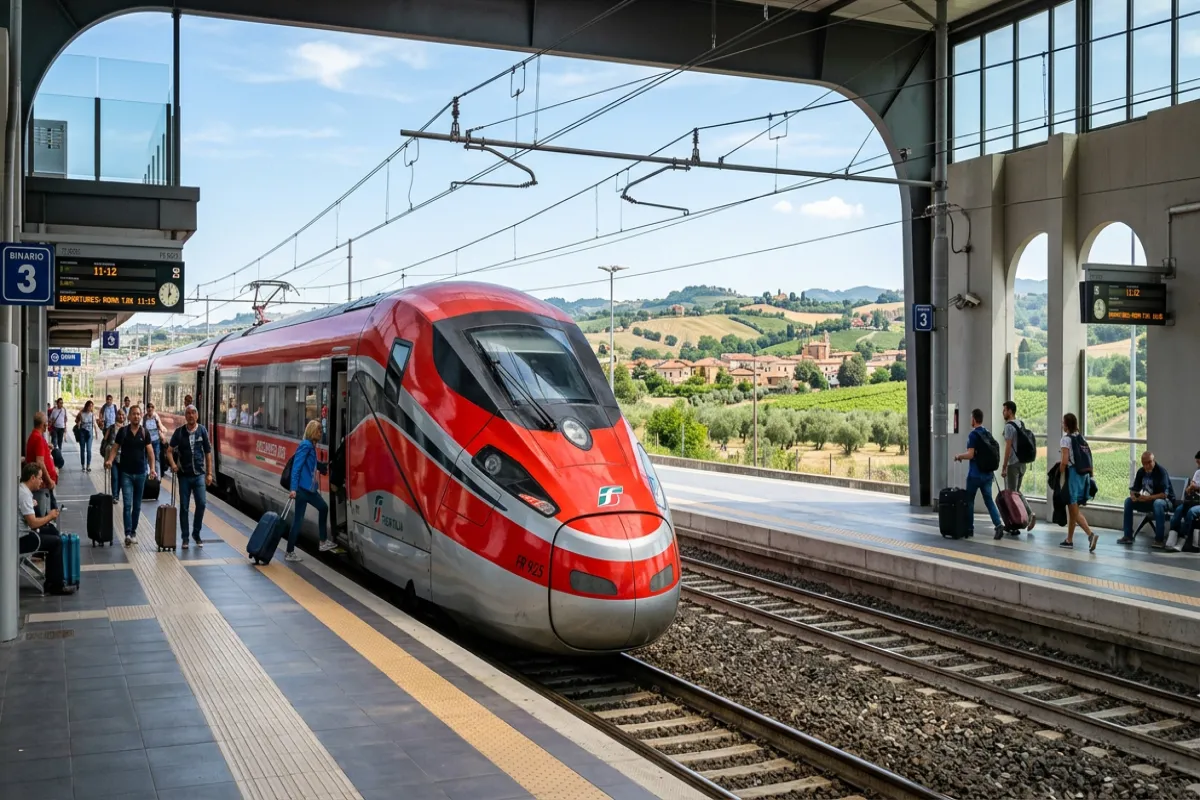
Trenitalia Frecciarossa and Italo are the two high-speed operators, and they compete on the same routes. This competition keeps prices reasonable, especially if you book early. Key travel times:
- Rome to Florence: 1.5 hours
- Rome to Venice: 3.5 hours
- Rome to Naples: 1 hour
Early-bird fares start at 10 to 19 euros per trip. Standard fares run 29 euros and up. Book on trenitalia.com or italotreno.com 3 to 6 months ahead for the best prices. Reservations are required on all high-speed trains, so you cannot just hop on.
Should you buy an Italy train pass? For most trips of 7 to 14 days covering 3 to 5 cities, booking individual point-to-point tickets ahead of time is cheaper and more flexible than a rail pass. A pass only makes sense if you are taking many spontaneous trips or traveling for three weeks or more.
Regional Trains
For shorter trips and smaller towns, regional trains cost 9 to 15 euros and do not require reservations. These are great for day trips to places like Cinque Terre, Pompeii from Naples, or hill towns around Florence. As of 2026, digital tickets for regional trains now auto-validate, so you no longer need to stamp a paper ticket at the platform.
Renting a Car in Italy
Renting a car in Italy makes sense for exploring Tuscany’s wine country, driving the Amalfi Coast, or visiting rural Puglia. It does not make sense for getting between major cities. Traffic in Rome, Florence, and Naples is chaotic, parking is expensive, and you will not need a car once you are in a city center.
A few things to know about driving in Italy:
- You need an International Driving Permit (IDP) along with your US license. Get one from AAA before your trip.
- ZTL zones (Zona a Traffico Limitato) in historic city centers are restricted areas monitored by cameras. Drive into one without authorization and you will receive a fine of 100 euros or more, often weeks after you return home. This is one of the most common costly mistakes tourists make.
- Manual transmission is standard for rental cars. Automatics cost significantly more and should be reserved early.
- Gas stations on highways charge premium prices. Fill up at stations in towns instead.
Building a 10 Day Italy Itinerary
A 10 day Italy itinerary is the sweet spot for a first visit. You can cover three to four destinations without feeling rushed. Here is a sample route that balances the big-name cities with enough breathing room to actually enjoy them.
Days 1 to 3: Rome
Start in Rome. Three full days gives you time for the Colosseum, Roman Forum, Vatican Museums, Sistine Chapel, Pantheon, Trastevere neighborhood, and at least one long afternoon just wandering and eating. Book the Colosseum and Vatican Museums weeks ahead because they sell out, especially in peak season.
If you are arriving at Fiumicino airport and have a long layover or a late-night arrival, check our Rome layover guide for tips on spending that time well. And for family-friendly ideas, see our list of things to do in Rome with kids.
Days 4 to 5: Florence
Take the high-speed train from Rome to Florence (1.5 hours). Two days in Florence covers the Uffizi Gallery, Duomo, Ponte Vecchio, the leather markets of San Lorenzo, and the viewpoint at Piazzale Michelangelo. Book the Uffizi ahead of time. If you want to see Michelangelo’s David at the Accademia, book that too.
Florence is also a great base for a day trip to Siena, San Gimignano, or the Chianti wine region if you have the time.
Days 6 to 7: Cinque Terre or Tuscany
From Florence, take the regional train to Cinque Terre (2.5 hours) for two days of hiking between the five colorful villages, swimming, and eating pesto and focaccia. Alternatively, rent a car and spend these days driving through Tuscany, stopping at Val d’Orcia, Montepulciano, and Montalcino.
Days 8 to 10: Venice or the Amalfi Coast
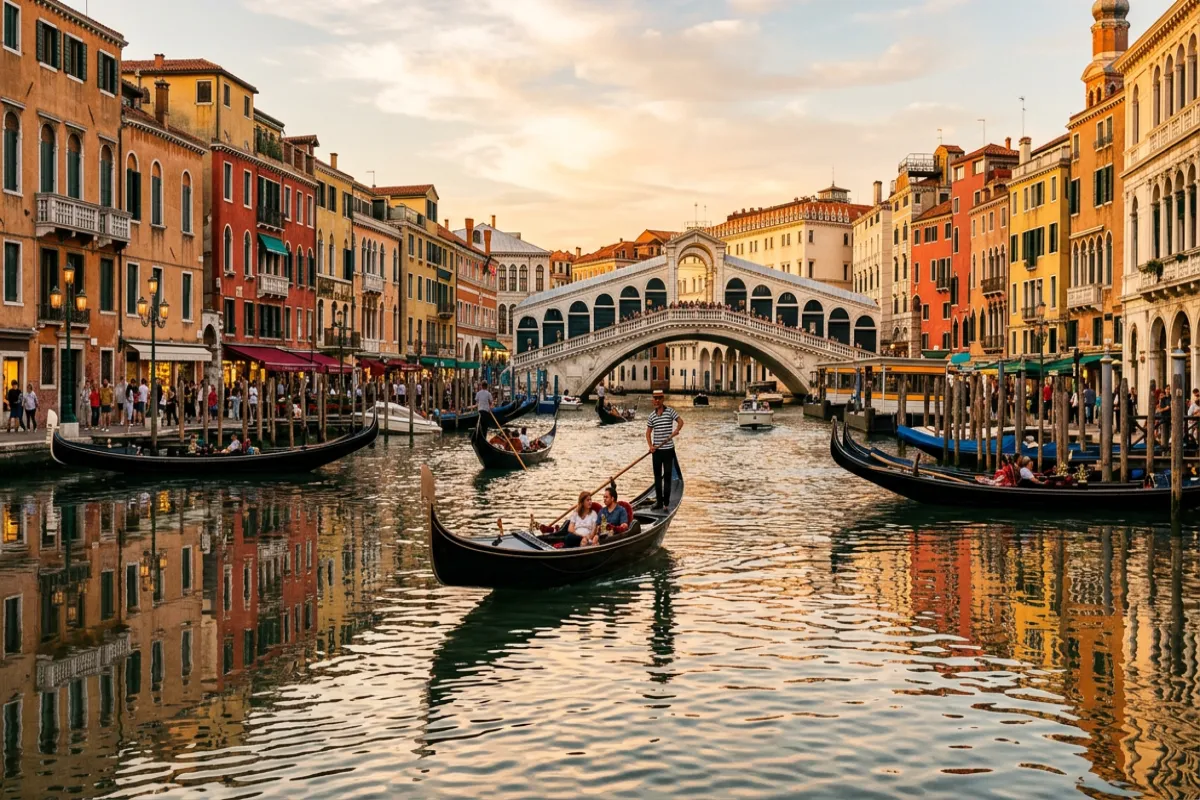
For your final stop, you have two excellent options. Venice is reachable from Florence by high-speed train in about 2 hours. Three days lets you explore St. Mark’s Square, ride the vaporetto water buses, visit Murano and Burano islands, and get lost in the back alleys where the real Venice reveals itself.
Alternatively, head south from Florence to Naples (2.5 hours by train) and use it as a base for the Amalfi Coast, Pompeii, and Capri. Naples itself has some of the best pizza and street food in Italy.
Need help structuring your day-by-day plan? Our vacation itinerary template makes it easy to organize activities, reservations, and transit times.
Visa and Entry Requirements
US citizens do not need a visa to visit Italy for stays up to 90 days. Your passport must be valid for at least 3 months beyond your planned departure date from Italy. This is a Schengen Area requirement, and airlines will check before boarding.
The EU’s new ETIAS system (European Travel Information and Authorization System) will require US travelers to complete a pre-registration for 7 euros before traveling to Italy. This system is expected to launch in Q4 2026, but it is not yet in effect. Check the official ETIAS website for the latest status before your trip.
Money, Currency, and Tipping in Italy
Currency and Payments
Italy uses the Euro (EUR). Credit and debit cards are widely accepted in cities, but you will need cash in smaller towns, local markets, and some family-run restaurants. Withdraw euros from ATMs in Italy rather than exchanging money before you leave. Italian ATMs (called “Bancomat”) give better exchange rates than currency exchange counters.
Avoid ATMs inside airports or attached to currency exchange shops, as these often charge higher fees. Instead, use ATMs attached to major banks like Intesa Sanpaolo or UniCredit.
Italy Tipping Culture
Italy tipping customs are very different from the US. Tipping is not required or expected. It is perfectly normal to pay the exact amount on the bill. If you receive great service, rounding up or leaving 1 to 2 euros is a generous gesture.
A few things that confuse American visitors:
- The coperto (cover charge) of 1 to 3 euros per person appears on virtually every restaurant bill. This is NOT a tip. It is a standard charge that covers bread and table service.
- If the bill says “servizio incluso,” a service charge has already been added. No additional tip is needed.
- Always tip in cash, even if you pay the bill by card.
- For taxis, simply round up to the nearest euro. For hotel porters, 1 to 2 euros per bag is appreciated.
Staying Safe in Italy
Italy is generally very safe for tourists. Violent crime against visitors is rare. The US State Department rates Italy as Level 2 (“Exercise Increased Caution”), which is the same rating as most of Western Europe.
The main threat is pickpocketing, particularly in crowded tourist areas. The highest-risk spots include:
- Rome: Termini station, Trevi Fountain area, the Colosseum, Bus 64 (the “Vatican Express”)
- Milan: around the Duomo
- Venice: Rialto Bridge area
Carry a cross-body bag worn on your chest, keep your phone in a front pocket, and stay alert on crowded public transport. These simple precautions are enough to keep you safe.
Common Tourist Scams
A few scams target tourists in Italian cities. Knowing about them makes them easy to avoid:
- “Free” bracelet scam: Someone ties a friendship bracelet on your wrist, then aggressively demands payment. Do not let strangers touch your hands or wrists.
- Ticket machine helpers: A person offers to help you buy train tickets while their accomplice pickpockets you. Use the machines on your own or buy tickets at the counter.
- Tourist-trap restaurants: Restaurants with picture menus, aggressive hosts standing outside, and locations directly on major tourist squares often overcharge significantly. Walk one or two blocks away from major attractions to find better food at honest prices.
Cultural Tips and Local Customs
Understanding a few Italian cultural norms will make your trip smoother and help you connect with locals.
Eating Like a Local
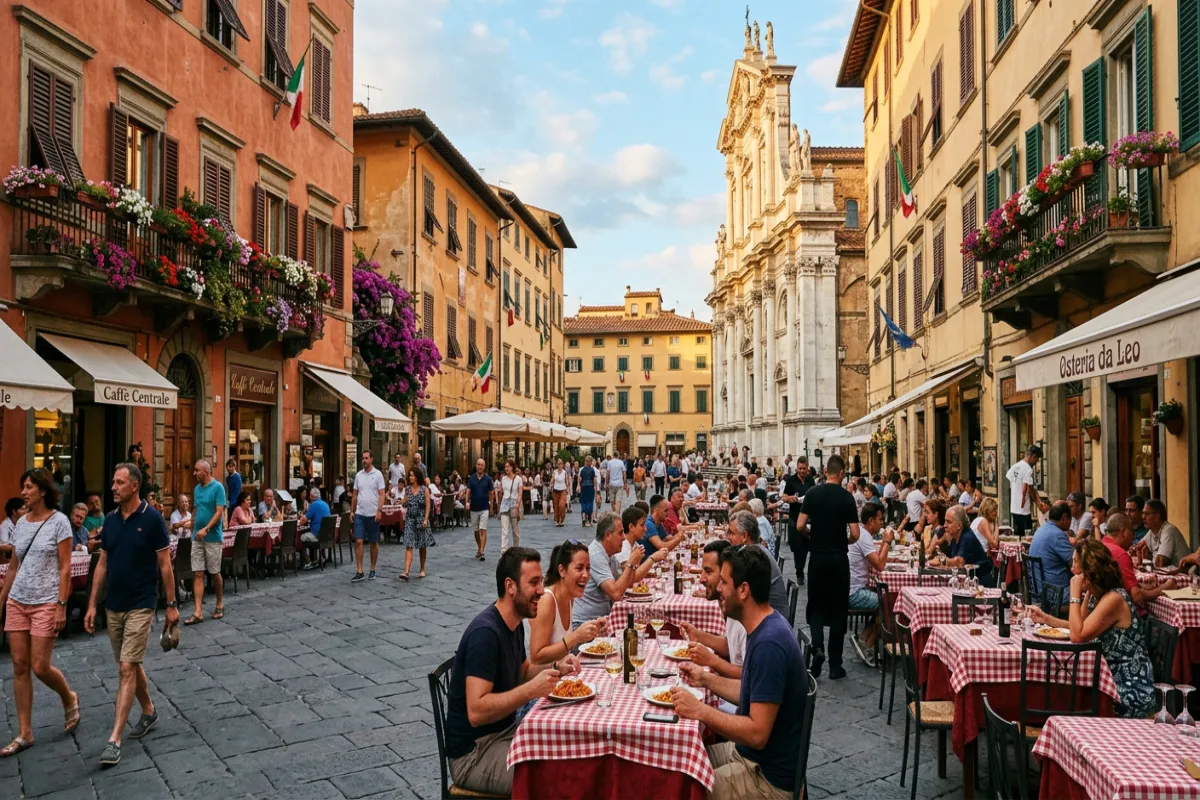
Italians eat lunch between 12:30 and 2:30 pm and dinner between 7:30 and 10 pm. If a restaurant is serving full meals outside those hours, it is almost certainly a tourist trap. Plan your day around Italian meal times and you will eat better food at better prices.
Espresso at the bar (standing) costs 1 to 1.50 euros. Sitting down at a table can cost 2 to 3 times more, especially at cafes in touristy piazzas. If you are on a budget, drink your coffee at the bar like the Italians do. And one more thing: cappuccino is a morning drink. Ordering one after lunch or dinner marks you as a tourist, though no one will refuse to make it.
Churches and Dress Codes
If you plan to visit churches (and you should, as some of Italy’s greatest art is inside them), both men and women need covered shoulders and knees. This is enforced at major sites like St. Peter’s Basilica and the Duomo in Florence. Carry a light scarf or shawl in your bag.
Shopping Hours and the Riposo
Many shops, especially in southern Italy and smaller towns, close between 1 and 4 pm for the riposo (afternoon rest). Plan your shopping and errands for the morning or late afternoon. Restaurants also close between lunch and dinner service in most areas.
Book Big Attractions Early
The Colosseum, Sistine Chapel, Uffizi Gallery, and Leonardo da Vinci’s Last Supper in Milan all sell out well in advance. Book tickets at least 2 to 4 weeks ahead, and further out during summer. Do not assume you can walk up and buy tickets at the door.
Practical Details
- Public restrooms at train stations cost about 1 euro. Restrooms at museums and restaurants you are dining at are free.
- Language: English is widely spoken in tourist areas but much less in rural southern Italy. Learning a few basic Italian phrases (buongiorno, grazie, scusi, il conto per favore) goes a long way.
Planning Tools
Organizing a multi-city Italy trip with trains, hotels, activities, and restaurants across different cities can get complicated fast. Our AI trip planner can help you build a day-by-day schedule, estimate travel times between cities, and keep all your reservations in one place.
Frequently Asked Questions
Do Americans need a visa to visit Italy?
No. US citizens can visit Italy and the rest of the Schengen Area for up to 90 days without a visa. Your passport must be valid for at least 3 months beyond your departure date. The EU’s ETIAS pre-registration system (7 euros) is expected to launch in Q4 2026 but is not yet required.
How many days do you need in Italy?
A minimum of 7 days allows you to visit two cities comfortably. Ten days is ideal for a first trip, giving you time for three to four destinations without rushing. Two weeks lets you add smaller towns, the Amalfi Coast, or Sicily without feeling pressed for time.
Is it better to fly into Rome or Milan?
Milan Malpensa is often the cheapest airport for flights from the US. However, if your itinerary starts in Rome, flying directly there saves you the 3-hour train ride from Milan. Compare prices for both and factor in the train cost (early-bird fares from 10 to 19 euros) before deciding.
Should I rent a car or take trains in Italy?
For travel between major cities like Rome, Florence, Venice, and Naples, trains are faster, cheaper, and less stressful than driving. Renting a car in Italy makes sense only for exploring rural areas like Tuscany, the Amalfi Coast, or Puglia. Remember that you need an International Driving Permit, and ZTL zones in city centers can result in hefty fines if you drive into them.
How much should I tip in Italy?
Tipping is not expected in Italy. The coperto (cover charge of 1 to 3 euros per person) on restaurant bills is not a tip. If you receive exceptional service, rounding up the bill or leaving 1 to 2 euros in cash is generous. For taxis, round up to the nearest euro. For hotel porters, 1 to 2 euros per bag is standard.