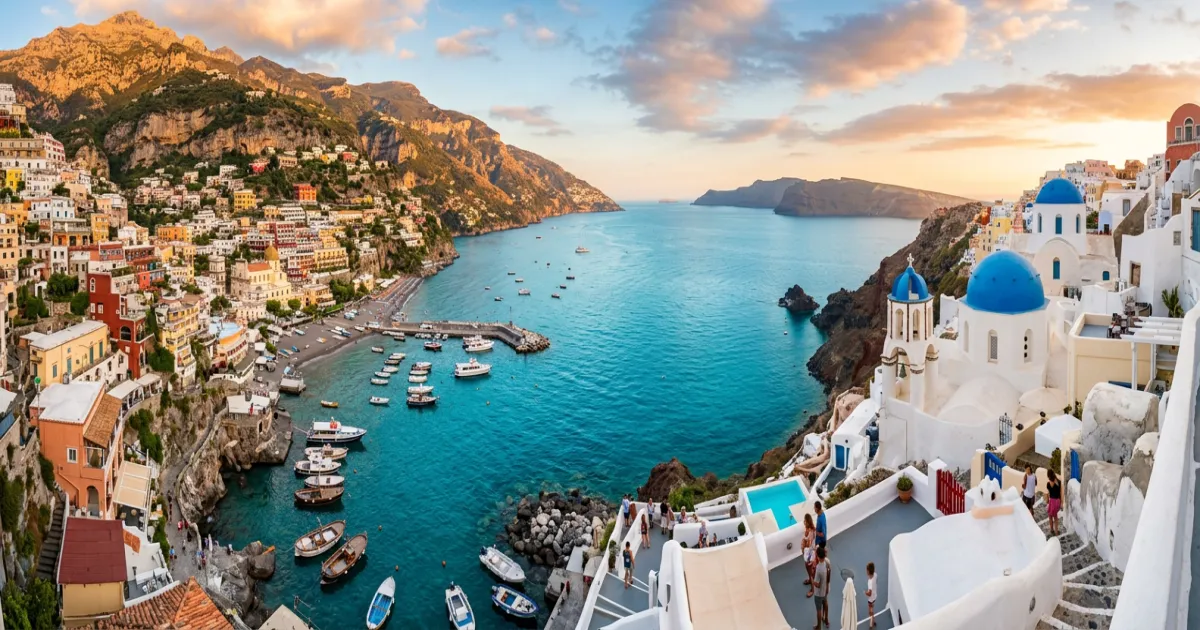
Italy and Greece sit side by side across the Mediterranean, share the same currency and visa zone, and together offer one of the most rewarding two-country trips you can take in Europe. Roman ruins flow into ancient Greek temples. Tuscan vineyards give way to Aegean island sunsets. And getting between the two countries takes as little as two hours by air or one scenic overnight ferry.
This guide walks you through everything you need to plan a combined Italy and Greece trip in 2026, from timing and budget to transport options and a day-by-day sample itinerary.
Quick Facts: Italy and Greece at a Glance
Before diving into planning details, here are the basics that make this combination so practical:
- Schengen Zone: Both countries are in the Schengen Area, so you cross the border with zero passport checks or additional visas.
- Currency: Both use the Euro, so no currency exchange needed when you move between them.
- Proximity: Rome to Athens is roughly 1,050 km (650 miles). A direct flight takes about 2 hours.
- Transport options: Multiple budget airlines fly between Italian and Greek cities daily. Overnight ferries connect the Adriatic coast of Italy to western Greece.
- Time zone: Greece is one hour ahead of Italy (Eastern European Time vs. Central European Time).
If you are planning your first international trip, our complete trip planning guide covers the fundamentals before you get into country-specific details.
Why Combine Italy and Greece in One Trip
These two countries complement each other perfectly. Italy delivers world-class art, architecture, and food in buzzing cities. Greece offers ancient history paired with laid-back island life. Together, they create a trip that balances cultural intensity with relaxation.
Here is what makes the combination work so well:
- Complementary experiences: Italy is about cities, art museums, and food culture. Greece is about archaeological sites, island-hopping, and coastal living. You get variety without repetition.
- Easy connections: Budget carriers like Ryanair, EasyJet, and Aegean Airlines run multiple daily flights between Italian and Greek cities, often for $40 to $80 one way.
- Same visa and currency: No extra paperwork, no exchanging money, no border hassle.
- Mediterranean neighbors: Similar climate, similar dining hours (late), similar pace of life. The cultural transition feels natural, not jarring.
Best Time to Visit Italy and Greece
Both countries share a Mediterranean climate, which makes timing straightforward. The sweet spots are the shoulder seasons:
April through June: Warm days (20 to 28 C / 68 to 82 F), smaller crowds, lower prices. Wildflowers bloom across the Greek islands. Italian cities are busy but manageable. Ferry schedules are fully operational by May.
September and October: Still warm enough for swimming and island time. Summer crowds thin out significantly after mid-September. Hotel rates drop. The light is golden and perfect for photography.
July and August: Peak season brings intense heat (35 C+ / 95 F+ in Athens and Rome), maximum crowds at major sites, and the highest prices. If these are your only available months, book accommodations and ferry tickets well in advance and plan sightseeing for early morning or evening.
November through March: Many Greek island businesses close for winter. Italian cities remain open year-round, but some coastal areas (Amalfi, Cinque Terre) are quieter. This period works if you want to focus on Rome, Florence, and Athens only.
How Long Do You Need?
The ideal duration depends on how many places you want to visit:
- 10 days (minimum): Enough for 2 Italian cities and Athens plus one island. You will feel the pace, but it is doable.
- 14 days (recommended): Gives you 5 to 6 days in Italy and 6 to 7 days in Greece with comfortable travel days between stops. This is the sweet spot for most travelers.
- 21 days (ideal): Allows you to add smaller destinations like Cinque Terre, Meteora, or Crete without rushing. You can also build in rest days, which makes a real difference on longer trips.
Use a vacation itinerary template to map out your days and make sure you are not cramming too much into each stop.
Budget: What to Expect
Italy and Greece are both moderate by Western European standards. Neither is as expensive as Scandinavia or Switzerland, and both offer excellent value for food and local transport.
Daily Budget Ranges (Per Person)
| Category | Italy | Greece |
|---|---|---|
| Budget | $80 to $120/day | $60 to $100/day |
| Mid-range | $150 to $250/day | $120 to $200/day |
| Luxury | $300+/day | $250+/day |
These ranges include accommodation, food, local transport, and activities. They do not include international flights or intercountry transport.
Where the Money Goes
- Accommodation: Budget hotels and guesthouses run $50 to $90/night in Italy, $40 to $70/night in Greece. Santorini and Mykonos in peak season are exceptions and can match or exceed Italian prices.
- Food: Street food and casual dining cost $15 to $30/day in both countries. A sit-down dinner with wine runs $30 to $60 per person. Greek tavernas tend to be slightly cheaper than Italian restaurants.
- Flights between countries: One-way flights from Rome or Naples to Athens start around $40 to $80 on Ryanair and EasyJet when booked 4 or more weeks ahead.
- Ferries: Overnight ferries from Bari to Patras start at roughly $75 for a deck seat, $120 to $180 for a cabin.
Track your spending across both countries with a travel budget template to avoid any surprises.
Getting Between Italy and Greece
You have three realistic options for crossing between the two countries. Each has its advantages.
Option 1: Fly (Fastest and Often Cheapest)
Direct flights connect multiple Italian cities to Athens and the Greek islands. The most common routes:
- Rome (FCO) to Athens (ATH): About 2 hours. Ryanair runs roughly 8 flights per week, Aegean Airlines runs about 16 per week. One-way fares start around $40 to $80.
- Naples to Athens: About 2 hours. Fewer flights but still regular service on Ryanair and Volotea.
- Milan/Venice to Athens: 2 to 2.5 hours with multiple carriers.
- Direct to islands: In summer, you can find seasonal direct flights from Rome or Milan to Santorini, Mykonos, and Crete, skipping Athens entirely.
Book 4 to 8 weeks ahead for the best fares. Use Google Flights to compare across airlines.
Option 2: Ferry (Scenic Overnight)
Overnight ferries are the romantic option and surprisingly practical. You save a night of hotel costs, and you wake up in Greece.
- Bari to Patras: Operated by Anek Superfast Ferries. About 16.5 hours, with daily departures year-round. Deck passage starts around $75, cabins from $120. Bari is easy to reach by train from Rome (about 4 hours) or Naples (about 3.5 hours).
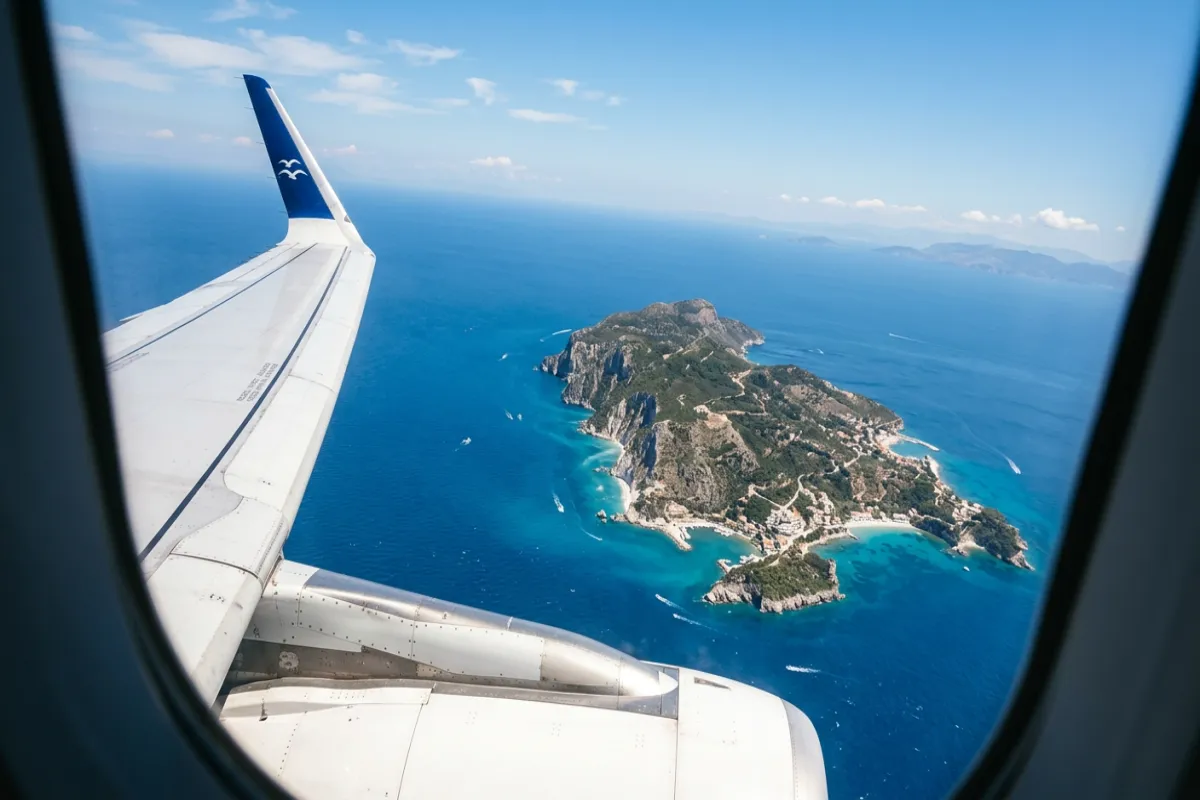
- Brindisi to Igoumenitsa: Grimaldi Lines operates this route with up to 3 daily crossings. The crossing takes 7.5 to 9.5 hours. Fares start around $45 for deck passage. From Igoumenitsa, you can continue by bus to Athens (about 5 hours) or take a short ferry to Corfu.
- Ancona/Venice to Patras: Longer crossings (20 to 30+ hours) but connect northern Italy directly to Greece.
Ferry schedules vary by season, with more frequent service from May through October. Book through Direct Ferries or Ferryhopper for the best comparison.
Option 3: Do Not Drive
While technically possible to drive from Italy through the Balkans to Greece, it adds 15+ hours of driving through multiple countries and makes little sense for a vacation. Fly or take the ferry.
Italy Highlights for a Combined Trip
When you only have 5 to 7 days on the Italian side, focus on destinations that deliver the highest impact. For a deeper dive, see our Italy trip planning guide.
- Rome (2 to 3 days): The Colosseum, Vatican Museums, Pantheon, Trastevere neighborhood. Rome works as both a starting point (major international airport) and a launch pad for flights or trains to ferry ports.
- Florence (2 days): The Uffizi Gallery, Duomo, Ponte Vecchio, and Tuscan cuisine. A high-speed train from Rome takes 1.5 hours.
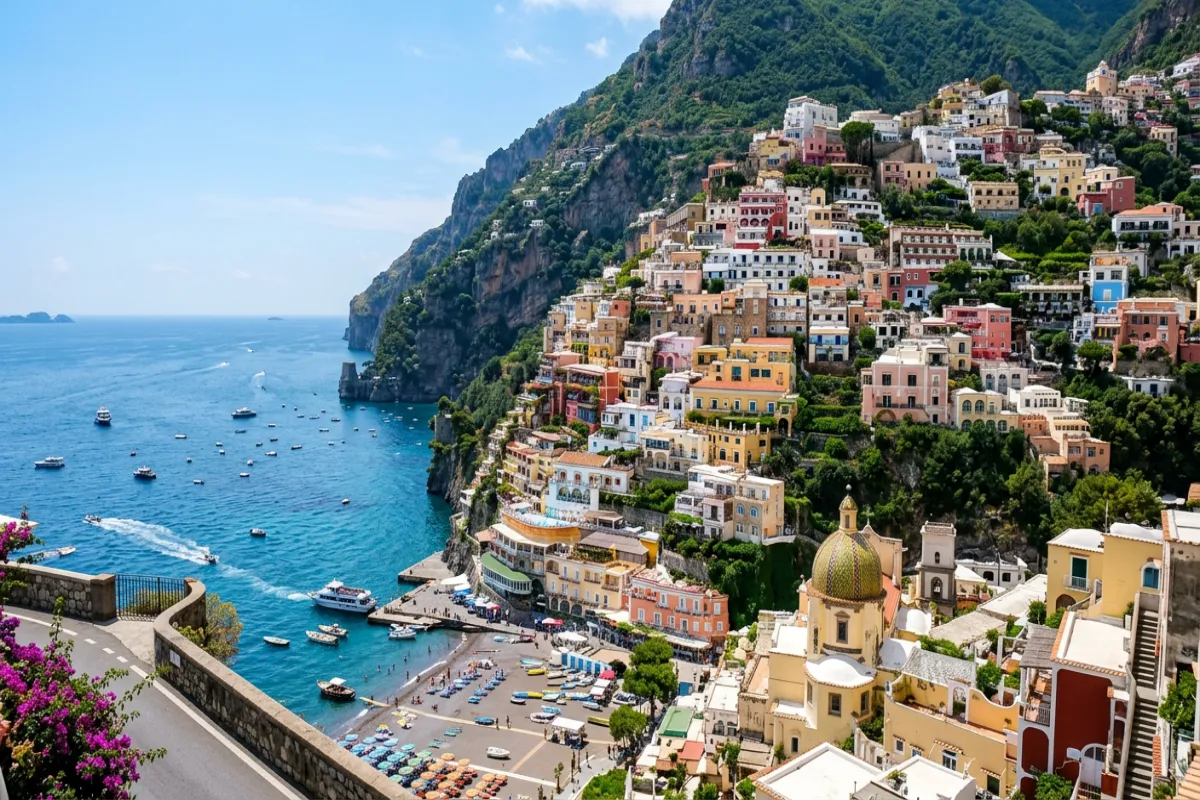
- Amalfi Coast (2 days): Positano, Ravello, and the coastal drive. Base yourself in Sorrento for easier logistics. Accessible from Naples by Circumvesuviana train and ferry.
- Venice (1 to 2 days): Best if you are flying into or out of northern Italy. St. Mark’s Basilica, Grand Canal, and getting lost in the side streets.
- Cinque Terre (1 to 2 days): Five colorful villages along the Ligurian coast connected by train and hiking trails. Best combined with a Florence visit.
Greece Highlights for a Combined Trip
Greece rewards a mix of mainland history and island relaxation. Our Greece trip planning guide covers additional options.
- Athens (2 days): The Acropolis, Ancient Agora, Plaka neighborhood, and the National Archaeological Museum. Athens is compact and walkable. Two full days covers the essentials.
- Santorini (2 to 3 days): Caldera views, Oia sunsets, black sand beaches, and wine tasting. Ferries from Athens (Piraeus) take about 5 hours by high-speed or 8 hours by conventional ferry. Flights take 45 minutes.
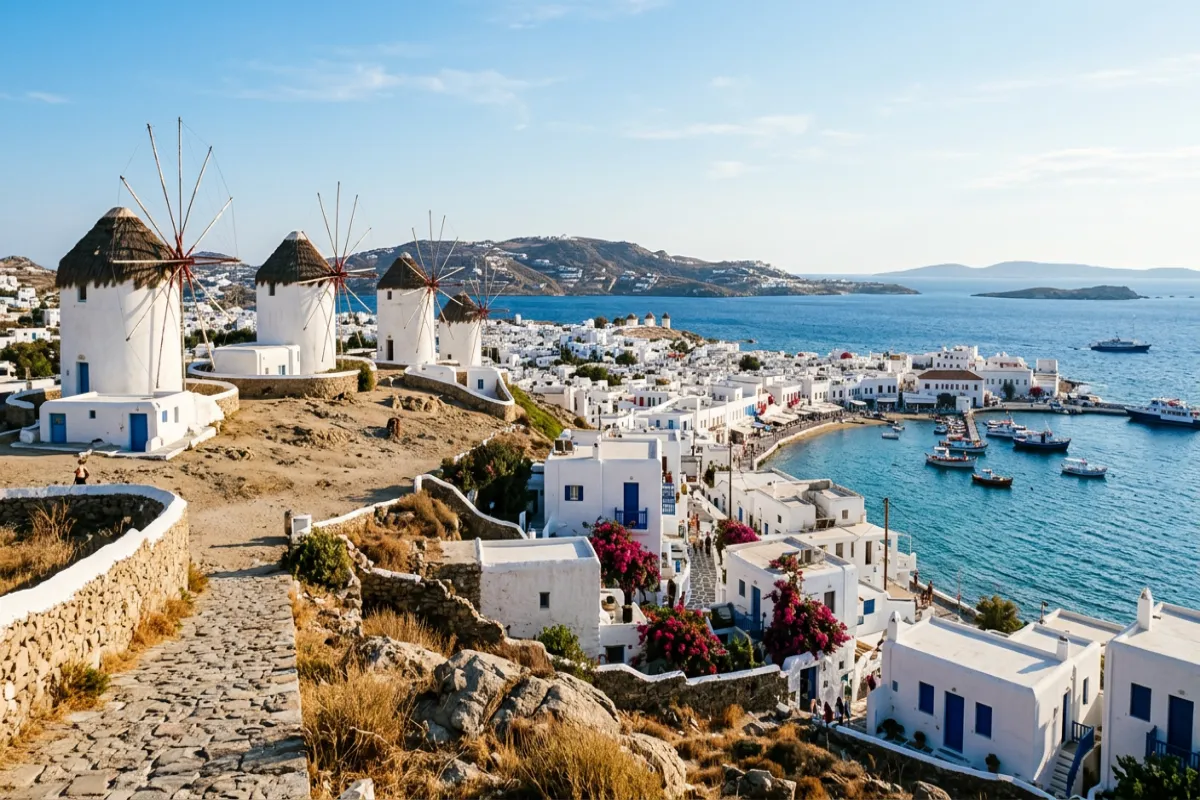
- Mykonos (2 days): Windmills, Little Venice waterfront, beach clubs, and the nearby island of Delos (UNESCO World Heritage Site). Well connected by ferry to Santorini (about 2 to 3 hours).
- Crete (3+ days): Greece’s largest island has its own airports and enough variety for an entire trip: Knossos palace, Samaria Gorge, Elafonissi beach, and Chania’s Venetian harbor.
- Meteora (1 to 2 days): Monasteries perched on towering rock pillars in central Greece. Reachable by train from Athens (about 4 hours). A powerful contrast to the islands.
Which Country Should You Visit First?
Either order works, but each has a different feel:
Italy first, then Greece (most popular): You start with the energy of Italian cities, then wind down on the Greek islands. The trip builds toward relaxation, which many travelers prefer. You also fly home from Athens, which has excellent international connections.
Greece first, then Italy (also great): You begin with islands and beaches while you are freshest, then shift to museums and city exploration. This works well if your international flight arrives in Athens or departs from Rome.
The deciding factor is usually your flight routing. Check which open-jaw itinerary (flying into one country and out of the other) is cheapest. Multi-city bookings on Google Flights or Skyscanner often cost the same as round-trip tickets.
Where to Stay
Mix your accommodation types to match each destination:
- Italian cities (Rome, Florence): Boutique hotels or vacation rentals in central neighborhoods. In Rome, look at Trastevere or Monti. In Florence, stay near Santa Croce or Santo Spirito.
- Amalfi Coast: Book early. Sorrento has the best transport links. Positano is beautiful but expensive and car-dependent.
- Athens: Stay in Plaka or Monastiraki for walkability to the Acropolis and metro access to the port and airport.
- Greek islands: Santorini caldera-view hotels book up months ahead. Consider staying in Fira (more affordable and central) rather than Oia (stunning but pricey). On Mykonos, Mykonos Town puts you close to nightlife and ferries.
Book accommodation 2 to 3 months ahead for shoulder season, 4 to 6 months ahead for July and August, especially on the Greek islands.
Practical Tips for Your Trip
These details will save you time and frustration on the ground:
- Same visa makes life simple: US, UK, Canadian, and Australian citizens get 90 days visa-free in the Schengen Area. Your combined Italy-Greece trip falls well within this limit.
- Late dining is normal: Italians eat dinner at 8 to 9 PM. Greeks eat even later, often 9 to 10 PM. Restaurants in both countries may not open for dinner before 7 PM.
- Watch your belongings: Pickpocketing is a known issue at crowded tourist spots in both countries, particularly around the Colosseum and Roman metro in Italy, and Monastiraki Square and the Athens metro in Greece. Use a money belt or front-pocket wallet.
- Pace yourself: The biggest mistake on a combined trip is trying to see too much. Build in at least one rest day per week. A morning with no alarm and a slow coffee at a local cafe will recharge you more than another museum.
- SIM cards and connectivity: Buy a European SIM card or eSIM that works across EU countries. One card covers both Italy and Greece with no roaming charges within the EU.
- Tipping customs differ: In Italy, a coperto (cover charge) of 1 to 3 euros per person is common at restaurants and is not a tip. Rounding up or leaving 5 to 10% is appreciated. In Greece, tipping 5 to 10% at restaurants is standard.
- Island ferry tickets: For popular Cyclades routes (Athens to Santorini, Santorini to Mykonos), book ferry tickets at least 2 weeks ahead in high season. Use Ferryhopper or Let’s Ferry for online booking.
Sample 14-Day Italy and Greece Itinerary
This itinerary covers the highlights of both countries at a comfortable pace. Adjust it based on your interests and energy level.
Days 1 to 3: Rome, Italy
Day 1: Arrive in Rome. Get oriented with a walk through the historic center. Piazza Navona, Trevi Fountain, Spanish Steps. Dinner in Trastevere.
Day 2: Colosseum, Roman Forum, and Palatine Hill in the morning (book timed tickets in advance). Afternoon at the Pantheon and surrounding streets. Evening passeggiata and gelato.
Day 3: Vatican Museums and St. Peter’s Basilica (arrive early or book skip-the-line tickets). Afternoon exploring Castel Sant’Angelo or the Borghese Gallery.
Days 4 to 5: Florence, Italy
Day 4: High-speed train to Florence (1.5 hours). Check in and walk to the Duomo and Baptistery. Climb the dome or Giotto’s bell tower for city views. Explore San Lorenzo market.
Day 5: Morning at the Uffizi Gallery. Afternoon crossing the Ponte Vecchio and exploring the Oltrarno neighborhood. Consider a day trip to Siena or the Chianti wine region if time allows.
Day 6: Travel Day, Fly to Athens
Morning train back to Rome or direct flight from Florence. Fly to Athens (about 2 hours). Arrive and settle into your Athens hotel. Evening stroll through Plaka with dinner at a rooftop restaurant overlooking the lit-up Acropolis.
Days 7 to 8: Athens, Greece
Day 7: Morning at the Acropolis and Acropolis Museum. Afternoon exploring the Ancient Agora and Monastiraki flea market. Sunset from Lycabettus Hill.
Day 8: National Archaeological Museum in the morning. Afternoon free for Syntagma Square, the Changing of the Guard, and shopping. Head to Piraeus port in the evening.
Days 9 to 11: Santorini, Greece
Day 9: Arrive by ferry or morning flight. Check into your hotel and explore Fira. Walk the caldera path from Fira to Imerovigli.
Day 10: Visit Oia, explore the castle ruins, browse the galleries. Watch the famous Oia sunset. Consider a catamaran cruise around the caldera.
Day 11: Red Beach and Akrotiri archaeological site (the “Greek Pompeii”). Wine tasting at Santo Wines or Venetsanos Winery. Relaxed evening.
Days 12 to 13: Mykonos, Greece
Day 12: Ferry from Santorini to Mykonos (2 to 3 hours). Explore Mykonos Town: windmills, Little Venice, Panagia Paraportiani church. Beach afternoon.
Day 13: Day trip to Delos island (UNESCO site, 30-minute boat ride). Ancient temples and the Terrace of the Lions. Return for a final Greek dinner in Mykonos Town.
Day 14: Return Home
Morning flight from Mykonos to Athens. Connect to your international flight home, or spend a final few hours in Athens if your schedule allows.
Planning Tools
These resources will help you organize the details:
- Yopki AI Travel Planner can help you build a custom day-by-day itinerary for both countries based on your travel dates and interests.
- Use a vacation itinerary template to organize your daily schedule and keep all booking confirmations in one place.
- Track spending across both countries with a travel budget template.
- Read our dedicated Italy planning guide and Greece planning guide for deeper detail on each country.
- For broader European trip planning, see our Europe trip planning guide.
Frequently Asked Questions
Is it better to fly or take the ferry between Italy and Greece?
Flying is faster (2 hours vs. 7 to 16 hours) and often cheaper ($40 to $80 vs. $75 to $180). But the overnight ferry saves you a night of hotel costs and is a memorable experience. If time is tight, fly. If you want the journey to be part of the adventure, take the ferry from Bari or Brindisi.
Do I need separate travel insurance for each country?
No. A standard international travel insurance policy covers both countries. Make sure your policy includes the full Schengen Area and covers medical evacuation, since both countries have areas (islands, rural regions) where you might need transport to a larger hospital.
Can I use credit cards everywhere?
Cards are widely accepted in cities and tourist areas in both countries. However, smaller tavernas in Greece, market vendors in Italy, and some ferry ticket offices still prefer cash. Carry some euros for these situations. ATMs are easy to find throughout both countries.
How far in advance should I book?
For peak season (June through August), book flights and accommodation 3 to 6 months ahead. Ferry tickets for popular routes should be booked 2 to 4 weeks ahead. For shoulder season (April to May, September to October), 4 to 8 weeks ahead is usually sufficient for everything.
Is 10 days enough for Italy and Greece?
Ten days is doable but tight. A realistic 10-day split would be Rome (2 days), Florence (1 day), fly to Athens (1 travel day), Athens (2 days), and Santorini (3 days). You will need to move efficiently and skip some secondary destinations. Fourteen days is much more comfortable.
What is the cheapest way to do this trip?
Fly into Rome and out of Athens (or vice versa) on an open-jaw ticket to avoid backtracking. Use budget airlines between countries. Stay in guesthouses or vacation rentals instead of hotels. Eat at local trattorias and tavernas rather than tourist-zone restaurants. Travel in April, May, or October for lower prices on everything.