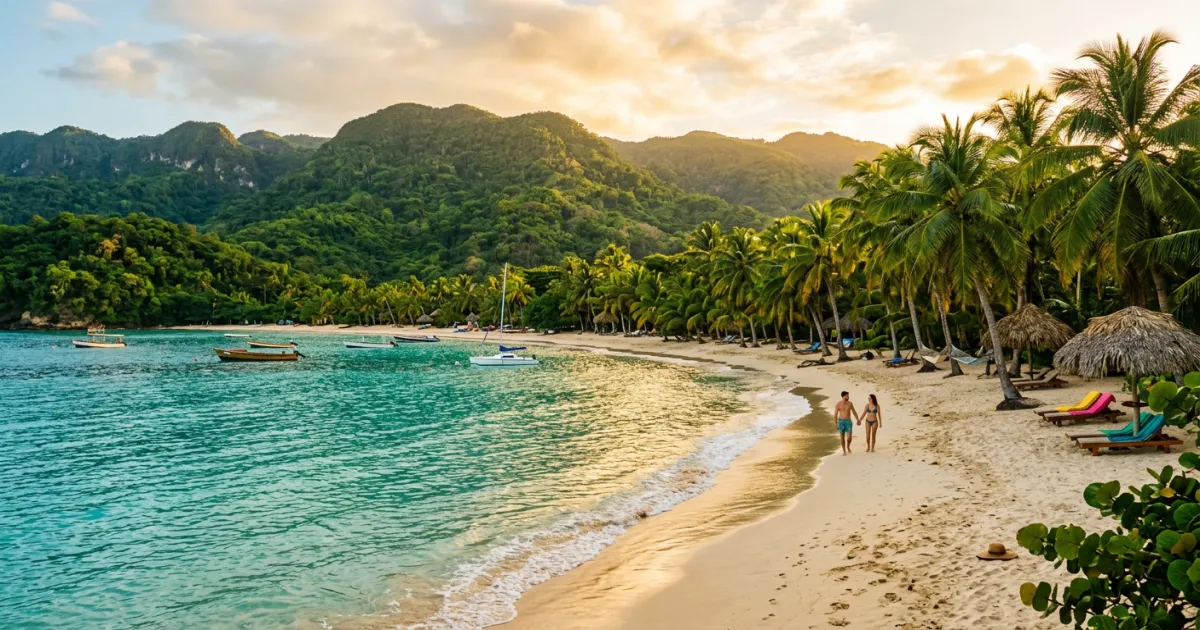
Jamaica is one of the Caribbean’s most vibrant and welcoming destinations, offering everything from world-class beaches and lush mountain trails to a food scene that will change how you think about spice forever. Whether you are dreaming of an all-inclusive resort week in Montego Bay or a backpacking adventure through Port Antonio, this guide covers everything you need to plan your trip to Jamaica in 2026.
Already mapping out your full vacation? Start with our complete trip planning guide for a step-by-step framework, then come back here for Jamaica-specific details.
Jamaica Quick Facts
| Detail | Info |
|---|---|
| Visa (US Citizens) | No visa required for stays up to 90 days (180 days max per calendar year) |
| Currency | Jamaican Dollar (JMD), but USD is widely accepted in tourist areas |
| Language | English (official), Jamaican Patois widely spoken |
| Time Zone | Eastern Standard Time (EST/UTC-5), no daylight saving |
| Climate | Tropical; warm year-round with average highs of 82-90°F (28-32°C) |
| Main Airports | Sangster International (MBJ) in Montego Bay, Norman Manley (KIN) in Kingston |
| Electrical | 110V, same plugs as the US (Type A/B) |
US citizens simply need a valid passport (with at least six months remaining) and a completed C5 Immigration/Customs form, which you can fill out online at visitjamaica.com before your flight to speed up arrival.
Best Time to Visit Jamaica
Jamaica enjoys warm weather year-round, so there is no truly bad time to visit. However, the timing you choose will affect your budget, crowd levels, and weather experience significantly.
Dry Season (November to April)
This is peak tourist season, and for good reason. Expect sunny skies, low humidity, and calm seas. December through March is the busiest stretch, with the highest hotel and flight prices. If you want dry-season weather without peak-season crowds, aim for November or early December before the holiday rush.
Wet Season (May to October)
The wet season brings short afternoon rain showers, but mornings are usually clear and beautiful. Hotel prices drop 20-40%, and beaches are far less crowded. Hurricane season officially runs from June 1 through November 30, with the highest risk in August through October. Travel insurance is strongly recommended if you visit during these months.
Sweet Spot
Late November and early December offer the best of both worlds: dry-season weather arrives, prices have not yet spiked for the holidays, and tourist crowds are manageable. Late April and May are also excellent for budget-conscious travelers who want pleasant weather before the rains pick up.
How Long to Spend in Jamaica
A 5 to 7 day trip is the sweet spot for most visitors. This gives you enough time to settle into island pace, explore one or two regions, and still have days for beaches and spontaneous adventures. If you are sticking to one resort area, 4 to 5 days works. For a multi-region trip covering both the north coast and Kingston, plan for 7 to 10 days.
Use our vacation itinerary template to map out your daily plan before you go.
Jamaica Trip Budget: What to Expect
Jamaica can fit nearly any budget, from bare-bones backpacking to ultra-luxe all-inclusive stays. Here is a realistic breakdown of daily costs per person in 2026.
Budget ($50-110/day)
Stay in hostels ($14-26/night) or basic guesthouses. Eat at roadside jerk stands and local cook shops ($3-8 per meal). Use route taxis and minibuses for transport. Skip organized tours and explore beaches and free attractions on your own.
Mid-Range ($150-300/day)
Book a comfortable hotel or Airbnb ($60-130/night). Mix local food with restaurant meals. Take a few guided tours like Dunn’s River Falls or a Blue Mountain coffee tour. Use a combination of taxis and occasional car rental.
All-Inclusive / Luxury ($350-800+/day)
All-inclusive resorts typically run $250-500+ per person per night and cover accommodation, meals, drinks, and some activities. High-end resorts like Sandals, Couples, and Round Hill push above $600/night. The advantage is predictability: once you have paid, your daily spending drops to near zero unless you leave the resort.
A one-week trip for two people averages roughly $2,000-4,000 for mid-range travel, including flights from the US East Coast. Track your spending with our travel budget template.
Getting There and Getting Around
Flights
Most international visitors fly into Sangster International Airport (MBJ) in Montego Bay, which is the main gateway for the north coast resort areas. Norman Manley International Airport (KIN) in Kingston serves the capital and the eastern part of the island. Direct flights from major US cities (Miami, New York, Atlanta, Fort Lauderdale, Charlotte) take 3 to 4.5 hours.
If you have a layover in Montego Bay, check our Montego Bay layover guide for tips on making the most of your time at the airport.
Airport Transfers
Most resorts offer shuttle service from MBJ, and many all-inclusive packages include transfers. Independent travelers can book shared shuttles ($20-35 per person to Negril or Ocho Rios) or private transfers ($80-150). Always arrange transport in advance rather than negotiating with drivers at the airport.
Getting Around the Island
- Resort shuttles and organized tours: The easiest option if you are staying at an all-inclusive. Most resorts arrange day trips to major attractions.
- Route taxis: Shared taxis that follow set routes between towns. Affordable (a few hundred JMD per ride) but can be crowded. Look for red license plates for licensed taxis.
- Knutsford Express: A reliable bus service connecting Kingston, Montego Bay, Ocho Rios, Negril, and other destinations. Air-conditioned and comfortable, with online booking available.
- Rental car: Gives you the most freedom but comes with challenges. Jamaicans drive on the left side of the road, mountain roads can be narrow and winding, and road conditions vary widely. Do not drive at night in rural areas, as roads are often unlit with unexpected obstacles.
- Charter taxis: You can hire a driver for the day ($100-200 USD) to explore multiple stops. This is often the best option for day trips to attractions that are spread out.
Where to Stay in Jamaica
Jamaica has four main tourist regions, each with a distinct personality. Your choice depends on what kind of trip you want.
Montego Bay
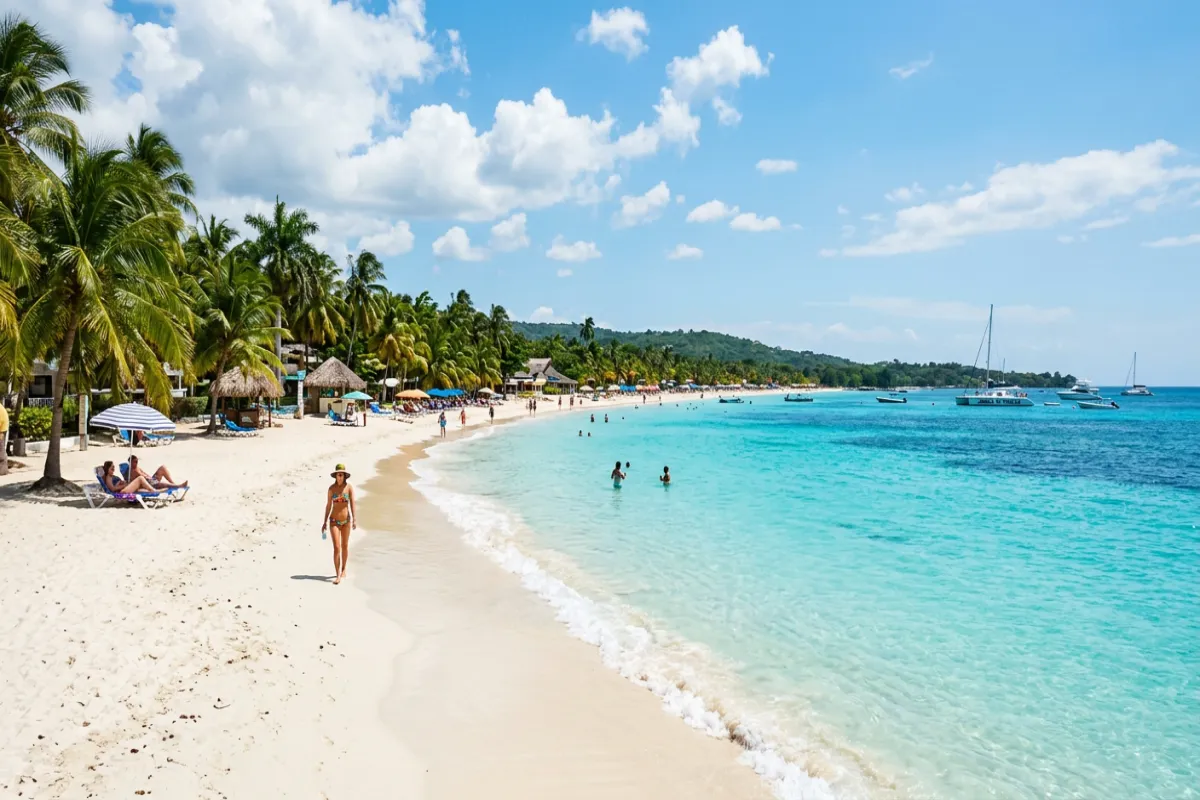
Jamaica’s second-largest city and the main resort hub. The “Hip Strip” along Gloucester Avenue is packed with restaurants, bars, and shops. Doctor’s Cave Beach is the most popular public beach. This is where you will find the highest concentration of all-inclusive resorts, and it is the most convenient base if you want resort comfort with easy access to the airport.
Negril
Home to Seven Mile Beach, one of the Caribbean’s most famous stretches of sand. Negril has a laid-back, bohemian vibe that attracts everyone from honeymooners to solo travelers. The West End cliffs offer a different experience, with boutique hotels perched above the water and Rick’s Cafe serving as the sunset gathering spot. Negril is about 90 minutes from MBJ airport.
Ocho Rios
A popular cruise port and the gateway to Dunn’s River Falls. Ocho Rios has a more touristy feel but offers easy access to some of Jamaica’s top attractions, including Mystic Mountain, Fern Gully, and the Blue Hole. It sits roughly 90 minutes east of Montego Bay.
Port Antonio
The off-the-beaten-path choice. Port Antonio is lush, quiet, and far less developed than the north coast resort towns. This is where you will find the Blue Lagoon, Reach Falls, and rafting on the Rio Grande. It is ideal for travelers who want a more authentic, less touristy Jamaican experience. Getting here requires a longer transfer (2.5-3 hours from MBJ, or fly into Kingston and drive 2 hours east).
Kingston
Jamaica’s capital is not a beach destination, but it is the cultural heart of the island. Visit for the Bob Marley Museum, Devon House, the National Gallery, and the best food scene in Jamaica. Most tourists skip Kingston, which means you get a more genuine experience if you include it in your itinerary.
Must-Do Experiences in Jamaica
Jamaica packs an enormous amount of variety into a relatively small island. Here are the experiences worth building your trip around.
Dunn’s River Falls (Ocho Rios)
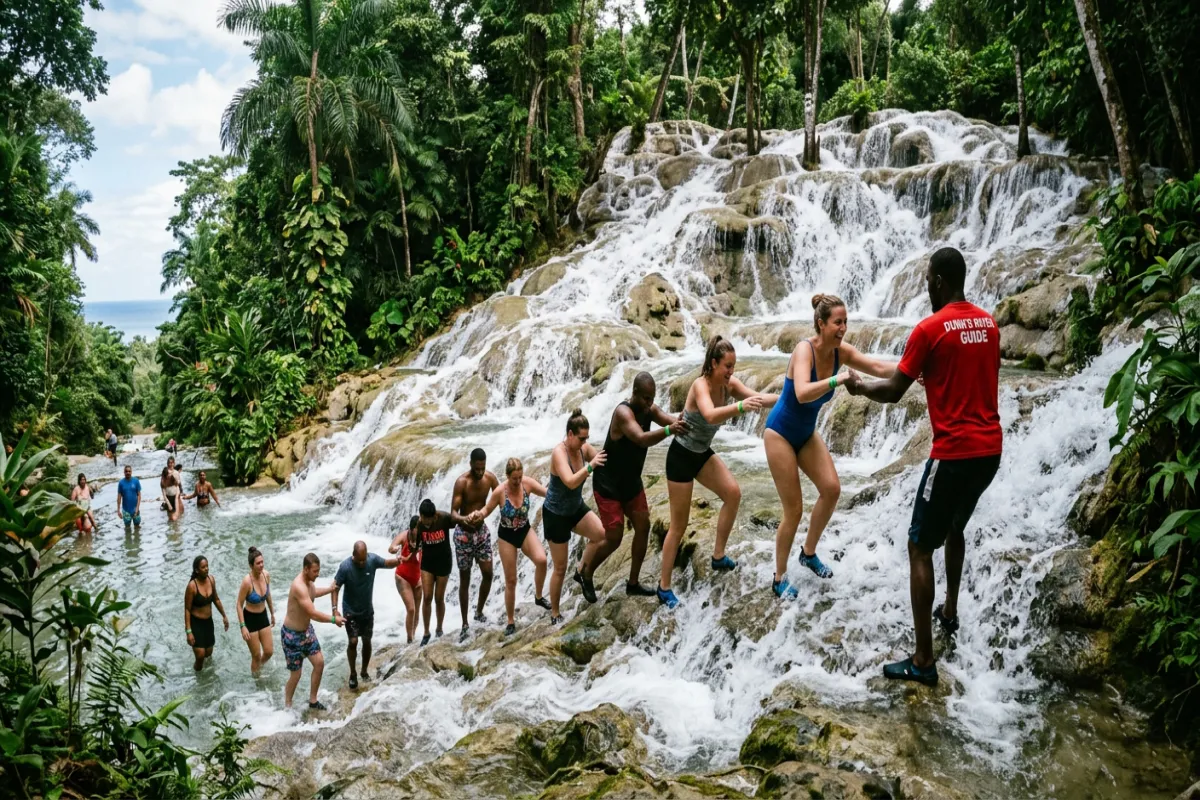
Jamaica’s most iconic attraction is a 600-foot terraced waterfall that you climb from bottom to top, holding hands in a human chain with other visitors and a guide. The climb takes about an hour. Wear water shoes (available for rent on-site) and bring a waterproof phone case. Arrive early to beat the cruise ship crowds. Admission is around $30 USD for adults.
Blue Mountains Coffee Tour
Jamaica Blue Mountain coffee is one of the most prized (and expensive) coffees in the world. Several estates in the Blue Mountains east of Kingston offer tours where you walk through coffee plantations, learn about the growing and roasting process, and taste freshly brewed cups at the source. The drive up through the mountains is an experience in itself.
Rick’s Cafe Cliff Jumping (Negril)
Perched on the West End cliffs of Negril, Rick’s Cafe has been a Jamaica institution since 1974. Watch local divers leap from cliffs up to 35 feet high, or take the plunge yourself from a lower platform. The sunset views here are legendary. Get there by 4 PM to grab a good spot.
Rafting on the Martha Brae
A relaxing 3-mile bamboo raft ride down the Martha Brae River near Falmouth. Your raft captain poles you downstream through lush tropical scenery. It takes about 60-90 minutes and is one of the most peaceful experiences on the island.
Bob Marley Museum (Kingston)
Located in Marley’s former home and recording studio at 56 Hope Road in Kingston, this museum is a pilgrimage for reggae fans. Guided tours take about 75 minutes and walk you through his life, music, and legacy. The studio where he recorded hits like “No Woman, No Cry” is preserved exactly as it was.
More Must-Do Experiences
- Luminous Lagoon (Falmouth): Take a nighttime boat tour through a bioluminescent bay where the water glows electric blue when disturbed. One of only four places in the world where this phenomenon occurs.
- Blue Hole (Ocho Rios): A series of natural swimming pools and waterfalls in the jungle above Ocho Rios. Less crowded than Dunn’s River Falls and arguably more beautiful. Guides help you jump from rocks into deep turquoise pools.
- Snorkeling and diving: The Montego Bay Marine Park and Negril’s reef offer clear water and healthy coral. Doctor’s Cave Beach in Montego Bay is an easy snorkeling spot right off the sand.
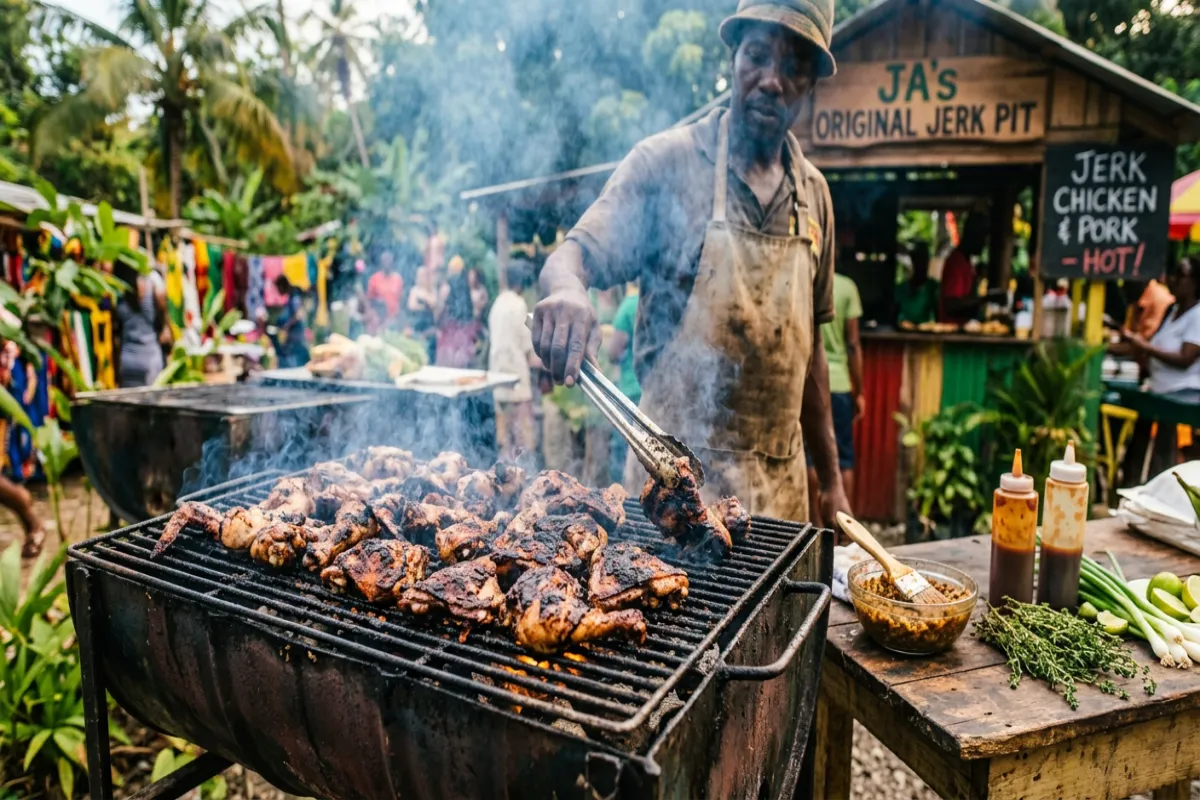
- Jerk food trail: Follow the smoke from Boston Bay (near Port Antonio), the birthplace of jerk cooking, through roadside stands across the island. Scotchies in Montego Bay is another legendary jerk spot.
Jamaican Food and Drink You Need to Try
Jamaican cuisine is bold, flavorful, and unlike anything else in the Caribbean. Do not spend your entire trip eating at your resort buffet. Get out and eat where locals eat.
Essential Dishes
- Jerk chicken and pork: Marinated in scotch bonnet peppers, allspice (pimento), thyme, and garlic, then slow-smoked over pimento wood. A roadside jerk plate costs $3-8 USD and is one of the best meals you will have anywhere.
- Ackee and saltfish: Jamaica’s national dish. Ackee is a fruit that, when cooked, has a texture similar to scrambled eggs. Mixed with salted codfish, onions, and peppers, it is a staple breakfast across the island.
- Jamaican patties: Flaky, turmeric-yellow pastry stuffed with spiced beef, chicken, or vegetables. Available everywhere for about $1-2 USD. Tastee and Juici are the two biggest chains.
- Festival: Slightly sweet fried dough, similar to a corn fritter. The perfect side dish for jerk meats. You will find it at every jerk stand.
- Curry goat: Tender goat meat slow-cooked in Jamaican curry spices. Often served at Sunday dinners and special occasions, but available at restaurants throughout the week.
- Bammy: A flatbread made from cassava, often fried or steamed and served alongside fish dishes.
Drinks
- Red Stripe: Jamaica’s famous lager. Light, crisp, and perfect for a hot beach day.
- Rum: Appleton Estate and Wray & Nephew are the two iconic Jamaican rum brands. Wray & Nephew overproof (63% alcohol) is the base for most local rum cocktails. Appleton offers distillery tours in the Nassau Valley.
- Fresh fruit juices: Mango, soursop, june plum, and sorrel (a tart, hibiscus-like drink served cold) are all worth trying.
- Blue Mountain coffee: Skip the resort coffee and seek out locally roasted Blue Mountain beans. Best enjoyed black to appreciate the smooth, mild flavor.
Practical Tips for Visiting Jamaica
Money and Haggling
US dollars are accepted at most tourist-facing businesses, but you will often get a better deal paying in Jamaican dollars. ATMs are widely available in towns. Haggling is expected and normal at craft markets, with street vendors, and for unofficial taxi rides. It is not expected at restaurants, shops with fixed prices, or for organized tours.
Safety
Tourist areas in Jamaica are generally safe, but use common sense. Avoid walking alone at night in cities, especially in Kingston neighborhoods you are not familiar with. Stick to well-lit, populated areas. Beach vendors can be persistent, but they are generally harmless. A firm but polite “no thanks” is usually enough. Keep valuables in your hotel safe and avoid wearing flashy jewelry.
Cannabis
Jamaica decriminalized possession of small amounts of marijuana (up to 2 ounces) in 2015. It is not fully legal, but possession of small amounts results in a small fine rather than criminal charges. Smoking is restricted to private spaces and licensed establishments. Regardless of local rules, be aware that bringing any cannabis through US customs is a federal crime.
Water
Tap water is generally safe to drink in major towns, resort areas, and hotels. In rural areas, stick to bottled water. When in doubt, bottled water is inexpensive and available everywhere.
Tipping
Tipping 10-15% is customary at restaurants. Check your bill first, as some restaurants add a service charge automatically. At all-inclusive resorts, tipping is usually not expected but appreciated. Tip tour guides $5-10 per person and taxi drivers 10-15%.
What to Pack
- Reef-safe sunscreen (SPF 30+)
- Water shoes for waterfalls and rocky beaches
- Light, breathable clothing and a rain jacket for sudden showers
- Insect repellent, especially for evenings
- A waterproof phone case
Sample 7-Day Jamaica Itinerary
This itinerary covers Jamaica’s highlights across two regions, starting and ending in Montego Bay.
Days 1-2: Montego Bay
Arrive at MBJ and settle into your hotel. Spend your first afternoon at Doctor’s Cave Beach. On Day 2, explore the Hip Strip, visit Rose Hall Great House, and grab dinner at Scotchies for world-class jerk chicken.
Day 3: Falmouth and Ocho Rios
Drive east to Falmouth to raft the Martha Brae River in the morning. Continue to Ocho Rios and climb Dunn’s River Falls in the afternoon. If you have time, visit the Blue Hole before sunset. Stay overnight in the Ocho Rios area.
Day 4: Blue Mountains Day Trip
Take a guided day trip into the Blue Mountains for a coffee plantation tour. Enjoy the cool mountain air and stunning views over Kingston and the coast. Return to Ocho Rios in the evening.
Days 5-6: Negril
Transfer to Negril (about 2.5 hours from Ocho Rios via the north coast road). Spend Day 5 on Seven Mile Beach. On Day 6, snorkel in the morning, explore the West End cliffs in the afternoon, and watch the sunset from Rick’s Cafe with a rum punch in hand.
Day 7: Return to Montego Bay
Drive back to Montego Bay (90 minutes from Negril). If your flight is in the evening, spend the morning at a beach or pick up last-minute souvenirs and Blue Mountain coffee at the craft market. Head to MBJ for your departure.
Want help building a more detailed day-by-day itinerary? Try our AI travel planner to generate a personalized Jamaica itinerary based on your dates, budget, and interests.
Planning Tools and Resources
- How to Plan a Trip (Step-by-Step Guide)
- AI Travel Planner for personalized itineraries
- Vacation Itinerary Template
- Travel Budget Template
Planning a Caribbean trip but not sure Jamaica is the right fit? Compare it with our Puerto Rico planning guide for another incredible island option.
Frequently Asked Questions
Do I need a visa to visit Jamaica from the US?
No. US citizens can visit Jamaica without a visa for up to 90 days. You just need a valid US passport with at least six months of validity remaining and a completed C5 immigration form.
Is Jamaica safe for tourists?
Tourist areas like Montego Bay, Negril, and Ocho Rios are generally safe. Use the same precautions you would in any unfamiliar destination: avoid isolated areas at night, keep valuables secured, and use licensed taxis (look for red license plates).
Should I do all-inclusive or independent travel?
All-inclusive resorts are ideal if you want a stress-free beach vacation and prefer to have everything arranged. Independent travel costs less and gives you a far richer cultural experience, with access to local food, smaller towns, and hidden beaches. Many travelers compromise by doing 3-4 days all-inclusive and then spending 2-3 days exploring independently.
What is the best area to stay in Jamaica for first-time visitors?
Montego Bay or Negril. Montego Bay offers the most convenience (closest to the airport, biggest selection of resorts, central location for day trips). Negril offers the best beach and a more relaxed atmosphere.
Can I use US dollars in Jamaica?
Yes. US dollars are widely accepted at hotels, restaurants, tour operators, and most shops in tourist areas. However, you will typically get better value paying in Jamaican dollars, especially at local markets and roadside food stalls. ATMs dispense JMD and are easy to find in towns.
How far in advance should I book a Jamaica trip?
For peak season (December through March), book flights and accommodation 3-6 months in advance. For the shoulder or wet season, 1-2 months ahead is usually sufficient. All-inclusive resorts often run early-bird promotions that reward advance booking.