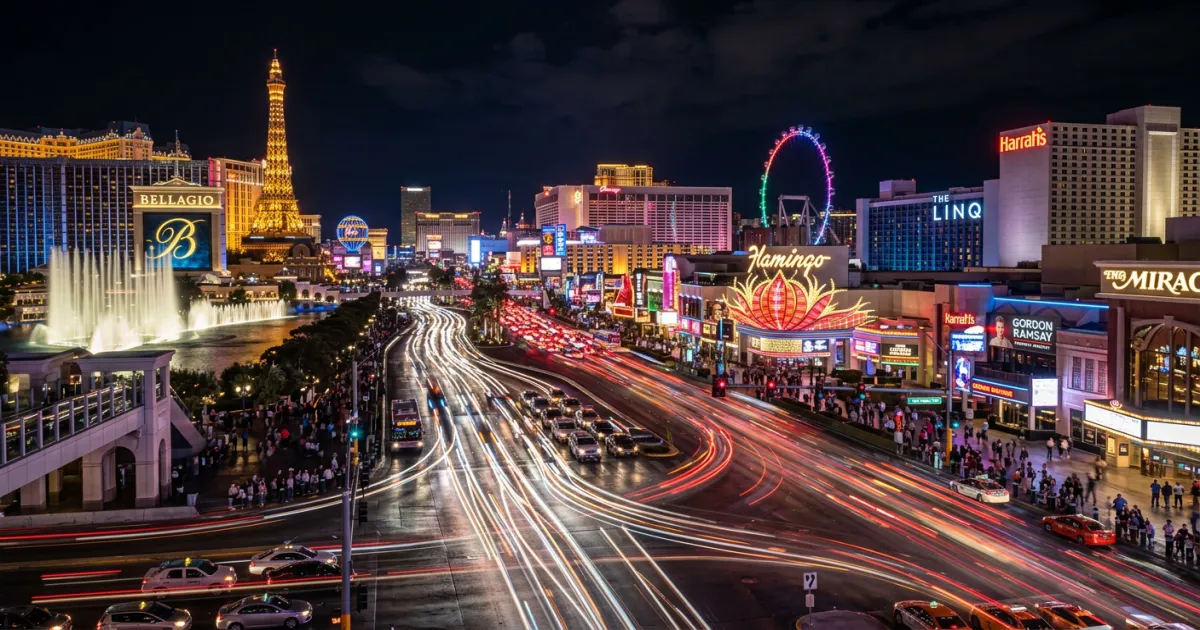
Las Vegas draws over 40 million visitors each year, and for good reason. Whether you want world-class shows, legendary nightlife, incredible food, or day trips into the desert, Vegas delivers all of it within a few square miles. This guide covers everything you need to plan a trip to Las Vegas in 2026, from budgeting and timing to neighborhoods, must-do experiences, and a ready-to-use 4-day itinerary.
If you are new to trip planning in general, start with our step-by-step trip planning guide for a framework you can apply to any destination.
Quick Facts About Las Vegas
- State: Nevada, USA
- Currency: US Dollar (USD)
- Time Zone: Pacific Standard Time (PST/PDT)
- Travel Type: Domestic (no passport needed for US travelers)
- Best Time to Visit: March through May, and September through November
- Airport: Harry Reid International Airport (LAS), about 10 minutes from the Strip
- Language: English
Best Time to Visit Las Vegas
Spring (March through May) and fall (September through November) are the sweet spots for a Vegas trip. Daytime temperatures sit in the comfortable 70s and 80s F, hotel rates drop compared to peak weekends, and pool season is in full swing without the extreme heat.
Summer (June through August) brings temperatures regularly exceeding 110 F. The dry desert heat is intense, and walking between casinos on the Strip becomes genuinely uncomfortable. Hotels do drop their rates to compensate, so budget travelers willing to tolerate the heat can find real deals.
Winter (December through February) is mild by most standards, with daytime highs in the 50s and 60s F, but nights can dip into the 30s. Pool parties shut down, and you will want a jacket for evening walks. The upside is lower hotel rates outside of holiday weekends and New Year’s Eve.
Watch out for conventions. Major events like CES (January), CONEXPO (March), and various trade shows can triple hotel prices and pack restaurants. Check the Las Vegas Convention Center calendar before booking. Weekends are also consistently more expensive than weekdays, sometimes by $50 to $150 per night for the same room.
How Long to Spend in Las Vegas
Plan for 3 to 5 days to experience Las Vegas properly. Two days is the absolute minimum to see the Strip, catch a show, and have a nice dinner, but you will feel rushed. Four days gives you time to explore both the Strip and downtown Fremont Street, plus squeeze in a day trip to the desert.
If you are combining Vegas with other destinations, a long weekend (Thursday through Sunday or Friday through Monday) hits the sweet spot of enough time without overstaying.
Las Vegas Trip Budget: What to Expect
Vegas can work on nearly any budget. Here is a realistic breakdown per person, per day, assuming two people sharing a room:
Budget ($75 to $130/day)
- Stay at a Fremont Street hotel or off-Strip property ($30 to $60/night for your share)
- Eat at off-Strip restaurants and fast food ($25 to $40/day)
- Free attractions: Bellagio fountains, Fremont Street Experience, casino walkthrough
- Set a strict gambling budget or skip the tables entirely
Mid-Range ($180 to $300/day)
- Mid-Strip hotel like Flamingo, LINQ, or MGM Grand ($70 to $120/night for your share)
- Mix of casual dining and one nice restaurant ($50 to $80/day)
- One or two paid activities (show, High Roller, pool party)
- Moderate gambling budget ($50 to $100/day)
Luxury ($460+/day)
- Premium resort like Bellagio, Aria, Wynn, or Cosmopolitan ($200+/night for your share)
- Celebrity chef restaurants and upscale dining ($100+/day)
- Premium show seats, VIP nightclub entry, private pool cabana
- Higher gambling budget
The resort fee trap: Nearly every major Strip hotel charges a mandatory daily resort fee on top of your room rate. These fees have climbed significantly and now range from $40 to $62 per night at most Strip properties. For example, Bellagio, Aria, and Cosmopolitan charge around $62 per night, while MGM Grand and Flamingo charge around $57. These fees are per room, per night, and are not optional. Always factor them into your total accommodation cost. A $99/night room with a $57 resort fee is really a $156/night room.
Use a travel budget template to track all these costs before you go.
Free Things to Do in Las Vegas
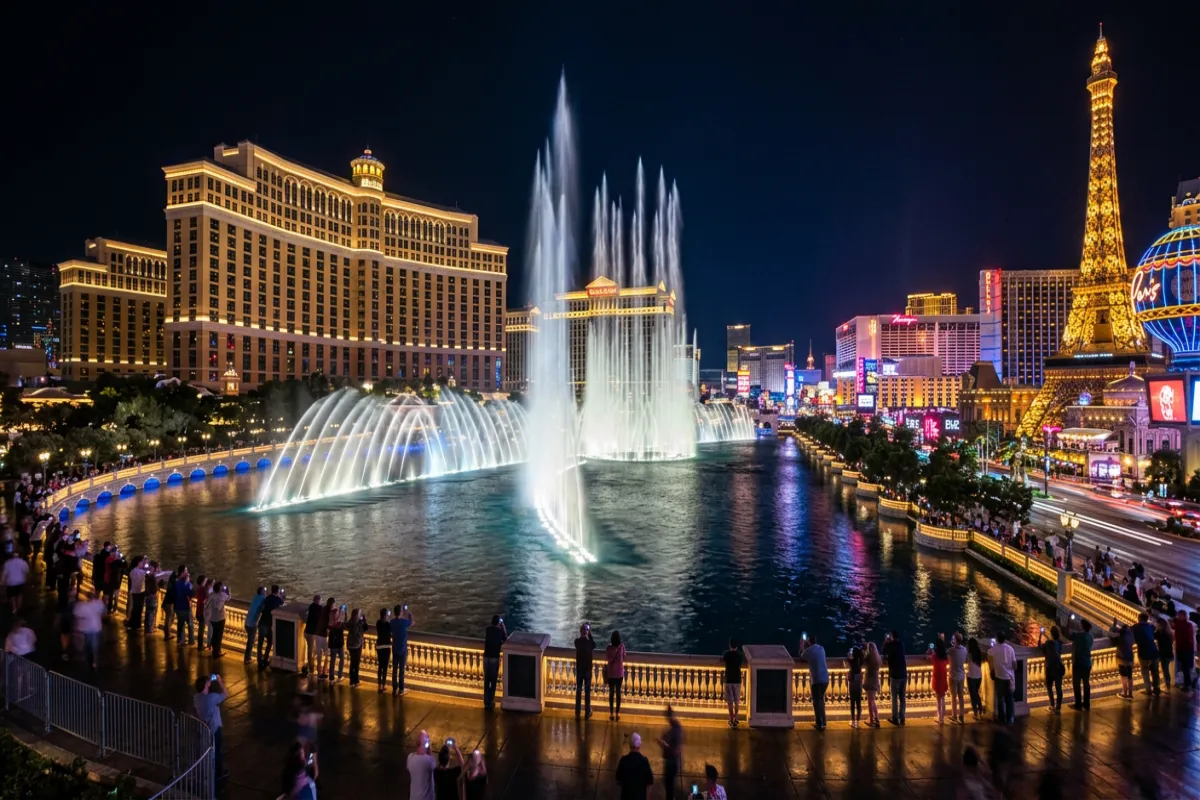
- Watch the Bellagio Fountain show (runs every 15 to 30 minutes, afternoons and evenings)
- Walk the Fremont Street Experience and see the Viva Vision light show
- Explore the themed casino lobbies and architecture along the Strip
- See the wildlife habitat at the Flamingo (flamingos, fish, turtles)
- Watch the Fall of Atlantis animatronic show at Caesars Palace Forum Shops
- Browse the art installations at the Bellagio Gallery of Fine Art lobby and Aria lobby
Getting Around Las Vegas
Everything in Vegas looks closer than it actually is. The Strip itself stretches about 4.2 miles from end to end, and casino entrances are often set far back from the road. What looks like a 5-minute walk on the map can take 20 minutes in reality.
Walking
Walking is the best way to experience the Strip if you are staying in the central section. Wear comfortable shoes. You will easily walk 8 to 12 miles per day without even trying. Pedestrian bridges at major intersections keep you off the street, but they also add distance.
Las Vegas Monorail
The monorail runs along the east side of the Strip with seven stations, from the SAHARA at the north end to MGM Grand at the south end. Single rides cost $6 ($5.50 for e-tickets), or you can grab a 24-hour unlimited pass for $15. Trains arrive every 4 to 8 minutes. It runs Monday from 7 AM to midnight, and stays open until 2 AM Tuesday through Thursday and 3 AM Friday through Sunday. The stations are set well behind the casinos, so factor in walking time from the platform to wherever you actually want to be.
Rideshare (Uber/Lyft)
Rideshare is the easiest option for getting from the airport to your hotel ($15 to $25 one way) and for trips downtown or off-Strip. Each casino has a designated rideshare pickup area, usually on a lower level or parking structure. Expect surge pricing on weekend nights and after major events.
Rental Car
You do not need a car for the Strip, but a rental makes sense if you are planning day trips to the Grand Canyon, Valley of Fire, or Red Rock Canyon. The airport rental car center is connected by a free shuttle. Parking at Strip hotels costs $20 to $40 per day.
Where to Stay in Las Vegas
Location matters more than you might expect. The Strip is long, and staying at the wrong end can mean 30-plus minute walks or constant rideshare trips.
South Strip (Luxury Zone)
Best for: Couples, luxury seekers, fine dining fans
This cluster includes Bellagio, Aria, Cosmopolitan, Vdara, and Park MGM. You are close to CityCenter, the Bellagio fountains, and some of the best restaurants in the city. Expect resort fees around $62/night on top of room rates.
Mid-Strip (Best Overall Location)
Best for: First-timers, groups, anyone who wants to be in the middle of everything
MGM Grand, Paris Las Vegas, Flamingo, LINQ, and Harrah’s sit in the heart of the action. The High Roller observation wheel is here, and you can walk to most major attractions in either direction. This area offers the best balance of price and location.
North Strip (Upscale and Quieter)
Best for: Repeat visitors, luxury travelers who prefer less chaos
The Venetian, Palazzo, Wynn, and Encore anchor the north end. These properties feel slightly more refined and less frantic than the mid-Strip. The Venetian’s Grand Canal Shoppes and the Wynn’s grounds are attractions in themselves.
Downtown / Fremont Street
Best for: Budget travelers, history buffs, a different Vegas vibe
Downtown Las Vegas around Fremont Street offers a grittier, more authentic old-Vegas experience. Hotels like Golden Nugget, The D, and Circa are significantly cheaper than Strip properties. The Fremont Street Experience light show canopy runs five blocks and the whole area has a more walkable, compact feel. Resort fees are lower here too.
Must-Do Experiences in Las Vegas
Shows and Entertainment
Las Vegas remains the live entertainment capital of the world. Here are the categories worth exploring:
Cirque du Soleil has five resident shows in Vegas as of 2026: “O” at the Bellagio (the crown jewel, a water-based spectacular), Mystere at Treasure Island (the longest-running show), KA at MGM Grand (martial arts and acrobatics on a moving stage), Michael Jackson ONE at Mandalay Bay, and Mad Apple at New York-New York. Tickets range from $69 to $188+ depending on the show and seat location. Shows run about 90 minutes.
Magic shows have deep roots in Vegas. David Copperfield performs regularly at the MGM Grand, and several smaller magic shows run throughout the city.
Comedy options range from big headliners at dedicated theaters to the many comedy clubs scattered around the Strip and downtown.
Residencies and concerts rotate regularly. Check the schedules at venues like the Sphere, T-Mobile Arena, MGM Grand Garden Arena, and Dolby Live at Park MGM for whoever is performing during your visit.
To save on show tickets, check sites like Vegas.com and TodayTix for same-day discounts, sometimes up to 50% off.
Casino Basics for Beginners
If you have never gambled before, Vegas is a surprisingly welcoming place to learn. Most casinos offer low-minimum tables ($10 to $25 minimums on weekdays, higher on weekends). Slot machines start at a penny and require zero skill. Dealers at table games are generally happy to explain the rules if you ask during quieter times (weekday mornings are best for learning).
Set a strict budget before you sit down, treat it as entertainment money you can afford to lose, and stop when it is gone. That mindset keeps gambling fun rather than stressful.
Pool Parties
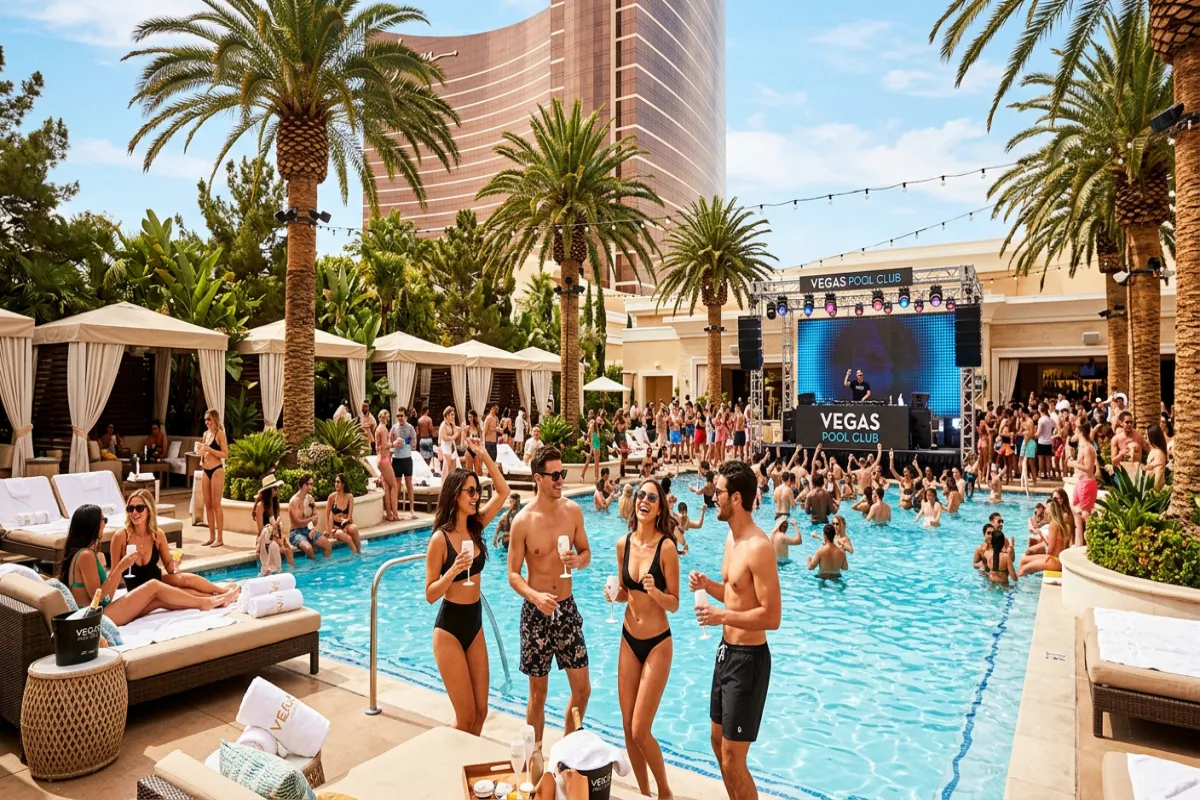
Vegas pool parties are a scene unto themselves, running from roughly April through October. Venues like Encore Beach Club, Wet Republic at MGM Grand, and Marquee Dayclub at the Cosmopolitan bring in DJs, bottle service, and huge crowds. Cover charges range from $20 to $75+, with cabanas and daybeds costing significantly more. Weekend pool parties are the busiest.
Fremont Street Experience
The pedestrianized Fremont Street Experience in downtown Las Vegas features a massive LED canopy stretching five blocks overhead. Free light shows run on the hour in the evenings. The area is packed with street performers, live music stages, and bars with open-air seating. The SlotZilla zip line lets you soar above it all. It is a completely different energy from the Strip and worth at least one evening.
High Roller Observation Wheel
The High Roller at the LINQ stands 550 feet tall and offers panoramic views of the Strip, the desert, and the surrounding mountains. The ride takes 30 minutes in one of 28 glass-enclosed cabins. Daytime tickets start around $28 for adults, with anytime tickets at $40. The Happy Hour cabin option ($67 to $70) includes an open bar during your ride. Nighttime rides offer the best views of the lit-up Strip.
Bellagio Fountains
The Bellagio fountain show is free and runs every 15 minutes in the afternoons and every 30 minutes in the evenings, choreographed to music. Each show is different, and they are best viewed from the Bellagio’s front walkway or from the patio of a nearby restaurant. It never gets old, even for repeat visitors.
Day Trips from Las Vegas
Some of the most dramatic landscapes in the American Southwest are within easy driving distance of the Strip.
Red Rock Canyon (30 minutes)
The closest option and perfect for a half-day trip. The 13-mile scenic loop drive winds through striking red sandstone formations. Hiking trails range from easy walks to challenging scrambles. Go early in the morning before it gets hot and crowded.
Hoover Dam (45 minutes)
A marvel of 1930s engineering sitting on the Nevada-Arizona border. You can walk across the dam for free, or pay for a guided tour of the power plant and interior tunnels. The Mike O’Callaghan-Pat Tillman Memorial Bridge offers dramatic views of the dam from above.
Valley of Fire State Park (1 hour)
Nevada’s oldest and largest state park showcases brilliant red Aztec sandstone formations that look like another planet. The Fire Wave trail and White Domes loop are the two most popular hikes. Entrance fee is $10 per vehicle.
Grand Canyon West Rim (2.5 hours)
The closest Grand Canyon access point from Las Vegas, featuring the Skywalk glass bridge extending over the canyon. Guided tours from Vegas take a full day and typically cost $80 to $200 depending on the operator and whether you add a helicopter or boat component. The South Rim (4.5 hours) is more spectacular but requires an overnight stay or a very long day.
Where to Eat in Las Vegas
Celebrity Chef Restaurants
Vegas has one of the highest concentrations of celebrity chef restaurants anywhere. Gordon Ramsay has multiple spots including Hell’s Kitchen at Caesars Palace. Guy Fieri’s Vegas Kitchen + Bar is at the LINQ. Giada De Laurentiis runs Giada at the Cromwell. Bobby Flay’s restaurants are at Caesars. These are splurge meals, with entrees typically $40 to $80+, but the quality and experience often justify the price for a special night out.
Steakhouses
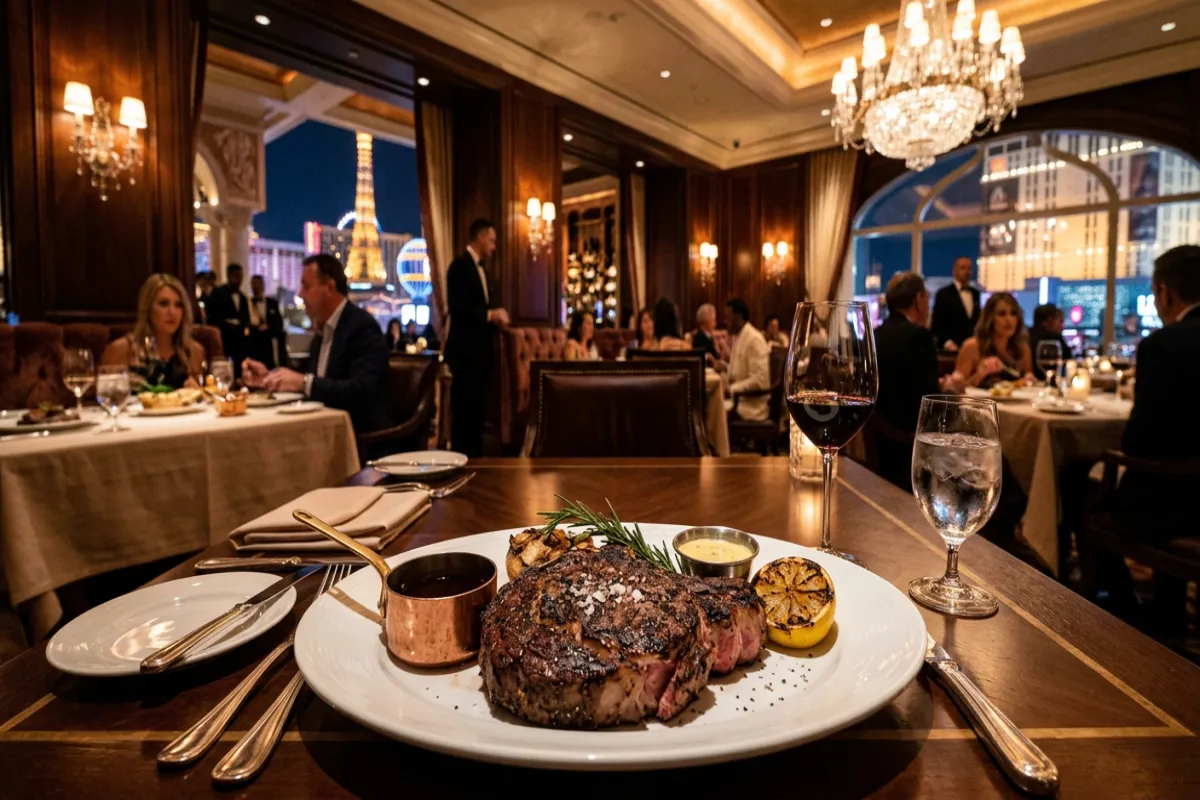
Vegas does steakhouses exceptionally well. CUT by Wolfgang Puck at the Palazzo, Jean Georges Steakhouse at Aria, and STK at the Cosmopolitan are all worth the price tag. Expect to spend $80 to $150+ per person with drinks.
Buffets
Vegas buffets still exist but have evolved significantly. The Bacchanal Buffet at Caesars Palace and the Wicked Spoon at the Cosmopolitan are more about quality stations and chef-driven dishes than the all-you-can-eat piles of old. Prices run $45 to $75 per person for dinner. Weekend brunch buffets are the best value.
Cheap Eats
Eating well on a budget in Vegas means going off-Strip. Chinatown (a stretch of Spring Mountain Road just west of the Strip) has some of the best and most affordable Asian food in the country. You will find excellent ramen, dim sum, Korean BBQ, Thai, and pho for $12 to $20 per person. On the Strip itself, food courts at casino shopping areas (like the one at the Venetian’s Grand Canal Shoppes) offer meals in the $12 to $18 range.
Happy Hours
Many Strip restaurants run happy hour specials, usually from 3 PM to 6 PM on weekdays. Half-price appetizers and discounted cocktails can cut your dinner bill significantly. Check individual restaurant websites or ask your hotel concierge for current deals.
Las Vegas Nightlife
Nightclubs
Vegas nightclubs are legendary and operate on a different scale than anywhere else. Major venues include XS at Wynn, Hakkasan at MGM Grand, Omnia at Caesars Palace, and Zouk at Resorts World. Cover charges range from $30 to $100+ for general admission, with lines that can stretch for an hour or more on weekends. Guest lists (sign up online in advance) can get you free or reduced entry, especially on weeknights. Most clubs do not get going until midnight.
Pool Parties (Dayclubs)
During pool season (April through October), daytime pool parties at venues like Encore Beach Club, Wet Republic, and Marquee Dayclub are just as popular as the nightclubs. They typically run from 11 AM to 6 PM on weekends.
Bar Hopping on Fremont Street
Downtown’s Fremont East district has a more relaxed, craft-cocktail-focused bar scene. Spots like Commonwealth, Atomic Liquors (the oldest freestanding bar in Vegas), and the Gold Spike offer a more intimate, less bottle-service-driven experience than the Strip clubs.
Cocktail Bars
For a quieter drink, Vegas has excellent cocktail bars tucked away in unexpected places. The Chandelier at the Cosmopolitan (a three-story bar inside a chandelier sculpture), the Parasol Up/Down at Wynn, and Herbs and Rye on the west side of town are standouts.
Practical Tips for Las Vegas
- Everything is further than it looks. The Strip’s grand architecture plays tricks on your perception. That casino “right there” is probably a 15-minute walk. Give yourself more time than you think between destinations.
- Tip everyone. Tipping culture is strong in Vegas. Tip bartenders $1 to $2 per drink, cocktail servers $2 to $5 per round, hotel housekeeping $3 to $5 per night, valets $3 to $5, and restaurant servers 18 to 20 percent. These workers rely on tips as a major part of their income.
- Free drinks while gambling. Casinos offer complimentary cocktails to active gamblers at table games and slot machines. Cocktail servers will come around periodically. Tip them $1 to $2 per drink. You need to be actively playing to receive this perk.
- Hydrate constantly. Las Vegas sits in the Mojave Desert. The dry heat dehydrates you much faster than humid climates, and the combination of air-conditioned casinos and outdoor heat accelerates it. Carry a water bottle everywhere, especially in summer. Dehydration combined with alcohol is the number one reason tourists feel terrible on day two.
- Sunscreen is not optional. Even in spring and fall, the desert sun is intense. Apply before you head out, especially if you are spending time at a pool.
- Comfortable shoes are essential. You will walk 8 to 12 miles per day on hard surfaces. Leave the new shoes at home.
- Casino floors have no clocks or windows. This is intentional. Set phone alarms if you have dinner reservations or show times to keep.
- Book shows and restaurants in advance. Popular Cirque du Soleil shows and celebrity chef restaurants book up, especially on weekends. Reserve at least two weeks ahead for peak times.
- What happens in Vegas is heavily surveilled. Casinos have some of the most extensive camera systems anywhere. Public areas on the Strip are also well-monitored. Las Vegas is generally safe for tourists who exercise normal urban awareness.
Sample 4-Day Las Vegas Itinerary
Day 1: Arrive and Explore the Strip
- Check in and get settled
- Walk the central Strip from your hotel to get oriented
- Watch the Bellagio fountains at sunset
- Dinner at a mid-range Strip restaurant
- Evening casino time or catch a late show
Day 2: South Strip and Shows
- Morning: Sleep in (Vegas is a late-night city)
- Afternoon: Explore south Strip, walk through Bellagio conservatory, Aria, and Cosmopolitan
- Pool time if the weather is right
- Pre-show dinner at a celebrity chef restaurant
- Evening: Cirque du Soleil show (“O” at Bellagio or KA at MGM Grand)
Day 3: Downtown and Day Trip
- Morning: Drive to Red Rock Canyon for the scenic loop (2 to 3 hours)
- Lunch at a Chinatown restaurant on Spring Mountain Road
- Afternoon rest at the hotel
- Evening: Uber to Fremont Street for downtown exploration
- Dinner at one of Fremont East’s restaurants
- Walk through the Fremont Street Experience light show
Day 4: High Roller, Shopping, and Departure
- Morning: Brunch buffet at Bacchanal or Wicked Spoon
- Ride the High Roller observation wheel
- Last-minute shopping at Forum Shops or Grand Canal Shoppes
- Check out and head to the airport (15 to 25 minutes by rideshare)
Want to build a detailed, customized itinerary? Use the Yopki AI Travel Planner to generate a complete Vegas itinerary based on your travel dates, budget, and interests. Or grab a free vacation itinerary template to plan it yourself.
Planning Tools
These free resources will help you organize your Las Vegas trip:
- How to Plan a Trip: Step-by-Step Guide for a complete planning framework
- AI Travel Planner to generate a custom Vegas itinerary in seconds
- Vacation Itinerary Template for organizing your daily schedule
- Travel Budget Template for tracking every expense
If you are flying through Harry Reid International Airport and have a layover, check out our Las Vegas airport layover guide for tips on making the most of your time at LAS.
Frequently Asked Questions
Is Las Vegas expensive?
It can be, but it does not have to be. Budget travelers can do Vegas for under $100 per day by staying downtown, eating off-Strip, and enjoying free attractions. The biggest variable is how much you choose to spend on nightlife, shows, and gambling.
What is the best month to visit Las Vegas?
October is arguably the best single month. Temperatures are comfortable (mid-70s F), summer crowds have thinned, pool season is winding down but still accessible, and hotel rates are reasonable outside of convention weeks.
Do I need a car in Las Vegas?
Not if you are staying on the Strip or downtown. Walking, the monorail, and rideshare cover everything. Rent a car only if you plan day trips to Red Rock Canyon, Valley of Fire, or the Grand Canyon.
Are resort fees avoidable?
At most major Strip hotels, no. Resort fees are mandatory charges ranging from $40 to $62 per night. A few off-Strip and downtown hotels waive them, and certain loyalty program tiers at MGM and Caesars properties may include resort fee waivers. Always check the total cost including resort fees before booking.
Is Las Vegas safe for tourists?
Yes, the main tourist areas (the Strip and Fremont Street) are well-lit, heavily patrolled, and closely monitored by security cameras. Use normal urban precautions: stay aware of your surroundings, keep valuables secure, and avoid poorly lit side streets late at night.
How much cash should I bring to Las Vegas?
Credit cards are accepted almost everywhere, but bring cash for tips, gambling, and small purchases. A reasonable starting point is $200 to $500 in cash depending on your gambling plans, with more available via ATMs if needed (note: casino ATMs charge $5 to $10 in fees per withdrawal).
Can I drink on the street in Las Vegas?
Yes. Las Vegas allows open containers of alcohol on the Strip and Fremont Street. Glass containers are not permitted, so bars will give you drinks in plastic cups for walking. This is one of the few places in the US where open container laws are this relaxed.