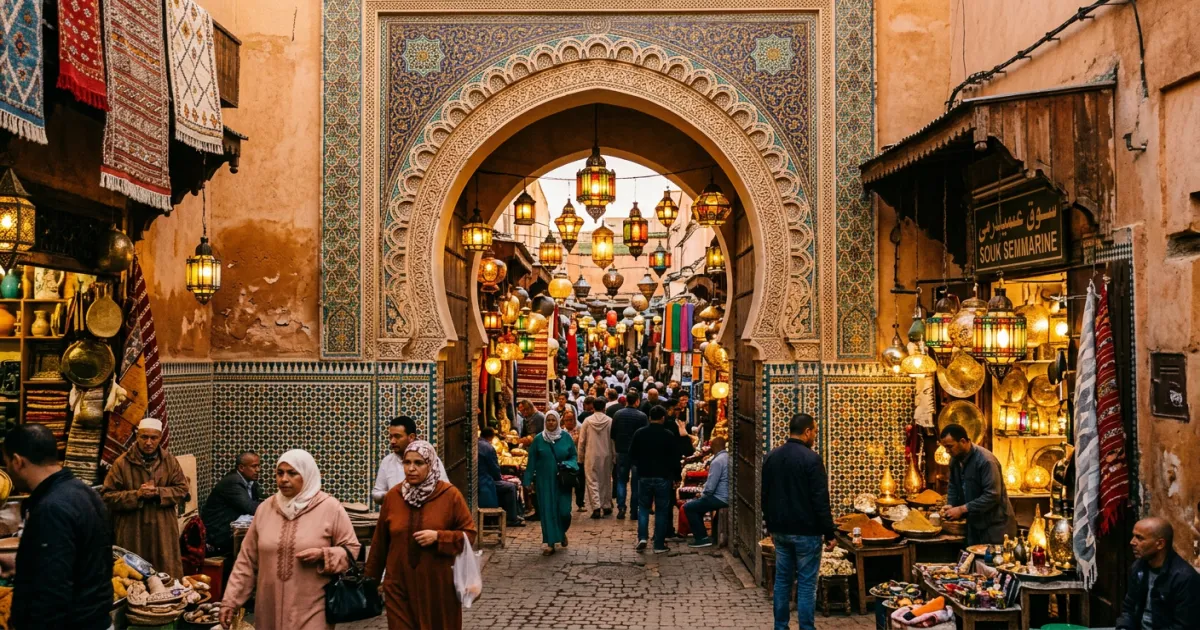
Morocco is one of those destinations that hits every sense at once. The call to prayer echoing over terra-cotta rooftops, the smell of cumin and fresh bread drifting through narrow alleys, the shock of blue walls in a mountain town you only half-believed existed. It is close to Europe, easy to reach from the US, and remarkably affordable. And in 2026, with Morocco gearing up to co-host the 2030 FIFA World Cup, infrastructure improvements are already making travel smoother while prices remain reasonable.
This guide covers everything you need to plan a trip to Morocco: visa info, budget breakdowns, where to go, what to eat, and a sample 10-day itinerary. If you are starting from scratch, our step-by-step trip planning guide walks you through the general process.
Quick Facts
- Visa: US citizens get 90 days visa-free. Passport must be valid for at least 6 months beyond your travel dates.
- Currency: Moroccan Dirham (MAD). Roughly 10 MAD = 1 USD. ATMs are widely available in cities.
- Languages: Arabic (Darija dialect), French, and Amazigh (Berber). French is the most useful second language for tourists. English is spoken in major tourist areas but less so outside them.
- Time Zone: WET (UTC+0), with daylight saving moving to UTC+1 during summer months. Morocco permanently adopted UTC+1 but pauses it during Ramadan.
- Cost Level: Very affordable compared to Europe and North America. Budget travelers spend $30 to $50 per day comfortably.
Best Time to Visit Morocco
Morocco has diverse geography, so “best time” depends on where you are going.
March through May and September through November are the ideal months for most itineraries. Temperatures are pleasant across the country, and you avoid both the summer heat and winter cold.
Summer (June through August) brings scorching heat to interior cities like Marrakech and Fes, where temperatures regularly exceed 40C (104F). The Atlantic coast (Essaouira, Agadir) stays pleasant with ocean breezes, making it a good summer option.
Winter (December through February) is mild along the coast and in southern desert areas, but the Atlas Mountains get genuine cold and snow. Skiing at Oukaimeden is possible. Marrakech in winter sits around 18C (64F) during the day, which is comfortable for sightseeing.
Ramadan shifts dates each year (roughly February/March in 2026). Many restaurants close during daylight hours, though tourist-oriented places stay open. The evening iftar meals are a cultural experience worth seeking out. Travel is absolutely possible during Ramadan, just plan around it.
How Long to Spend in Morocco
10 to 14 days is ideal for a first visit. This gives you time to experience the imperial cities, the Sahara Desert, and at least one coastal or mountain destination without rushing.
7 days works for a highlights trip covering Marrakech, the desert, and either Fes or Chefchaouen. You will move quickly but still get a meaningful taste of the country.
3 to 4 days is enough for a Marrakech-only trip, including a day trip to the Atlas Mountains or Essaouira.
Budget Breakdown
Morocco is one of the most affordable destinations you can visit from the US or Europe. Here is what to expect per person per day in 2026:
| Category | Budget ($30-50/day) | Mid-Range ($70-120/day) | Luxury ($200+/day) |
|---|---|---|---|
| Accommodation | $8-15 (hostels, basic guesthouses) | $40-80 (charming riads, 3-star hotels) | $150-400+ (luxury riads, 5-star hotels) |
| Food | $8-12 (street food, local restaurants) | $15-25 (sit-down restaurants, cafes) | $40+ (fine dining, hotel restaurants) |
| Transport | $5-10 (buses, shared taxis) | $10-20 (trains, private taxis) | $30+ (private drivers, domestic flights) |
| Activities | $5-10 (self-guided, free sites) | $15-30 (guided tours, entry fees) | $50+ (private guides, luxury experiences) |
A two-week mid-range trip typically costs $1,000 to $1,500 per person excluding international flights. Use our travel budget template to plan your spending.
Getting There and Getting Around
International Flights
Most travelers fly into Casablanca Mohammed V Airport (CMN), Morocco’s main international hub, or Marrakech Menara Airport (RAK), which has growing direct connections from Europe and some seasonal routes from the US. Royal Air Maroc (RAM) operates direct flights from New York JFK and Washington Dulles to Casablanca. From Europe, budget carriers like Ryanair and easyJet offer cheap flights to Marrakech, Fes, and Tangier.
Trains
Morocco’s national rail network (ONCF) is the best in North Africa. The Al Boraq high-speed train connects Tangier to Casablanca in about 2 hours. Standard trains link Casablanca, Rabat, Fes, Meknes, and Marrakech. First class is comfortable and affordable (Marrakech to Fes costs around 200 MAD / $20 in first class). Book at oncf-voyages.ma.
Buses
CTM and Supratours are the two reliable bus companies. They cover routes the trains do not, including desert towns, mountain villages, and Chefchaouen. CTM buses are modern, air-conditioned, and very affordable. Supratours is operated by ONCF and connects to train stations.
Taxis
Petit taxis operate within cities and are metered (though you may need to insist the driver turns on the meter). Grand taxis are shared Mercedes sedans that run fixed routes between cities. They are cheap but depart only when full (6 passengers). You can also hire a grand taxi privately for more comfort.
Rental Cars
Renting a car makes sense for the Atlas Mountains, desert routes, and coastal drives. Roads between major cities are good. Driving in medinas is impossible and city driving can be hectic, so plan to park and walk in urban areas. An international driving permit is recommended. Gas costs about 12 MAD per liter ($1.20).
Domestic Flights
Royal Air Maroc operates domestic flights between major cities. Useful for saving time on the Marrakech-to-Fes route (1 hour vs. 7 hours by train).
Where to Stay
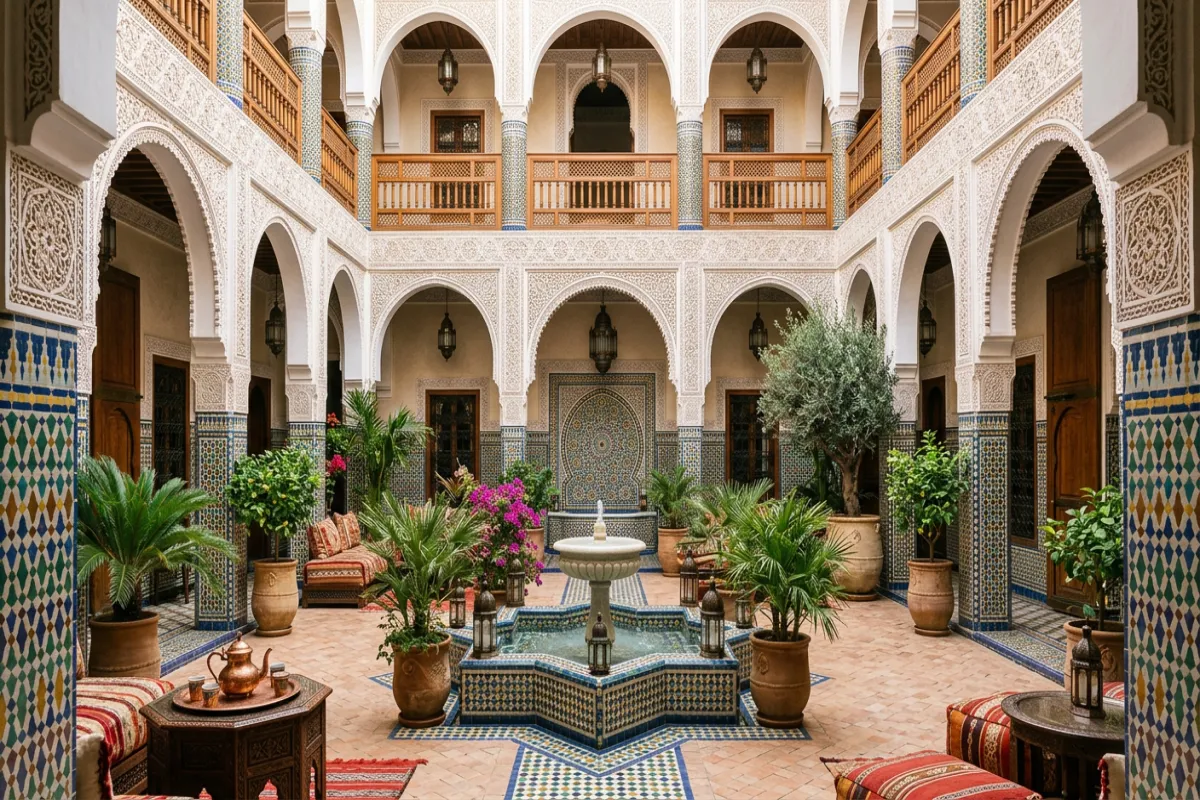
Riads are the quintessential Morocco accommodation. These traditional guesthouses are built around a central courtyard, often with a plunge pool and rooftop terrace. Staying in a riad inside the medina is one of the most memorable parts of a Morocco trip. Expect to pay $25 to $50 per night for a budget riad and $80 to $200 for a beautifully restored one. Many include breakfast.
Hotels range from international chains in Casablanca and Marrakech’s Gueliz neighborhood to family-run places in smaller towns. Modern hotels with pools are common in the new city (ville nouvelle) areas.
Desert Camps are essential for the Sahara experience. Luxury desert camps near Merzouga offer comfortable beds, hot showers, and candlelit dinners among the dunes for $80 to $200 per night. Basic camps start around $30.
Kasbahs are fortified guesthouses, especially common along the southern routes between Marrakech and the desert. Some are centuries old and beautifully restored.
Must-See Destinations
Marrakech
The Red City is where most trips begin, and for good reason. Jemaa el-Fnaa, the main square, transforms from a daytime market into a nightly open-air food festival with musicians, storytellers, and snake charmers. The surrounding souks are a labyrinth of shops selling spices, leather goods, ceramics, and textiles. Do not miss the Bahia Palace (stunning tile and woodwork), the Jardin Majorelle (Yves Saint Laurent’s cobalt-blue garden), and the Saadian Tombs. Allow 2 to 3 days minimum.
Fes
Fes el-Bali is the oldest continuously inhabited medieval city in the world and a UNESCO World Heritage Site. Its medina has over 9,000 alleyways, no cars, and a sensory intensity that makes Marrakech feel calm. Visit the Chouara Tannery (the iconic leather-dyeing pits), the University of al-Qarawiyyin (founded in 859 AD, the oldest existing university), and the Bou Inania Madrasa. A guide is genuinely helpful here since GPS does not work well in the medina.
Sahara Desert
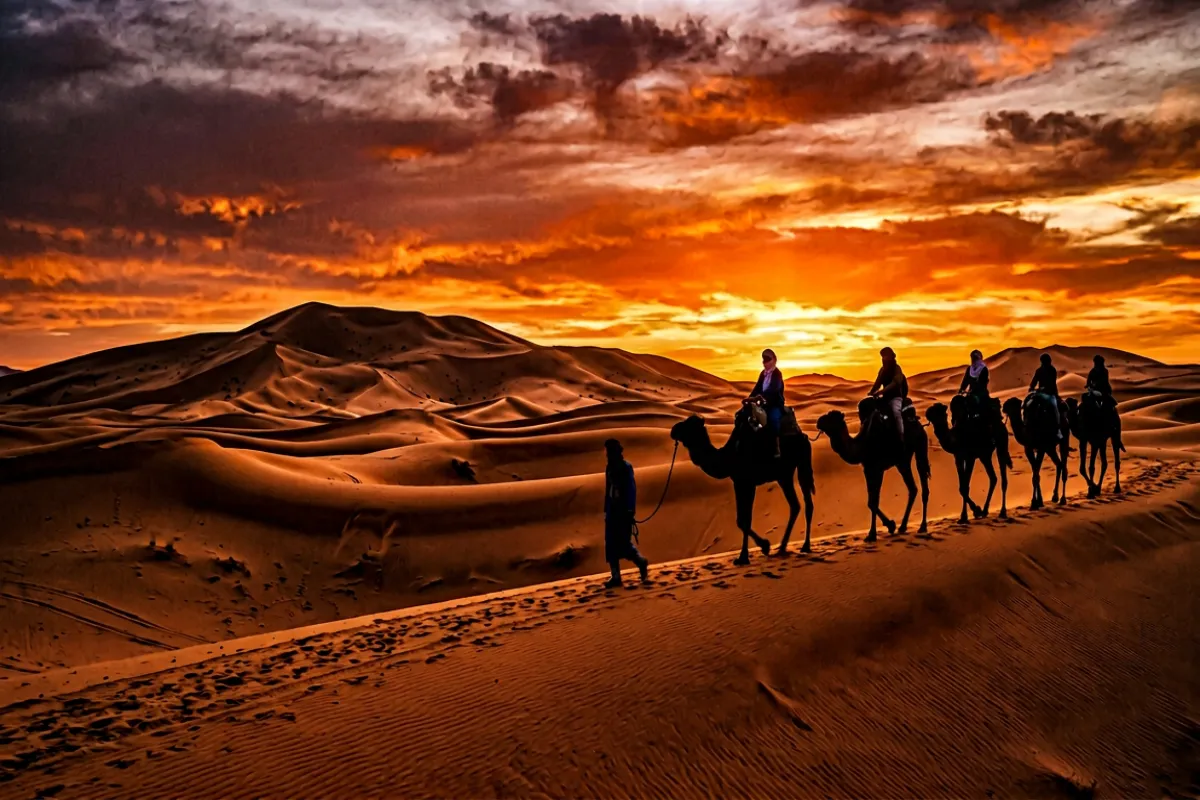
A camel trek into the Erg Chebbi dunes near Merzouga is the most popular desert experience. The dunes reach up to 150 meters high and glow orange at sunset. Most travelers book a 2 or 3-day tour from Marrakech that includes stops at Ait Benhaddou and the Todra Gorge. Alternatively, Erg Chigaga near M’hamid offers a more remote, less touristy experience.
Chefchaouen
The famous Blue City in the Rif Mountains is exactly as photogenic as the pictures suggest. Every wall, stairway, and doorframe is painted in shades of blue. It is smaller and more relaxed than the imperial cities, making it a good place to slow down. The surrounding mountains offer excellent hiking.
Atlas Mountains
The High Atlas provides some of North Africa’s best trekking. Toubkal, at 4,167 meters, is the highest peak in North Africa and can be summited in a 2-day trek from Imlil (no technical climbing required). The Ourika Valley is an easy day trip from Marrakech with waterfalls and Berber villages.
Essaouira
This laid-back Atlantic coastal town is famous for its Portuguese fortifications, fresh seafood, and strong winds that make it a windsurfing and kitesurfing hub. The medina is a UNESCO World Heritage Site but far less intense than Marrakech or Fes. It is a 2.5-hour drive from Marrakech, making it an easy addition to any itinerary.
Casablanca
Morocco’s largest city is modern and business-oriented, but the Hassan II Mosque alone justifies a stop. It is one of the largest mosques in the world, built partly over the Atlantic Ocean, and one of the few in Morocco open to non-Muslims. Guided tours run throughout the day.
Ait Benhaddou
This fortified ksar (village) along the former caravan route is a UNESCO World Heritage Site and has served as a filming location for Gladiator, Game of Thrones, and Lawrence of Arabia. It is a common stop on the route between Marrakech and the desert.
Todra Gorge
A dramatic canyon with 300-meter limestone walls narrowing to just 10 meters wide. Popular with rock climbers and a stunning stop on the desert circuit.
Ouarzazate
Known as the “Hollywood of Africa,” Ouarzazate is home to Atlas Studios, one of the world’s largest film studios. The nearby Taourirt Kasbah is worth exploring. The town serves as a base for desert trips and the Route of a Thousand Kasbahs.
Moroccan Food You Need to Try
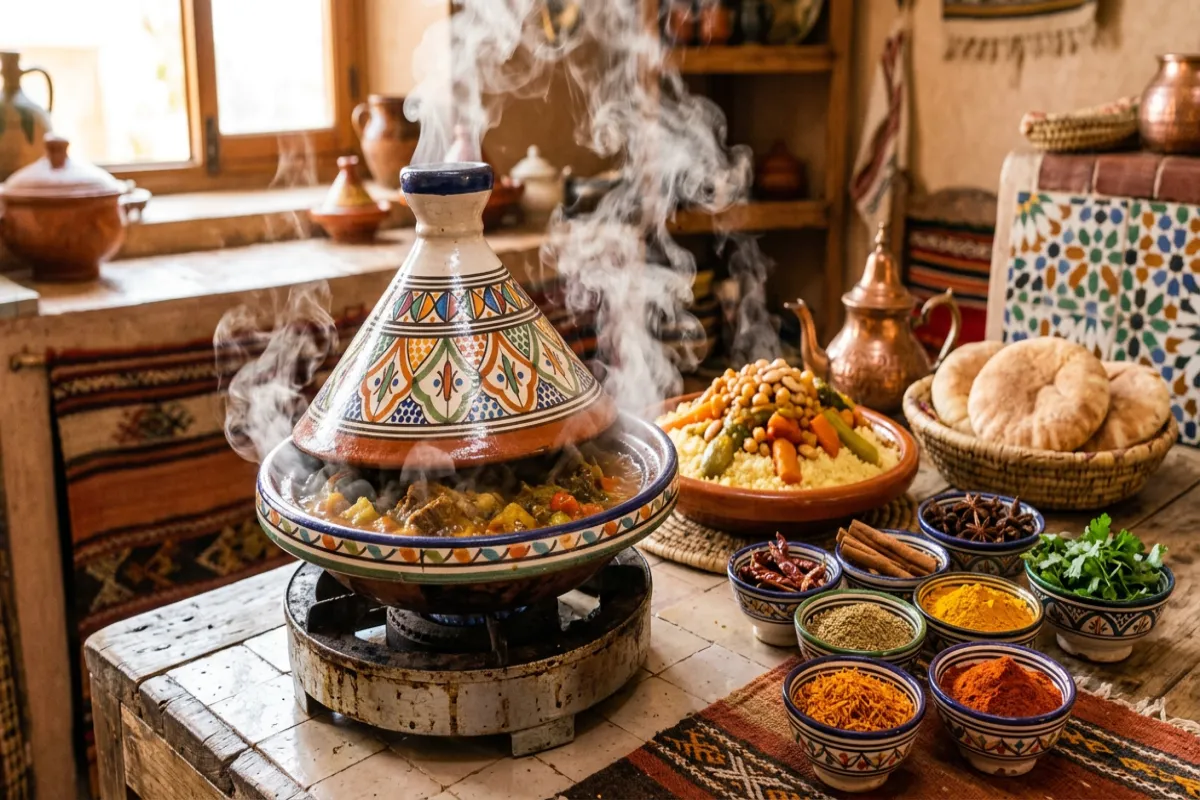
Tagine is Morocco’s signature dish: a slow-cooked stew of meat (usually chicken or lamb) with vegetables, olives, and preserved lemons, cooked in a conical clay pot. Every region has its own variation.
Couscous is traditionally served on Fridays after the main weekly prayer. Families gather for a communal plate topped with vegetables and meat. Many restaurants serve it daily for tourists, but Friday couscous is the real deal.
Pastilla (also spelled bastilla) is a savory-sweet pie traditionally made with pigeon or chicken, wrapped in warqa (thin pastry) and dusted with cinnamon and powdered sugar. It sounds unusual but tastes incredible.
Mint tea is poured from a height to create a frothy top and served at every occasion. Refusing tea is considered impolite. The pouring ceremony itself is part of Moroccan hospitality.
Msemen are square-shaped flatbreads, crispy on the outside and layered inside, served at breakfast with honey or cheese.
Harira is a hearty tomato-based soup with lentils, chickpeas, and herbs, traditionally served to break the fast during Ramadan but available year-round.
Street food at Jemaa el-Fnaa is an experience in itself. Stalls serve grilled meats, snail soup, fresh orange juice (5 MAD / $0.50), and fried fish. Point at what looks good and sit down at a communal table.
Etiquette tip: Eat with your right hand when sharing from a communal plate. Bread acts as your utensil. In restaurants with individual plates, cutlery is provided.
Practical Tips for First-Time Visitors
- Bargaining is expected and part of the fun. In the souks, start at about one-third of the asking price and negotiate from there. Stay friendly and be willing to walk away. Fixed-price shops exist too, usually labeled as such.
- Dress modestly, especially women. Morocco is a Muslim country. Covering shoulders and knees is respectful in medinas and smaller towns. Marrakech’s tourist areas are more relaxed, but modest clothing reduces unwanted attention everywhere.
- French is more useful than English. Outside major tourist spots, French will get you much further. Learning a few words of Darija (Moroccan Arabic) like “shukran” (thank you) and “la” (no) goes a long way.
- Beware of faux guides. At medina entrances, people may offer to “help” you find your riad or show you around. Some are genuinely helpful, but many will demand payment. Politely decline and use Google Maps or contact your riad for directions in advance.
- Tipping is customary. Leave 10 to 15 MAD for small services (someone helping with directions, a bathroom attendant). In restaurants, 10% is standard if service is not included. For guides, 100 to 200 MAD per day is appropriate.
- Ramadan affects daily life. During Ramadan, many restaurants and cafes close during daylight hours. Hotel restaurants and tourist-oriented places typically stay open. Eating, drinking, or smoking in public during fasting hours is considered disrespectful.
- Ask before photographing people. Moroccans are generally warm and welcoming, but many do not want their photo taken, especially in rural areas. Always ask first. Some people in Jemaa el-Fnaa (snake charmers, water sellers) pose for photos but expect a tip.
- Get lost in the medinas intentionally. The best discoveries happen when you wander without a plan. If you get truly lost, head downhill (medinas are built on slopes and downhill usually leads to a main road) or ask a shopkeeper for directions to a landmark.
- Scams exist, but hospitality is real. Morocco gets a reputation for aggressive touts and scams, and those do exist. But the vast majority of Moroccans are genuinely hospitable. Being invited for tea is usually just… being invited for tea. Use common sense but do not let fear prevent you from connecting with locals.
- Cash is king. ATMs are easy to find in cities, but carry cash for souks, taxis, street food, and smaller towns. Credit cards are accepted at larger hotels and upscale restaurants.
Sample 10-Day Morocco Itinerary
This route covers Morocco’s highlights at a comfortable pace. Use our vacation itinerary template to customize it.
Days 1-3: Marrakech
Explore Jemaa el-Fnaa and the souks. Visit the Bahia Palace, Jardin Majorelle, and Saadian Tombs. Wander the Mellah (Jewish Quarter) and the Maison de la Photographie for rooftop views. Take a cooking class to learn tagine and pastilla. On day 3, consider a half-day trip to the Ourika Valley in the Atlas Mountains.
Day 4: Drive Over the Atlas to Ait Benhaddou
Cross the Tizi n’Tichka pass (2,260 meters) through stunning mountain scenery. Stop at Ait Benhaddou for a few hours to explore the kasbah. Continue to Ouarzazate or a nearby kasbah hotel for the night.
Days 5-6: Sahara Desert
Drive through the Todra Gorge and the Dades Valley to Merzouga. In the late afternoon, ride camels into the Erg Chebbi dunes and spend the night at a desert camp. Watch sunrise over the Sahara. Return to Merzouga and drive toward Fes (or take a shorter route to Midelt for an overnight stop).
Days 7-8: Fes
Hire a guide for a full day in the Fes el-Bali medina. Visit the Chouara Tannery, Bou Inania Madrasa, and al-Qarawiyyin University. On day 2, explore the Mellah, the Royal Palace gates, and the quieter Fes el-Jdid. Take a food tour through the medina.
Day 9: Chefchaouen
Drive 4 hours from Fes to Chefchaouen (or take a CTM bus). Spend the afternoon wandering the blue streets, visiting the small kasbah museum, and watching sunset from the Spanish Mosque viewpoint above town.
Day 10: Departure
Drive to Tangier (2 hours) for a flight out, or return to Fes or Casablanca depending on your departure city. If you have extra time, spend a morning in Tangier exploring the Kasbah and the new waterfront area.
Planning Tools
Use these free resources to organize your Morocco trip:
- Yopki AI Travel Planner to build a personalized Morocco itinerary in minutes
- Vacation Itinerary Template for a printable day-by-day plan
- Travel Budget Template to track your Morocco spending
- How to Plan a Trip for our complete step-by-step planning process
Explore More Destinations
Planning a broader trip? Check out our Africa travel planning guide for safari destinations, or head across the Strait of Gibraltar to Spain, which pairs naturally with a Morocco trip.
Frequently Asked Questions
Is Morocco safe for tourists?
Yes. Morocco is one of the safest countries in Africa for tourists. Violent crime against visitors is very rare. Petty theft and scams in tourist areas are the main concerns. Use normal precautions: watch your belongings in crowded areas, avoid poorly lit streets at night, and use official taxis.
Do I need a visa to visit Morocco?
US citizens do not need a visa for stays up to 90 days. You only need a passport valid for at least 6 months beyond your travel dates.
What is the best city to fly into?
Casablanca (CMN) has the most international connections, including direct flights from the US. Marrakech (RAK) is better if Marrakech is your starting point and you are coming from Europe. You can fly into one and out of the other to avoid backtracking.
Is Morocco expensive?
No. Morocco is very affordable by Western standards. Budget travelers can manage on $30 to $50 per day, and mid-range travelers spend $70 to $120 per day for comfortable riads, good food, and guided experiences.
Should I book a guided tour or travel independently?
Both work well. Independent travel is straightforward in Morocco with good train and bus networks. Guided tours are worth considering for the Sahara Desert trip (logistics are complex), the Fes medina (genuinely hard to navigate), and if you want deeper cultural context. Many travelers do a mix of both.
What should I pack for Morocco?
Modest, breathable clothing that covers shoulders and knees. Comfortable walking shoes (medina streets are uneven). A scarf or shawl (useful for sun protection, mosque visits, and desert sand). Layers for chilly evenings and mountain excursions. Sunscreen and sunglasses year-round.
Can I drink the tap water?
Tap water is treated and generally safe in cities, but most travelers stick to bottled water to avoid adjustment issues. Bottled water is cheap (3 to 5 MAD). Bring a reusable bottle with a filter to reduce plastic waste.