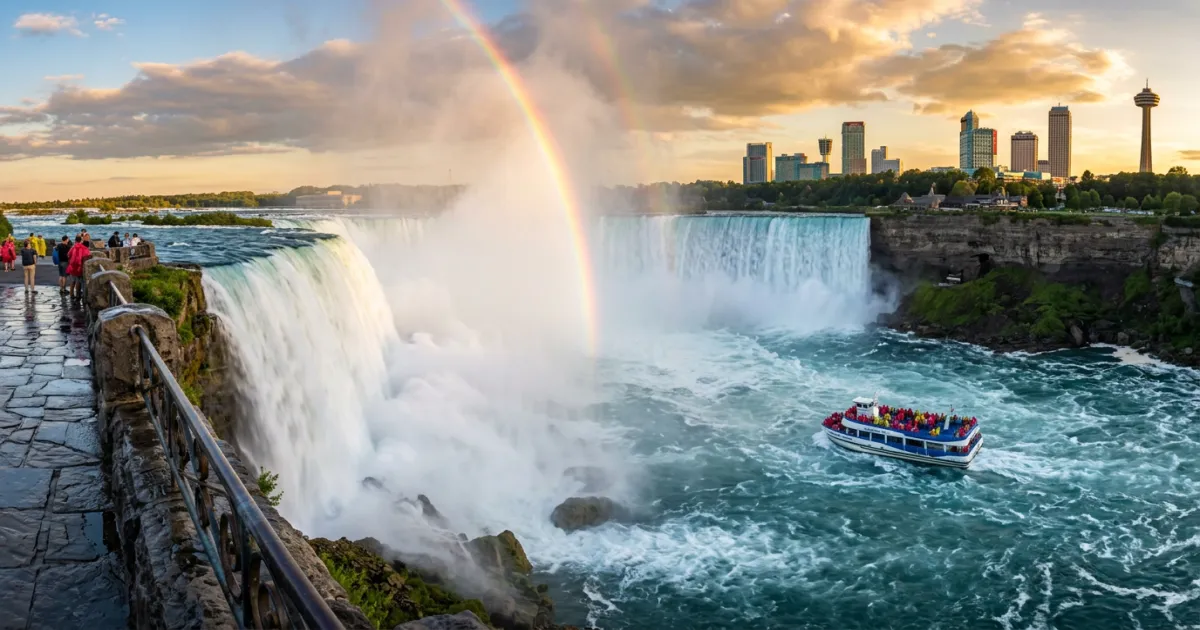
Niagara Falls is one of the most iconic natural wonders in the world, straddling the border between New York State and Ontario, Canada. Whether you are visiting for a day trip or spending a long weekend, this guide covers everything you need to know to plan your Niagara Falls trip in 2026.
Quick Facts About Niagara Falls
- Location: The falls sit on the Niagara River between Buffalo, New York (US) and Niagara Falls, Ontario (Canada).
- Passport required: You need a valid passport or passport card to cross between the US and Canadian sides.
- Currency: US dollars on the American side, Canadian dollars on the Canadian side. Most businesses near the falls accept both currencies, though exchange rates at shops are rarely favorable.
- Best time to visit: May through October, when boat tours are running and weather is warm.
- Free to view: There is no charge to see the falls from either side. Both Niagara Falls State Park (US) and Queen Victoria Park (Canada) offer free viewing areas.
If you are in the early stages of planning, our general trip planning guide walks you through the basics of organizing any vacation from scratch.
US Side vs. Canadian Side: Which Is Better?
The short answer: visit both if you can. Each side offers a different experience, and you can walk between them across the Rainbow Bridge in about 10 minutes.
Canadian Side
The Canadian side is widely considered the better side for panoramic views. You face the falls head-on, which means you get the full sweeping view of Horseshoe Falls, American Falls, and Bridal Veil Falls all at once. The Canadian side also has more tourist infrastructure, including Fallsview hotels with rooms overlooking the falls, the Clifton Hill entertainment district, restaurants, and the Skylon Tower observation deck.
Key Canadian-side attractions include Hornblower Niagara Cruises (the Canadian equivalent of Maid of the Mist), Journey Behind the Falls (tunnels behind Horseshoe Falls), and the White Water Walk along the Niagara River rapids.
American Side
The American side puts you closer to the action. You can stand right at the brink of the falls at Prospect Point and feel the mist on your face. Niagara Falls State Park, designed by Frederick Law Olmsted (the architect behind Central Park), is the oldest state park in the United States. The American side is also less crowded and less commercialized.
Key American-side attractions include the Maid of the Mist boat tour, Cave of the Winds (a wooden walkway that takes you to the base of Bridal Veil Falls), and Goat Island, which sits between the American and Horseshoe Falls.
The bottom line: the Canadian side wins for views and entertainment, while the American side wins for a more intimate, up-close experience with the water. Ideally, plan time on both sides.
Best Time to Visit Niagara Falls
Niagara Falls flows year-round, but the experience changes dramatically with the seasons.
Peak Season: June Through August
Summer is the busiest time at the falls. The weather is warm (highs around 75 to 85 degrees Fahrenheit), all attractions are open, and boat tours run daily. Expect large crowds, especially on weekends and holidays. Hotel prices are at their highest, and wait times for popular attractions like Cave of the Winds can stretch to an hour or more.
Shoulder Season: May, September, and October
Shoulder season is the sweet spot for most visitors. Boat tours still operate (typically mid-May through early November), crowds are significantly smaller, and hotel rates drop 20 to 40 percent compared to summer. September and October bring fall foliage along the Niagara Gorge, adding color to an already stunning landscape. Temperatures are comfortable, ranging from 55 to 75 degrees Fahrenheit.
Winter: November Through April
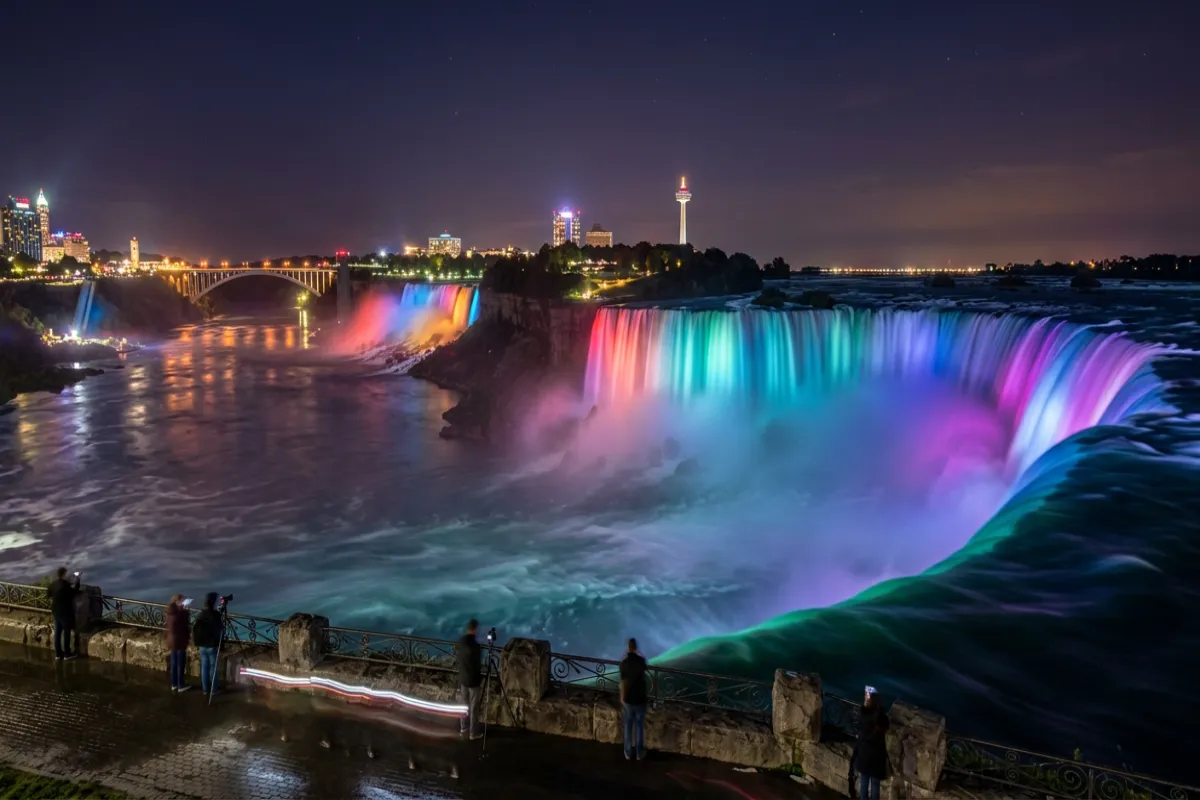
The falls never fully freeze, though ice formations along the edges and surrounding trees create a dramatic winter scene. Boat tours shut down for the season, but the falls are still fully viewable from observation decks and parks. The nightly illumination show runs year-round. Crowds are minimal, and hotel rates are at their lowest. Journey Behind the Falls on the Canadian side stays open in winter.
How Long to Spend at Niagara Falls
You can see the highlights in a single day if you are short on time, but two to three days is ideal for a complete experience.
- One day: Pick one side (Canadian side recommended for first-timers) and hit the major attractions. You can see the falls, take a boat tour, and grab a meal in about six to eight hours.
- Two days: Spend one day on each side of the border. This gives you time to do both Maid of the Mist and Hornblower, plus Cave of the Winds, Journey Behind the Falls, and the Skylon Tower without rushing.
- Three days: Add a day trip to Niagara-on-the-Lake (a charming town 20 minutes from the falls known for its wineries and historic theater), explore the Niagara Gorge Trail, or spend more time in the surrounding area.
Niagara Falls Budget Breakdown
Niagara Falls is surprisingly affordable compared to many major tourist destinations. Viewing the falls is completely free, and many of the paid attractions are reasonably priced.
Daily Cost Estimates Per Person
| Category | Budget | Mid-Range | Luxury |
|---|---|---|---|
| Hotel (per person, double occupancy) | $50 to $80 | $75 to $150 | $200+ |
| Meals | $25 to $40 | $50 to $80 | $100+ |
| Attractions | $25 to $35 | $50 to $75 | $100+ |
| Transportation | $5 to $10 | $10 to $20 | $30+ |
| Daily Total | $105 to $165 | $185 to $325 | $430+ |
Key Attraction Prices (2026)
- Maid of the Mist (US side): $30.25 per adult
- Cave of the Winds (US side): $23.00 per adult
- Journey Behind the Falls (Canada): $28.00 CAD per adult
- Niagara Adventure Pass (Canada): Approximately $70 CAD per adult, bundling Journey Behind the Falls, Hornblower Niagara Cruises, White Water Walk, and Niagara’s Fury
The Canadian-side Adventure Pass saves about 15 to 20 percent compared to buying individual tickets. On the American side, combination tickets for Maid of the Mist and Cave of the Winds total $53.25 per adult.
Need help setting up a trip budget? Our travel budget template makes it easy to track spending categories and stay on target.
Getting to Niagara Falls
By Air
The closest major airports are Buffalo Niagara International Airport (BUF), about 30 minutes from the falls, and Toronto Pearson International Airport (YYZ), about 90 minutes away. Buffalo generally offers more affordable flights from US cities, while Toronto is the better option if you are coming from overseas or want to combine your trip with time in Toronto.
Hamilton John C. Munro International Airport (YHM) is another option on the Canadian side, roughly 45 minutes from the falls, and sometimes has budget airline options.
By Car
Niagara Falls is an easy road trip from several major cities:
- Toronto: 1.5 hours (about 130 km / 80 miles)
- Buffalo: 30 minutes (about 32 km / 20 miles)
- New York City: 6 to 7 hours (about 650 km / 400 miles)
- Cleveland: 3.5 hours (about 310 km / 190 miles)
- Pittsburgh: 4 hours (about 350 km / 215 miles)
- Detroit: 4 hours (about 380 km / 235 miles)
Parking is available near the falls on both sides. Niagara Falls State Park (US) charges $10 to $20 for parking depending on the season. On the Canadian side, parking lots along Falls Avenue and near Clifton Hill typically cost $20 to $30 CAD per day.
By Bus or Train
Amtrak runs trains from New York City to Niagara Falls, NY (about 8 to 9 hours). On the Canadian side, VIA Rail connects Toronto to Niagara Falls, Ontario. Bus services like FlixBus and Megabus offer budget-friendly options from Toronto and several US cities.
Must-See Attractions and Experiences
Horseshoe Falls
The largest and most famous of the three waterfalls, Horseshoe Falls is 167 feet tall and about 2,600 feet wide. It carries roughly 90 percent of the water that flows over Niagara Falls. The best views are from the Canadian side, where you can see the full crescent shape that gives the falls its name.
American Falls and Bridal Veil Falls
These two waterfalls sit on the US side, separated by tiny Luna Island. American Falls is about 940 feet wide, while the delicate Bridal Veil Falls is only about 50 feet wide. You can view them from both sides of the border, but the American side puts you right at the edge.
Maid of the Mist (US Side)
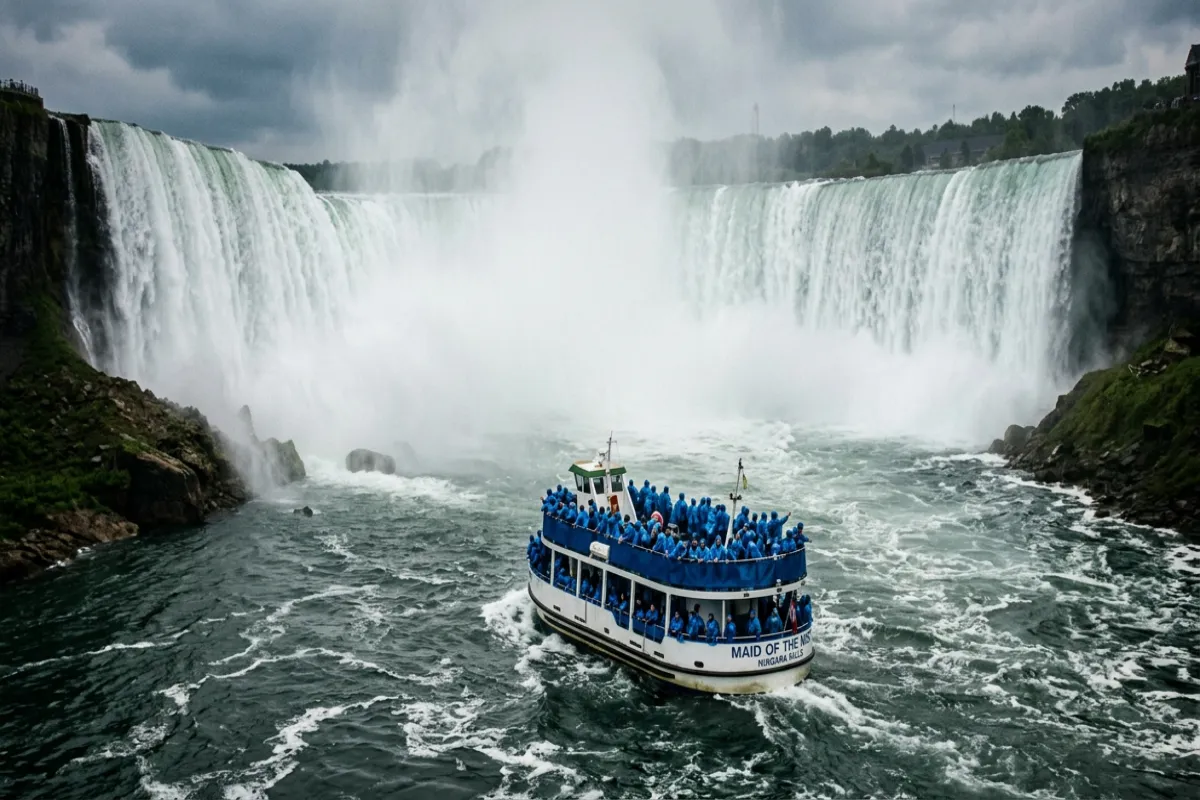
Operating since 1846, the Maid of the Mist is one of the most iconic boat tours in the world. The boat takes you into the basin at the base of Horseshoe Falls, where the mist is so thick you can barely see. Ponchos are provided. The ride lasts about 20 minutes and runs from mid-May through early November. Adults pay $30.25.
Hornblower Niagara Cruises (Canadian Side)
The Canadian equivalent of Maid of the Mist, Hornblower boats are larger catamarans that take you on a similar journey to the base of the falls. The experience is nearly identical, so you only need to do one unless you want to compare.
Cave of the Winds (US Side)
This wooden walkway descends into the Niagara Gorge and brings you to the Hurricane Deck at the base of Bridal Veil Falls. You will get drenched. Sandals and a poncho are provided. It is one of the most thrilling ways to experience the falls up close. Adults pay $23.00.
Journey Behind the Falls (Canadian Side)
Tunnels carved behind Horseshoe Falls lead to observation portals where you can see and feel the water thundering just feet in front of you. The tunnels were originally cut in the 1880s. Adults pay $28.00 CAD. This attraction is open year-round, unlike the boat tours.
Skylon Tower
This 775-foot observation tower on the Canadian side offers the best bird’s-eye views of all three waterfalls, plus the surrounding city and river. On a clear day, you can see the skyline of Toronto and Buffalo. The tower also has a revolving dining room.
Nighttime Illumination
Every evening, the falls are lit up with colored lights in a free show that runs year-round. During summer, fireworks displays are held on select nights (typically Fridays, Sundays, and holidays). The illumination typically starts at dusk and runs until at least midnight.
Niagara-on-the-Lake
This historic town about 20 minutes north of the falls is the heart of Ontario’s wine country. The Niagara region has over 100 wineries, many offering tastings and tours. The town itself has a charming Main Street with boutique shops, the Shaw Festival Theatre, and some of the best restaurants in the region. It makes an excellent half-day or full-day side trip.
Crossing the Border Between the US and Canada
Crossing between the two sides is straightforward but requires preparation.
What You Need
- US citizens: Valid passport or passport card. NEXUS cards are also accepted.
- Canadian citizens: Valid passport or NEXUS card.
- International visitors: A valid passport and appropriate visa for both countries. Check requirements for both the US and Canada before your trip, as they have separate visa systems.
Rainbow Bridge
The Rainbow Bridge is the most popular crossing for tourists visiting the falls. You can walk, bike, or drive across. The pedestrian toll is $1.00 USD (or $1.25 CAD) when departing from the Canadian side. There is no pedestrian toll when departing from the US side. Vehicle toll is $4.00 USD or $8.50 CAD.
The walk across takes about 10 minutes, plus 15 to 30 minutes for customs on each end (longer during peak summer weekends). The bridge is open 24 hours a day, 7 days a week.
Tips for a Smooth Crossing
- Have your passport out and ready before you reach the customs booth.
- Cross early in the morning or in the evening to avoid the longest lines.
- Keep answers to customs questions brief and straightforward. They will ask where you are going and how long you plan to stay.
- If driving, the Whirlpool Bridge and Lewiston-Queenston Bridge are less congested alternatives, though they are farther from the falls.
Where to Stay
Fallsview Hotels (Canadian Side)
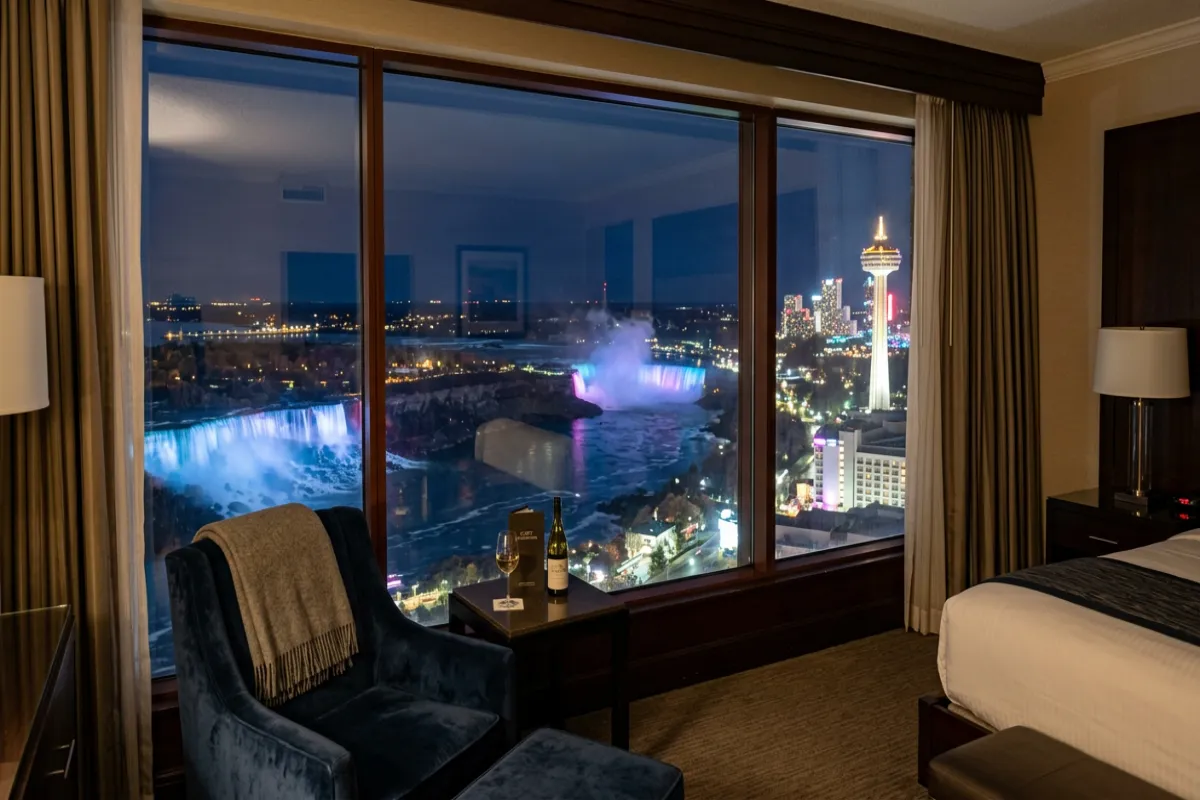
Hotels along Fallsview Boulevard on the Canadian side offer rooms with direct views of Horseshoe Falls. Properties like the Marriott Fallsview, Hilton Niagara Falls, and Sheraton on the Falls are popular choices. Expect to pay $200 to $400+ per night for a Fallsview room in peak season, with rates dropping to $100 to $200 in shoulder season.
Clifton Hill Area (Canadian Side)
Clifton Hill is the main tourist strip on the Canadian side, packed with restaurants, arcades, and attractions. Hotels here are walking distance to the falls but may not have falls views. Rates are generally $120 to $250 per night in summer.
Downtown Niagara Falls, NY (US Side)
The American side has fewer hotels, but they tend to be more affordable. Properties near Niagara Falls State Park put you within walking distance of the falls. Rates typically range from $80 to $180 per night. The Seneca Niagara Resort and Casino is the largest hotel on the US side.
Niagara-on-the-Lake
For a more upscale, relaxed experience, stay in Niagara-on-the-Lake. Boutique inns and bed-and-breakfasts surrounded by vineyards offer a completely different atmosphere. It is about a 20-minute drive to the falls. Rates range from $150 to $350+ per night.
Planning your trip itinerary? Our vacation itinerary template helps you organize your days so you do not miss anything.
Practical Tips for Visiting Niagara Falls
- You will get wet. Both the Maid of the Mist and Cave of the Winds provide ponchos, but you will still get soaked below the knees. Wear shoes that can handle water, or bring a change of footwear.
- Bring a waterproof phone case. The mist from the falls reaches most viewing areas, especially on windy days. A waterproof case costs a few dollars and protects your phone while still allowing photos.
- Go early in the morning. The falls are least crowded before 10 AM. You will have shorter wait times for attractions and better photo opportunities without crowds.
- Viewing the falls is free. You can walk along the railing at Niagara Falls State Park (US) or Queen Victoria Park (Canada) and see all three waterfalls without paying a cent.
- Raincoats are provided on boat tours. No need to bring your own rain gear for the boat rides. Both Maid of the Mist and Hornblower hand out ponchos before boarding.
- Buy attraction passes in advance online. You will save 15 to 20 percent and skip the ticket line.
- Weekdays are less crowded. If your schedule is flexible, visit Sunday through Thursday for smaller crowds and lower hotel rates (20 to 40 percent savings).
- Keep cash in both currencies. While most places accept both USD and CAD, you will get better exchange rates at a bank or ATM than at tourist shops.
Sample 3-Day Niagara Falls Itinerary
Day 1: Canadian Side
Start your morning at Queen Victoria Park for your first panoramic view of all three falls. Head to Journey Behind the Falls early to beat the crowds. After lunch on Clifton Hill, take the Hornblower Niagara Cruise. Spend the late afternoon at the Skylon Tower observation deck. Stay for the evening illumination show, which looks best from the Canadian side.
Day 2: American Side
Walk across the Rainbow Bridge in the morning (have your passport ready). Explore Niagara Falls State Park and take in the views from Prospect Point. Board the Maid of the Mist for the classic boat experience. After lunch, head to Cave of the Winds and the Hurricane Deck. Walk along Goat Island for views of the upper rapids and Terrapin Point, one of the closest viewpoints to the edge of Horseshoe Falls.
Day 3: Wine Country and Exploration
Drive or take a tour to Niagara-on-the-Lake. Visit two or three wineries for tastings (the region is known for Icewine, a sweet dessert wine). Stroll the town’s historic Main Street, grab lunch at one of the local restaurants, and browse the shops. If you have time in the afternoon, stop at the Whirlpool Aero Car or hike a section of the Niagara Gorge Trail on your way back.
Planning Tools
Putting together a Niagara Falls trip does not have to be complicated. Here are some resources to help:
- How to Plan a Trip covers the step-by-step process of organizing any vacation.
- Vacation Itinerary Template helps you map out your daily schedule.
- Travel Budget Template keeps your spending organized.
- AI Travel Planner can generate a personalized Niagara Falls itinerary based on your preferences, travel dates, and budget.
If you are combining Niagara Falls with a broader trip, check out our guide to planning a trip to New York for tips on visiting the state that is home to the American side of the falls.
Frequently Asked Questions
Do I need a passport to visit Niagara Falls?
You do not need a passport to visit the American side if you are a US citizen. However, you need a valid passport or passport card to cross to the Canadian side. If you want to experience both sides (recommended), bring your passport.
Is Niagara Falls worth visiting?
Yes. Niagara Falls is one of those rare destinations that lives up to the hype. The sheer volume of water (more than 750,000 gallons per second during peak flow) and the thundering sound create an experience that photos and videos simply cannot capture.
Can you visit Niagara Falls for free?
You can see the falls for free from multiple vantage points on both the US and Canadian sides. Niagara Falls State Park (US) and Queen Victoria Park (Canada) are both free to enter. You only pay for specific attractions like boat tours, Cave of the Winds, and Journey Behind the Falls.
Which side of Niagara Falls is better?
The Canadian side offers better panoramic views and more tourist amenities. The American side offers a closer, more immersive experience. Most visitors who have the time recommend doing both.
When do the boat tours run?
Maid of the Mist (US side) and Hornblower Niagara Cruises (Canadian side) typically operate from mid-May through early November, depending on weather and ice conditions.
How long does it take to cross the border?
Walking across the Rainbow Bridge takes about 10 minutes. Add 15 to 30 minutes for customs processing on each side. During peak summer weekends, wait times can be longer. Early mornings and evenings have the shortest lines.
Is Niagara Falls better in summer or fall?
Both are excellent. Summer offers the warmest weather and longest daylight hours but comes with bigger crowds. Fall (September and October) offers beautiful foliage, comfortable temperatures, smaller crowds, and lower prices. Boat tours still run through early November.