| Oregon Quick Facts | |
|---|---|
| State | Oregon, USA |
| Currency | US Dollar (USD) |
| Language | English |
| Time Zone | Pacific Time (PT) |
| Daily Budget | $90 to $300+ per person |
| Best Time | June to September |
| Getting There | Portland International Airport (PDX) |
Oregon packs a remarkable amount of variety into one state. You have the rugged Pacific coastline, the green Willamette Valley wine country, the volcanic peaks of the Cascades, the high desert of Central Oregon, and Portland’s legendary food and beer scene. A road trip through Oregon can take you from rainforest to desert to ocean in a single day. The state has no sales tax, making shopping and dining a bit easier on the wallet, and state parks are mostly free to enter.
For a broader framework for organizing any trip, our how to plan a trip guide covers the fundamentals.
Best Time to Visit Oregon
June through September is the best time to visit Oregon. Summer brings dry, warm weather with highs in the 70s to 80s F in the valleys and along the coast. The coast stays cooler (60s F) even in summer and gets morning fog that usually clears by midday. Crater Lake is typically snow-free and fully accessible from late June through mid-October. Spring (April to May) is beautiful but rainy, especially west of the Cascades. Fall (October) brings gorgeous foliage and wine harvest in the Willamette Valley. Winter is wet on the west side but offers excellent skiing at Mt. Hood and Mt. Bachelor.
Getting to Oregon
Portland International Airport (PDX) is the main gateway with direct flights from cities across the US. PDX consistently ranks as one of the best airports in America for its ease of use and dining options. Eugene (EUG) has a smaller regional airport. From Portland, the coast is about 90 minutes west, the Willamette Valley wine country is about an hour south, and Crater Lake is about 4.5 hours southeast. A rental car is essential for exploring beyond Portland.
Top Things to Do in Oregon
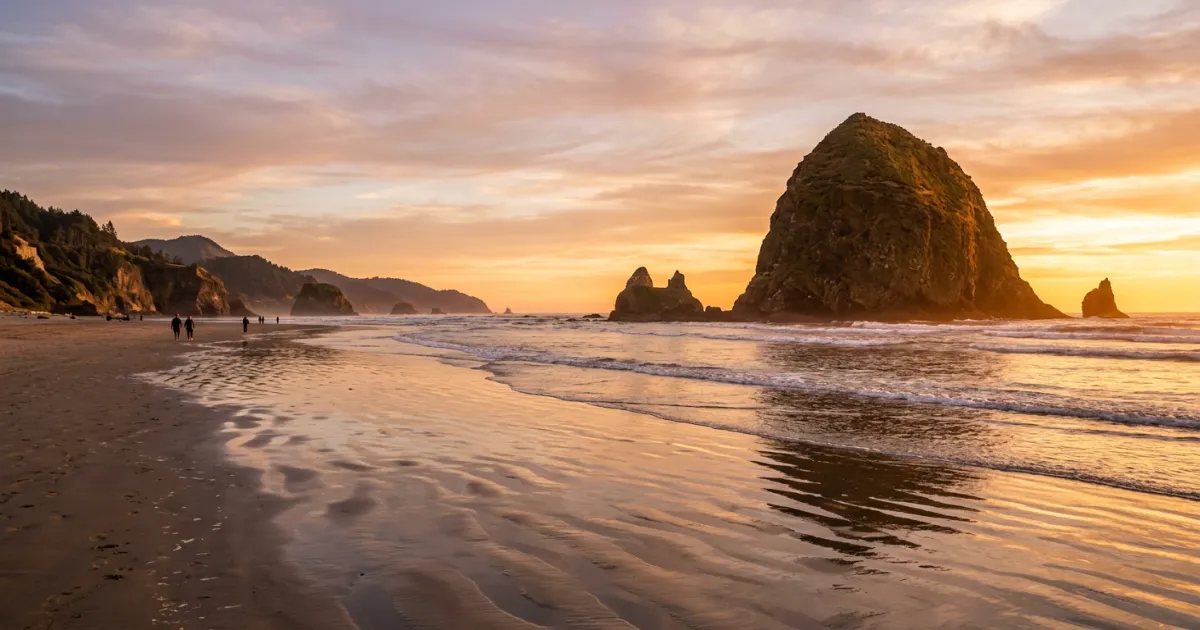
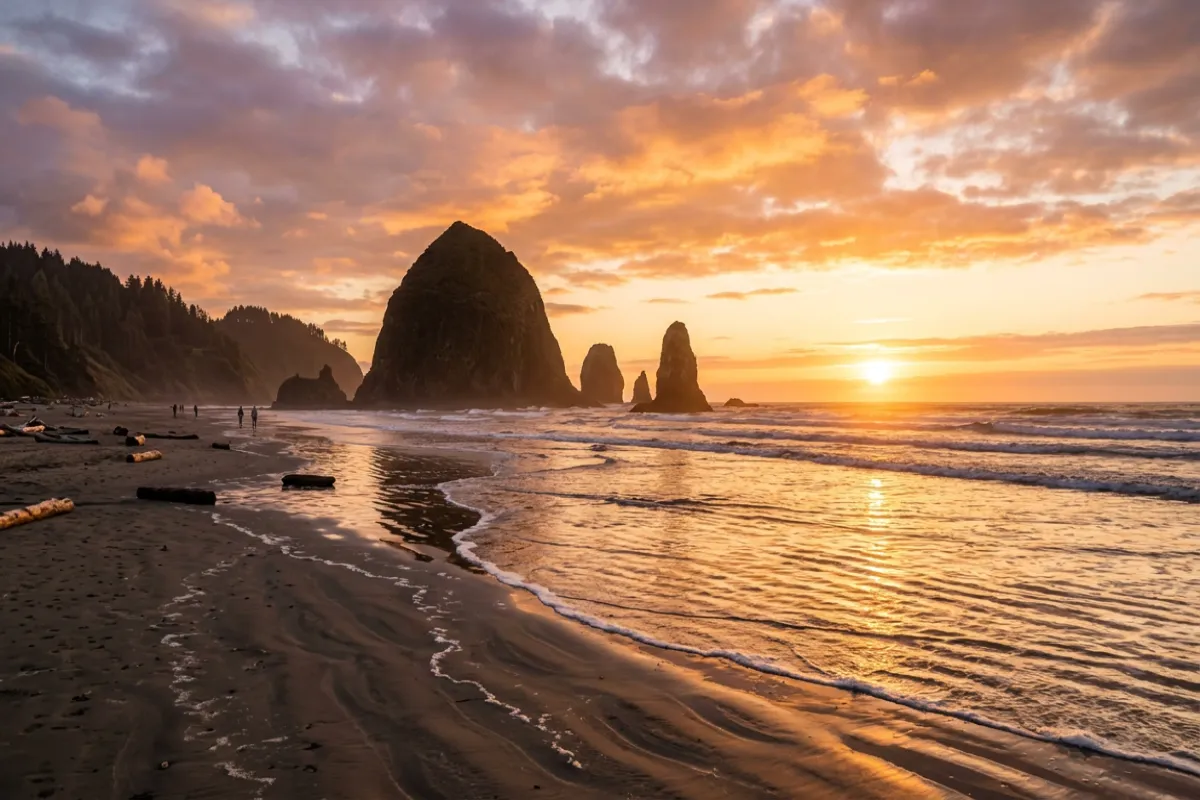
- Oregon Coast: 362 miles of public coastline with sea stacks, tide pools, and small towns. Cannon Beach (Haystack Rock) and Ecola State Park are the most iconic stops. The entire coast belongs to the public by law.
- Crater Lake National Park: The deepest lake in the United States, formed in a collapsed volcano. The intense blue color is unlike any other lake. Drive the 33-mile Rim Drive for viewpoints, or hike down to the water on the Cleetwood Cove trail.
- Portland Food and Beer: Portland has more breweries per capita than any US city. Pair that with food carts (over 500 across the city), independent restaurants, and Powell’s Books, the world’s largest independent bookstore.
- Willamette Valley Wine Tasting: Oregon’s premier wine region, known for Pinot Noir. Over 700 wineries spread across rolling hills south of Portland. Dundee, McMinnville, and Carlton are popular tasting hubs.
- Columbia River Gorge: Dramatic basalt canyon east of Portland with dozens of waterfalls, including Multnomah Falls (620 feet). Hiking, windsurfing at Hood River, and scenic driving along the Historic Columbia River Highway.
- Mt. Hood: Oregon’s highest peak, visible from Portland on clear days. Year-round skiing at Timberline Lodge, hiking, and the charming mountain town of Government Camp.
Where to Stay
In Portland, the Pearl District and downtown are walkable to restaurants and sights. East side neighborhoods (Hawthorne, Alberta, Division) have a more local feel. On the coast, Cannon Beach and Newport are the most popular base towns with a range of hotels and vacation rentals. Near Crater Lake, the Crater Lake Lodge (inside the park) is the top choice but books up months ahead. Bend is the hub for Central Oregon adventures. Expect $100 to $200 per night mid-range, more for coastal and wine country properties in summer.
Sample 3-Day Oregon Itinerary
- Day 1 – Portland: Explore downtown Portland: Powell’s Books, the Pearl District, and lunch at a food cart pod. Afternoon at the Portland Japanese Garden or Forest Park. Evening brewery hopping in the inner east side neighborhoods.
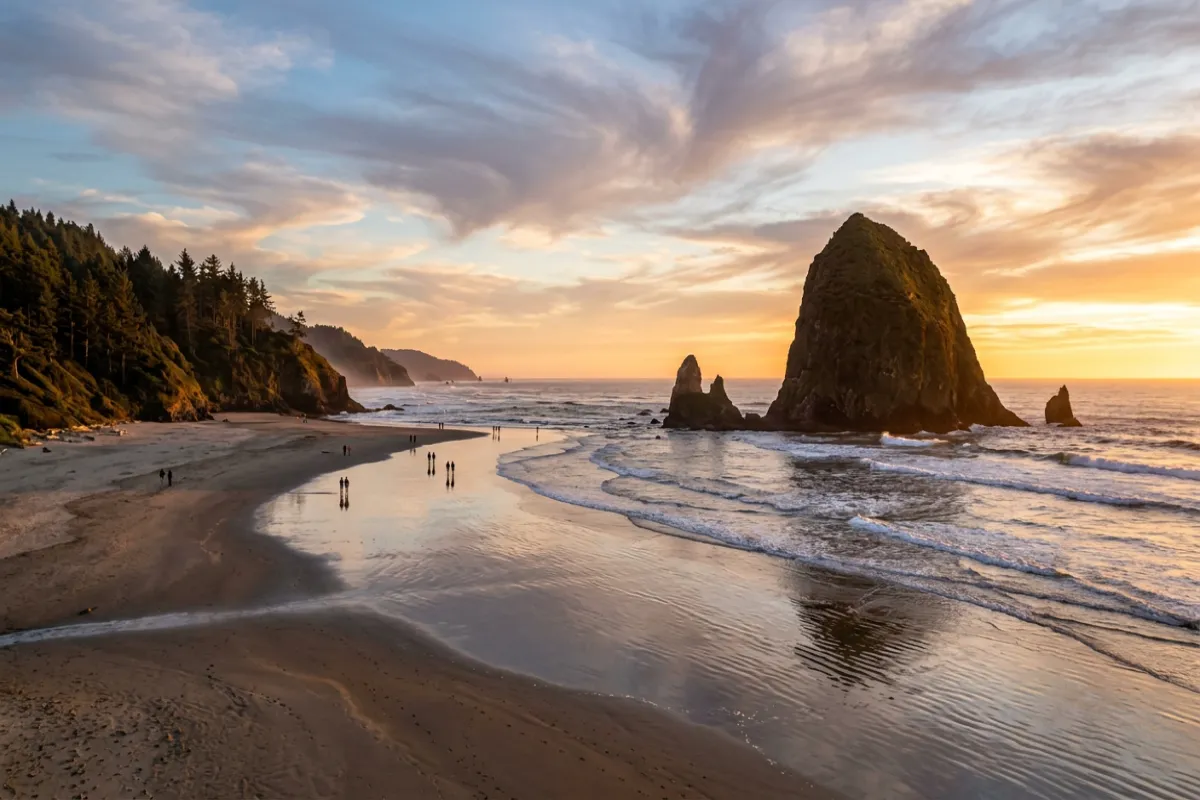
- Day 2 – Coast: Drive to the coast (90 minutes). Stop at Cannon Beach for Haystack Rock, hike at Ecola State Park, and drive south along the coast through Manzanita and Tillamook (stop at the creamery for cheese and ice cream). Overnight on the coast.
- Day 3 – Wine Country or Gorge: Drive to the Willamette Valley for wine tasting at 2 to 3 wineries in the Dundee Hills area. Alternatively, drive east to the Columbia River Gorge for Multnomah Falls and hiking. Return to Portland or continue south toward Crater Lake.
Budget Estimate
Budget travelers can manage on $90 to $140 per day with budget hotels or camping (Oregon state parks have excellent campgrounds for $20 to $35 per night), casual dining, and free outdoor activities. Mid-range travelers should plan for $180 to $300 covering comfortable hotels, restaurant meals, wine tastings ($10 to $25 per winery), and Crater Lake entry ($30 per vehicle). Oregon has no sales tax, so prices are what you see. Gas is slightly above the national average.
Planning Tools
Ready to start building your Oregon trip? Our free AI trip planner can generate a custom itinerary based on your dates, budget, and interests.
Frequently Asked Questions
What is the best Oregon road trip route?
A classic loop from Portland goes: Portland to the coast (Cannon Beach, Newport), south along US-101 to the Redwoods, east to Crater Lake, north through Bend, then back to Portland via Mt. Hood or the Columbia Gorge. Allow 7 to 10 days for the full loop, or pick one section for a shorter trip.
Does it rain a lot in Oregon?
West of the Cascades (Portland, the coast, the valleys), yes. Portland gets about 36 inches of rain per year, mostly from October through May. Summers are reliably dry and sunny. East of the Cascades (Bend, the high desert), it is much drier year-round with over 300 days of sunshine.
Is the Oregon coast swimmable?
The water is cold (50 to 60 F even in summer) and currents are strong. Most people do not swim in the ocean, but wading, tide pooling, and beachcombing are popular. Some sheltered coves and lakes near the coast are better for swimming.