| Poland Quick Facts | |
|---|---|
| Country | Poland |
| Currency | Polish Zloty (PLN). 1 USD = roughly 4 PLN |
| Language | Polish. English spoken by younger people in cities |
| Time Zone | CET (UTC+1), CEST (UTC+2) in summer |
| Visa (US) | Not required for stays under 90 days (Schengen Area) |
| Daily Budget | $40 to $200+ per person |
| Best Time | May to September |
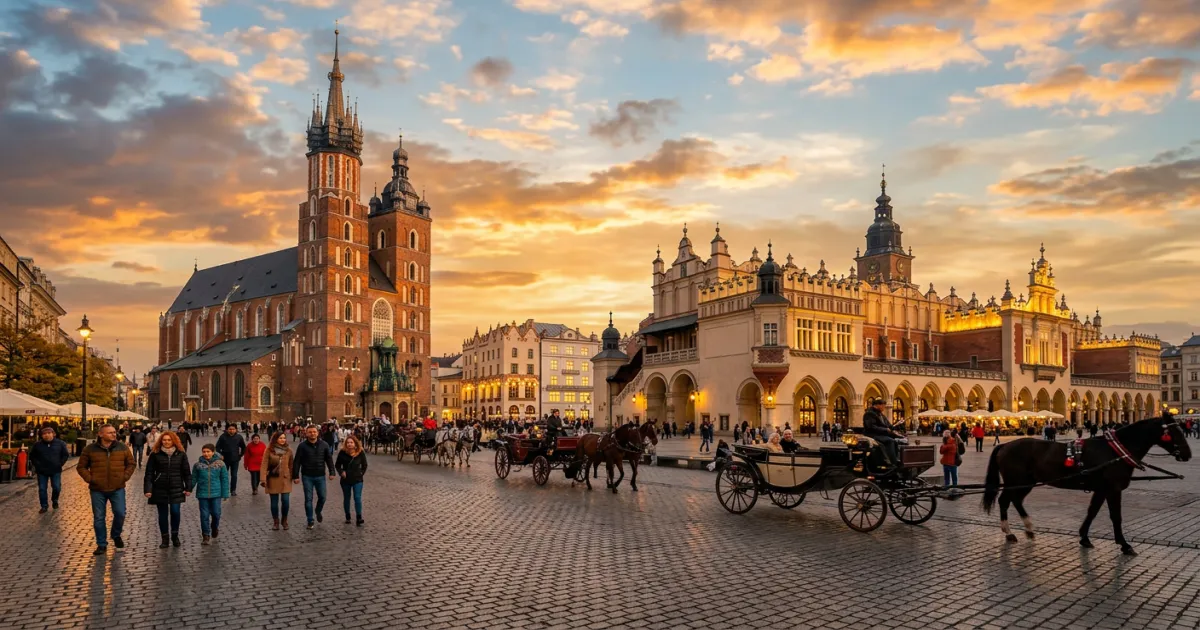
Poland is one of Europe’s best-value destinations with a depth of history, culture, and scenery that rivals countries at twice the price. Krakow’s medieval old town is one of the most beautiful in Europe. Warsaw has risen from wartime destruction into a dynamic modern capital. Gdansk on the Baltic coast has a stunning waterfront and Solidarity-era history. The food is hearty and affordable: pierogi, zurek, and bigos are satisfying and cheap. Poland also offers excellent craft beer, a growing wine scene, and the Tatra Mountains for hiking.
For a broader framework for organizing any trip, our how to plan a trip guide covers the fundamentals.
Best Time to Visit Poland
May through September is the main travel season. Summer brings warm weather (70 to 85 F), long days, and outdoor festivals. June and September are the sweet spots with fewer crowds than July to August. Spring (April to May) has mild weather and blooming landscapes. Fall (October) brings gorgeous colors. Winter (November through March) is cold (25 to 35 F) but atmospheric, with Christmas markets in Krakow and Wroclaw.
Getting to Poland
Warsaw Chopin Airport (WAW) and Krakow John Paul II Airport (KRK) are the main gateways. LOT Polish Airlines has direct flights from New York, Chicago, and other US cities to Warsaw (8 to 9 hours). Budget airlines (Ryanair, Wizz Air) connect Krakow to European hubs. Trains between Polish cities are reliable and affordable ($10 to $25 for intercity trips). The PKP Intercity network connects all major cities.
Top Things to Do in Poland
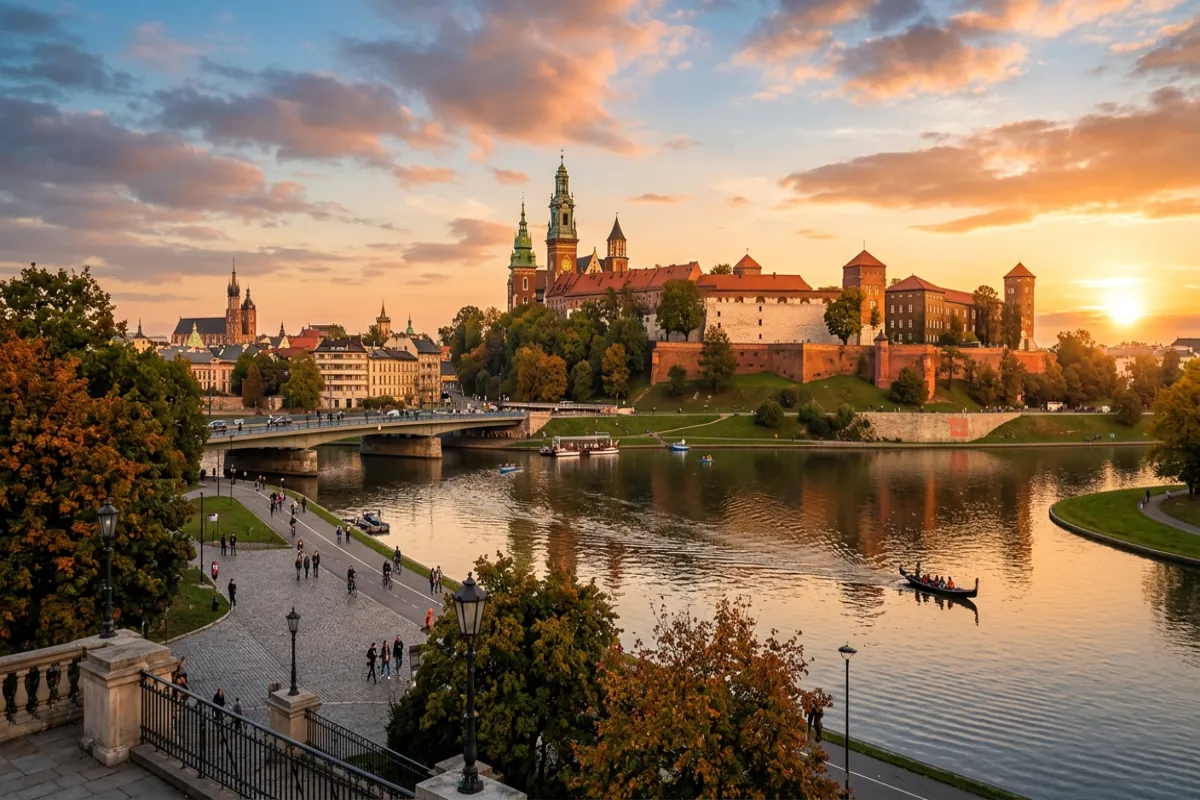
- Krakow Old Town: One of Europe’s best-preserved medieval centers. Rynek Glowny (Main Market Square), St. Mary’s Basilica with its trumpeter, the Cloth Hall, and Wawel Castle and Cathedral. The Kazimierz Jewish quarter has excellent restaurants and bars.
- Warsaw Old Town: Completely rebuilt after WWII destruction, it is a UNESCO World Heritage Site for the remarkable faithfulness of the reconstruction. The Royal Route, Lazienki Park, and the Warsaw Uprising Museum are highlights.
- Gdansk: A Baltic port city with a stunning waterfront of colorful gabled houses on the Motlawa River. The European Solidarity Centre tells the story of the Solidarity movement. Amber shopping is a local specialty.
- Wieliczka Salt Mine: Near Krakow, this UNESCO-listed underground marvel has chapels, lakes, and sculptures carved from salt over 700 years of mining. Guided tours about $25.
- Tatra Mountains: Poland’s highest mountains on the Slovak border. Zakopane is the base town for hiking (Morskie Oko lake is the top hike) and skiing in winter. About 2 hours south of Krakow.
- Polish Food: Pierogi (dumplings), zurek (fermented rye soup), bigos (hunter’s stew), and oscypek (smoked cheese). Milk bars (bar mleczny) are cafeteria-style eateries serving traditional food for $2 to $5 per meal.
Where to Stay
Krakow’s Old Town has excellent hotels and hostels from $15 (hostel) to $150 (boutique hotel). Kazimierz is slightly cheaper and has the best nightlife. Warsaw’s city center (Srodmiescie) has hotels from $40 to $200. Gdansk’s Main Town has waterfront hotels from $50 to $180. Poland is remarkably affordable for accommodation at every tier.
Sample 4-Day Poland Itinerary
- Day 1-2: Krakow: Old Town, Wawel Castle, Kazimierz quarter. Day 2: Wieliczka Salt Mine or Auschwitz-Birkenau day trip. Evening bar hopping in Kazimierz.
- Day 3: Warsaw: Train to Warsaw (2.5 hours). Old Town, Royal Route, and Lazienki Park. Warsaw Uprising Museum or POLIN Museum of the History of Polish Jews. Evening in the Praga district.
- Day 4: Gdansk (optional): Train to Gdansk (3 hours from Warsaw). Explore the waterfront, Long Market, and the European Solidarity Centre. Evening amber shopping and seafood dinner on the Motlawa.
Budget Estimate
Poland is one of Europe’s best bargains. Budget travelers can live well on $40 to $60 per day with hostel beds, milk bar meals ($2 to $5), and bus/train travel. Mid-range travelers should plan for $80 to $150 covering comfortable hotels, restaurant meals ($8 to $20), museum entries, and intercity trains. Luxury travelers spend $200 to $400 for boutique hotels and fine dining, still far below Western European prices. Beer costs $2 to $4 per pint.
Planning Tools
Ready to start building your Poland trip? Our free AI trip planner can generate a custom itinerary based on your dates, budget, and interests.
Frequently Asked Questions
Is Poland cheap?
Yes, compared to Western Europe. Accommodation, food, and transport are 50 to 70% cheaper than France, Germany, or the UK. The quality of food and lodging is excellent. Poland offers arguably the best value in the EU for travelers.
How many days do you need in Poland?
Four to five days covers Krakow (2 days including Auschwitz) and Warsaw (1 to 2 days). A week adds Gdansk or the Tatra Mountains. Krakow alone deserves at least 2 full days.
Do people speak English in Poland?
In cities, younger Poles generally speak good English. In rural areas and among older generations, English is less common. Learning a few Polish words (dzien dobry for hello, dziekuje for thank you) is appreciated. Google Translate works well for any communication gaps.