Quick Facts About Portugal
Portugal sits on the western edge of the Iberian Peninsula, bordered by Spain to the east and the Atlantic Ocean to the west and south. Before you start planning, here are the essentials:
- Visa: Portugal is part of the Schengen Area. US, UK, Canadian, and Australian citizens can visit visa-free for up to 90 days within any 180-day period. Your passport must be valid for at least three months beyond your planned departure date.
- Currency: Euro (EUR). Credit cards are widely accepted in cities, but carry some cash for smaller shops and rural areas.
- Language: Portuguese. English is commonly spoken in tourist areas, especially by younger people, but less so in rural regions and among older residents.
- Time Zone: Western European Time (WET/UTC+0), shifting to Western European Summer Time (WEST/UTC+1) from late March to late October. Portugal is one hour behind Spain despite sharing a border.
- Affordability: Portugal remains one of the most affordable countries in Western Europe, with costs well below France, Italy, or the UK.
Best Time to Visit Portugal
Portugal enjoys a Mediterranean climate with over 300 days of sunshine per year, making it a solid destination in nearly every season. That said, timing your trip right can make a big difference in both cost and experience.
April through June and September through October are the sweet spots. Temperatures hover between 18 and 25 degrees Celsius (65 to 77 Fahrenheit), crowds are manageable, and prices for flights and hotels sit well below peak rates. The wildflowers bloom across the Alentejo region in spring, and the vineyards of the Douro Valley turn golden in autumn.
July and August bring peak summer heat, especially in the Algarve where temperatures regularly top 35 degrees Celsius (95 Fahrenheit). The southern beaches get crowded with European vacationers, and hotel prices spike. Lisbon and Porto also see heavy tourist traffic during these months.
November through March is the low season. Lisbon stays mild through winter with daytime temperatures around 12 to 16 degrees Celsius (54 to 61 Fahrenheit) and occasional rain. Porto is cooler and wetter. The Algarve remains relatively pleasant. This is the cheapest time to visit, with hotel rates dropping by 30 to 50 percent compared to summer.
How Long to Spend in Portugal
A week gives you enough time to explore one or two cities properly, but 7 to 10 days is the ideal range for a first trip. This allows you to experience Lisbon, Porto, and either the Algarve coast or the Douro Valley wine region without feeling rushed.
If you only have 5 days, focus on Lisbon (3 days) with a day trip to Sintra and one day exploring a second destination. With two weeks, you can comfortably add the Azores or Madeira islands, the university city of Coimbra, and more time along the Algarve.
Portugal Trip Budget: What to Expect
Portugal consistently ranks as one of the cheapest Western European destinations. Your daily spend will vary based on travel style, but here are realistic ranges per person per day (excluding international flights):
- Budget (hostels, street food, public transport): EUR 60 to 80 per day
- Mid-range (3-star hotels, local restaurants, some tours): EUR 130 to 200 per day
- Luxury (4-star+ hotels, fine dining, private tours): EUR 250 and up per day
Accommodation is where costs vary the most. Hostel dorms run EUR 15 to 35 per night in Lisbon and Porto. A solid mid-range hotel costs EUR 90 to 150 per night. In the Algarve during peak season, expect to pay more.
Food is remarkably affordable. A full lunch at a local restaurant typically costs EUR 8 to 15 per person, including a drink. A three-course dinner for two at a mid-range restaurant runs EUR 40 to 60. Pastries and coffee at a pastelaria cost EUR 2 to 4.
Flights from the US to Lisbon or Porto typically range from USD 500 to 1,200 round-trip depending on your departure city, time of year, and how far in advance you book. Use our travel budget template to plan your spending before you go.
Getting There and Getting Around
Arriving in Portugal
Lisbon Humberto Delgado Airport (LIS) is the main international gateway, with direct flights from most major US and European cities. The airport sits just 7 kilometers from the city center, and the metro gets you downtown in about 20 minutes for under EUR 2.
Porto Francisco Sa Carneiro Airport (OPO) is the second busiest, serving northern Portugal. The metro connects the airport to central Porto in about 30 minutes. Faro Airport (FAO) serves the Algarve region directly.
If you are connecting through Lisbon, check out our Lisbon layover guide for tips on making the most of your time at the airport.
Getting Around Portugal
Trains: Comboios de Portugal (CP) operates the national rail network. The Alfa Pendular high-speed train connects Lisbon to Porto in about 2 hours and 40 minutes, with tickets starting around EUR 25 if booked in advance. Regional trains connect smaller cities and are very affordable.
Buses: Rede Expressos and FlixBus cover routes that trains do not, especially to the Algarve and smaller towns. Bus tickets often cost less than train tickets for the same route.
Driving: Renting a car is the best way to explore the Algarve coast, the Douro Valley, and rural areas. Rentals start around EUR 25 per day. Roads are well-maintained, and Portugal uses electronic toll systems on highways (make sure your rental includes a toll transponder). Driving is on the right side of the road.
Within cities: Lisbon and Porto both have metro systems, buses, and trams. A single ride costs about EUR 1.50 to 1.70 using a rechargeable Viva Viagem card in Lisbon or an Andante card in Porto. Uber and Bolt both operate in Portuguese cities and are often cheaper than taxis.
Where to Stay in Portugal
Lisbon
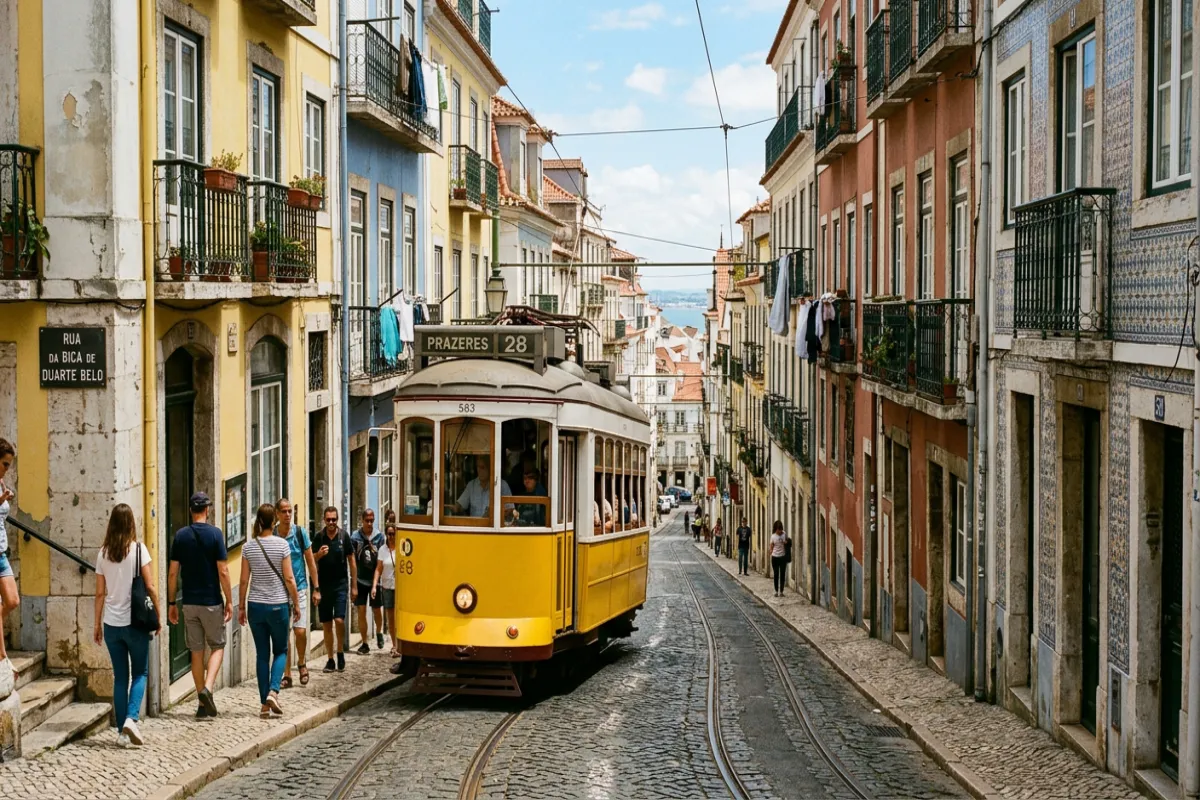
Alfama is the oldest neighborhood, full of narrow cobblestone streets, Fado music venues, and the iconic Tram 28 route. It is atmospheric but hilly. Bairro Alto is the nightlife district with plenty of restaurants and bars, best for travelers who want to be in the middle of the action. Baixa is the flat, central grid between the river and the hills, with easy walking access to major sights and metro connections. For first-time visitors, Baixa offers the best balance of location and convenience.
Porto
Ribeira is the UNESCO-listed riverside district with colorful buildings cascading down to the Douro River. It is the most scenic area to stay but can be touristy. Cedofeita and Bolhao offer a more local feel with good restaurants, shops, and easy access to the rest of the city.
Algarve
Lagos is a favorite for its dramatic cliffs, sea caves, and lively old town. Albufeira is more developed and resort-oriented. Tavira offers a quieter, more authentic Portuguese experience. For families, Vilamoura has calm beaches and well-organized infrastructure.
Sintra
Most visitors do Sintra as a day trip from Lisbon (30 minutes by train), but staying overnight lets you explore the palaces in the morning before the tour buses arrive. If you are based in Lisbon, the train from Rossio station runs frequently throughout the day.
Must-See Destinations and Experiences
Lisbon
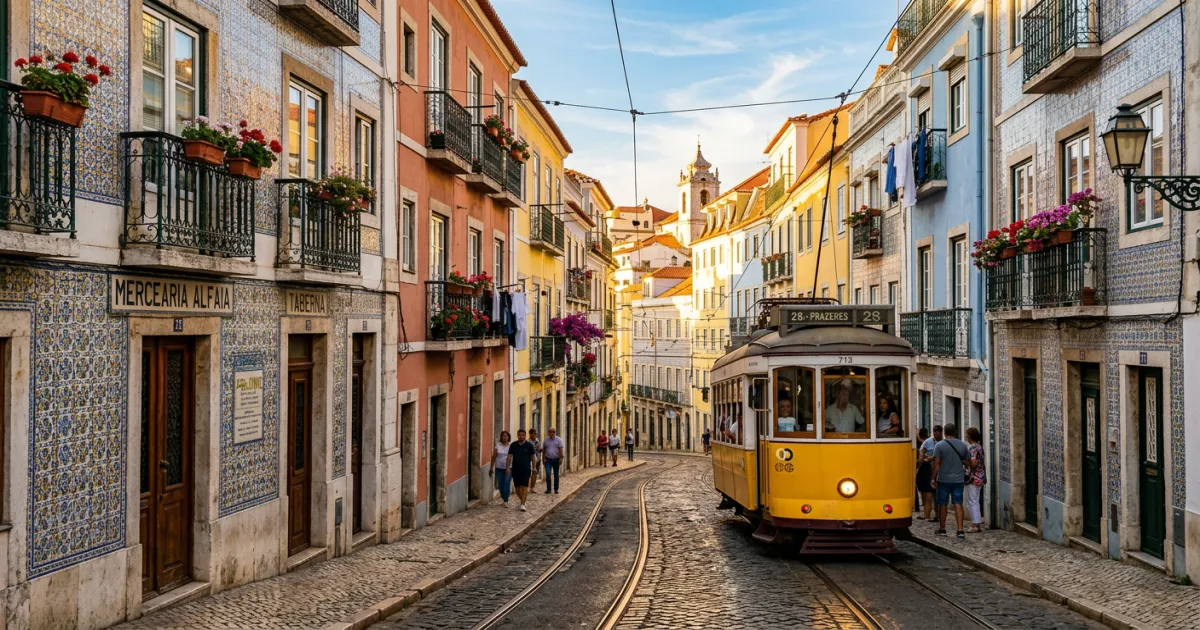
Ride the famous Tram 28 through the historic neighborhoods (go early morning to avoid crowds and watch for pickpockets). Explore the Belem district to see the Tower of Belem and Jeronimos Monastery, both UNESCO World Heritage Sites. Wander the Alfama district and catch a live Fado performance in one of the traditional houses. Take in the views from Miradouro da Senhora do Monte or Miradouro da Graca.
Porto
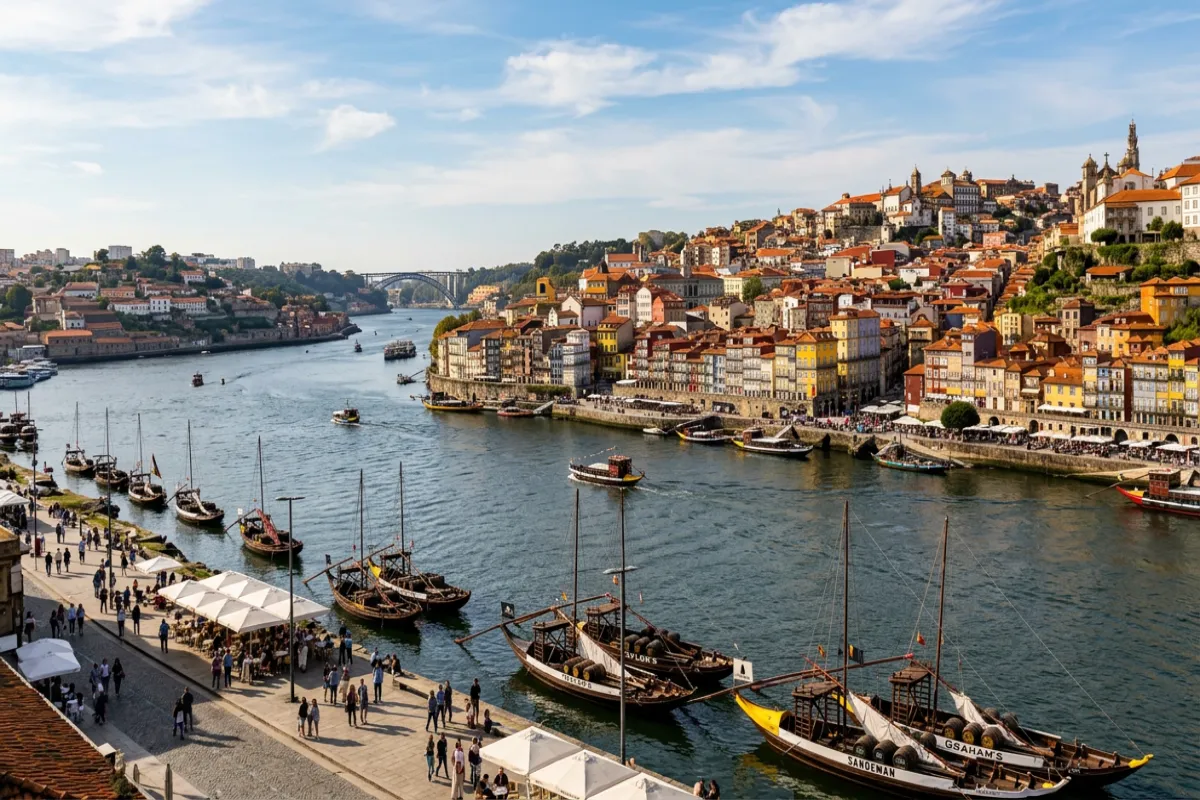
Walk along the Ribeira waterfront and cross the Dom Luis I Bridge for views of both sides of the Douro. Visit the port wine cellars in Vila Nova de Gaia, where you can taste and tour at producers like Taylor’s, Graham’s, and Sandeman. Step inside Livraria Lello, one of the most beautiful bookstores in the world (buy your ticket online in advance to skip the line). The Sao Bento train station is worth a visit just for its 20,000 hand-painted azulejo tiles depicting Portuguese history.
Sintra
This fairy-tale town in the hills outside Lisbon holds some of Portugal’s most striking architecture. Pena Palace sits at the top of the hill with its colorful Romanticist design and panoramic views. The Quinta da Regaleira estate features an initiatic well that spirals underground. Moorish Castle ruins offer incredible views along the hilltops. Buy tickets online in advance, especially during summer.
The Algarve
The southern coast stretches for 150 kilometers of dramatic cliffs, golden beaches, and hidden sea caves. Take a boat tour to the Benagil Cave, one of the most photographed spots in Portugal. Hike the Seven Hanging Valleys Trail near Lagoa for clifftop views. Explore the old town in Lagos and swim at Praia Dona Ana. The Algarve also has excellent golf courses and seafood restaurants.
Douro Valley
The terraced vineyards of the Douro Valley are a UNESCO World Heritage landscape and the birthplace of port wine. Take a river cruise from Porto, drive through the winding valley roads, or ride the historic Douro Line train. Many quintas (wine estates) offer tastings and overnight stays. Harvest season in September and October is particularly beautiful.
The Azores
This Atlantic archipelago 1,500 kilometers west of mainland Portugal is a paradise for nature lovers. Hike around volcanic crater lakes on Sao Miguel, the largest island. Whale watching season runs from April to October. The hot springs at Furnas let you soak in naturally heated mineral pools. Flights from Lisbon take about 2.5 hours.
Madeira
Madeira island sits 1,000 kilometers southwest of Lisbon and is known for its levada walking trails, subtropical gardens, and year-round mild climate. The capital Funchal has a lively market hall, cable car rides, and excellent seafood. The island produces its own fortified Madeira wine. Direct flights from Lisbon take about 1 hour and 40 minutes.
Coimbra
Home to one of the oldest universities in Europe (founded in 1290), Coimbra sits between Lisbon and Porto. The Joanina Library at the university is one of the most stunning baroque libraries in the world. The city has its own style of Fado music, distinct from the Lisbon tradition. It makes an easy stop on the train route between Lisbon and Porto.
Portuguese Food and Drink You Need to Try
Portuguese cuisine is hearty, seafood-heavy, and deeply tied to regional traditions. Here is what to eat and drink during your trip:
- Pasteis de nata: Flaky custard tarts dusted with cinnamon and powdered sugar. The most famous version comes from Pasteis de Belem in Lisbon, which has been baking them since 1837. You will find them at every bakery in the country.
- Bacalhau: Dried and salted codfish is the national dish, and the Portuguese claim to have 365 ways to prepare it, one for each day of the year. Try bacalhau a bras (shredded cod with eggs and potatoes) or bacalhau com natas (cod with cream).
- Francesinha: Porto’s signature sandwich is a meat-loaded creation covered in melted cheese and a spicy tomato-beer sauce, served with french fries. It is rich, messy, and absolutely worth trying at least once.
- Sardines: Grilled sardines (sardinhas assadas) are a summer staple, especially during the June festivals in Lisbon. They are served whole on bread with a simple salad.
- Port wine: The fortified wine produced in the Douro Valley comes in several styles, from ruby and tawny to vintage and vintage ports. Visit the cellars in Vila Nova de Gaia across the river from Porto for tastings.
- Vinho verde: This young, slightly sparkling white wine comes from the Minho region in northern Portugal. It is light, refreshing, and pairs perfectly with seafood. Despite the name (which means “green wine”), most versions are white.
Tipping: Tipping is not expected in Portugal the way it is in the United States. If you receive good service at a restaurant, rounding up the bill or leaving 5 to 10 percent is a generous gesture. At cafes, leaving small change is sufficient. Be aware that bread, butter, and olives placed on your table are not complimentary. If you do not want them, politely decline when they are brought out.

Practical Tips for Visiting Portugal
- Portuguese, not Spanish: Portugal and Spain share a border, but they are distinct countries with different languages and cultures. Never assume a Portuguese person speaks Spanish, and avoid referring to Portuguese as a dialect of Spanish. Many Portuguese people speak English, especially in tourist areas.
- Siesta hours: Some smaller shops and restaurants close in the early afternoon (roughly 1 PM to 3 PM), particularly outside major cities. Plan your shopping accordingly. Dinner is typically eaten late, around 8 PM or later.
- Wear good shoes: Lisbon is built on seven hills, and both Lisbon and Porto have steep streets paved with traditional cobblestones (calcada portuguesa). These can be slippery when wet. Bring comfortable, supportive walking shoes with good grip.
- Safety: Portugal is one of the safest countries in the world, consistently ranking in the top five on the Global Peace Index. Violent crime is rare. Petty theft and pickpocketing can occur in tourist-heavy areas like Tram 28 in Lisbon and busy train stations. Use common sense with your belongings.
- Drug policy: Portugal decriminalized the personal use of all drugs in 2001, focusing on treatment rather than punishment. This does not mean drugs are legal. Possession of small amounts for personal use is treated as a public health issue rather than a criminal offense.
- Connectivity: Free Wi-Fi is widely available in cafes, restaurants, and hotels. If you need mobile data, buying a local SIM card or using an eSIM is easy and affordable. Major carriers include MEO, Vodafone, and NOS.
- Electricity: Portugal uses Type F (Schuko) plugs with 230V/50Hz. US travelers will need a plug adapter, and possibly a voltage converter for older appliances.
For more tips on organizing your trip from start to finish, read our complete trip planning guide.
Sample 10-Day Portugal Itinerary
Days 1 to 3: Lisbon
Start in the capital. Spend your first day exploring the Alfama district, riding Tram 28, and visiting the Sao Jorge Castle for views over the city. On day two, head to Belem for the Tower of Belem, Jeronimos Monastery, and a pastel de nata at the original Pasteis de Belem bakery. Day three is for the Bairro Alto and Chiado neighborhoods, the Mercado da Ribeira (Time Out Market), and a Fado show in the evening.
Day 4: Sintra Day Trip
Take the early morning train from Rossio station to Sintra (30 minutes). Visit Pena Palace first (it opens at 9:30 AM), then walk down to Quinta da Regaleira. If you have time, stop at the Moorish Castle or the National Palace in the town center before returning to Lisbon.
Days 5 to 7: Porto
Take the Alfa Pendular train from Lisbon to Porto (2 hours 40 minutes). Arrive at Sao Bento station and admire the azulejo tiles. Walk the Ribeira waterfront, cross the Dom Luis I Bridge, and spend an afternoon tasting port wine in Vila Nova de Gaia. Visit Livraria Lello, the Clerigos Tower, and the Bolhao Market. Enjoy a francesinha at one of Porto’s traditional restaurants.
Day 8: Douro Valley Day Trip
Take a day trip from Porto to the Douro Valley. You can drive (about 90 minutes), join a guided tour, or take the scenic Douro Line train from Porto to Pinhao or Pocinho. Visit a quinta for wine tasting and lunch overlooking the terraced vineyards, then return to Porto in the evening.
Days 9 to 10: Algarve
Fly from Porto to Faro (about 1 hour) or take the train from Lisbon if you prefer. Base yourself in Lagos for easy access to the best beaches and the Benagil Cave boat tours. Spend your final day relaxing on the beach, exploring the old town, and enjoying fresh grilled fish at a seaside restaurant before heading home.
Need help building a day-by-day plan? Try our AI travel planner or download our vacation itinerary template to organize your schedule.
Planning Tools and Resources
Getting a trip to Portugal organized does not have to be complicated. Here are some resources to help:
- How to Plan a Trip: Complete Guide for step-by-step trip planning from scratch
- Yopki AI Travel Planner to generate a custom itinerary in minutes
- Travel Budget Template to track your spending
- Vacation Itinerary Template to organize your daily plans
- How to Plan a Trip to Spain if you are combining Portugal with its neighbor
- How to Plan a Trip to Europe for broader European trip planning
Frequently Asked Questions
Do I need a visa to visit Portugal?
US, UK, Canadian, and Australian citizens do not need a visa for stays of up to 90 days. Portugal is part of the Schengen Area, so your 90-day limit applies to the entire Schengen zone, not just Portugal. Make sure your passport is valid for at least three months beyond your departure date.
Is Portugal expensive?
Portugal is one of the most affordable countries in Western Europe. A mid-range traveler can expect to spend EUR 130 to 200 per day including accommodation, meals, and transportation. Budget travelers staying in hostels and eating at local spots can manage on EUR 60 to 80 per day.
Is Portugal safe for tourists?
Yes. Portugal consistently ranks as one of the safest countries in the world. Violent crime against tourists is extremely rare. The main concern is petty pickpocketing in crowded tourist areas, which is preventable with basic awareness.
What is the best city to fly into?
Lisbon (LIS) has the most international connections and is the best starting point for most first-time visitors. Porto (OPO) is a good option if you plan to focus on northern Portugal and the Douro Valley. Faro (FAO) is the choice if you are heading straight to the Algarve beaches.
Can I get by with English in Portugal?
In Lisbon, Porto, the Algarve, and other tourist areas, English is widely spoken, especially by younger people and those working in hospitality. In smaller towns and rural areas, you may encounter less English. Learning a few basic Portuguese phrases is always appreciated.
How many days do I need in Portugal?
Seven to 10 days is ideal for a first trip, allowing you to visit Lisbon, Porto, and one additional region. Five days is enough for a focused trip to one or two cities. Two weeks lets you add the islands (Azores or Madeira) or spend more time in the Algarve.
When should I book my trip?
Book flights 2 to 4 months in advance for the best prices. For summer travel (July and August), book accommodation 3 to 6 months ahead, especially in the Algarve. Shoulder season (April to June, September to October) offers more flexibility, but popular hotels in Lisbon and Porto still fill up.