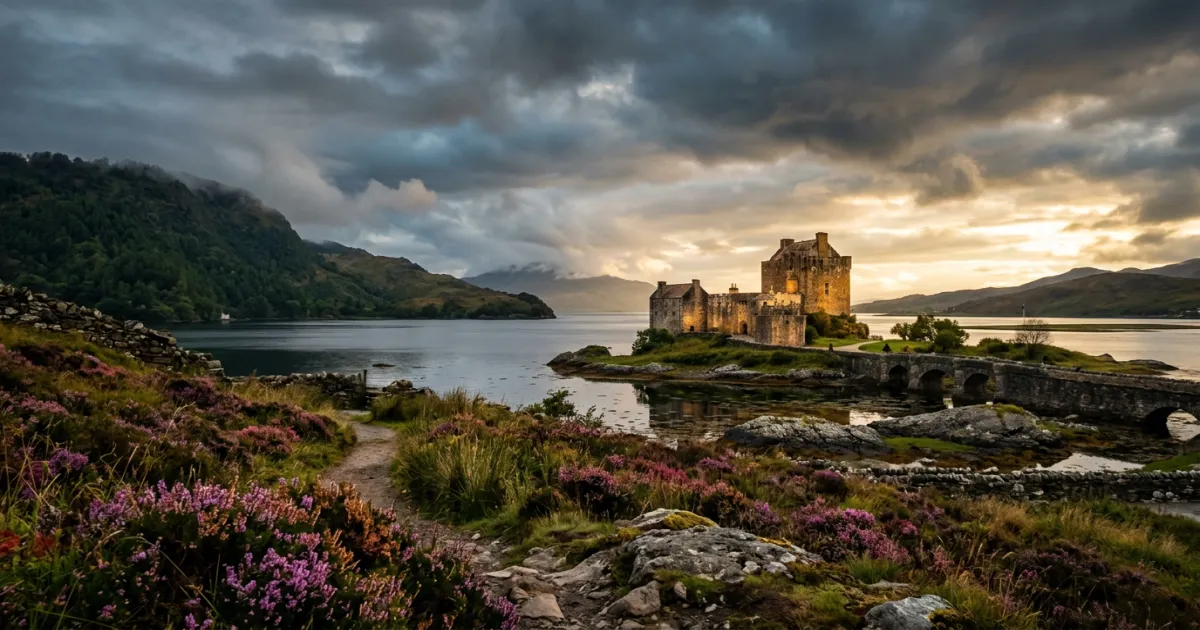
Scotland is one of Europe’s most breathtaking destinations, offering ancient castles, misty Highlands, world-class whisky, and some of the most dramatic coastline you will find anywhere. Whether you are drawn by Edinburgh’s history, the wild beauty of the Isle of Skye, or the legendary North Coast 500 road trip, this guide covers everything you need to plan an unforgettable trip to Scotland in 2026.
Already in the early stages of trip planning? Our complete trip planning guide walks you through the fundamentals, and our AI travel planner can help you build a custom Scotland itinerary in minutes.
Scotland Quick Facts
- Visa: US, Canadian, Australian, and EU citizens do not need a visa to visit the UK for stays under 90 days (6 months for US/Canadian passport holders). You will need a valid passport.
- Currency: British Pound Sterling (GBP), not the Euro. Scotland prints its own banknotes through three banks (Bank of Scotland, Royal Bank of Scotland, Clydesdale Bank), which are legal currency throughout the UK, though some shops in England may hesitate to accept them.
- Languages: English is spoken everywhere. Scottish Gaelic is the second official language, and you will see bilingual signs in the Highlands and Islands.
- Time Zone: GMT (Greenwich Mean Time) in winter, BST (British Summer Time, GMT+1) from late March to late October.
- Electricity: Type G plugs (three rectangular pins), 230V. You will need an adapter if coming from North America or continental Europe.
- Emergency Number: 999 (or 112)
Best Time to Visit Scotland
Scotland’s weather is famously unpredictable, but each season has something to offer.
May to September is the warmest period, with average highs of 14 to 19 degrees Celsius (57 to 66 Fahrenheit). June offers the longest daylight hours, with nearly 18 hours of light in the north. This is peak tourist season, so expect higher prices and busier attractions.
Shoulder months (April, May, September, October) offer a sweet spot of decent weather, fewer crowds, and lower accommodation prices. September and October bring stunning autumn colors across the Highlands.
Winter (November to March) is cold and dark, with limited daylight (as few as 6 to 7 hours in December). However, this is the time for cozy pubs, fewer tourists, lower prices, and the chance to see the Northern Lights from northern Scotland.
Highland midges are tiny biting insects that swarm in the Highlands and western coast from late May through August, especially in still, damp conditions. They will not ruin your trip, but bring midge repellent (Smidge is the most popular local brand) and a head net if you plan to hike in remote areas during summer.
How Long to Spend in Scotland
Plan for 7 to 10 days to see the major highlights without rushing. This gives you enough time for Edinburgh, the Highlands, and either the Isle of Skye or the islands.
If time is limited, 5 days is the minimum for a meaningful trip. You could spend 2 days in Edinburgh and 3 days driving through the Highlands, but you will have to be selective about stops.
If you have two weeks or more, you can comfortably add the Outer Hebrides, Orkney Islands, the North Coast 500, and additional time in Glasgow.
Scotland Trip Budget
Scotland is generally a bit cheaper than London, but it is still a moderately expensive destination by European standards. Here are realistic daily budget ranges per person:
- Budget (hostels, pub meals, public transport): 50 to 75 GBP / $65 to $95 USD per day
- Mid-range (B&Bs, restaurants, rental car): 120 to 175 GBP / $155 to $230 USD per day
- Comfortable (boutique hotels, fine dining, tours): 250 to 400+ GBP / $325 to $520+ USD per day
Money-saving tips: Scotland’s tap water is excellent and free, so bring a reusable water bottle. Pub meals are filling and affordable (8 to 15 GBP for a main course). Many of Scotland’s best attractions, including hiking trails, beaches, and national parks, are completely free. Use our travel budget template to track your spending.
Getting to Scotland
By air: Edinburgh Airport (EDI) is Scotland’s busiest international airport with direct flights from major US, Canadian, and European cities. Glasgow Airport (GLA) is another strong option with transatlantic routes. If you are flying from within Europe, budget airlines like Ryanair and easyJet serve both cities. For travelers connecting through London, check if your Edinburgh layover gives you enough time to explore the city.
By train: LNER trains connect London King’s Cross to Edinburgh Waverley in about 4.5 hours. The journey passes through beautiful English and Scottish countryside, and booking in advance can get you tickets from 30 GBP.
By car: If you are already in England, driving to Scotland via the M6/A74(M) is straightforward. The England-Scotland border crossing is seamless with no checkpoints.
Getting Around Scotland
Rental car: This is by far the best way to explore Scotland beyond the cities. You will drive on the left side of the road. If you are not used to this, book an automatic transmission vehicle to make it easier. Fuel up whenever you see a petrol station in rural areas, as they can be 30 miles or more apart in the Highlands. Watch for single-track roads with passing places, which are common in the Highlands and islands.
Trains: ScotRail operates trains across Scotland, connecting Edinburgh, Glasgow, Stirling, Inverness, Aberdeen, and many smaller towns. The ScotRail app makes booking easy and paperless. Consider a Spirit of Scotland pass for unlimited travel over 4 or 8 days.
Buses: CityLink coaches connect major towns affordably. Local buses serve smaller communities but can be infrequent in rural areas.
Ferries: CalMac Ferries are the lifeline to the western islands (Skye, Mull, Islay, the Outer Hebrides). NorthLink Ferries serve Orkney and Shetland. Book ferry crossings in advance during summer, especially if taking a car.
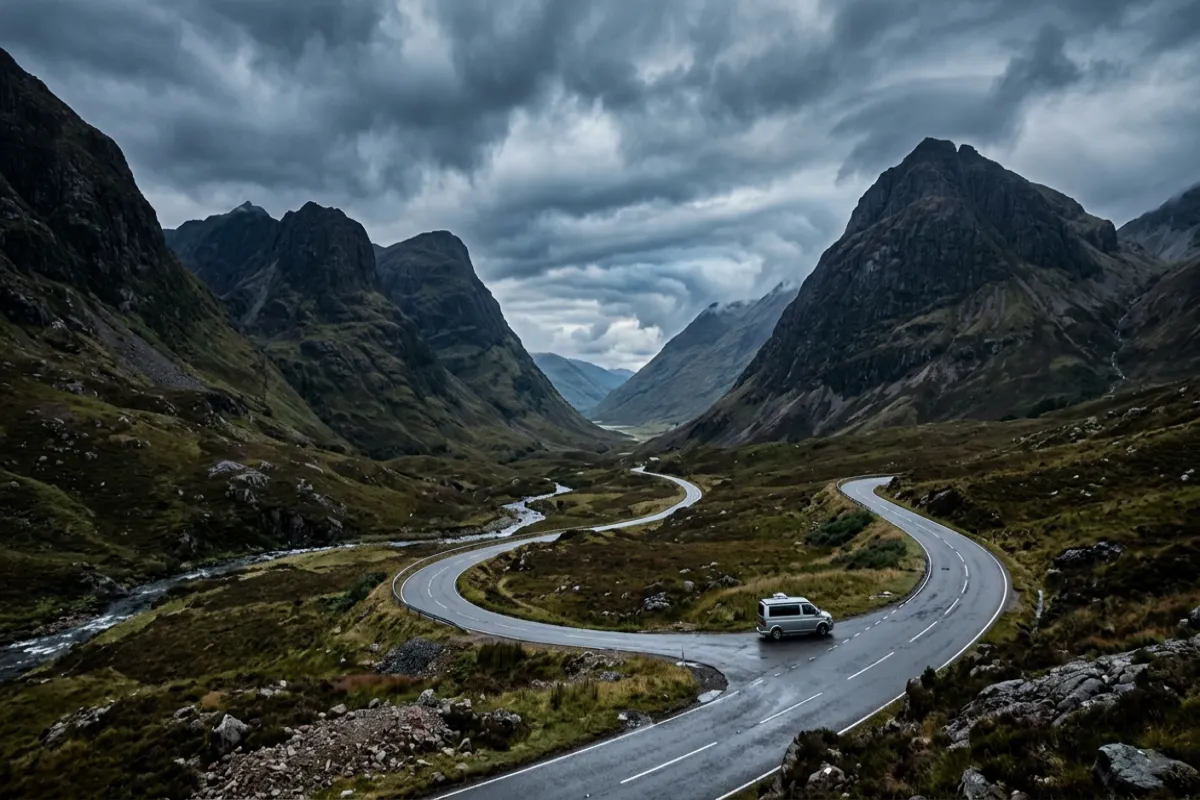
The North Coast 500: Scotland’s answer to Route 66 is a 516-mile loop around the northern Highlands, starting and ending in Inverness. Plan at least 5 days for the drive (7 is better). May and September offer the best balance of good weather and quieter roads. Keep your vehicle on the smaller side, as some sections have narrow roads with tight passing places. Our road trip itinerary template is perfect for planning your NC500 route.
Where to Stay in Scotland
Edinburgh: The Old Town puts you within walking distance of Edinburgh Castle, the Royal Mile, and most major sights. The New Town offers a more elegant Georgian setting with upscale hotels and restaurants. Budget travelers should look at hostels near Grassmarket.
Glasgow: The West End is the most charming neighborhood, with great restaurants, pubs, and proximity to the University of Glasgow and Kelvingrove Art Gallery. The Merchant City area is another solid choice for dining and nightlife.
Highlands: B&Bs (bed and breakfasts) are the classic Highland accommodation, offering warm hospitality and full Scottish breakfasts. Highland lodges and self-catering cottages work well for families and groups. For a splurge, several Scottish castles have been converted into luxury hotels.
Islands: Accommodation on Skye and the smaller islands is limited, so book well in advance for summer visits. Options range from simple guest houses to boutique hotels.
Budget options: Scotland has an excellent network of hostels, including SYHA (Scottish Youth Hostels Association) properties in stunning locations like Glen Nevis and Loch Lomond. Wild camping is legal in Scotland under the right to roam, but follow the Scottish Outdoor Access Code.
Must-See Places in Scotland
Edinburgh
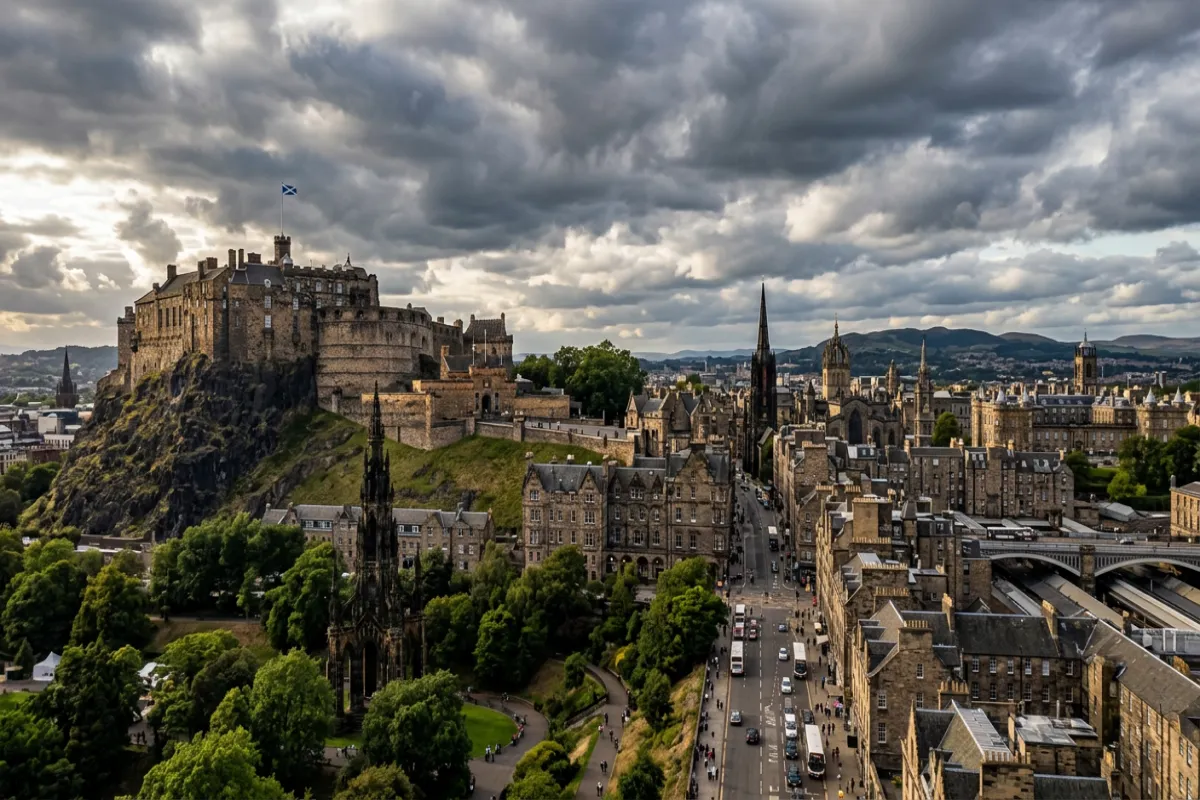
Edinburgh Castle sits atop Castle Rock and dominates the city skyline. Book tickets online in advance to skip the queue. The Royal Mile stretches from the castle down to the Palace of Holyroodhouse, lined with shops, pubs, and historic closes (alleyways). Arthur’s Seat, the ancient volcano in Holyrood Park, offers a rewarding 45-minute hike with panoramic city views.
The Highlands and Glen Coe
Glen Coe is arguably the most dramatic valley in Scotland, with towering peaks and a haunting history (it was the site of the 1692 Massacre of Glencoe). Stop at the Three Sisters viewpoint and, if time allows, hike the Lost Valley trail.
Isle of Skye
Skye is Scotland’s most famous island and for good reason. The Old Man of Storr, the Fairy Pools, and the Quiraing are all iconic landscapes. The island is connected to the mainland by a bridge (no ferry needed for cars), but the single-track roads get very busy in summer. Allow at least 2 full days.
Loch Ness and Inverness
Loch Ness is worth a visit for the scenery alone, monster or not. Urquhart Castle on the loch shore is the classic photo spot. Inverness, the capital of the Highlands, makes a good base for exploring the region and is the starting point for the NC500.
Stirling
Stirling Castle rivals Edinburgh Castle in grandeur and historical importance. It was the childhood home of Mary, Queen of Scots. The nearby Wallace Monument commemorates William Wallace and offers sweeping views of the Forth Valley.
St Andrews
Home of golf, St Andrews is a beautiful university town on the Fife coast. Even non-golfers will enjoy the medieval ruins, the long West Sands beach, and the charm of this compact seaside town.
Whisky Distilleries
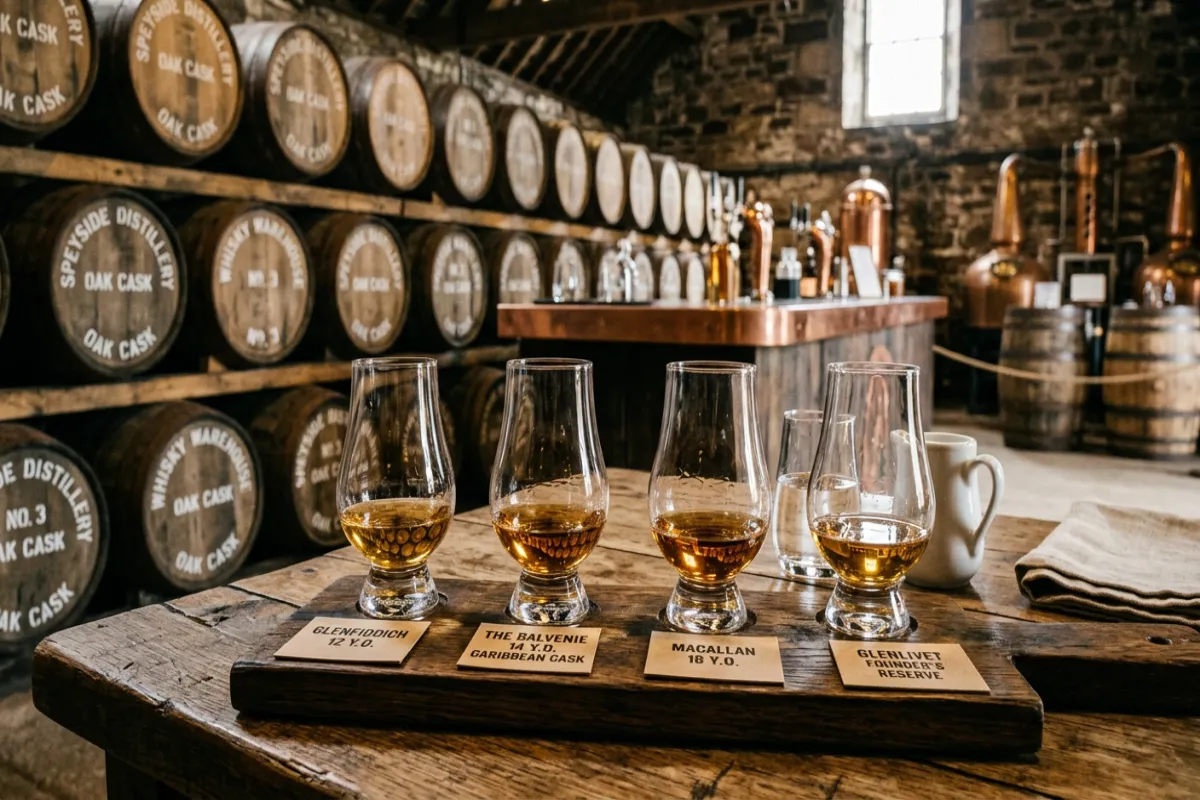
The Speyside region in northeast Scotland is the heart of Scotch whisky country, home to more than half of Scotland’s distilleries. The Malt Whisky Trail connects seven distilleries and a cooperage. Popular tours include Glenfiddich, Macallan, and Glenlivet. Distillery tours on Islay (pronounced “eye-luh”) are excellent for peated whisky fans.
The North Coast 500
This 516-mile coastal route around the northern tip of Scotland passes dramatic sea cliffs, white sand beaches, ancient ruins, and remote fishing villages. Highlights include Dunrobin Castle, Smoo Cave, the beaches of Durness, and the dramatic scenery around Assynt and Torridon.
Scottish Food and Drink
Haggis: Scotland’s national dish is made from sheep’s heart, liver, and lungs mixed with oatmeal, onions, and spices, cooked in a casing. It sounds intimidating but tastes like a rich, savory, slightly peppery sausage. Try it with “neeps and tatties” (turnip and potatoes). Vegetarian haggis is widely available and surprisingly good.
Scotch whisky: Scotland produces five regional styles of single malt whisky (Highland, Lowland, Speyside, Islay, and Campbeltown), plus blended whiskies. Distillery tours typically cost 10 to 20 GBP and include tastings.
Scottish salmon: Scotland is famous for its salmon, both wild and farmed. You will find it smoked, grilled, and in fish pies throughout the country.
Pub food: Scottish pubs serve hearty, affordable meals. Look for fish and chips, cullen skink (a creamy smoked haddock soup), steak pie, and sticky toffee pudding for dessert.
Afternoon tea: Available at many hotels and tea rooms across Scotland, often featuring scones with clotted cream and jam, finger sandwiches, and pastries.
Tipping: Tipping culture in Scotland is similar to England. Leaving 10% at restaurants for good service is appreciated but not mandatory. You do not need to tip at pubs when ordering at the bar. Rounding up taxi fares is common but not expected.
Practical Tips for Visiting Scotland
- Pack layers: Scottish weather can change multiple times in a single day. Bring a waterproof jacket, layers you can add or remove, and sturdy walking shoes. Even in summer, evenings can be cool.
- Midges in the Highlands: These tiny biting insects are most active from late May through August, especially at dawn and dusk in sheltered, damp areas. Bring repellent (the brand Smidge works well) and consider a head net for serious hiking.
- Right to roam: Scotland has some of the most progressive access laws in the world. The Land Reform (Scotland) Act 2003 gives everyone the right to walk, cycle, and camp on most land and inland water, as long as you act responsibly and follow the Scottish Outdoor Access Code.
- Scottish banknotes: Scottish pounds are worth exactly the same as Bank of England notes and are accepted throughout Scotland. However, some shops and businesses in England may question them or refuse them. Exchange any remaining Scottish notes before leaving Scotland, or spend them at chain stores that accept them without issue.
- Mobile signal: Coverage is good in cities and towns but can be patchy or nonexistent in remote Highland and island areas. Download offline maps before heading into rural areas.
- Driving tips: Drive on the left. Automatic cars are available but cost more to rent. Be cautious on single-track roads and always use passing places. Scotland has a stricter drink-drive limit than England (50mg per 100ml of blood vs. 80mg).
- Daylight hours: In midsummer (June), the far north gets almost 19 hours of daylight, giving you long days for exploring. In winter (December), you may only get 6 to 7 hours of daylight.
Sample 7-Day Scotland Itinerary
This road trip itinerary covers Scotland’s greatest hits. You can adjust the pace depending on your interests.
Days 1 and 2: Edinburgh
Start with Edinburgh Castle and walk down the Royal Mile. Visit the National Museum of Scotland (free admission). Hike Arthur’s Seat for sunset views. On day two, explore the New Town, visit the Scottish National Gallery, and stroll through the Royal Botanic Garden. End the evening with a whisky tasting at one of the city’s many whisky bars.
Days 3 and 4: Drive to the Highlands
Pick up your rental car and drive north via Stirling Castle (about 1 hour from Edinburgh). Continue to the Trossachs and Loch Lomond, then push on through Glen Coe. Spend the night near Fort William or Glen Coe village. On day four, visit the Glenfinnan Viaduct (famous from the Harry Potter films), then drive to Loch Ness and Urquhart Castle. Overnight in or near Inverness.
Days 5 and 6: Isle of Skye
Drive from Inverness to Skye via the scenic route through Eilean Donan Castle (one of Scotland’s most photographed castles). On Skye, visit the Old Man of Storr, the Fairy Pools, and the Quiraing. Portree, the island’s main town, has good restaurants and colorful harbor-front buildings. Take your time and enjoy the dramatic landscapes.
Day 7: Return via Glasgow
Drive south from Skye through the Highlands to Glasgow (about 5 hours with stops). Spend the afternoon exploring Glasgow’s West End, including the University of Glasgow, Kelvingrove Art Gallery (free), and the Ashton Lane restaurant scene. Alternatively, if your flight departs from Edinburgh, head east instead (about 4.5 hours from Skye).
Planning Tools
Make your Scotland trip planning easier with these free resources:
- AI Travel Planner to generate a personalized Scotland itinerary based on your dates, interests, and budget
- Road Trip Itinerary Template for planning your Highlands or NC500 driving route
- Travel Budget Template to estimate and track your Scotland trip costs
- How to Plan a Trip (Step-by-Step Guide) for the complete trip planning framework
More European Destination Guides
Planning a bigger European adventure? Check out our guides to Ireland (Scotland’s Celtic neighbor, easily combined into one trip) and our comprehensive Europe trip planning guide.
Frequently Asked Questions
Do I need a visa to visit Scotland?
US, Canadian, Australian, and EU citizens do not need a visa for visits under 90 days (6 months for US/Canadian passport holders). Scotland is part of the United Kingdom, so UK visa rules apply.
Is Scotland expensive to visit?
Scotland is moderately priced by Western European standards and generally cheaper than London. Budget travelers can manage on 50 to 75 GBP per day, while mid-range travelers should plan for 120 to 175 GBP per day.
Do I need a car in Scotland?
Not for Edinburgh and Glasgow, where public transport is excellent. But a rental car is strongly recommended for the Highlands, Isle of Skye, and especially the NC500. Trains connect the major cities but do not reach many scenic areas.
What side of the road do they drive on in Scotland?
The left side. If you are used to driving on the right, book an automatic transmission car and take extra care at roundabouts and when turning.
When is the best time to visit Scotland?
May through September for the warmest weather and longest days. June offers up to 18 hours of daylight. Shoulder months (April, May, September, October) are great for fewer crowds and lower prices.
What should I pack for Scotland?
Layers, a waterproof jacket, comfortable walking shoes, and midge repellent if visiting the Highlands in summer. The weather can shift from sunshine to rain several times in one day, any time of year.
Can I combine Scotland with Ireland?
Absolutely. Direct flights connect Edinburgh and Glasgow to Dublin and Belfast in about 1 hour. Many travelers combine a week in Scotland with a week in Ireland. See our Ireland trip planning guide for details.