| Seattle Quick Facts | |
|---|---|
| State | Washington, USA |
| Currency | US Dollar (USD) |
| Language | English |
| Time Zone | Pacific Time (PT) |
| Daily Budget | $100 to $400+ per person |
| Best Time | June to September |
| Getting There | Seattle-Tacoma International Airport (SEA) |
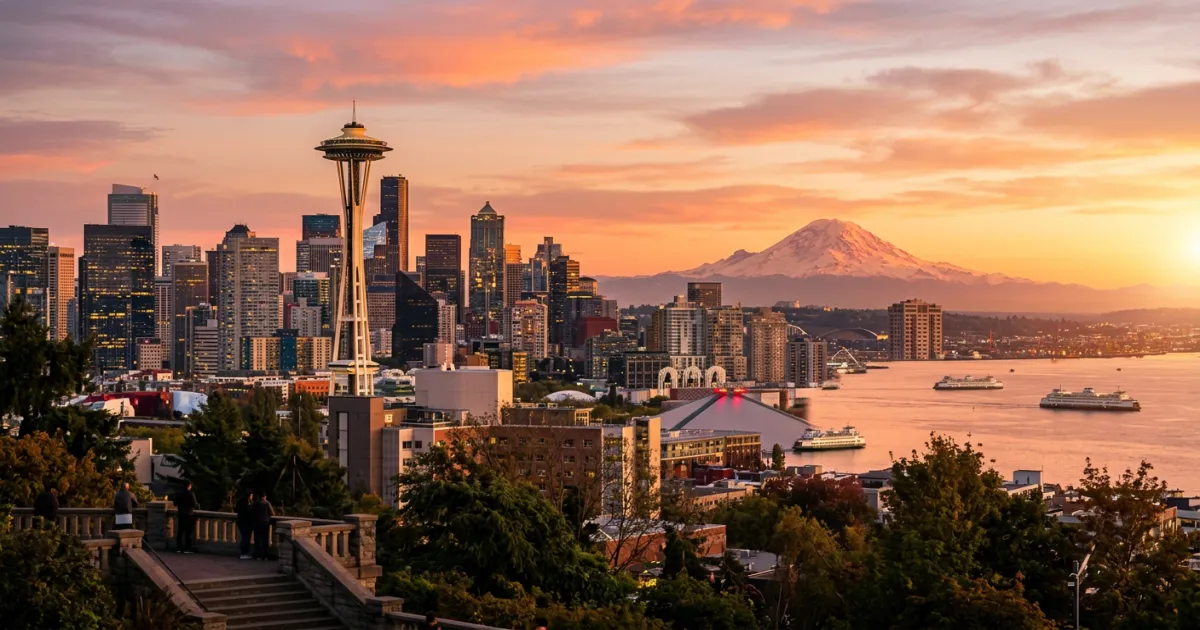
Seattle sits between Puget Sound and the Cascade Mountains, with views of Mount Rainier on clear days that stop you in your tracks. The city is famous for coffee (Starbucks started here, but the real coffee scene is the independent shops), Pike Place Market, and a tech-fueled food scene that punches well above its weight. Seattle is also green, progressive, and surrounded by nature: Olympic National Park, Mount Rainier, and the San Juan Islands are all easy day trips. The rain reputation is somewhat overblown. Seattle gets less annual rainfall than New York or Atlanta; it just drizzles more consistently.
For a broader framework for organizing any trip, our how to plan a trip guide covers the fundamentals.
Best Time to Visit Seattle
June through September is the best time to visit. Seattle’s summers are spectacular: warm (70 to 80 F), dry, and with long daylight hours. Mount Rainier is most visible in summer. The rest of the year is gray and drizzly (45 to 55 F from October through May). If you visit in summer, you will understand why Seattleites endure the rain: the summers are worth it.
Getting to Seattle
Seattle-Tacoma International Airport (SEA) is a major hub with direct flights from all US cities and many international destinations. Light rail connects the airport to downtown in about 40 minutes ($3). Within Seattle, the light rail, buses, and the Seattle Streetcar cover most tourist areas. A car is useful for day trips but not needed in the city.
Top Things to Do in Seattle
- Pike Place Market: The oldest continuously operating farmers market in the US (since 1907). Watch the fish throwers, browse local produce, flowers, and crafts, and eat your way through. The original Starbucks is here (expect a line). Allow 2 to 3 hours.
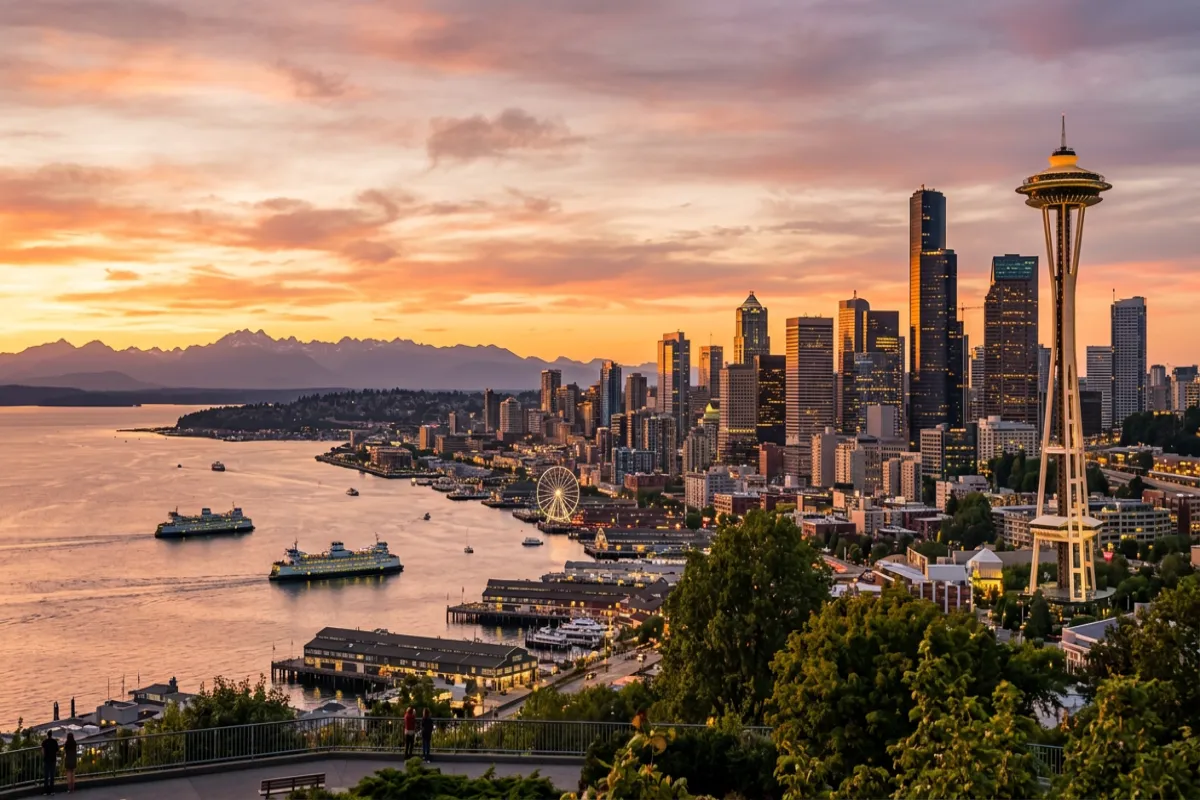
- Space Needle: The iconic 605-foot tower from the 1962 World’s Fair. The observation deck has 360-degree views of the city, mountains, and water ($35 to $40). Best at sunset on a clear day.
- Chihuly Garden and Glass: A stunning exhibition of Dale Chihuly’s glass sculptures next to the Space Needle. The Glasshouse with its 100-foot ceiling of red, orange, and yellow glass is extraordinary. $32 per adult.
- Capitol Hill: Seattle’s most vibrant neighborhood with independent restaurants, bars, coffee shops, vintage stores, and nightlife. The center of Seattle’s LGBTQ+ community and music scene (Sub Pop Records started here).
- Museum of Pop Culture (MoPOP): A Frank Gehry-designed museum celebrating music, sci-fi, and pop culture. Exhibits on Nirvana, Jimi Hendrix, indie games, and horror films. $30 per adult.
- Coffee Culture: Seattle’s independent coffee scene goes far beyond Starbucks. Espresso Vivace, Elm Coffee Roasters, and Victrola Coffee are local favorites. The coffee culture here is the real deal.
Where to Stay
Downtown / Pike Place is the most central area ($150 to $350). Capitol Hill has more character and better nightlife ($120 to $280). Belltown is walkable to Pike Place and the waterfront ($130 to $300). South Lake Union is the tech hub with newer hotels ($120 to $250). Ballard has a neighborhood feel with breweries and restaurants ($100 to $200). Seattle hotels are expensive; book ahead for summer.
Sample 3-Day Seattle Itinerary
- Day 1 – Pike Place and Downtown: Morning at Pike Place Market (arrive by 9 AM for fewer crowds). Walk the waterfront to the Seattle Great Wheel and the Olympic Sculpture Park. Afternoon at the Space Needle and Chihuly Garden and Glass. Evening dinner in Belltown.
- Day 2 – Neighborhoods: Morning coffee in Capitol Hill and explore the neighborhood. Afternoon at MoPOP and the Seattle Center. Evening in Ballard for brewery hopping and dinner.
- Day 3 – Water and Nature: Morning ferry to Bainbridge Island (35 minutes, $9 round trip walk-on) for a small-town waterfront walk. Or drive to Snoqualmie Falls (30 minutes east, free). Afternoon at the Seattle Asian Art Museum in Volunteer Park or exploring Fremont (the self-proclaimed Center of the Universe).
Budget Estimate
Budget travelers can manage on $100 to $160 per day with a budget hotel, Pike Place Market food (excellent and affordable), and free activities (walking neighborhoods, waterfront, parks). Mid-range travelers should plan for $200 to $350 covering a comfortable hotel, restaurant meals ($15 to $35), Space Needle ($37), Chihuly ($32), and transit. Coffee is $4 to $6 per drink at the good shops. Happy hour food specials are a Seattle institution and a great way to eat well for less.
Planning Tools
Ready to start building your Seattle trip? Our free AI trip planner can generate a custom itinerary based on your dates, budget, and interests.
Frequently Asked Questions
Does it really rain all the time in Seattle?
No. Seattle gets about 37 inches of rain per year, less than New York, Atlanta, or Houston. However, it drizzles frequently from October through May, creating consistently gray, overcast days. Summers (June through September) are reliably dry and sunny. Seattleites rarely use umbrellas; a light rain jacket is the local move.
How many days do you need in Seattle?
Three days covers Pike Place, the Space Needle, a couple of neighborhoods, and a day trip. Four to five days lets you add the Museum of Flight, the Ballard Locks, and a longer day trip to Mount Rainier or the San Juan Islands.
Is Seattle walkable?
Downtown, Pike Place, Capitol Hill, and the waterfront are all walkable. The hills can be steep in some areas. Light rail, buses, and the streetcar fill in the gaps. You don’t need a car for the city itself; only for day trips to Mount Rainier, Snoqualmie, or other destinations outside the city.