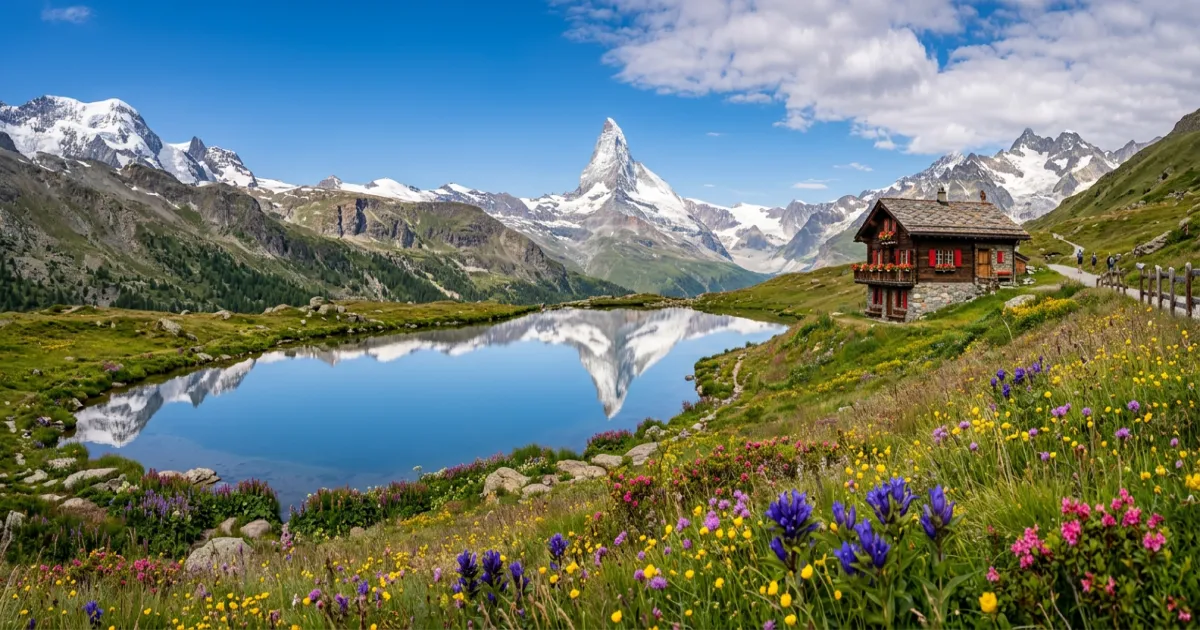
Switzerland is one of the most beautiful countries on Earth. Snow-capped Alpine peaks, pristine lakes, charming medieval towns, world-class trains, and some of the best chocolate and cheese you will ever taste. It is also one of the most expensive destinations in Europe, which makes planning ahead essential.
This guide covers everything you need to know to plan a trip to Switzerland in 2026: costs, transportation, the best time to visit, where to stay, what to see, and a sample 10-day itinerary that hits all the highlights. Whether you are dreaming of standing beneath the Matterhorn, riding the Glacier Express through the Alps, or hiking through wildflower meadows in the Bernese Oberland, this is your starting point.
If you are still in the early stages of trip planning, start with our step-by-step guide to planning any trip. Already know you want to explore more of the continent? Check out our complete guide to planning a trip to Europe.
Quick Facts About Switzerland
- Visa: No visa required for stays up to 90 days for US, UK, Canadian, and Australian citizens. Switzerland is part of the Schengen Area.
- Currency: Swiss franc (CHF). Most places accept credit cards, but carry some cash for small shops and mountain huts.
- Languages: Four official languages: German (spoken in the north and central regions), French (west), Italian (south/Ticino), and Romansh (southeast). English is widely spoken in tourist areas.
- Time Zone: Central European Time (CET), UTC+1 (UTC+2 during summer daylight saving).
- Cost Level: Very expensive. Switzerland is consistently ranked as one of the most expensive countries in the world for travelers.
- Tipping: Service is included in bills by law. Small tips (rounding up or 5-10%) are appreciated but not expected.
- Plug Type: Type J (three-pronged, recessed). Most European Type C plugs will fit, but bring an adapter to be safe.
Best Time to Visit Switzerland
Switzerland is a year-round destination, but the best time depends on what you want to do.
Summer (June to September)
This is peak season and the most popular time to visit. Temperatures range from 18 to 28 degrees Celsius (65 to 82 degrees Fahrenheit) in the lowlands. Mountain passes and hiking trails are fully open, cable cars run on full schedules, and lakes are warm enough for swimming. The downside: higher prices and bigger crowds, especially in July and August.
Winter (December to March)
Ski season transforms Switzerland into a winter sports paradise. World-famous resorts like Zermatt, Verbier, St. Moritz, and Grindelwald draw skiers and snowboarders from around the globe. Christmas markets light up cities in December. Some mountain trails and passes close due to snow.
Shoulder Season (May and October)
Fewer crowds, lower prices, and still beautiful weather. May brings wildflowers and green valleys, while October offers stunning fall foliage. Some high-altitude attractions may have limited hours or closures, so check ahead.
How Long to Spend in Switzerland
Plan for at least 7 to 10 days to experience a good mix of cities, mountains, and lakes. A week lets you cover the highlights (Zurich, Lucerne, Interlaken, Zermatt), while 10 days adds room for scenic train journeys, smaller towns, and day trips to places like Montreux or Lugano.
If you only have 4 to 5 days, focus on one region. The Bernese Oberland (Interlaken, Grindelwald, Lauterbrunnen) packs an incredible amount of scenery into a compact area.
Switzerland Travel Budget: What It Actually Costs
There is no way around it: Switzerland is expensive. It is consistently the priciest country in Europe for travelers. But smart planning can make it manageable.
Daily Budget Ranges (Per Person)
- Budget traveler: CHF 120 to 200 per day (approximately $135 to $225 USD). This means hostel dorms (CHF 35 to 55 per night), supermarket meals and street food, free walking tours, and a Swiss Travel Pass for transport.
- Mid-range traveler: CHF 250 to 350 per day ($280 to $395 USD). Three-star hotels or private Airbnb rooms, sit-down restaurant lunches, paid activities, and scenic train excursions.
- Luxury traveler: CHF 500+ per day ($565+ USD). Four- and five-star hotels, fine dining, private tours, first-class rail, and spa experiences.
Typical Costs
- Hostel dorm bed: CHF 35 to 55 per night
- Budget hotel/Airbnb: CHF 120 to 180 per night
- Mid-range hotel: CHF 200 to 350 per night
- Restaurant meal: CHF 25 to 45 for a main course
- Supermarket lunch: CHF 10 to 15
- Coffee: CHF 4 to 6
- Beer at a bar: CHF 6 to 8
- Mountain excursion (cable car/cogwheel): CHF 50 to 120 round trip
Money-saving tip: Eat your main meal at lunch. Many restaurants offer set lunch menus that are 20 to 30 percent cheaper than dinner prices. Stock up at Coop and Migros supermarkets for breakfast and snacks. Use our free travel budget template to plan your spending before you go.
Getting There and Getting Around
Flying In
The two main international airports are Zurich Airport (ZRH) and Geneva Airport (GVA). Both are well connected to the city centers by train in under 15 minutes. Zurich is the larger hub with more international connections. If you are arriving from the US, direct flights are available from several major cities to Zurich and Geneva.
Planning a layover? Read our complete guide to a layover in Zurich for tips on making the most of your time at ZRH.
The Swiss Travel System: Trains, Boats, and Buses
Switzerland has one of the best public transportation networks in the world. Trains run on time (famously so), connections are seamless, and the scenery from the window is often the highlight of the trip. The Swiss Travel System integrates trains, buses, boats, and even some cable cars into one network.
You rarely need a car in Switzerland. Trains connect every major city and most small towns. PostBuses fill the gaps in rural areas. Lake boats serve as both transportation and scenic cruises.
The Swiss Travel Pass: Is It Worth It?
For most visitors spending a week or more, the Swiss Travel Pass is absolutely worth it. It includes:
- Unlimited travel on trains, buses, and boats throughout the country
- Free admission to over 500 museums
- Free public transport in more than 90 Swiss cities and towns
- 25 to 50 percent discounts on most mountain railways and cable cars
2026 Swiss Travel Pass Prices (2nd Class / 1st Class)
- 3 days: CHF 254 / CHF 405
- 4 days: CHF 309 / CHF 492
- 6 days: CHF 399 / CHF 634
- 8 days: CHF 439 / CHF 697
- 15 days: CHF 499 / CHF 787
The 8-day pass typically pays for itself after just 3 to 4 intercity train journeys. Second class is comfortable and perfectly fine for most travelers. Buy your pass online through the official Swiss Travel System website or authorized retailers before your trip.
Scenic Train Routes You Should Not Miss
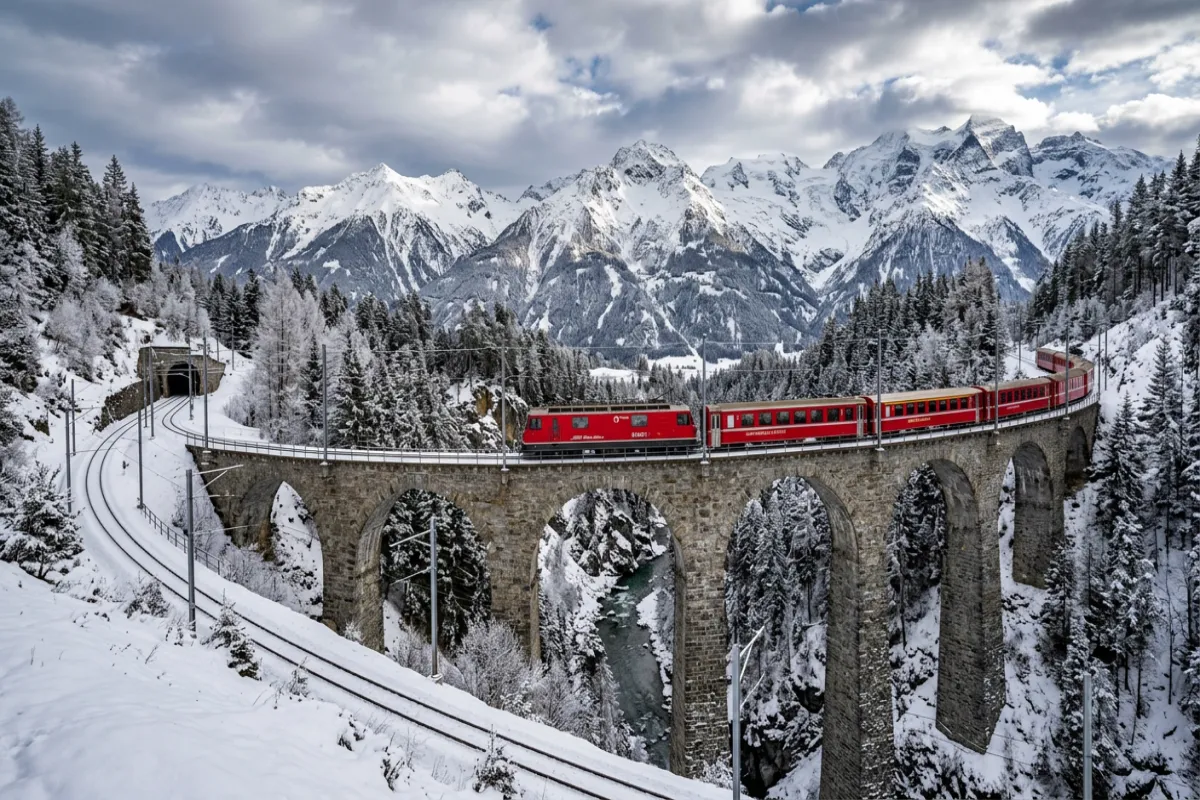
- Glacier Express (Zermatt to St. Moritz): The “slowest express train in the world” takes about 8 hours to cross 291 bridges and pass through 91 tunnels. A mandatory seat reservation is required. Swiss Travel Pass holders ride free but still need the reservation (around CHF 49).
- Bernina Express (Chur/St. Moritz to Tirano, Italy): A UNESCO World Heritage route that climbs to 2,253 meters. Four hours of jaw-dropping scenery including the famous Landwasser Viaduct. The route continues by bus from Tirano to Lugano.
- GoldenPass Line (Lucerne to Montreux): Connects the German-speaking and French-speaking regions through rolling hills, Alpine meadows, and lakeside stretches. No reservation required. As of 2023, the new GoldenPass Express runs direct without a train change.
Where to Stay in Switzerland
Each Swiss city and region has a distinct character. Here are the best bases for different types of trips:
Zurich
Switzerland’s largest city and main international gateway. A mix of finance, culture, art, and nightlife. The Old Town (Altstadt) sits along the Limmat River with excellent restaurants and shopping. Good base if you are arriving late or departing early.
Lucerne
Many travelers’ favorite Swiss city. The Chapel Bridge (Kapellbrucke, dating to 1333) is the most photographed landmark in the country. Lake Lucerne is surrounded by mountains, and day trips to Mount Pilatus and Mount Rigi are easy from here. Central location makes it a great hub.
Interlaken
The adventure capital of Switzerland, sitting between Lake Thun and Lake Brienz. Gateway to the Jungfrau region, Grindelwald, and Lauterbrunnen. If you want hiking, paragliding, canyoning, or skydiving, this is your base.
Zermatt
A car-free village at the foot of the Matterhorn. One of the most iconic mountain towns in the world. Excellent skiing in winter, spectacular hiking in summer. The Gornergrat railway takes you to 3,089 meters for panoramic views of the Matterhorn and surrounding peaks.
Geneva
The French-speaking lakeside city that is home to the United Nations, the Red Cross, and the famous Jet d’Eau fountain. More cosmopolitan and international than other Swiss cities. Good base for exploring the Lake Geneva region, including Montreux and the Lavaux vineyards (a UNESCO World Heritage site).
Bern
The Swiss capital, and one of the most underrated cities in the country. The entire Old Town is a UNESCO World Heritage Site with covered arcades stretching for 6 kilometers. Quieter and more affordable than Zurich or Geneva. The Bear Park and views from the Rose Garden are highlights.
Must-See Places and Experiences
Matterhorn and Zermatt
The Matterhorn (4,478 meters) is the most recognizable mountain in the world. You can see it from multiple viewpoints around Zermatt. Take the Gornergrat Railway for the best panorama, or ride the Matterhorn Glacier Paradise cable car to 3,883 meters, the highest cable car station in Europe.
Jungfrau Region and Top of Europe
The Jungfraujoch railway station sits at 3,454 meters and is the highest railway station in Europe. From the top, you can see the Aletsch Glacier (the longest in the Alps), visit the Ice Palace, and enjoy the Lindt Swiss Chocolate Heaven. The Swiss Travel Pass gives a roughly 25 percent discount on the ticket.
Lake Lucerne
One of the most scenic lakes in Switzerland, surrounded by mountains on all sides. Take a boat cruise across the lake, then ride the world’s steepest cogwheel railway up Mount Pilatus. The combination of lake and mountain makes this a quintessential Swiss experience.
Lauterbrunnen Valley
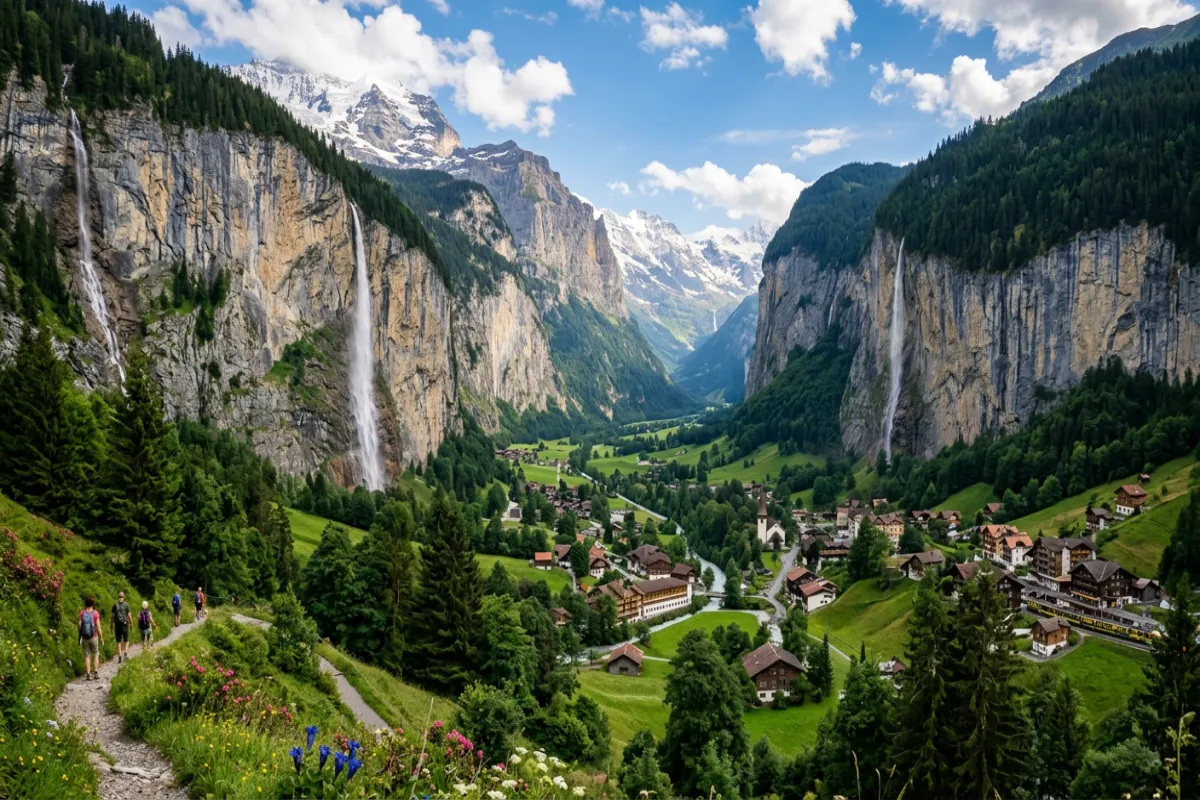
A narrow valley with 72 waterfalls cascading down sheer cliff walls. Staubbach Falls drops 297 meters right next to the village. Trummelbach Falls, hidden inside the mountain, drains meltwater from the Jungfrau glaciers. This valley inspired Tolkien’s Rivendell.
Grindelwald
A traditional mountain village below the Eiger’s dramatic north face. The Grindelwald-First cable car takes you to the First Cliff Walk, a suspended walkway along the cliff edge. The new Eiger Express gondola provides fast access to the Jungfrau region.
Interlaken Adventures
Switzerland’s adventure capital offers paragliding over the Alps, canyoning through gorges, bungee jumping, skydiving with mountain views, and white-water rafting. Even if you skip the adrenaline activities, the views of the Jungfrau massif from town are unforgettable.
Rhine Falls
Europe’s largest waterfall by volume, near the town of Schaffhausen in northern Switzerland. The falls are 150 meters wide and 23 meters high. You can take a boat to the rock in the middle of the falls. Easily combined with a day trip from Zurich (about 50 minutes by train).
Bern Old Town
A UNESCO World Heritage Site since 1983. The medieval center has been beautifully preserved with 6 kilometers of covered stone arcades, the Zytglogge clock tower (a landmark since 1530), and the Federal Palace. The Bear Park on the banks of the Aare River is home to the city’s beloved bears.
Montreux and Lake Geneva
The Swiss Riviera along Lake Geneva offers a milder climate and a French-speaking atmosphere. Visit the Chateau de Chillon (one of the most visited castles in Switzerland), walk the lakeside promenade past the Freddie Mercury statue, and explore the Lavaux vineyard terraces, which are a UNESCO World Heritage Site.
Chocolate and Cheese Experiences
Visit the Lindt Home of Chocolate in Kilchberg near Zurich, home to the world’s tallest chocolate fountain. Tour the Maison Cailler chocolate factory in Broc (near Gruyeres). Pair it with a visit to the Gruyeres cheese factory (La Maison du Gruyere) to watch the famous cheese being made. In Appenzell, see traditional Appenzeller cheese production.
Swiss Food You Need to Try
Swiss cuisine reflects the country’s four cultural regions and its Alpine traditions.
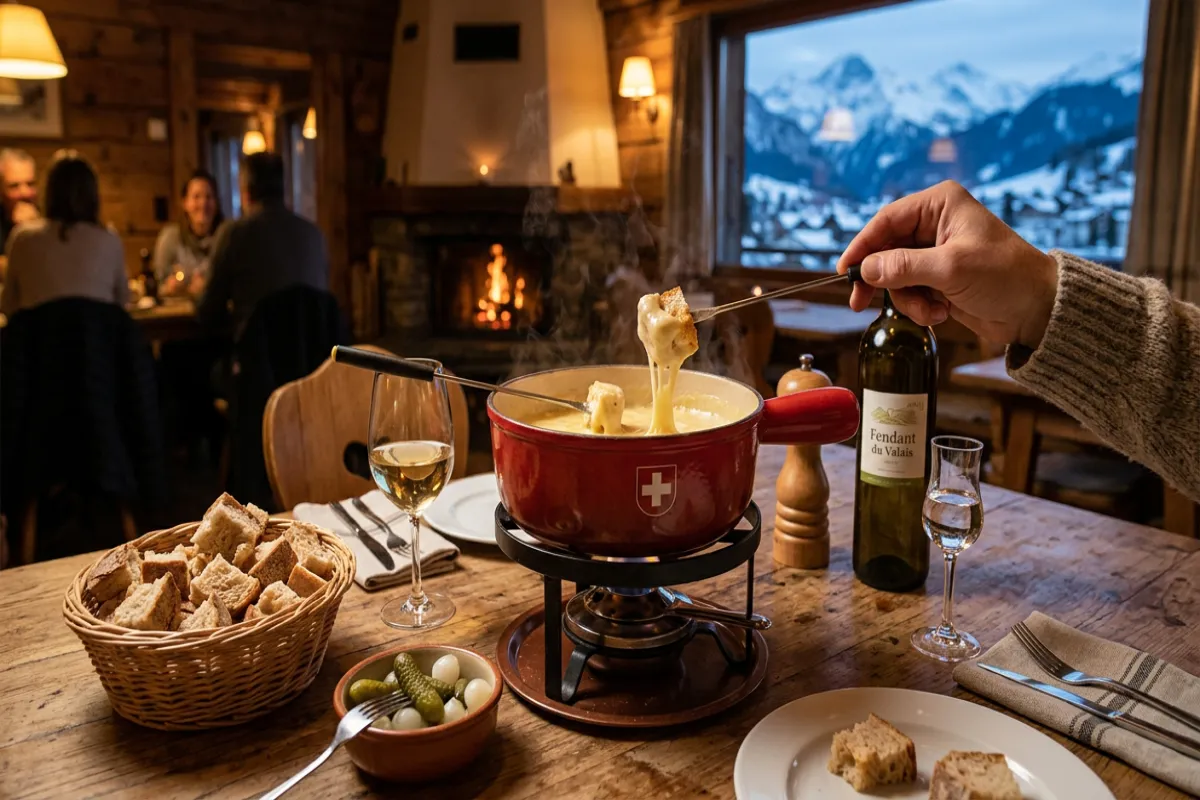
- Fondue: The national dish. Melted Gruyere and Vacherin cheese served in a communal pot. You dip bread cubes using long forks. Best enjoyed in a traditional chalet restaurant during colder months.
- Raclette: A wheel of raclette cheese is melted and scraped onto boiled potatoes, pickles, and onions. Available at restaurants and street markets across the country.
- Rosti: Crispy fried grated potatoes, similar to hash browns but better. Originally a Bernese farmer’s breakfast, now served as a side dish everywhere. The “Rostigraben” (rosti ditch) is the informal cultural boundary between German- and French-speaking Switzerland.
- Swiss Chocolate: Switzerland produces some of the finest chocolate in the world. Look for Sprungli (the premium Zurich chocolatier, not to be confused with Lindt & Sprungli), Laderach, and Cailler. Most train stations have chocolate shops.
- Swiss Cheese: Beyond fondue, try Emmental (the one with the holes), Gruyere (nutty and firm), Appenzeller (spicy), and Tete de Moine (shaved into rosettes). Alpine cheese made in mountain huts during summer has a distinct, complex flavor.
- Lavaux Wine: The terraced vineyards along Lake Geneva produce excellent white wines, especially Chasselas. Take a wine-tasting walk through the UNESCO-listed terraces between Lausanne and Montreux.
Practical Tips for Visiting Switzerland
- Everything runs on time. Swiss trains, buses, and boats depart exactly on schedule. If your connection is listed as 4 minutes, that is enough time. Plan accordingly and do not be late.
- Tap water is excellent. Switzerland has some of the cleanest tap water in the world. Many cities have public drinking fountains with perfectly safe water. No need to buy bottled water.
- Sunday closures. Most shops are closed on Sundays. Supermarkets, malls, and non-essential retail shut down. Restaurants, museums, and tourist attractions remain open. Stock up on Saturday if you need groceries.
- Recycling is strict. Switzerland takes recycling seriously. Trash disposal requires official paid garbage bags in most cantons. Separate glass, PET bottles, aluminum, and paper. Your hotel will handle this, but be aware if staying in an apartment.
- The language changes by region. You will hear German in Zurich, Lucerne, and Bern. French in Geneva, Lausanne, and Montreux. Italian in Lugano and Ticino. Road signs and menus change as you cross linguistic boundaries.
- Download the SBB Mobile app. The official Swiss Federal Railways app shows all train, bus, and boat schedules in real time. You can buy tickets directly in the app. It is the single most useful tool for getting around Switzerland.
- Altitude matters. Mountain peaks can be 20 degrees colder than the valleys below. Pack layers even in summer. Bring sunscreen and sunglasses for high-altitude excursions. If you are prone to altitude sickness, take it easy above 2,500 meters.
- Swiss hotels charge a city tax. Most cities add a small nightly tourist tax (typically CHF 2 to 5 per person). In return, many cities give you a free guest card with public transport and museum discounts.
Sample 10-Day Switzerland Itinerary
This itinerary covers the country’s greatest hits while keeping travel times manageable. An 8-day Swiss Travel Pass works perfectly for this route.
Use our free vacation itinerary template to organize your day-by-day plan, or try our AI travel planner to generate a personalized Switzerland itinerary in seconds.
Days 1 to 2: Zurich and Lucerne
Arrive in Zurich, explore the Old Town and Bahnhofstrasse. Take the train to Lucerne (1 hour 15 minutes). Walk the Chapel Bridge, explore the Old Town, and take a boat cruise on Lake Lucerne. Day trip to Mount Pilatus via the world’s steepest cogwheel railway.
Days 3 to 4: Interlaken and Jungfrau Region
Train from Lucerne to Interlaken (2 hours). Visit Jungfraujoch (Top of Europe) on one day. Spend the other day exploring Lauterbrunnen Valley and its waterfalls, or take the Grindelwald-First cable car to the cliff walk. Optional: paragliding over Interlaken.
Day 5: GoldenPass to Montreux
Take the GoldenPass Express from Interlaken to Montreux (about 3 hours). Visit Chateau de Chillon, walk the lakeside promenade, and see the Freddie Mercury statue. Optional afternoon wine tasting in Lavaux. Train back to Interlaken or continue to next stop.
Days 6 to 7: Zermatt
Train to Zermatt (about 2 hours from Interlaken). Spend two days here. Take the Gornergrat Railway for Matterhorn views, visit the Matterhorn Glacier Paradise, explore the car-free village, and hike if the weather is clear. Visit the Matterhorn Museum for the dramatic story of the first ascent.
Day 8: Glacier Express to St. Moritz
Board the Glacier Express for the 8-hour journey through the Alps to St. Moritz. Cross 291 bridges, pass through 91 tunnels, and climb over the Oberalp Pass at 2,033 meters. This is one of the greatest train journeys in the world. Book your seat reservation in advance.
Day 9: Bernina Express to Lugano
Take the Bernina Express from St. Moritz through the UNESCO World Heritage route to Tirano, Italy (about 2 hours 15 minutes by train). Continue by Bernina Express bus through Italian lake country to Lugano (about 3 hours). Explore Lugano’s Mediterranean-feeling lakeside in the evening.
Day 10: Lugano and Departure
Morning in Lugano exploring the Italian-speaking region of Ticino. Optional day trip to nearby Lake Como in Italy (45 minutes by train). Return to Zurich (2 hours by train) for departure, or visit Rhine Falls en route.
Planning Tools
These free resources will help you organize your Switzerland trip:
- AI Travel Planner to generate a custom Switzerland itinerary based on your dates, interests, and budget
- Vacation Itinerary Template to organize your day-by-day plan
- Travel Budget Template to track your spending before and during the trip
- How to Plan a Trip for a complete step-by-step planning framework
Planning to combine Switzerland with neighboring countries? Our Italy travel guide covers everything you need if you are adding Italian cities to your route, and the Europe planning guide helps with multi-country logistics.
Frequently Asked Questions
Do I need a visa to visit Switzerland?
US, UK, Canadian, and Australian citizens do not need a visa for stays up to 90 days. Switzerland is part of the Schengen Area, so your 90-day limit is shared across all Schengen countries.
Is Switzerland worth it despite the high costs?
Yes. The scenery, infrastructure, cleanliness, and overall quality of the travel experience are unmatched. The Swiss Travel Pass and smart food choices (supermarkets, lunch specials) make it more affordable than you might expect.
Should I rent a car in Switzerland?
For most visitors, no. The train system is so efficient and scenic that a car adds hassle (expensive parking, city restrictions, mountain road stress) without much benefit. The main exception is if you want to explore very remote Alpine valleys off the train network.
Is the Swiss Travel Pass worth the money?
For trips of 4 days or more with travel between cities, almost always yes. The 8-day pass (CHF 439 in 2nd class) pays for itself after just a few intercity journeys, and the mountain discounts and free museum admissions add even more value.
What should I pack for Switzerland?
Layers are essential. Even in summer, mountain peaks can be near freezing. Pack comfortable walking shoes (hiking boots if you plan to hike), a waterproof jacket, sunscreen, sunglasses, and a reusable water bottle for the excellent tap water.
Can I use euros in Switzerland?
Some tourist shops and hotels accept euros, but you will get change back in Swiss francs at a poor exchange rate. Use a travel credit card with no foreign transaction fees for the best rates. ATMs are widely available for cash withdrawals in CHF.