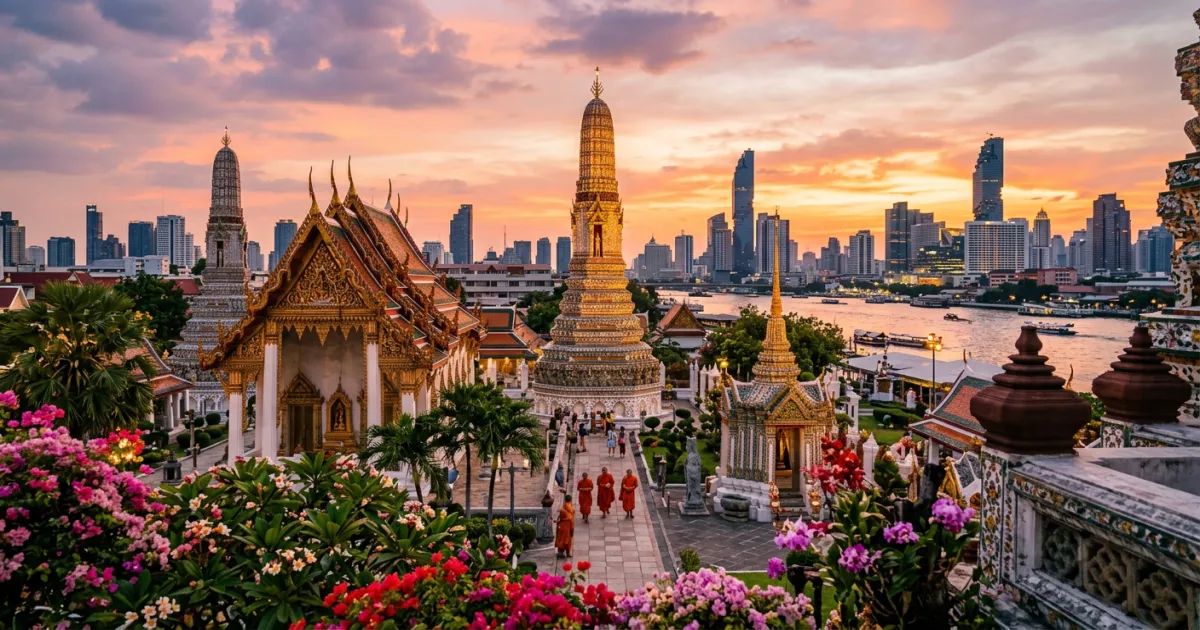
Thailand is one of the world’s most popular travel destinations for good reason. It delivers ancient temples, pristine beaches, legendary street food, and warm hospitality at prices that make almost any budget work. Whether you are planning your first visit or returning for another round, this guide covers everything you need to know to plan a trip to Thailand in 2026.
If you are in the early stages of trip planning, our complete trip planning guide walks you through the fundamentals, and our AI travel planner can help you build a custom Thailand itinerary in minutes.
Thailand Quick Facts
- Visa: US citizens enjoy visa-free entry for up to 60 days. You must have a passport valid for at least 6 months from your arrival date. All travelers must complete the Thailand Digital Arrival Card (TDAC) within 72 hours before arrival through the official Thai Immigration website.
- Currency: Thai Baht (THB). As of early 2026, roughly 32 to 35 THB equals 1 USD. ATMs are everywhere, though most charge a 220 THB ($6 to $7) foreign transaction fee per withdrawal. Exchange booths in cities offer better rates than airports.
- Language: Thai is the official language. English is widely spoken in tourist areas, especially Bangkok, Chiang Mai, and the islands. Learning a few Thai phrases (sawadee for hello, khop khun for thank you) goes a long way.
- Time Zone: Indochina Time (ICT), UTC+7, year-round. No daylight saving time.
- Electricity: 220V with Type A, B, and C plugs. Most North American devices will fit, but check your voltage. Adapters are cheap and sold at any convenience store.
- Costs: Thailand remains one of the most affordable travel destinations in Asia. Budget travelers can get by on $30 to $50 per day, while mid-range travelers will spend $80 to $125 comfortably.
- Entry Fee: Thailand introduced a 300 THB (roughly $9) tourist entry fee in February 2026, which is included in your airfare.
Best Time to Visit Thailand
Thailand has three distinct seasons, and the best time to visit depends on what you want to do and where you want to go.
Cool and Dry Season (November to February) is the peak tourist season and widely considered the best time to visit. Temperatures range from 75 to 85 degrees Fahrenheit (24 to 30 Celsius), humidity is lower, and rainfall is minimal. This is ideal for temples, trekking, and beach time. Expect higher prices and larger crowds, especially around Christmas and New Year.
Hot Season (March to May) brings temperatures of 90 to 100+ degrees Fahrenheit (32 to 40 Celsius), especially in Bangkok and central Thailand. April is the hottest month. This is a good time for the islands, where sea breezes keep things more comfortable. Songkran, the Thai New Year water festival in mid-April, is one of the most exciting cultural events to experience.
Monsoon Season (June to October) means afternoon downpours, but it rarely rains all day. Prices drop significantly, crowds thin out, and the landscape turns lush and green. The Gulf Coast islands (Koh Samui, Koh Phangan, Koh Tao) have different weather patterns and can be great during the early monsoon months. If you are flexible and do not mind occasional rain, this is the best season for budget travel.
How Long to Spend in Thailand
Thailand rewards longer stays, but you can have a meaningful trip at almost any length.
7 days is the minimum for a focused trip. You can cover Bangkok and either Chiang Mai or one island destination, but you will feel rushed.
10 to 14 days is the sweet spot for most first-time visitors. This gives you enough time to explore Bangkok, spend a few days in northern Thailand, and relax on the southern islands without exhausting yourself with constant travel.
3 to 4 weeks allows you to travel at a relaxed pace, venture off the beaten path to places like Pai or Khao Sok, and really settle into the rhythm of Thai life.
If you only have a short window, consider that even a layover in Bangkok can give you a taste of the city’s temples and street food.
Thailand Budget Breakdown
Thailand is one of the cheapest countries to travel in, and your money stretches further here than almost anywhere else in Southeast Asia (outside of Cambodia and Laos).
Budget Traveler ($30 to $50 per day)
- Accommodation: Hostel dorms for 400 to 700 THB ($12 to $21) per night
- Food: Street food meals for 40 to 80 THB ($1.20 to $2.50) each
- Transport: Public buses, songthaews (shared red trucks), and overnight trains
- Activities: Free temple visits, markets, beaches
Mid-Range Traveler ($80 to $125 per day)
- Accommodation: Private rooms in guesthouses or 3-star hotels for 1,200 to 2,200 THB ($35 to $65) per night
- Food: Mix of street food and sit-down restaurants for 100 to 300 THB ($3 to $9) per meal
- Transport: Domestic flights, private minivans, and Grab rides
- Activities: Guided tours, cooking classes, snorkeling trips
Luxury Traveler ($185+ per day)
- Accommodation: 4 to 5-star resorts and boutique hotels for 4,000+ THB ($120+) per night
- Food: Fine dining and rooftop restaurants for 500+ THB ($15+) per meal
- Transport: Private drivers, domestic flights, speedboat transfers
- Activities: Private tours, spa treatments, luxury island hopping
Keep in mind that northern Thailand (Chiang Mai, Chiang Rai, Pai) is 15 to 25 percent cheaper than Bangkok, and up to 40 to 50 percent cheaper than popular islands like Phuket and Koh Samui. Want to track your spending? Use our travel budget template to plan your daily costs before you go.
Getting There and Getting Around
Getting to Thailand
Suvarnabhumi Airport (BKK) in Bangkok is Thailand’s main international gateway and one of the busiest airports in Southeast Asia. Most long-haul flights from North America, Europe, and Australia arrive here. Direct flights from the US West Coast take roughly 17 to 20 hours, while East Coast travelers should expect 20 to 24 hours with a connection.
Don Mueang Airport (DMK), also in Bangkok, handles budget carriers like AirAsia, Nok Air, and Thai Lion Air. If you are connecting to a domestic flight on a budget airline, you may need to transfer between airports (allow at least 2 to 3 hours).
Phuket (HKT) and Chiang Mai (CNX) also receive some international flights, particularly from other Asian cities.
Getting Around Thailand
Domestic flights are the fastest way to cover long distances. Airlines like AirAsia, Nok Air, and Thai Smile offer flights between major cities for as low as 1,000 to 2,500 THB ($30 to $75) when booked in advance. Bangkok to Chiang Mai takes about 1 hour and 15 minutes by air versus 10 to 12 hours by train.
Trains are a scenic and affordable option. The overnight sleeper train from Bangkok to Chiang Mai is a classic Thai travel experience, with second-class sleeper berths running about 800 to 1,200 THB ($24 to $36). Book through the State Railway of Thailand website or at the station.
Buses and minivans connect virtually every town in Thailand. Long-distance buses are comfortable and cheap, ranging from 300 to 800 THB ($9 to $24) for most routes. VIP buses offer more legroom and onboard bathrooms.
Songthaews (shared pickup trucks with bench seating) are the local transport in cities like Chiang Mai, running fixed routes for 20 to 40 THB ($0.60 to $1.20).
Tuk-tuks are the iconic three-wheeled vehicles you will find in every Thai city. Always agree on a price before you get in, or better yet, use the Grab app (Southeast Asia’s version of Uber) for metered, fair-price rides in Bangkok and other major cities.
Ferries and speedboats connect the mainland to all the major islands. Companies like Lomprayah and Seatran run reliable services from ports like Surat Thani, Krabi, and Phuket.
Where to Stay in Thailand
Bangkok
Sukhumvit is the most popular area for tourists, with excellent BTS Skytrain access, world-class restaurants, rooftop bars, and hotels at every price point. The stretch between Nana (BTS Asok) and Thong Lo is the heart of the action.
Khao San Road is the legendary backpacker strip with budget hostels, street food vendors, and a lively nightlife scene. It is loud and chaotic, but staying nearby (Phra Athit Road area) gives you a quieter base within walking distance.
Silom and Sathorn is Bangkok’s business district with upscale hotels, easy river access, and proximity to Lumphini Park. Great for mid-range and luxury travelers.
Chiang Mai
The Old City (inside the moat) puts you within walking distance of dozens of temples and the famous Sunday Walking Street market. Accommodation here is excellent value. The Nimman neighborhood is trendier, with cafes, boutique shops, and a younger crowd.
Thai Islands
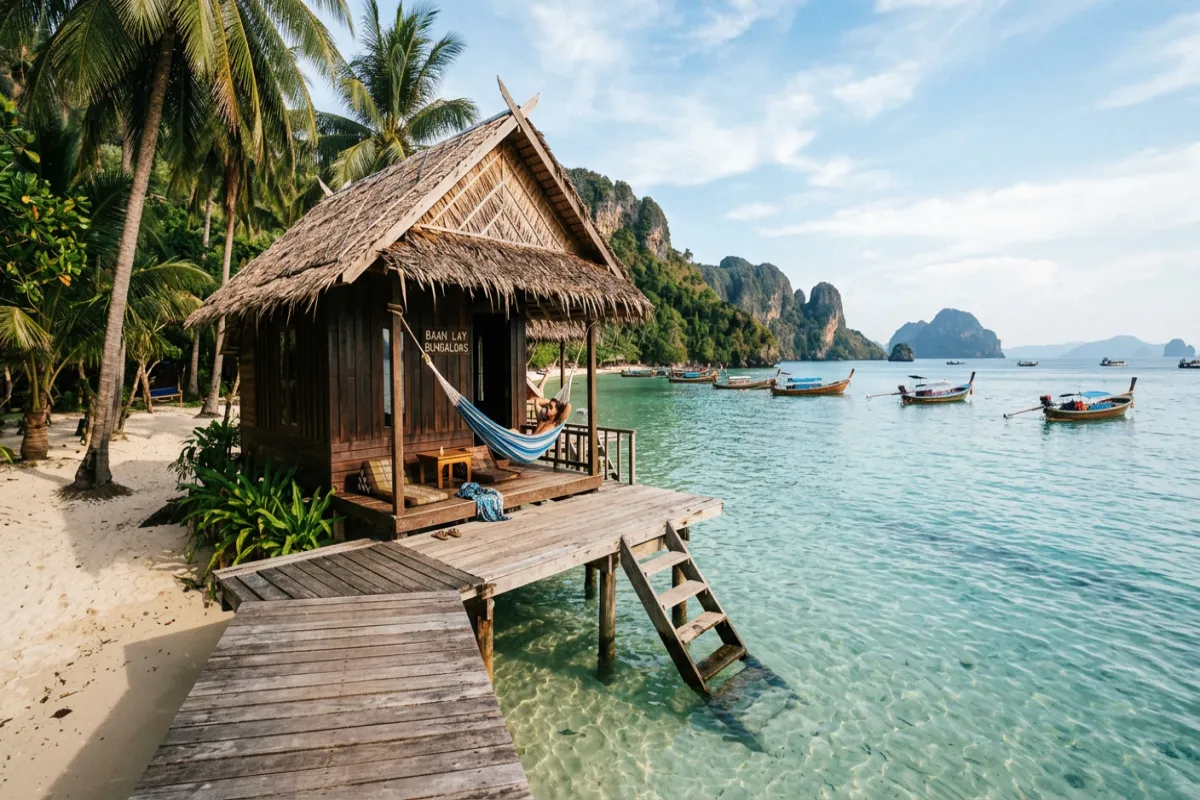
Island accommodation ranges from basic beach bungalows for 500 THB ($15) per night to luxury resorts at 10,000+ THB ($300+). Book well in advance during peak season (December to February), especially for popular islands like Koh Phi Phi and Koh Samui.
Must-See Destinations in Thailand
Bangkok
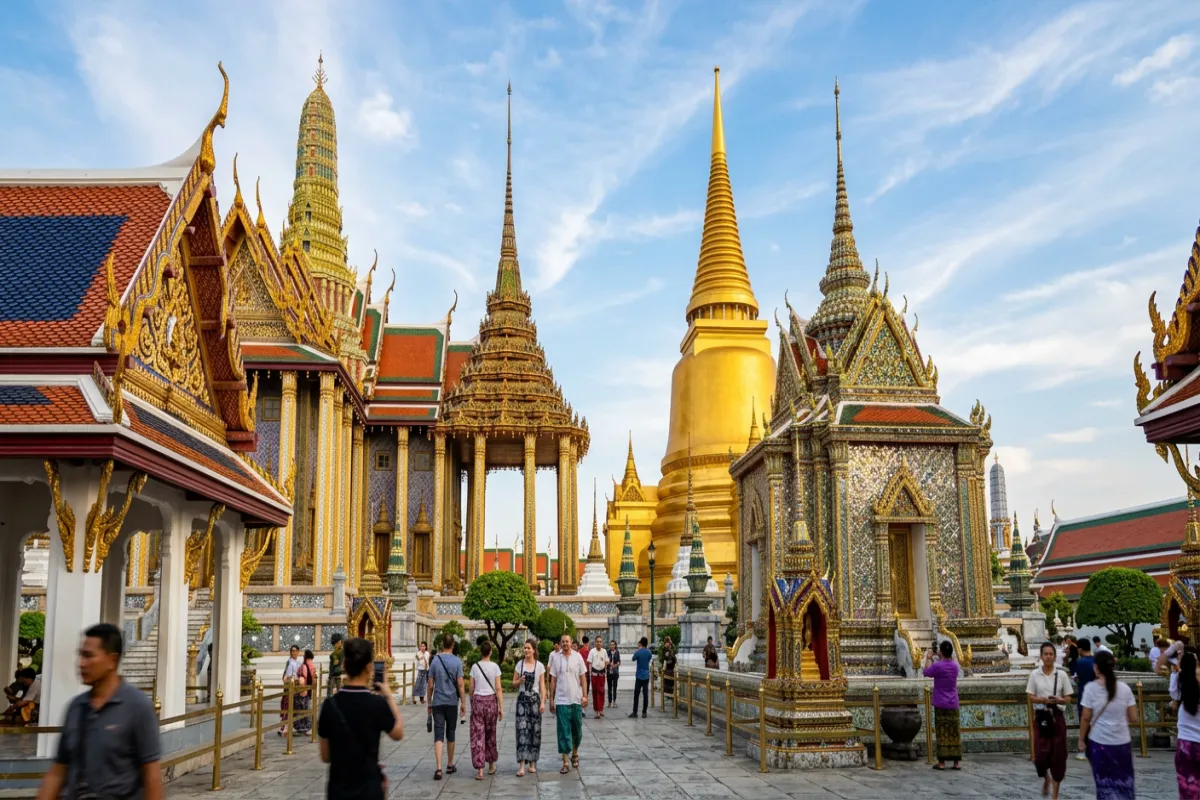
Thailand’s capital is overwhelming in the best way. Do not miss Wat Pho, home to the massive 46-meter Reclining Buddha and the country’s oldest and largest temple complex. The Grand Palace next door is a dazzling complex of royal buildings and the sacred Wat Phra Kaew (Temple of the Emerald Buddha). Visit both early in the morning to beat the heat and crowds. Explore the vibrant Chatuchak Weekend Market (one of the world’s largest outdoor markets with over 15,000 stalls), take a longtail boat through the canals, and watch the sunset from a rooftop bar.
Chiang Mai
The cultural capital of northern Thailand is home to over 300 Buddhist temples. Highlights include Wat Phra That Doi Suthep, perched on a mountain overlooking the city, and Wat Chedi Luang in the Old City. The Night Bazaar and Sunday Walking Street are must-visits for handicrafts, art, and street food. Chiang Mai is also the base for treks into hill tribe villages and visits to ethical elephant sanctuaries.
Thai Islands
Koh Phi Phi offers jaw-dropping limestone karst scenery and excellent snorkeling at Maya Bay. Koh Samui is the largest Gulf island, with palm-lined beaches, luxury resorts, and a more developed infrastructure. Koh Phangan is famous for the Full Moon Party but also has quiet beaches on the northern coast. Koh Lanta is a laid-back, family-friendly alternative with long, uncrowded beaches. Phuket, the largest island, has the widest range of accommodation and activities, from Patong’s nightlife to the quiet beaches of the west coast.
Beyond the Highlights
Pai is a small mountain town north of Chiang Mai with hot springs, waterfalls, and a bohemian atmosphere that draws travelers for days longer than they planned. Ayutthaya, the ancient capital just an hour north of Bangkok by train, is a UNESCO World Heritage Site filled with crumbling temples and Buddha statues. Khao Sok National Park in southern Thailand has one of the oldest rainforests in the world, with dramatic limestone cliffs, a stunning lake, and floating bungalow accommodation.
Thai Food: What to Eat and Where to Find It
Thai food is one of the biggest reasons people visit the country, and eating well here does not require a big budget.
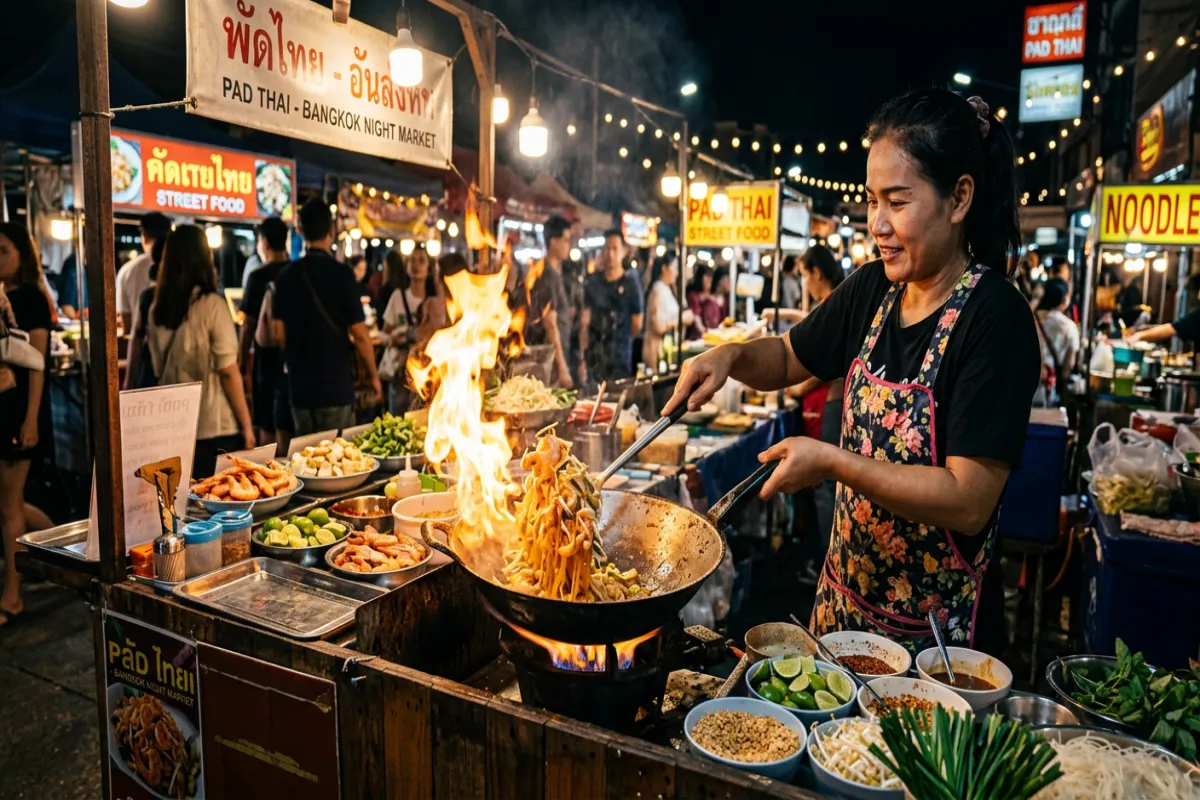
Street food is king. Thailand’s street food culture is legendary, and some of the best meals you will have cost less than $2. Night markets, morning markets, and roadside stalls serve everything from pad thai and green curry to grilled meats on sticks and fresh tropical fruit.
Must-Try Dishes
- Pad Thai: stir-fried rice noodles with shrimp or chicken, bean sprouts, peanuts, and lime. Every vendor makes it slightly differently.
- Green Curry (Gaeng Keow Wan): creamy coconut curry with Thai basil, bamboo shoots, and your choice of protein. Ranges from mild to intensely spicy.
- Som Tam: green papaya salad pounded fresh to order. Spicy, sour, sweet, and salty all at once.
- Mango Sticky Rice (Khao Niao Mamuang): the ultimate Thai dessert, best during mango season (April to June).
- Tom Yum Goong: hot and sour shrimp soup with lemongrass, galangal, and lime leaves.
- Khao Soi: a northern Thai coconut curry noodle soup found primarily in Chiang Mai. Rich, creamy, and topped with crispy noodles.
Cooking classes are one of Thailand’s most popular activities. Half-day classes in Chiang Mai or Bangkok typically cost 1,000 to 1,500 THB ($30 to $45) and include a market tour where you learn to identify Thai ingredients.
Vegetarian and vegan travelers will find Thailand surprisingly accommodating. Look for restaurants marked with a yellow “jay” flag (indicating vegan Buddhist food), and learn the phrase “mai sai nuea sat” (no meat) to communicate your needs at street stalls.
Spice levels can be adjusted. Most vendors will ask “pet mai?” (spicy or not?). If you have low spice tolerance, say “mai pet” (not spicy) or “pet nit noi” (a little spicy).
Practical Tips for Thailand
Respect the Monarchy
Thailand has strict lese-majeste laws that make it illegal to defame, insult, or threaten the royal family. This is not just a cultural suggestion; violations carry prison sentences of 3 to 15 years. Never make negative comments about the king or royal family, and always stand during the royal anthem played before movies in theaters.
Temple Etiquette
Dress modestly when visiting temples: cover your shoulders and knees. Many temples provide sarongs or cover-ups for rent or loan. Always remove your shoes before entering temple buildings. Never point your feet at a Buddha image, and do not touch monks (especially important for women).
Bargaining
Bargaining is expected at markets, street stalls, and with tuk-tuk drivers. Start at about 50 to 60 percent of the asking price and work from there. Do not bargain at 7-Elevens, restaurants, or shops with fixed prices. Always bargain with a smile.
Common Scams to Avoid
Be wary of anyone who tells you a temple or palace is “closed today” and then offers to take you somewhere else. This is the most common scam in Bangkok, typically used to steer you to gem shops or overpriced tailors. Never buy gemstones from shops recommended by tuk-tuk drivers. Book reputable tour operators through your hotel or established agencies rather than random street touts.
Health and Safety
Drink bottled water only. It is cheap (7 to 10 THB from any convenience store) and available everywhere. Ice in restaurants and bars is generally safe, as it is produced commercially. Get travel insurance before you go. Thailand has excellent private hospitals (Bumrungrad in Bangkok is world-renowned), but costs can add up fast without coverage. Apply mosquito repellent, especially during monsoon season, to reduce the risk of dengue fever.
Connectivity
Buy a local SIM card at the airport upon arrival. AIS, TrueMove, and DTAC all offer tourist SIM packages with generous data allowances (15 to 30 GB) for 299 to 599 THB ($9 to $18) for 7 to 15 days. Wi-Fi is available at most hotels, cafes, and restaurants.
Sample 14-Day Thailand Itinerary
This itinerary covers the classic highlights while leaving room to breathe. Adjust based on your interests and pace. For a printable version, grab our vacation itinerary template.
Days 1 to 3: Bangkok
- Day 1: Arrive at Suvarnabhumi Airport. Check into your hotel in Sukhumvit or near Khao San Road. Explore your neighborhood and grab street food for dinner.
- Day 2: Visit the Grand Palace and Wat Pho in the morning. Take a longtail boat through the Thonburi canals in the afternoon. Eat at Chinatown (Yaowarat Road) for dinner.
- Day 3: Explore Chatuchak Weekend Market (or the smaller Chatuchak Friday Market if it is a weekday). Visit a rooftop bar at sunset. Try a cooking class if time allows.
Days 4 to 6: Chiang Mai
- Day 4: Fly from Bangkok to Chiang Mai (1 hour 15 minutes). Check into a guesthouse in the Old City. Walk the ancient temples of the Old City in the afternoon.
- Day 5: Morning visit to Doi Suthep temple. Afternoon cooking class at a local school. Evening at the Night Bazaar or Sunday Walking Street (if Sunday).
- Day 6: Full-day visit to an ethical elephant sanctuary. Alternatively, take a day trip to the white temple (Wat Rong Khun) in Chiang Rai.
Days 7 to 8: Travel South and Transition
- Day 7: Morning flight from Chiang Mai to Surat Thani or Krabi (depending on your island choice). Ferry to your chosen island.
- Day 8: Settle into island life. Find your beach, rent a kayak, or explore the local town.
Days 9 to 12: Southern Islands
- Day 9: Island hopping or snorkeling day trip. The Four Islands tour from Koh Lanta or Phi Phi is excellent.
- Day 10: Rent a scooter and explore the island. Find hidden beaches and viewpoints.
- Day 11: Take a cooking class, get a Thai massage, or just relax on the beach.
- Day 12: Optional island hop to a second destination (Koh Phi Phi to Koh Lanta, or Koh Samui to Koh Phangan) or stay put and enjoy the atmosphere.
Days 13 to 14: Return to Bangkok and Departure
- Day 13: Ferry back to the mainland and fly to Bangkok. Pick up last-minute souvenirs at a local market or mall. Enjoy a farewell dinner.
- Day 14: Departure from Suvarnabhumi Airport. If your flight is in the evening, squeeze in one more temple visit or a final round of street food.
Planning Tools
Make your Thailand trip planning easier with these resources:
- How to Plan a Trip covers the step-by-step planning process for any destination.
- AI Travel Planner generates a personalized Thailand itinerary based on your dates, budget, and interests.
- Vacation Itinerary Template helps you organize your daily schedule.
- Travel Budget Template lets you estimate and track your Thailand trip costs.
Planning a trip to Japan as well? Our Japan travel guide covers a similar breakdown for one of Thailand’s most popular add-on destinations.
Frequently Asked Questions
Is Thailand safe for tourists?
Thailand is generally very safe for tourists. Violent crime against visitors is rare. The main risks are petty theft (watch your belongings in crowded areas), motorbike accidents (wear a helmet and drive carefully), and tourist scams in Bangkok. Use common sense, keep valuables secure, and you will be fine.
Do I need vaccinations for Thailand?
No vaccinations are required for entry from the US, but the CDC recommends being up to date on routine vaccines and considering Hepatitis A, Hepatitis B, and Typhoid. Talk to your doctor or a travel medicine clinic at least 4 to 6 weeks before your trip.
Can I drink tap water in Thailand?
No. Always drink bottled or filtered water. Bottled water is available everywhere for 7 to 10 THB. Ice in restaurants is generally safe as it is commercially produced, but avoid ice from unknown sources in very rural areas.
How much cash should I carry in Thailand?
Immigration officials may ask to see proof of funds (20,000 THB or roughly $600 per person for tourists), though this is rarely enforced. For daily spending, carry enough cash for markets and street food, as many smaller vendors do not accept cards. ATMs are widely available in cities and tourist areas.
Is Thailand good for families with kids?
Absolutely. Thai people are exceptionally welcoming to children, and many hotels offer family rooms and kids’ pools. The islands are great for families, with calm waters for swimming. Bangkok can be hectic, but kid-friendly attractions like Safari World, Sea Life Ocean World, and Chatuchak Market keep younger travelers engaged.
What should I pack for Thailand?
Pack light, breathable clothing (cotton or moisture-wicking fabrics), a light rain jacket or compact umbrella, comfortable walking shoes or sandals, reef-safe sunscreen, mosquito repellent, and a cover-up for temple visits. You can buy almost anything you forget at a 7-Eleven or local market for very little money.