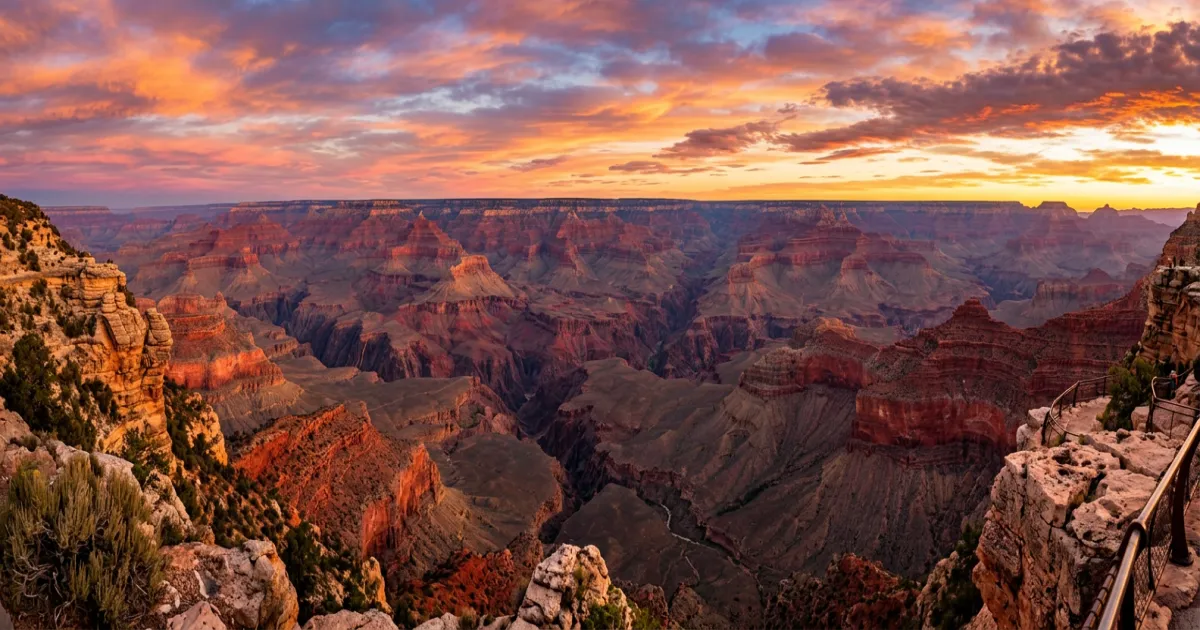
The Grand Canyon is one of the most awe-inspiring natural wonders on Earth. Carved over millions of years by the Colorado River, this massive gorge stretches 277 miles long, up to 18 miles wide, and over a mile deep. Every year, roughly 6 million visitors come to witness its layered bands of colorful rock revealing billions of years of geological history.
Planning a trip to the Grand Canyon takes some thought. Which rim should you visit? When should you go? Where will you stay? This guide covers everything you need to know to plan your Grand Canyon trip in 2026, from entrance fees and lodging to hiking safety and a sample 3-day itinerary.
Quick Facts
- Location: Northern Arizona, USA
- Park size: 1,218,375 acres (1,904 square miles)
- Entrance fee: $35 per vehicle (valid 7 days). New for 2026: international visitors (non-U.S. residents) pay an additional $100 per person surcharge for ages 16+.
- Best time to visit: March through May and September through November
- Most visited area: South Rim (roughly 90% of all visitors)
- Elevation: South Rim averages 7,000 feet; North Rim sits at 8,200 feet
- Annual visitors: Approximately 6 million
If you are new to trip planning in general, our complete guide to planning a trip walks you through the fundamentals before you dive into destination-specific details.
Which Rim Should You Visit?
The Grand Canyon has three main visitor areas, each offering a different experience. Your choice depends on how much time you have, what you want to see, and where you are coming from.
South Rim (Most Popular)
The South Rim is where the vast majority of visitors go, and for good reason. It is open year-round, has the most developed infrastructure, and offers close to two dozen unique viewpoints along the rim. You will find multiple lodges, restaurants, shuttle bus routes, visitor centers, and the most extensive trail system. If this is your first visit to the Grand Canyon, the South Rim is the best starting point.
North Rim (Quieter Alternative)
The North Rim sits about 1,200 feet higher than the South Rim and receives only about 10% of the park’s total visitors. The higher elevation means cooler temperatures (roughly 10 degrees cooler than the South Rim) and lush forests of spruce, fir, and aspen. The tradeoff: the North Rim is only open from mid-May through mid-October. Lodging is limited to the Grand Canyon Lodge and the North Rim Campground. It is also more remote, sitting about 4.5 hours from Las Vegas and over 5 hours from Phoenix.
West Rim (Skywalk and Las Vegas Day Trips)
The West Rim is not part of Grand Canyon National Park. It is managed by the Hualapai Tribe and is located about 2.5 hours (129 miles) from Las Vegas, making it the closest rim for visitors coming from Vegas. The main attraction is the Skywalk, a horseshoe-shaped glass bridge that extends 70 feet over the canyon edge, letting you look down 4,000 feet to the canyon floor. The West Rim has its own separate admission pricing (not covered by the National Park pass) and fewer hiking options than the South or North Rims.
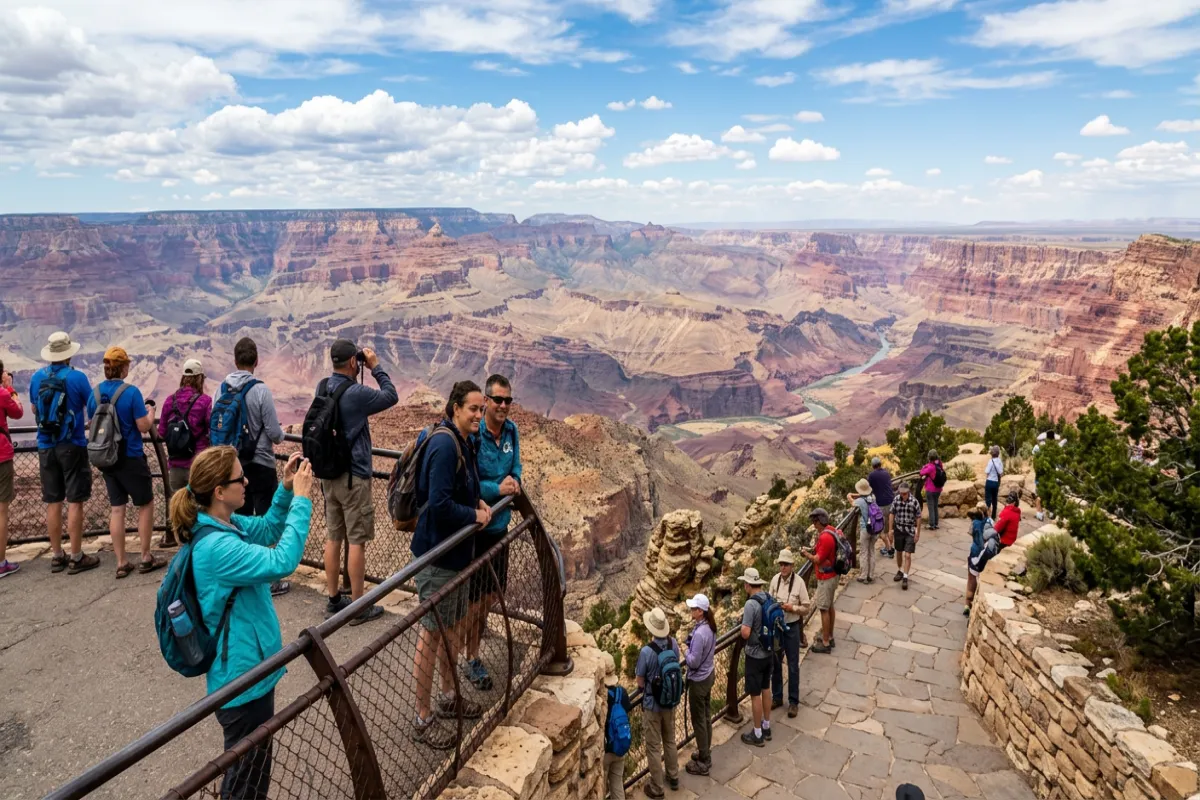
Best Time to Visit the Grand Canyon
The Grand Canyon is a year-round destination, but conditions vary dramatically by season.
Spring (March to May) and Fall (September to November): Ideal
These are the sweet spots. Temperatures on the South Rim range from the 50s to 70s Fahrenheit, skies are typically clear, and crowds are more manageable than summer. Spring wildflowers and fall foliage add extra visual appeal. These months are also the safest and most comfortable for hiking below the rim.
Summer (June to August): Hottest and Most Crowded
Summer is the busiest season despite extreme heat. Inner canyon temperatures regularly exceed 100 degrees Fahrenheit and can reach 120 degrees at the river. Heat-related emergencies are common. If you visit in summer, plan rim-level activities during the hottest hours and start any hikes well before dawn. Afternoon monsoon thunderstorms are also a factor from mid-July through September.
Winter (December to February): Fewest Crowds
The South Rim stays open in winter, and you will find significantly fewer visitors. Snow can dust the rim, creating stunning photo opportunities. Temperatures hover in the 30s to 40s during the day and can dip below zero at night. Some facilities and trails may close due to ice. The North Rim is closed entirely in winter.
How Long to Spend at the Grand Canyon
Many visitors treat the Grand Canyon as a quick stop, but spending more time reveals much more of what makes this place extraordinary.
- 1 day: Enough for rim viewpoints, a short walk along the Rim Trail, and a visit to the Yavapai Geology Museum. You will get the classic views but only scratch the surface.
- 2 to 3 days: The ideal amount for most visitors at the South Rim. This gives you time for a day hike partway down the Bright Angel or South Kaibab Trail, multiple viewpoints, a ranger program, and sunrise or sunset photography.
- 4+ days: Needed if you want to hike to Phantom Ranch at the canyon bottom (overnight permit required), explore both rims, or add a Colorado River rafting trip. Rim-to-rim hiking is a multi-day commitment that requires careful planning.
Grand Canyon Trip Budget
Use our travel budget template to track your Grand Canyon expenses. Here is a rough breakdown of what to expect.
Entrance Fees
- Private vehicle: $35 (7-day pass)
- Motorcycle: $30
- Individual (walk-in, bike): $20 per person
- America the Beautiful Annual Pass: $80 (covers all national parks for a year)
- International visitor surcharge (2026): $100 per person ages 16+
Lodging
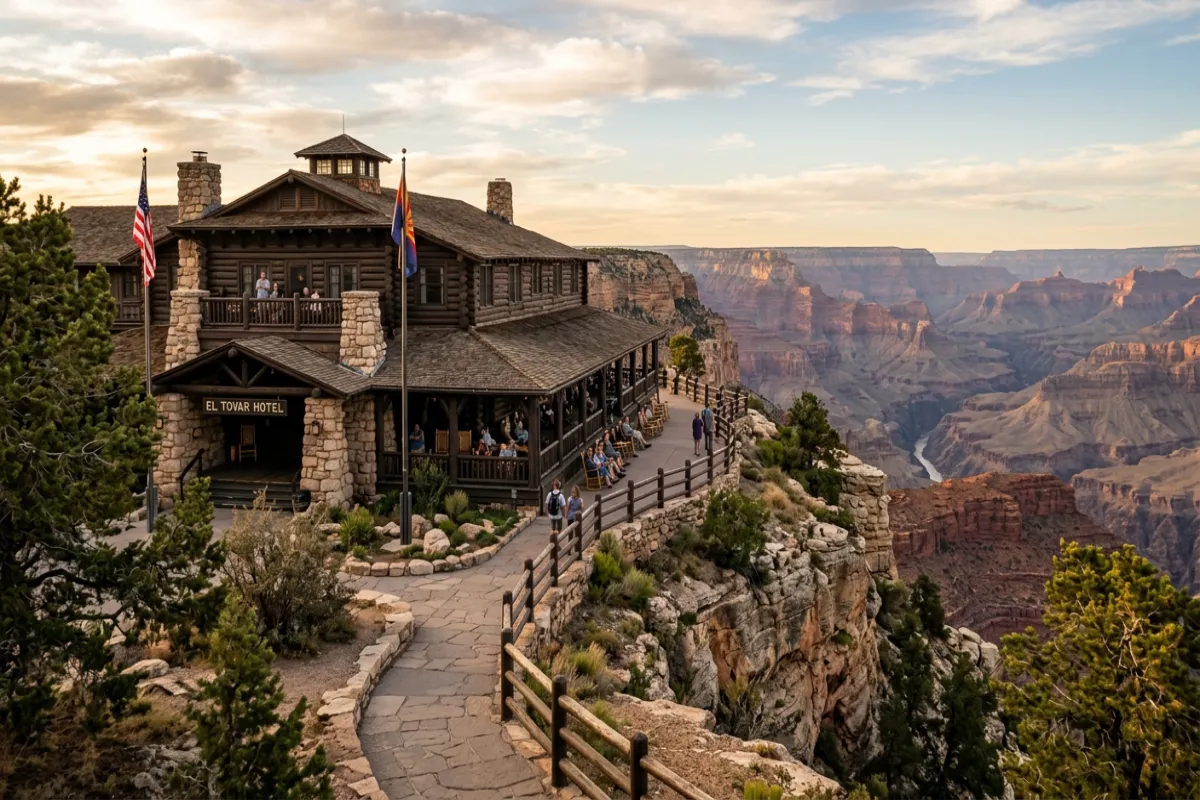
- Inside the park: $100 to $500+ per night depending on the property. El Tovar (the premium historic hotel on the rim) runs $250 to $500+. Bright Angel Lodge starts around $100 for basic rooms. Maswik Lodge and Yavapai Lodge offer mid-range options.
- Tusayan (park gateway town): $150 to $300 per night, with options like Best Western and Holiday Inn Express.
- Flagstaff (1.5 hours south): $80 to $200 per night with the widest selection of hotels and restaurants.
- Williams (1 hour south): $70 to $150 per night, a charming Route 66 town and the departure point for the Grand Canyon Railway.
- Camping at Mather Campground: $18 per night (reservations recommended).
Daily Budget Ranges
- Budget traveler: $50 to $80 per day (camping, own food, free shuttles and trails)
- Mid-range: $150 to $300 per day (hotel in Tusayan or Flagstaff, dining out, a guided tour)
- Luxury: $400+ per day (El Tovar, fine dining, helicopter tour, mule ride)
Getting to the Grand Canyon
Most visitors drive to the Grand Canyon. Here are the main routes:
- From Las Vegas: About 4.5 hours (275 miles) to the South Rim via US-93 and I-40. The West Rim is only about 2.5 hours from Vegas.
- From Phoenix: About 3.5 hours (230 miles) via I-17 North to Flagstaff, then US-180/AZ-64 to the South Rim.
- From Flagstaff: About 1.5 hours (80 miles) north on US-180 to AZ-64.
- From Williams: About 1 hour (60 miles) north on AZ-64. You can also take the Grand Canyon Railway, a scenic 2.5-hour train ride that runs daily from Williams to the South Rim.
Flying in: The nearest major airport is Phoenix Sky Harbor (PHX), about 3.5 hours from the South Rim. Flagstaff Pulliam Airport (FLG) is closer but has limited flights. Las Vegas McCarran (LAS) works well if you are combining a Grand Canyon trip with a Las Vegas visit.
If you are planning a road trip to the Grand Canyon, our road trip itinerary template can help you map out stops and timing.
Where to Stay
Inside the Park (South Rim)
Staying inside the park puts you steps from the canyon rim and eliminates the daily drive in. The downside: these properties book up fast. For peak season (summer and holidays), you should book 13 months in advance when reservations open.
- El Tovar Hotel: The crown jewel, a historic lodge built in 1905 right on the canyon rim. 78 rooms, fine dining, and unmatched atmosphere. Note: El Tovar guest rooms will be closed for renovation from June 25 to September 11, 2026, though the dining room and shops remain open.
- Bright Angel Lodge: Another historic property near the rim, with a mix of lodge rooms and private cabins. More affordable than El Tovar.
- Kachina and Thunderbird Lodges: Modern lodges near the rim with comfortable rooms.
- Maswik Lodge: Set back from the rim in the ponderosa pine forest, offering the most affordable park lodging.
- Yavapai Lodge: The largest in-park lodge with 358 rooms, located near the Market Plaza area.
Book all in-park lodging through Grand Canyon National Park Lodges at (888) 297-2757 or grandcanyonlodges.com.
Outside the Park
- Tusayan: The closest gateway town, just 1 mile from the South Entrance. Several chain hotels and restaurants, plus an IMAX theater with a Grand Canyon film.
- Flagstaff: A full-service city 80 miles south with hundreds of lodging options, great restaurants, craft breweries, and its own attractions like Lowell Observatory.
- Williams: A smaller, more affordable town on historic Route 66. Home to the Grand Canyon Railway depot.
Camping
- Mather Campground (South Rim): 327 sites, $18 per night. Reservations through recreation.gov open six months in advance.
- Desert View Campground (South Rim, east end): 50 sites, first-come first-served, open mid-April through mid-October.
- North Rim Campground: 87 sites, open mid-May through mid-October, reservations through recreation.gov.
Must-See Attractions and Experiences
Viewpoints
- Mather Point: The first viewpoint most visitors see, just steps from the South Rim Visitor Center. Expansive views in every direction.
- Yavapai Observation Station: A geology museum with panoramic windows overlooking the canyon. Great for understanding the rock layers you are seeing.
- Desert View Watchtower: A 70-foot stone tower designed by architect Mary Colter in 1932, located at the east end of the South Rim. The highest point on the South Rim with views stretching to the Painted Desert and Navajo Nation.
- Hopi Point and Mohave Point: Popular sunset spots along Hermit Road (free shuttle access in peak season).
- Lipan Point: One of the widest canyon views with clear sightlines to the Colorado River.
Trails
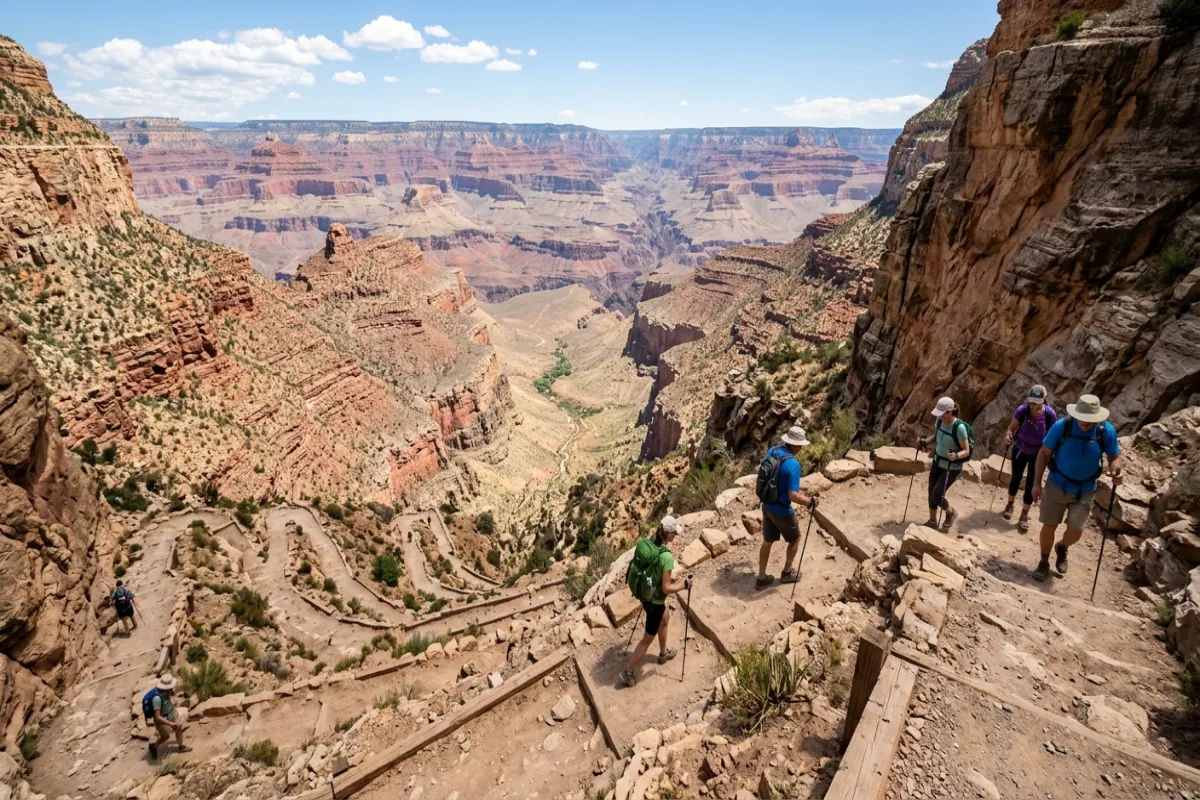
- Bright Angel Trail: The most popular trail in the park. Starts at Bright Angel Lodge and descends to Phantom Ranch at the canyon bottom (9.5 miles one way). Water is available seasonally at rest houses along the way. Day hikers commonly go to the 1.5-Mile or 3-Mile Resthouse as a turnaround point.
- South Kaibab Trail: Steeper and more exposed than Bright Angel, but offers the most dramatic panoramic views. No water available on this trail. Ooh Aah Point (0.9 miles) and Cedar Ridge (1.5 miles) are popular day hike turnaround points.
- Rim Trail: A mostly paved, relatively flat trail running 13 miles along the South Rim. Perfect for all fitness levels with accessible sections between Mather Point and Bright Angel Lodge.
Tours and Activities
- Helicopter and small plane tours: Aerial views of the canyon from operators based in Tusayan and Las Vegas.
- Colorado River rafting: Multi-day rafting trips through the canyon are bucket-list experiences. Commercial trips range from 3 to 18 days and book up a year or more in advance. Half-day smooth-water float trips are available from the West Rim area.
- Mule rides: The park offers mule trips along the rim and down to Phantom Ranch. These book up months in advance (sometimes a year ahead for Phantom Ranch trips).
- Ranger programs: Free talks, walks, and evening programs run daily. Check the park newspaper (“The Guide”) at the visitor center for schedules.
Nearby: Havasu Falls
Havasu Falls is located on Havasupai tribal land, about 35 miles west of the South Rim (but not accessible from within the park). Known for its stunning turquoise waterfalls, it requires a 10-mile hike each way. Permits are required and are managed by the Havasupai Tribe. They are released in a single batch each February and sell out within minutes. Plan well in advance if this is on your list.
Hiking Safety at the Grand Canyon
This section could save your life. The Grand Canyon is not a typical hiking destination. Every year, hundreds of hikers require rescue, and deaths occur regularly from falls, heat exposure, and dehydration.
Critical Rules
- Do not attempt to hike from the rim to the Colorado River and back in a single day. This is the number one cause of hiking emergencies. The rim-to-river distance is 7 to 9 miles one way with 4,000+ feet of elevation change. Going down is deceptively easy; coming back up in the heat is where people collapse. People die attempting this every year.
- Carry and drink plenty of water. At least one liter per hour of hiking in warm weather. Dehydration sets in quickly at 7,000 feet in the dry desert air.
- Start hikes early. Be on the trail by dawn, especially from May through September. Most heat emergencies happen in the afternoon.
- Eat salty snacks. Drinking too much water without replacing electrolytes can cause hyponatremia, which is just as dangerous as dehydration.
- Know your turnaround time. Whatever time it took you to hike down, plan on it taking twice as long to hike back up.
Trail Difficulty Guide
- Rim trails: Easy to moderate. Mostly flat with paved sections. Suitable for all fitness levels.
- Below-rim trails (Bright Angel, South Kaibab): Strenuous. Steep grades, exposed to sun, significant elevation change. Only for prepared and fit hikers.
- Rim-to-rim: Very strenuous, multi-day commitment (21+ miles). Requires a backcountry permit for overnight camping. Most hikers take 2 to 3 days in each direction.
Practical Tips
- Altitude: The South Rim sits at 7,000 feet. You may feel shortness of breath or fatigue, especially if coming from sea level. Give yourself time to acclimate.
- Free shuttle buses: The park operates free shuttle buses along three routes on the South Rim (Village, Kaibab/Rim, and Hermit Road). During peak season, Hermit Road is closed to private vehicles and only accessible by shuttle.
- Cashless entrance stations: As of 2026, all Grand Canyon entrance stations are cashless. Bring a credit card, debit card, or mobile payment method.
- No drones: Drones are prohibited in all national parks, including the Grand Canyon. Violations carry hefty fines.
- Cell service: Limited and unreliable, especially below the rim. Download offline maps before your trip.
- Mule rides: Book months in advance through Grand Canyon National Park Lodges. Weight limits and age restrictions apply.
- Pets: Dogs are allowed on the Rim Trail (leashed) but are not permitted on any below-rim trails.
- Free entrance days 2026: The National Park Service offers several fee-free days each year. Check nps.gov for the current schedule.
Sample 3-Day Grand Canyon Itinerary
Day 1: Arrival and South Rim Orientation
- Arrive and check into your lodging (in-park or Tusayan).
- Head to Mather Point for your first canyon view.
- Visit the Grand Canyon Visitor Center and pick up a copy of “The Guide.”
- Walk the Rim Trail from Mather Point to Yavapai Observation Station (0.7 miles, easy).
- Catch the Hermit Road shuttle to Hopi Point or Mohave Point for sunset.
- Dinner at El Tovar Dining Room (reservations recommended) or Arizona Steakhouse at Bright Angel Lodge.
Day 2: Below-Rim Hike and Desert View
- Start early (before 7 AM). Take the Kaibab/Rim shuttle to the South Kaibab Trailhead.
- Hike to Cedar Ridge (1.5 miles down, 1,120 feet elevation loss). Enjoy panoramic views. Return the same way (allow 2 to 3 hours round trip).
- After the hike, refuel at the Market Plaza deli.
- Drive (or shuttle) the Desert View Drive, stopping at Grandview Point, Moran Point, Lipan Point, and Desert View Watchtower.
- Return for sunset at a different viewpoint than Day 1.
Day 3: Bright Angel Trail and Departure
- Wake up early for sunrise at Mather Point or Yaki Point.
- Hike the Bright Angel Trail to the 1.5-Mile Resthouse or 3-Mile Resthouse (your choice based on fitness and time).
- Return to the rim by midday.
- Browse the Hopi House gift shop for authentic Native American art and crafts.
- Depart for your next destination or extend your stay.
Want help building a custom day-by-day plan? Our AI travel planner can generate a personalized Grand Canyon itinerary based on your dates, interests, and travel style.
Combine with Other Destinations
The Grand Canyon pairs well with several nearby destinations for a longer trip:
- Yellowstone National Park: If you are planning a national parks road trip, check out our Yellowstone planning guide to add another iconic park to your route.
- Las Vegas: Just 4.5 hours from the South Rim (or 2.5 hours from the West Rim). Many visitors combine a canyon trip with a few days in Vegas. See our Las Vegas planning guide.
- Sedona: About 2 hours south of the South Rim, known for red rock formations and excellent hiking.
- Monument Valley: About 3 hours northeast, offering the iconic desert landscape of the Navajo Nation.
- Antelope Canyon and Horseshoe Bend: Located near Page, AZ, about 2.5 hours east of the South Rim.
Planning Tools
- How to Plan a Trip (General Guide)
- AI Travel Planner for personalized itineraries
- Travel Budget Template
- Road Trip Itinerary Template
Frequently Asked Questions
How much does it cost to enter the Grand Canyon in 2026?
The entrance fee is $35 per private vehicle, valid for 7 days. Motorcycles are $30, and walk-in or bicycle visitors pay $20 per person. New for 2026, non-U.S. residents ages 16 and older must pay an additional $100 per person surcharge. The America the Beautiful Annual Pass ($80) covers entrance to all national parks for a year.
Which rim of the Grand Canyon is best for first-time visitors?
The South Rim. It has the most viewpoints, the best trail access, the widest range of lodging and dining, and is open year-round. About 90% of all visitors go to the South Rim.
Can I see the Grand Canyon in one day?
Yes, but you will only see the highlights. A single day gives you time for rim viewpoints and a short walk along the Rim Trail. For a below-rim hike and Desert View Drive, plan at least two days.
Is the Grand Canyon safe for kids?
The rim viewpoints are safe for families, though you need to watch children closely near unfenced edges. The Rim Trail has paved, accessible sections perfect for families. Below-rim hikes are not recommended for young children due to the strenuous climb back up.
When do in-park lodges open for booking?
Grand Canyon National Park Lodges typically open reservations 13 months in advance. For popular dates (summer, holidays, spring break), book as soon as reservations open.
Do I need a permit to hike in the Grand Canyon?
No permit is needed for day hikes. Overnight backcountry camping below the rim requires a backcountry permit from the National Park Service, available through recreation.gov. The permit costs $10 (non-refundable) plus $8 per person per night.
Is there cell phone service at the Grand Canyon?
Limited service is available on the South Rim in developed areas, but coverage is spotty. There is virtually no service below the rim or on the North Rim. Download offline maps and let someone know your hiking plans before heading out.