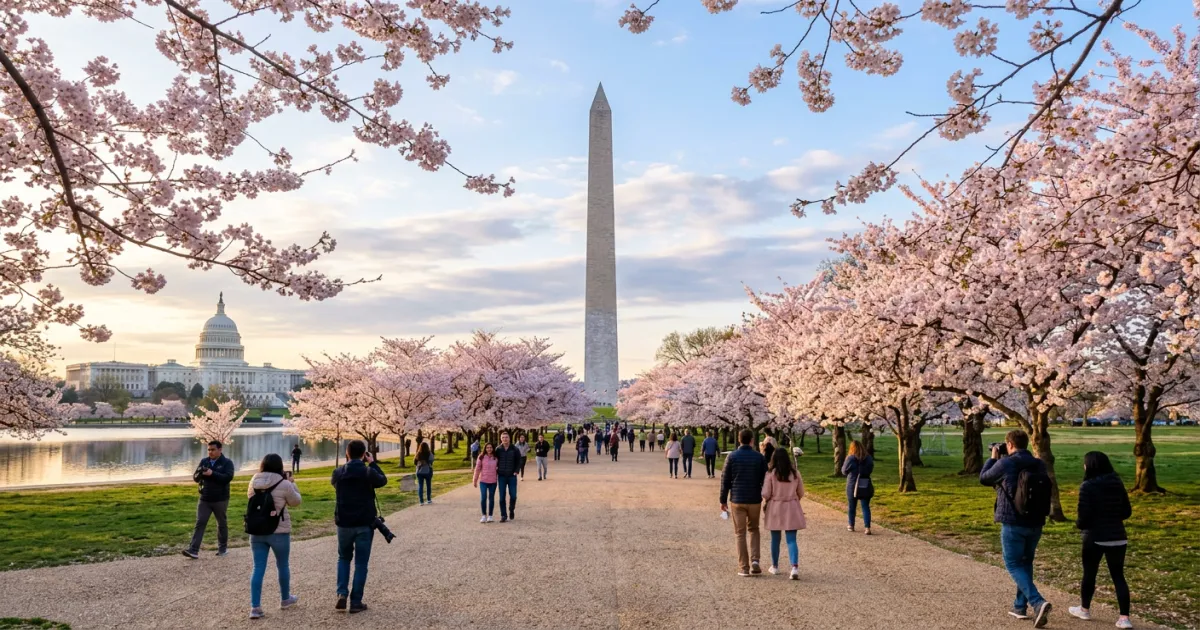
Washington DC is one of the most rewarding cities to visit in the United States, and not just because so many of its top attractions are completely free. The nation’s capital offers world-class museums, iconic monuments, vibrant neighborhoods, and a food scene that rivals any major American city. Whether you are visiting for the first time or returning to explore new corners, this guide covers everything you need to plan a trip to Washington DC in 2026.
Quick Facts: Washington DC at a Glance
| Detail | Info |
|---|---|
| Best Time to Visit | Late March to early April (cherry blossoms), September to November (fall foliage, fewer crowds) |
| Ideal Trip Length | 3 to 5 days |
| Budget per Day | $85 to $150 (budget), $200 to $300 (mid-range), $475+ (luxury) |
| Currency | US Dollar (USD) |
| Language | English |
| Getting Around | Metro (subway), walking, no car needed |
| Free Attractions | All 17 Smithsonian museums, all national monuments and memorials |
| Airport Options | DCA (Reagan National), IAD (Dulles), BWI (Baltimore-Washington) |
Best Time to Visit Washington DC
Timing your visit to Washington DC can make a significant difference in your experience. The city has distinct seasons, and each one comes with trade-offs.
Spring (March to May) is the most popular time to visit. The National Cherry Blossom Festival typically runs from late March through mid-April, when roughly 3,700 cherry trees around the Tidal Basin burst into bloom. Hotel prices spike during peak bloom, with mid-range rooms averaging $300 to $450 per night compared to $180 to $250 in winter. Book well in advance if you want to see the blossoms.
Fall (September to November) is the sweet spot for many travelers. Temperatures are comfortable (60s and 70s Fahrenheit), summer crowds have thinned, and hotel prices drop back to reasonable levels. The foliage in Rock Creek Park and along the Mall adds a beautiful backdrop.
Summer (June to August) brings intense heat and humidity. Temperatures regularly hit the 90s with high humidity that makes walking the National Mall exhausting. If summer is your only option, start sightseeing early in the morning and take afternoon breaks in air-conditioned museums.
Winter (December to February) is the most affordable season. You will find the lowest hotel rates and smallest crowds. Temperatures hover in the 30s and 40s, but all major museums and indoor attractions remain open. The National Christmas Tree on the Ellipse is a highlight in December.
How Long to Spend in Washington DC
Plan for 3 to 5 days to cover the major highlights without rushing. Here is a rough breakdown:
- 3 days: Enough for the National Mall, a few Smithsonian museums, key memorials, and a taste of the dining scene
- 4 days: Add Arlington Cemetery, the Capitol tour, Georgetown, and more museum time
- 5 days: Explore neighborhoods like U Street and Adams Morgan, visit the Library of Congress, and take a day trip to Mount Vernon or Old Town Alexandria
If you are still in the early stages of organizing your travels, our complete trip planning guide walks you through the entire process from start to finish.
Budget Breakdown: What a DC Trip Actually Costs
Washington DC is one of the most budget-friendly major cities for sightseeing because the biggest draws are free. However, lodging and dining add up quickly.
Accommodation
- Hostels: $79 per night average
- Budget hotels: $119 per night average
- Mid-range hotels (3-star): $280 per night average
- Upscale hotels (4-star): $326 per night average
- Luxury hotels (5-star): $518 per night average
Watch for hidden fees. Many DC hotels charge resort fees of $25 to $45 per night, and parking runs $25 to $80 per night if you drive.
Food and Drink
- Budget meals: $10 to $15 for lunch from food trucks or food courts at Union Station and L’Enfant Plaza
- Mid-range dinner: $25 to $50 per person at a sit-down restaurant
- Tipping: 18 to 20% is standard at restaurants in DC
Transportation
- Metro rail: $2.25 to $6.75 per trip depending on distance and time of day
- Metro bus: $2.25 per ride
- Day pass: About $15 for unlimited rides
Daily Budget Estimates (Per Person)
- Budget traveler: $85 to $150 per day
- Mid-range traveler: $200 to $305 per day
- Luxury traveler: $475 to $700+ per day
Use our travel budget template to map out your expenses before you go.
Getting Around Washington DC
You do not need a car in Washington DC. In fact, driving and parking in the city is expensive and stressful. The Metro system and your own two feet will get you everywhere you need to go.
The Metro (WMATA)
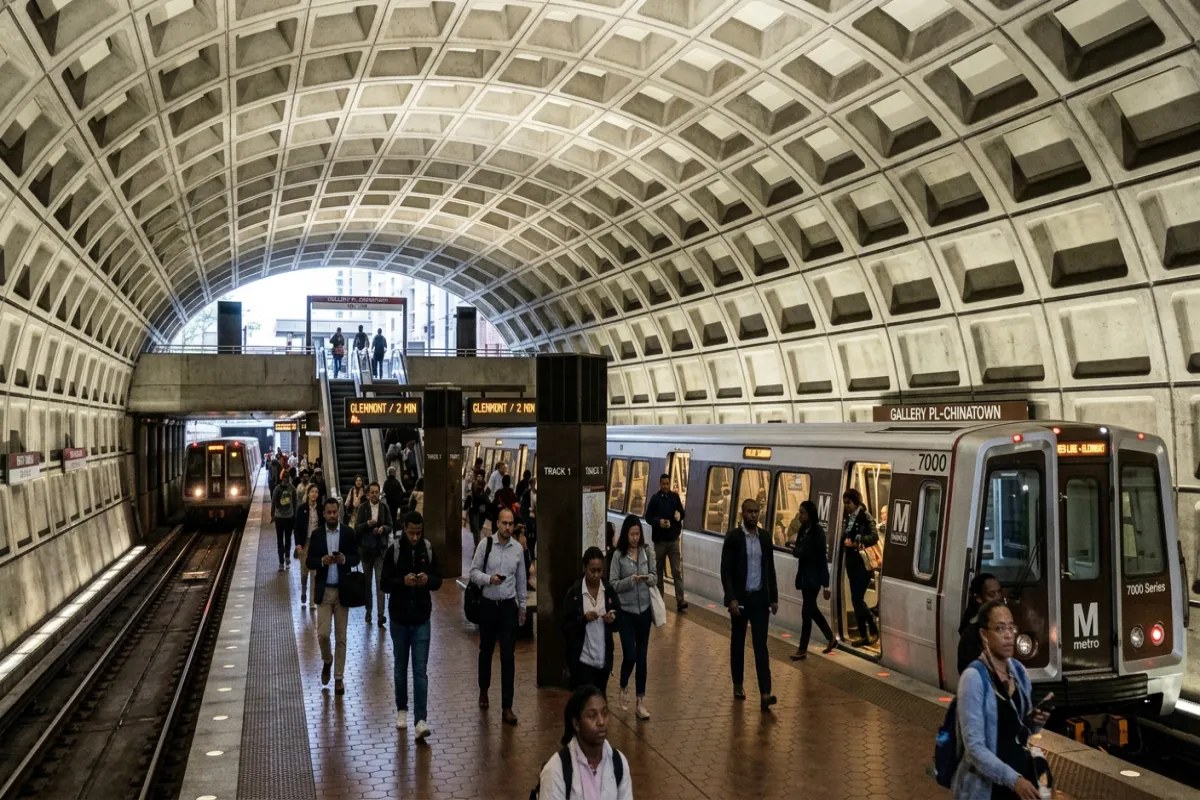
Washington’s Metrorail system has six color-coded lines (Red, Blue, Orange, Yellow, Green, and Silver) that connect most major tourist areas. Fares are distance-based: short trips cost $2.25, while cross-system rides can reach $6.75 during peak hours. After 9:30 PM and on weekends, all trips cost $2.25 to $2.50.
You can pay by tapping a contactless credit or debit card at the faregate, or use a virtual SmarTrip card on your phone. Physical SmarTrip cards are available at Metro stations. For multi-day visits, consider a 3-day or 7-day pass.
Metro tip: DC commuters take their Metro escalator etiquette seriously. Stand on the right, walk on the left. During rush hours (7 to 9:30 AM and 4 to 7 PM on weekdays), expect crowded trains. Two children under five ride free with a paying adult.
Walking
The National Mall is about 2 miles from the Capitol to the Lincoln Memorial. Wear comfortable shoes because you will log serious mileage. Most major attractions are within walking distance of each other once you Metro to the Mall area.
Rideshare and Taxis
Uber and Lyft operate throughout DC. A ride from Reagan National Airport to downtown takes about 15 minutes and costs $15 to $25. Taxis are also available but typically cost more than rideshare options.
Where to Stay in Washington DC
Location matters in DC. Staying near a Metro station makes everything easier. Here are the best neighborhoods for visitors:
Dupont Circle: A lively neighborhood with great restaurants, bars, and Embassy Row nearby. Well-connected by Metro with its own station on the Red Line. Good mid-range and boutique hotel options.
Capitol Hill: Ideal if you want to be close to the Capitol, Library of Congress, and Eastern Market. Quieter and more residential, with charming row houses and local eateries. The Capitol South and Eastern Market Metro stations provide easy access.
Foggy Bottom: Close to the National Mall, Kennedy Center, and Georgetown. The Foggy Bottom Metro station sits near George Washington University. This area has several well-known hotel chains at various price points.
Georgetown: Historic and picturesque with cobblestone streets, waterfront dining, and upscale shopping along M Street and Wisconsin Avenue. Note that Georgetown does not have its own Metro station, so you will need to walk, take a bus, or rideshare from the Foggy Bottom or Rosslyn stations.
Penn Quarter/Chinatown: Central location near the National Mall, several Smithsonian museums, and the Capital One Arena. The Gallery Place and Archives Metro stations are here. This is a strong choice if you want walkability to attractions.
Must-See Attractions in Washington DC
The National Mall and Monuments
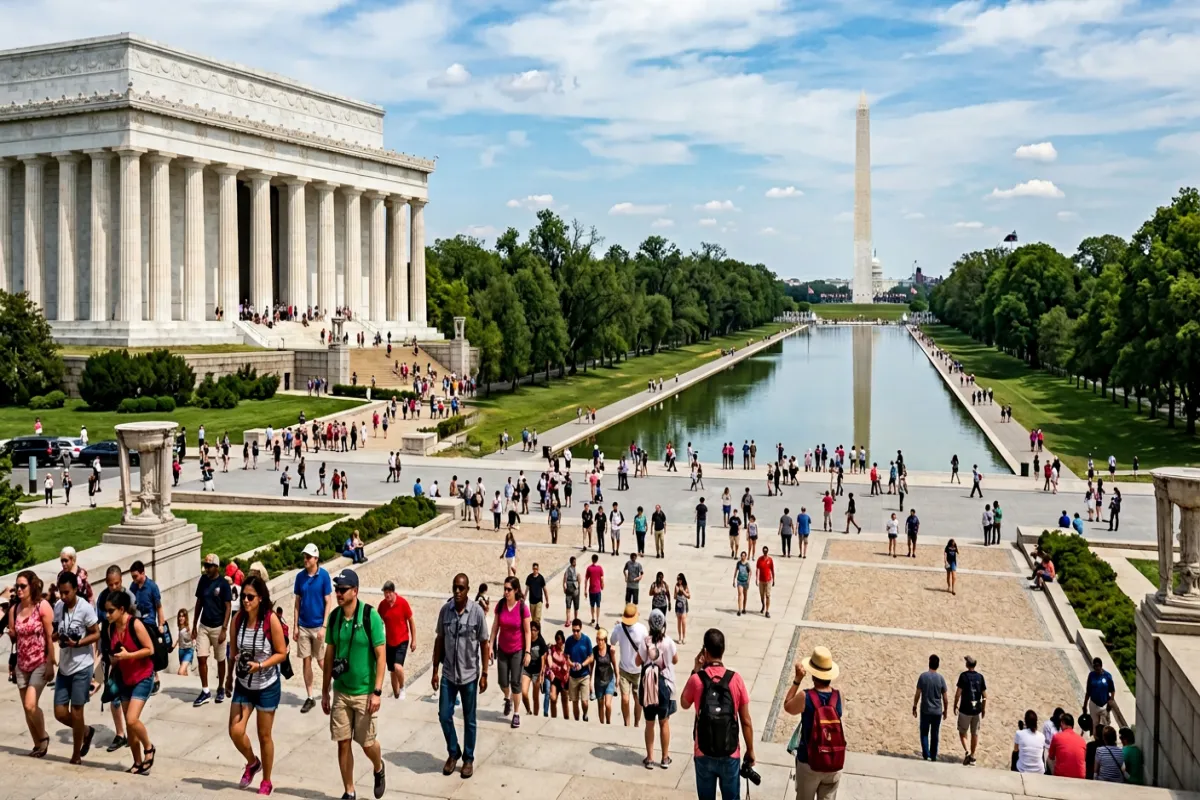
The National Mall is the heart of DC sightseeing and everything here is free. Plan to spend at least a full day exploring.
- Lincoln Memorial: Open 24 hours. Visit at night for a dramatic experience with fewer crowds and the Reflecting Pool lit up
- Washington Monument: The 555-foot obelisk offers panoramic views from the top. Free timed-entry tickets are required and can be reserved through the National Park Service website up to 30 days in advance
- Jefferson Memorial: Especially beautiful during cherry blossom season when the Tidal Basin trees frame the memorial
- Martin Luther King Jr. Memorial: The 30-foot stone sculpture along the Tidal Basin opened in 2011 and is a powerful stop
- World War II Memorial: Located between the Washington Monument and Lincoln Memorial, featuring 56 pillars representing US states and territories
- Vietnam Veterans Memorial: The reflective black granite wall listing over 58,000 names is one of the most moving sites in the city
Smithsonian Museums (All Free)
The Smithsonian Institution operates 17 museums in Washington DC, and every single one is free. You could spend a week visiting them all. The standouts include:
- National Air and Space Museum: Recently renovated with new exhibits on aviation and space exploration. Requires free timed-entry passes booked in advance
- National Museum of Natural History: Home to the Hope Diamond, dinosaur exhibits, and ocean hall
- National Museum of American History: See the original Star-Spangled Banner, first ladies’ gowns, and pop culture artifacts
- National Museum of African American History and Culture: The newest Smithsonian museum and consistently the hardest to get into. Free timed-entry passes are required and often sell out weeks in advance. Book as early as possible
- National Gallery of Art: Technically not a Smithsonian museum, but also free. Houses masterworks from da Vinci, Vermeer, Monet, and more
If you are looking for family-friendly activities specifically, check out things to do in Washington DC museums for more options.
The US Capitol and Library of Congress
US Capitol Tour: Free guided tours of the Capitol building are available Monday through Saturday. Reservations can be made through the Capitol Visitor Center website. You will see the Rotunda, National Statuary Hall, and the Crypt. Note: tours of the Senate and House chambers require passes from your Senator or Representative’s office.
Library of Congress: The Thomas Jefferson Building is architecturally stunning and free to visit. The main reading room is one of the most beautiful spaces in Washington. Free guided tours are offered daily.
Arlington National Cemetery
Located just across the Potomac River in Virginia (accessible via the Arlington Cemetery Metro station), this 639-acre military cemetery is the resting place of President John F. Kennedy, the Tomb of the Unknown Soldier, and over 400,000 service members. The Changing of the Guard ceremony at the Tomb of the Unknown Soldier takes place every hour (October through March) or every half hour (April through September). Admission is free, and a narrated tram tour is available for a fee.
Where to Eat in Washington DC
DC’s food scene has evolved dramatically over the past decade. The city is now home to multiple James Beard Award-winning restaurants and an incredible range of international cuisines.
Ben’s Chili Bowl (U Street): A DC institution since 1958. The half-smoke, a larger, spicier version of a hot dog smothered in chili, is the signature dish. Cash is accepted, and expect a line during peak hours.
Georgetown Waterfront: Upscale dining along the Potomac with options ranging from seafood to Italian. Fiola Mare and Tony & Joe’s are popular choices. After dinner, stroll along the Georgetown Waterfront Park.
14th Street NW: One of the city’s hottest dining corridors with everything from Ethiopian food to craft cocktail bars. Le Diplomate, a French bistro, is a local favorite that often requires reservations well in advance.
U Street Corridor: The historic center of Black culture in DC, now packed with diverse restaurants, live music venues, and bars. Beyond Ben’s Chili Bowl, you will find Ethiopian restaurants (DC has one of the largest Ethiopian communities in the US), soul food, and modern American cuisine.
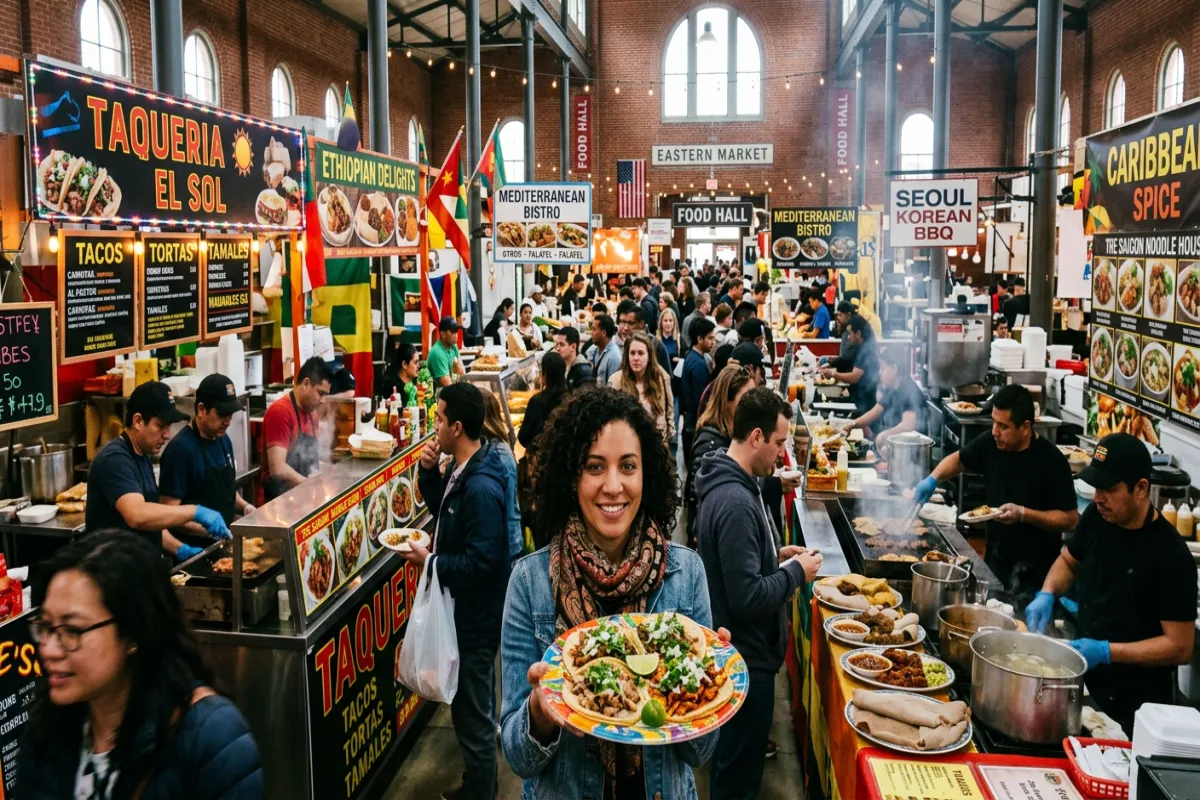
Eastern Market (Capitol Hill): Open since 1873, this public market operates Tuesday through Sunday with vendors selling fresh produce, meats, baked goods, and prepared foods. The Saturday outdoor flea market adds local artisans and crafts.
Adams Morgan: Known for its international dining options, particularly along 18th Street NW. Great for a night out with options ranging from pupusas to ramen to late-night pizza at Jumbo Slice.
Practical Tips for Visiting Washington DC
- Book timed-entry tickets early. The Washington Monument, National Museum of African American History and Culture, and National Air and Space Museum all require free timed-entry passes. These can sell out weeks ahead, especially during spring and summer. Check the National Park Service and Smithsonian websites 30 days before your visit.
- Expect security screenings. You will go through metal detectors and bag checks at nearly every museum, government building, and monument. Leave pocket knives and large bags at your hotel to speed things up.
- Summers are brutal. July and August temperatures regularly exceed 90 degrees with oppressive humidity. If you visit in summer, carry water, wear sunscreen, and plan indoor breaks during the hottest hours (noon to 3 PM).
- The National Mall is bigger than you think. It is about 2 miles end to end, and adding in detours to memorials and museums means you will easily walk 8 to 12 miles in a day. Wear broken-in walking shoes.
- Contact your Congressional representatives. Before your trip, reach out to your Senator or Representative’s office to request VIP Capitol tour passes, White House tour tickets, and gallery passes to watch Congress in session. These are free but must be requested in advance.
- Wi-Fi is widely available. Most Smithsonian museums and many Metro stations offer free Wi-Fi. Many cafes and restaurants also have complimentary access.
Sample 4-Day Washington DC Itinerary
Day 1: The National Mall and Monuments
Start at the Capitol Visitor Center for a morning tour. Walk west along the Mall, stopping at the National Gallery of Art. Continue to the National Museum of Natural History. After lunch at a food truck on the Mall, head to the Washington Monument (with your timed-entry pass). Walk to the World War II Memorial, then down to the Lincoln Memorial. Finish with the Vietnam Veterans Memorial and Korean War Memorial. Return at dusk to see the Lincoln Memorial and Reflecting Pool illuminated.
Day 2: Smithsonian Museums
Dedicate this day to the museums that interest you most. Start with the National Air and Space Museum (timed entry required). Head to the National Museum of American History after lunch. If you secured passes, spend the afternoon at the National Museum of African American History and Culture. End the day with dinner on 14th Street NW.
Day 3: Arlington, Georgetown, and Beyond
Take the Metro to Arlington Cemetery in the morning. Watch the Changing of the Guard and visit JFK’s gravesite. Head back into DC and explore Georgetown for lunch and shopping along M Street. Walk along the C&O Canal towpath. In the evening, dine at the Georgetown Waterfront.
Day 4: Capitol Hill and Neighborhoods
Visit the Library of Congress in the morning (the Thomas Jefferson Building is a must). Browse Eastern Market for brunch. Take the Metro to Dupont Circle and walk along Embassy Row. End your trip with a half-smoke at Ben’s Chili Bowl on U Street and explore the neighborhood’s live music venues.
Need help organizing your day-by-day schedule? Our vacation itinerary template makes it easy to lay out your plans.
Planning Tools for Your DC Trip
Getting organized before your trip saves time and money once you arrive. Here are some resources to help:
- Yopki AI Travel Planner: Build a personalized DC itinerary with AI-powered suggestions based on your interests, budget, and travel dates
- Travel Budget Template: Track your accommodation, food, transportation, and activity costs in one place
- Vacation Itinerary Template: Organize your day-by-day plans with times, locations, and notes
- How to Plan a Trip (Complete Guide): Start here if this is your first time planning a major trip from scratch
Frequently Asked Questions
Is Washington DC expensive to visit?
DC can be done on a budget because the biggest attractions are free. Your main costs will be hotel, food, and transportation. Budget travelers can manage on $85 to $150 per day per person by staying in hostels or budget hotels, eating from food trucks, and using the Metro.
Do I need a car in Washington DC?
No. The Metro system, buses, and walkability make a car unnecessary. Parking is expensive ($25 to $80 per night at hotels), traffic is heavy, and most attractions are Metro-accessible. If you fly into Dulles (IAD), the Silver Line Metro connects to downtown.
How far in advance should I book?
Book hotels 2 to 3 months ahead for spring and summer visits. For cherry blossom season (late March to early April), book 3 to 4 months in advance. Winter visits can often be booked just a few weeks out at lower rates.
Are the Smithsonian museums really free?
Yes. All 17 Smithsonian museums in DC are free, 365 days a year. Some museums require free timed-entry passes that you reserve online in advance, but there is never an admission charge.
What is the best Metro pass for tourists?
For a 3 to 5 day trip, a 7-day unlimited pass offers the best value if you plan to ride frequently. You can also tap a contactless credit card at faregates and pay per trip without buying a pass at all.
When is cherry blossom season?
Peak bloom typically occurs between late March and early April, though the exact dates vary each year based on weather conditions. The National Park Service issues bloom forecasts starting in early March. The National Cherry Blossom Festival usually runs for about four weeks around the expected peak.
Planning a trip to another US city? Check out our guide to planning a trip to New York City for another great East Coast destination.