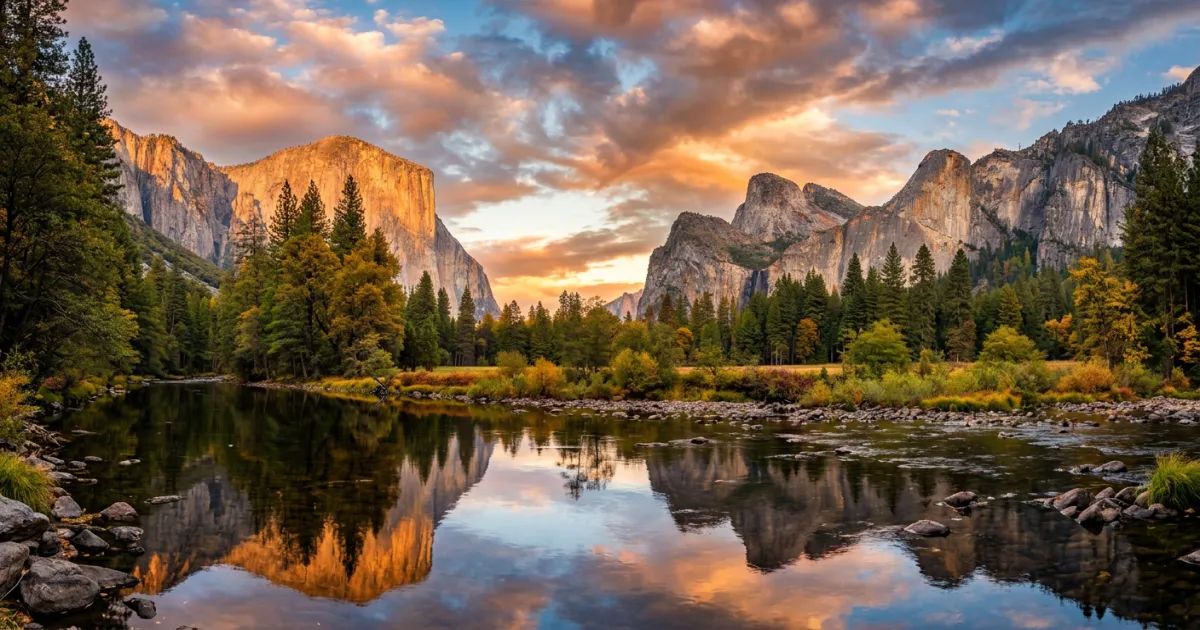
Yosemite National Park draws over four million visitors each year, and for good reason. Towering granite cliffs, thundering waterfalls, ancient giant sequoias, and some of the best hiking trails in North America make this park a bucket-list destination. But without a solid plan, your trip can quickly become stressful. Parking fills up early, campgrounds book out months in advance, and popular trails get crowded fast.
This guide covers everything you need to plan a trip to Yosemite in 2026, from entrance fees and lodging to hiking trails and a sample 4-day itinerary. If you are new to trip planning in general, start with our step-by-step trip planning guide for the basics.
Quick Facts
- Location: Sierra Nevada mountains, eastern California
- Size: 759,620 acres (nearly 1,200 square miles)
- Entrance fee: $35 per vehicle, $30 per motorcycle, $20 per person on foot or bicycle (valid 7 days). Non-U.S. residents ages 16 and older pay an additional $100 per person.
- Annual pass: $70 (Yosemite-specific) or $80 (America the Beautiful, covers all national parks)
- Best time to visit: May through September
- Nearest airports: Fresno Yosemite International (FAT, 1.5 hours), Oakland International (OAK, 3.5 hours), San Francisco International (SFO, 4 hours)
- Elevation range: 2,127 feet to 13,114 feet (Mount Lyell)
- 2026 reservation status: No entrance reservation required
Best Time to Visit Yosemite
The park is open year-round, but the season you choose shapes your entire experience.
Peak Season: June through August
Summer brings the warmest weather, the fullest waterfalls (especially in June after snowmelt), and access to all roads and trails. This is also the busiest period. Expect crowded parking lots, long lines at entrance stations, and full campgrounds. Arrive before 8 AM to secure parking in Yosemite Valley.
Shoulder Season: May and September through October
Late spring offers strong waterfall flow with thinner crowds. September and October bring golden light, cooler temperatures, and significantly fewer visitors. Some high-elevation roads and facilities may close earlier depending on weather. Tioga Road (Highway 120 through the park) typically opens in late May or June and closes with the first major snowfall, usually in November.
Winter: November through April
Snow blankets the valley floor and higher elevations. Glacier Point Road and Tioga Road close for winter. Yosemite Valley remains accessible year-round via Highway 140 (El Portal Road). Winter visitors enjoy cross-country skiing, snowshoeing, and the rare beauty of frozen waterfalls with almost no crowds. Some lodges remain open, and camping is available on a first-come, first-served basis.
How Long to Spend in Yosemite
Most visitors spend 3 to 5 days. A long weekend works for hitting the major viewpoints and a couple of hikes, but 4 to 5 days lets you explore beyond Yosemite Valley into Tuolumne Meadows, Mariposa Grove, and the high country. Day trips from San Francisco or Los Angeles are technically possible but leave very little time in the park after the long drive.
Yosemite Trip Budget
Your daily costs depend heavily on where you sleep and eat.
Entrance Fees
A private vehicle pass costs $35 and covers everyone in the car for seven consecutive days. If you plan to visit multiple national parks in a year, the $80 America the Beautiful annual pass pays for itself in three visits. In 2026, non-U.S. residents ages 16 and older must pay an additional $100 per person entrance fee, though an annual pass ($250 for non-residents) waives this fee for all passengers.
Yosemite also offers several fee-free days in 2026, including Presidents Day (February 16), Memorial Day (May 25), and Independence Day weekend (July 3 through 5). Check the NPS website for the full list.
Daily Cost Ranges
- Budget (camping): $50 to $75 per person per day. Camp in a $26 to $36 per night reservable site, cook your own meals, and stick to free hikes and shuttle rides.
- Mid-range: $150 to $200 per person per day. Stay in Curry Village or Housekeeping Camp ($140 to $280 per night), mix restaurant meals with packed lunches.
- Comfort: $250 to $400+ per person per day. Book Yosemite Valley Lodge ($300 to $380 per night) or The Ahwahnee ($500 to $650+ per night), dine in the park, and consider guided tours.
Use our free travel budget template to estimate and track your spending.
Getting to Yosemite
By Car
Most visitors drive. The park has four entrance stations:
- Big Oak Flat Entrance (Highway 120 West): From San Francisco/Oakland, about 3.5 hours
- Arch Rock Entrance (Highway 140): From Merced and Mariposa, the most scenic route and the only year-round access to the valley
- South Entrance (Highway 41): From Fresno, about 1.5 hours
- Tioga Pass Entrance (Highway 120 East): From the Eastern Sierra/Lee Vining, seasonal (typically late May through November)
From major cities: San Francisco is roughly 3.5 hours, Los Angeles is about 5 hours, and Las Vegas is approximately 7 hours.
By Air
Fresno Yosemite International Airport (FAT) is the closest major airport at about 65 miles from the South Entrance. Oakland (OAK) and San Francisco (SFO) offer more flight options but require a longer drive. Rental cars are essential since there is no rideshare service inside the park.
By Bus
YARTS (Yosemite Area Regional Transportation System) runs bus service from Merced, Mariposa, and other gateway communities directly into Yosemite Valley. Fares range from $5 to $18 each way depending on where you board, and your YARTS ticket covers the park entrance fee.
If you are planning a broader road trip that includes Yosemite, grab our free road trip itinerary template to map out your route and stops.
Where to Stay
In-Park Lodging
All in-park lodging is managed by Aramark and booked through TravelYosemite.com. Reservations open 366 days in advance at 7:00 AM Pacific Time and sell out within minutes for summer dates.
- The Ahwahnee: The park’s iconic luxury hotel. Stunning stone-and-timber architecture, fine dining, and views of Half Dome, Glacier Point, and Yosemite Falls. Expect $500 to $650+ per night in summer.
- Yosemite Valley Lodge: Modern rooms near the base of Yosemite Falls. Good mid-range option at $300 to $380 per night. Includes a restaurant, pool (seasonal), and bike rentals.
- Half Dome Village (formerly Curry Village): Canvas tent cabins ($154+), standard motel-style rooms ($230 to $280), and wooden cabins. Budget-friendly by park standards. Shared bathrooms for tent cabins.
- Housekeeping Camp: Open-air concrete shelters with canvas walls along the Merced River. Bring your own bedding. $140 to $170 per night. Seasonal (spring through fall).
- Wawona Hotel: A Victorian-era property near the South Entrance and Mariposa Grove. Quieter and less expensive than valley options.
Camping
Yosemite has 13 campgrounds with over 1,400 sites total.
- Reservable campgrounds (recreation.gov): Upper Pines, Lower Pines, North Pines (all in Yosemite Valley), Wawona, Hodgdon Meadow, and Tuolumne Meadows. Valley sites cost $26 to $36 per night. Reservations open five months in advance on the 15th of each month at 7:00 AM Pacific Time and sell out in minutes.
- First-come, first-served: Bridalveil Creek, Tamarack Flat, White Wolf, Yosemite Creek, and Porcupine Flat. These are away from the valley, cost around $12 to $18 per night, and offer a quieter experience.
- Camp 4: The legendary walk-in climber’s camp at the base of El Capitan. Reservations open one week in advance via recreation.gov. $6 per person per night.
Pro tip: If you cannot get a valley campsite, try Crane Flat or Hodgdon Meadow. Both are within 30 to 45 minutes of the valley floor and easier to reserve.
Gateway Towns
- El Portal: Just 5 minutes from the Arch Rock Entrance. Closest town to the valley with a handful of lodges and cabins.
- Mariposa: About 45 minutes from the valley. More lodging options, restaurants, and a charming Gold Rush-era downtown.
- Groveland: 45 minutes from the Big Oak Flat Entrance. Small-town feel with vacation rentals and a few historic hotels.
- Oakhurst: 45 minutes from the South Entrance near Mariposa Grove. Chain hotels and grocery stores make it a practical base.
Must-See Sights in Yosemite
Yosemite Valley
The 7-mile-long valley is the heart of the park. Most of the iconic landmarks are visible from the valley floor, and a free shuttle system connects all major stops. You could spend days here and not see everything.
El Capitan
This 3,000-foot vertical granite wall is the world’s most famous rock climbing destination. Even if you are not a climber, watching climbers inch up the face through binoculars is mesmerizing. El Capitan Meadow offers the best viewing spot.
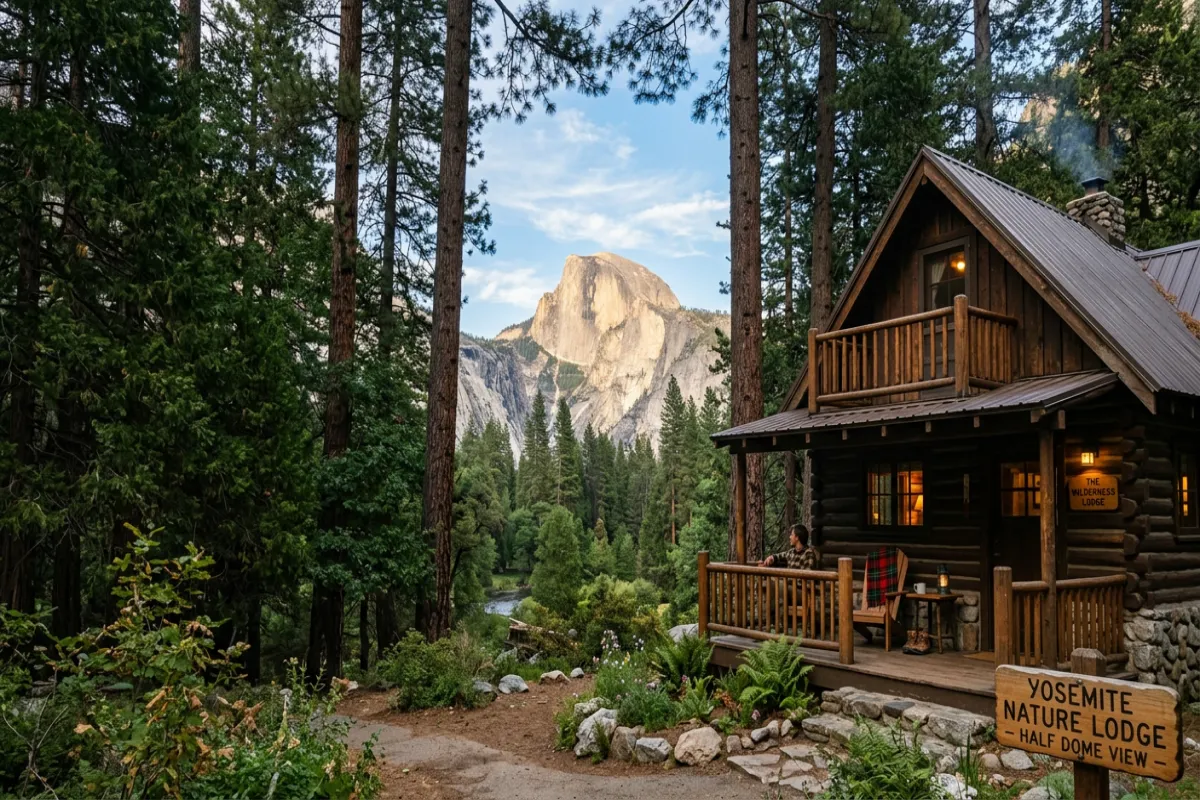
Half Dome
Yosemite’s signature landmark rises 4,737 feet above the valley floor. The summit hike is a 14 to 16-mile round trip with nearly 5,000 feet of elevation gain, including the final push up the famous cable route. Permits are required (see the hiking section below).
Yosemite Falls
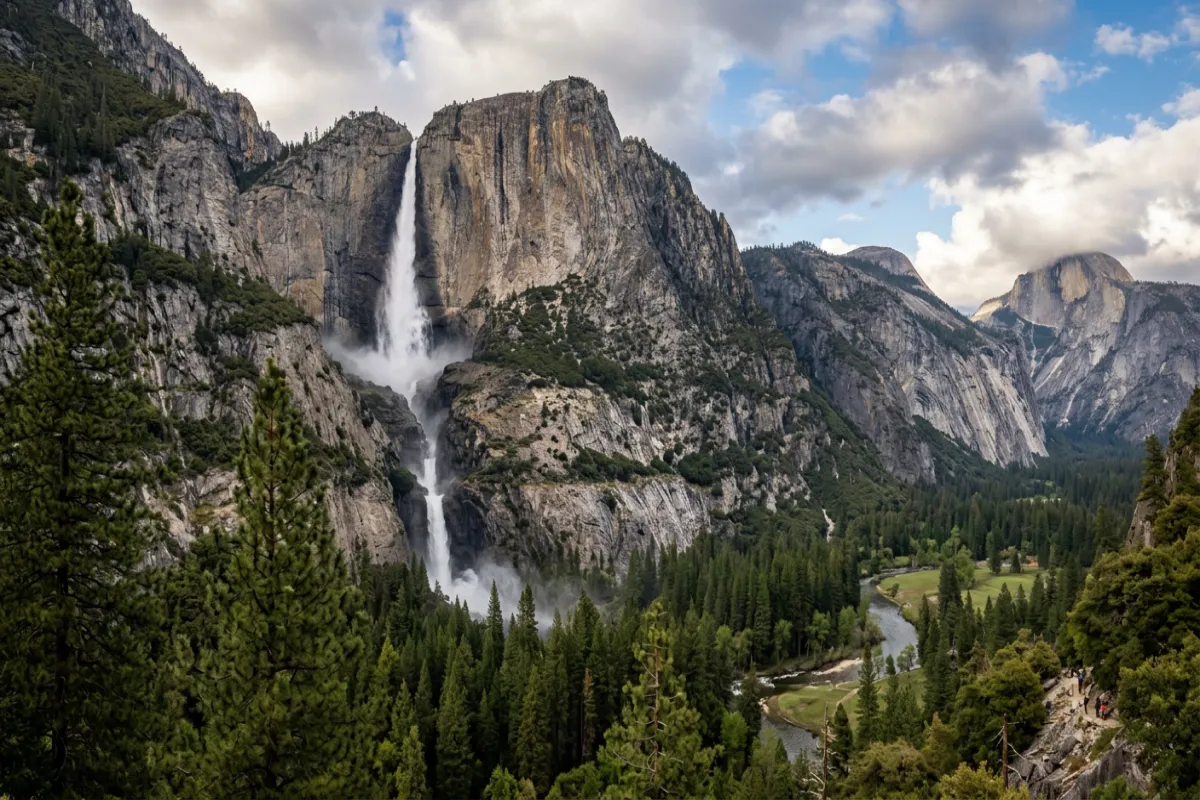
At 2,425 feet, this is the tallest waterfall in North America. It drops in three sections: Upper Yosemite Fall (1,430 feet), the middle cascades (675 feet), and Lower Yosemite Fall (320 feet). Peak flow happens in May and June. By late summer, the falls can slow to a trickle or dry up entirely.
Bridalveil Fall
A 617-foot waterfall near the valley entrance. A short, paved trail (about 0.5 miles round trip) leads to the base. Expect mist and spray in spring, so bring a rain layer.
Tunnel View
Arguably the most photographed viewpoint in all of the national parks. This overlook at the east end of the Wawona Tunnel provides a sweeping panorama of El Capitan, Bridalveil Fall, and Half Dome. Best light is in the morning or at sunset.
Glacier Point
A 7,214-foot overlook with jaw-dropping views of Half Dome, Yosemite Valley, and the High Sierra. Reachable by car via Glacier Point Road (seasonal, typically May through November). One of the best sunset spots in the park.
Mariposa Grove of Giant Sequoias
Home to over 500 mature giant sequoia trees, including the Grizzly Giant (estimated to be around 1,900 years old). The grove is near the park’s South Entrance, about an hour’s drive from Yosemite Valley. A free shuttle runs from the Mariposa Grove Welcome Plaza when the road is open.
Mirror Lake
A seasonal lake (spring and early summer) that reflects Half Dome and the surrounding cliffs. A flat 5-mile loop trail circles the lake. By late summer it becomes a meadow, but the walk is still pleasant.
Hiking in Yosemite
Easy Hikes
- Lower Yosemite Fall Loop (1 mile, flat): Paved trail to the base of Lower Yosemite Fall. Wheelchair accessible. Best in spring when water volume is highest.
- Valley Loop Trail (up to 13 miles, flat): A paved and packed-dirt trail that follows the valley floor, connecting most major viewpoints. Walk any section or the full loop by bike.
- Bridalveil Fall Trail (0.5 miles round trip): Short, mostly paved walk to the base of Bridalveil Fall.
Moderate Hikes
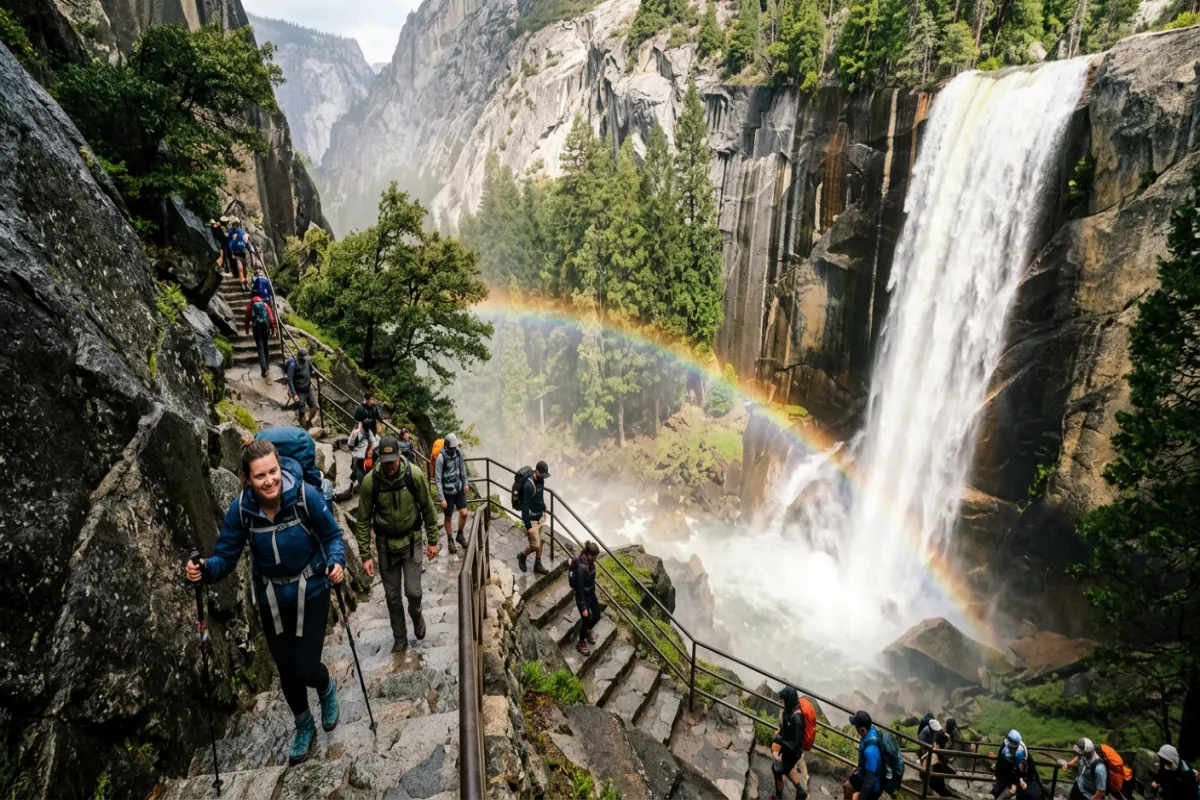
- Mist Trail to Vernal Fall (5.4 miles round trip, 1,000 feet gain): One of the most popular hikes in the park. Stone steps lead to the top of the 317-foot Vernal Fall. Expect to get wet from spray in spring. Continue upward to reach Nevada Fall (additional 2 miles and 1,000 feet).
- Sentinel Dome (2.2 miles round trip, 400 feet gain): A short hike from Glacier Point Road to a 360-degree panoramic summit. On a clear day, you can see from the Coast Range to the peaks of the high Sierra.
Strenuous Hikes
- Half Dome (14 to 16 miles round trip, 4,800 feet gain): This full-day hike takes most people 10 to 12 hours. The final 400 feet require climbing cable handrails bolted into the rock. Permits are required and issued by lottery. The preseason lottery runs in March with results in April. A daily lottery offers additional permits two days before each hiking date. Apply at recreation.gov. Cables are typically up from late May through mid-October.
- Upper Yosemite Falls Trail (7.2 miles round trip, 2,700 feet gain): Steep switchbacks to the top of North America’s tallest waterfall. Views are spectacular. Allow 6 to 8 hours.
- Cathedral Lakes (7 miles round trip, 1,000 feet gain): A Tuolumne Meadows classic. Two pristine alpine lakes beneath Cathedral Peak. Best in July through September when Tioga Road is open.
- Clouds Rest (14.5 miles round trip, 2,300 feet gain from Tenaya Lake): Panoramic summit views that rival Half Dome without the permit requirement. Starts from Tioga Road.
Practical Tips for Your Yosemite Trip
2026 Reservation Status
The National Park Service has announced that entrance reservations will not be required for 2026. This means you can drive into the park any day without a timed entry permit. However, the lack of reservations may lead to heavier crowds and longer entrance lines, especially on weekends and holidays from June through August. Plan to arrive early in the morning or visit midweek when possible.
Book Early
Lodging and campsite reservations fill up extremely fast. In-park lodging opens 366 days in advance and often sells out within minutes. Campground reservations open five months ahead. Set a reminder and be ready at 7:00 AM Pacific Time on release day. Have backup dates ready.
Bear Safety
Yosemite has an active black bear population. All food, coolers, toiletries, and anything with a scent must be stored in bear-proof containers or lockers provided at campgrounds and trailheads. Bear canisters are required for all overnight backcountry trips. Never leave food in your car, as bears can and do break into vehicles.
Altitude and Weather
Yosemite Valley sits at about 4,000 feet, but many trails and roads climb to 7,000 feet and above. Tuolumne Meadows is at 8,600 feet. Drink plenty of water, wear sunscreen, and layer clothing. Summer days can reach 90 to 100 degrees Fahrenheit in the valley, while nights drop to the 50s. Afternoon thunderstorms are common in the high country from July through September.
Cell Service and Connectivity
Cell service is limited and unreliable throughout most of the park. You may get a weak signal in Yosemite Village and at The Ahwahnee, but do not count on it for navigation or communication. Download offline maps before you arrive. Wi-Fi is available at some lodges for a fee.
Getting Around Inside the Park
A free shuttle system operates year-round in Yosemite Valley, connecting all major trailheads, lodges, and viewpoints. During summer, additional shuttles run to El Capitan, Mariposa Grove, and Tuolumne Meadows. Driving within the valley is discouraged due to limited parking. Leave your car at your campsite or lodging and use the shuttle.
Sample 4-Day Yosemite Itinerary
Day 1: Arrive and Explore Yosemite Valley
Arrive early to beat entrance lines. Check into your lodging or campsite. Take the Valley Loop shuttle to orient yourself. Walk to Lower Yosemite Fall (1 mile, easy). Drive or shuttle to Tunnel View for sunset. Have dinner in Yosemite Village or at your campsite.
Day 2: Waterfalls and Glacier Point
Start early on the Mist Trail to Vernal Fall and Nevada Fall (5 to 7 miles depending on turnaround point). Return to the valley for lunch. In the afternoon, drive Glacier Point Road to Glacier Point for panoramic views of Half Dome and the valley. Stay for sunset, then return to your accommodation.
Day 3: Mariposa Grove and South Yosemite
Drive to Mariposa Grove of Giant Sequoias (about 1 hour from the valley). Hike the Grizzly Giant Loop (2 miles) or the full grove trail (7 miles). On the way back, stop at Bridalveil Fall. Spend the afternoon at Mirror Lake or relaxing by the Merced River. For climbers and spectators alike, bring binoculars to El Capitan Meadow to watch climbers on the wall.
Day 4: Tuolumne Meadows or Half Dome
Option A (Tuolumne Meadows): If Tioga Road is open, drive 1.5 hours to Tuolumne Meadows. Hike to Cathedral Lakes (7 miles round trip) or explore Lembert Dome and Soda Springs. Pack a lunch. This area feels like a completely different park compared to the valley.
Option B (Half Dome): If you secured a permit, start before dawn for the Half Dome hike (14 to 16 miles, 10 to 12 hours). Bring plenty of water (at least 4 liters), snacks, gloves for the cables, and a headlamp. This is an all-day commitment and one of the most rewarding hikes in the national park system.
Planning Tools
Getting your Yosemite trip organized does not have to be complicated. These free tools can help:
- Yopki AI Travel Planner generates a personalized day-by-day itinerary based on your travel dates, interests, and pace.
- Travel Budget Template helps you estimate costs for entrance fees, lodging, food, gas, and activities.
- Road Trip Itinerary Template maps out your driving legs, stops, and overnight stays if you are combining Yosemite with other destinations.
- How to Plan a Trip (Step-by-Step) walks you through the fundamentals of trip planning, from setting a budget to booking flights.
Explore More National Park Guides
If you are considering other national parks alongside Yosemite, check out our companion guides:
Frequently Asked Questions
Do I need a reservation to enter Yosemite in 2026?
No. The National Park Service has confirmed that entrance reservations are not required for 2026. You still need to pay the standard entrance fee or present a valid annual pass.
How far in advance should I book lodging?
As early as possible. In-park lodging opens 366 days in advance and sells out within minutes for summer dates. Gateway town lodging is more available but still books up 3 to 5 months ahead for peak season.
Can I do Yosemite as a day trip?
Technically yes, but it is not ideal. From San Francisco, you will spend about 7 hours driving round trip, leaving limited time in the park. If a day trip is your only option, focus on Yosemite Valley: Tunnel View, Lower Yosemite Fall, and Bridalveil Fall.
Do I need a permit to hike Half Dome?
Yes. A permit is required to go beyond the base of the subdome. The NPS allows 300 hikers per day (225 day hikers, 75 backpackers). Apply through the preseason lottery in March or the daily lottery two days before your hike at recreation.gov.
Is there food available inside the park?
Yes. Yosemite Village has a grocery store, deli, and several restaurants. The Ahwahnee Dining Room serves upscale meals (dinner reservations recommended). Curry Village has a pizza deck, coffee corner, and bar. For budget travelers, the Village Store sells groceries for camp cooking.
What should I do if I cannot get a campsite reservation?
Try first-come, first-served campgrounds like Tamarack Flat, Porcupine Flat, or Yosemite Creek (arrive early in the day). Alternatively, look at campgrounds and lodging in gateway towns like Mariposa, Groveland, or Oakhurst. Some national forest campgrounds near the park entrances are also available without reservations.
Is Yosemite safe for families with young children?
Yes. Many valley trails are paved and stroller-friendly. The free shuttle system makes it easy to get around without a car. Stick to easy hikes like Lower Yosemite Fall and the valley floor trails, and keep children away from cliff edges and fast-moving water. Bear safety rules apply to everyone.