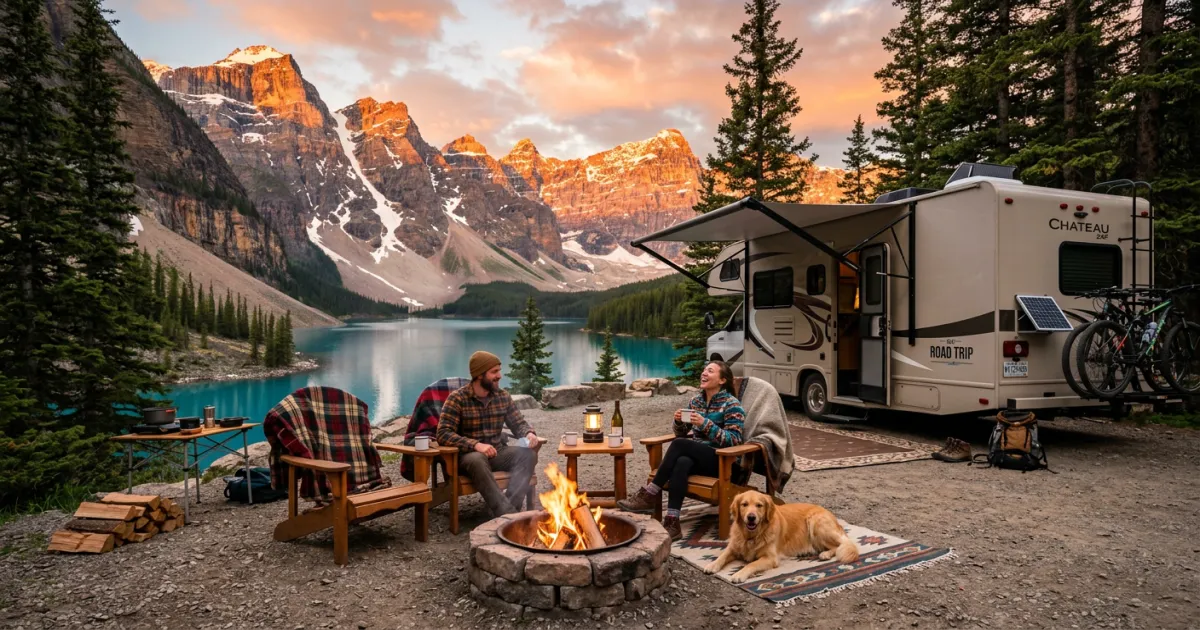
Why Plan an RV Road Trip?
An RV road trip puts you in control of your schedule, your kitchen, and your bedroom, all while the scenery changes outside your window. You skip the hotel check-in lines, eat meals on your own terms, and wake up in a new place every morning. Whether you are a retired couple chasing national parks or a family looking for a screen-free summer adventure, an RV trip delivers freedom that flights and hotels simply cannot match.
This guide walks you through every step of planning an RV road trip in 2026, from choosing the right vehicle to mapping your route and budgeting your expenses. If you are new to RV travel, start here. If you have done it before, use this as a checklist to make sure nothing slips through the cracks.
Types of RVs: Choosing the Right Vehicle
Picking the right RV is the single most important decision you will make. Each type has tradeoffs between living space, drivability, and cost. Here is what you need to know about each one.
Class A Motorhome
Class A motorhomes are the largest drivable RVs on the road. They range from 25 to 45 feet long and feel like a rolling apartment, with full kitchens, bathrooms, and slide-outs that expand the living area when parked. They are ideal for extended trips and full-time living. The downsides: they are expensive to rent ($175 to $275 per night on Outdoorsy), fuel-hungry (6 to 10 miles per gallon on diesel or gas), and difficult to maneuver in tight campgrounds or city streets. Many Class A owners tow a smaller vehicle (“toad”) for errands and sightseeing once parked.
Class B Camper Van
Class B vans are the smallest and most nimble motorhomes. Built on a standard van chassis, they typically run 17 to 23 feet long. You get a compact kitchen, a wet bath, and sleeping for two. They drive like a large van, fit in standard parking spots, and get 15 to 25 miles per gallon. Rentals run $100 to $200 per night. The tradeoff is space: extended trips with more than two people will feel cramped quickly.
Class C Motorhome
Class C motorhomes sit between A and B in size, typically 20 to 33 feet. They are built on a truck or van chassis with a distinctive cab-over sleeping area. This makes them a popular choice for families since they sleep four to eight people comfortably. Fuel economy lands around 10 to 16 miles per gallon, and rentals average $150 to $200 per night. They are easier to drive than a Class A but still require attention to height clearance and turning radius.
Travel Trailer
Travel trailers are towable RVs that range from 12 to 35 feet. You need a compatible tow vehicle (usually a truck or large SUV), but the big advantage is that once you unhitch at the campsite, your tow vehicle is free for day trips. Rental costs are the lowest of any RV type, starting around $50 to $125 per night. They come in every size and layout imaginable, from tiny teardrop trailers to full-size units with multiple slide-outs.
Fifth Wheel
Fifth wheels connect to a special hitch mounted in a pickup truck bed. This elevated hitch point creates a distinctive two-level layout and allows for lengths up to 43 feet. They feel spacious and stable on the highway. Rental prices range from $60 to $150 per night. The catch: you need a heavy-duty pickup truck with a fifth-wheel hitch, which limits your towing options.
Pop-Up Camper
Pop-up campers (also called fold-down or tent campers) collapse for towing and expand at the campsite. They are lightweight, affordable ($50 to $100 per night to rent), and easy to tow with most vehicles. You get a more connected-to-nature experience since the canvas sides let in fresh air and sounds. The downsides: limited climate control, less security, and setup takes 15 to 30 minutes.
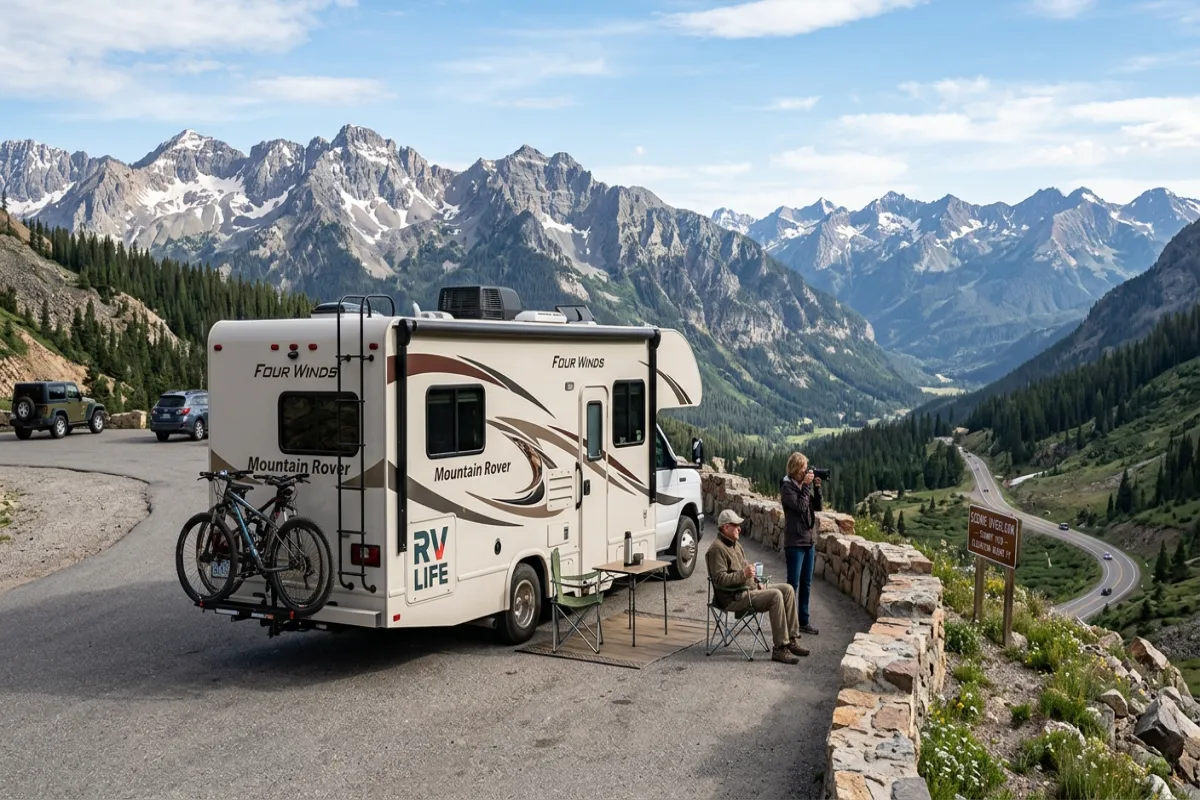
Rent vs. Buy: What Makes Sense for Your Trip
If this is your first RV trip, rent. Full stop. Renting lets you test different RV types, learn what features matter to you, and avoid a five- or six-figure purchase before you know if you even enjoy the lifestyle.
Rental Costs in 2026
RV rental costs in 2026 range from $75 to $350 or more per night depending on the vehicle type, season, and location. Here is a quick breakdown:
- Peer-to-peer platforms (Outdoorsy, RVshare): These connect you with individual RV owners. Prices tend to be 10 to 20 percent lower than fleet rentals for comparable vehicles. RVshare averages around $184 per day across all types. Outdoorsy runs slightly higher due to platform fees.
- Fleet rentals (Cruise America, El Monte RV): These companies maintain their own fleets of newer, standardized RVs. Cruise America charges $100 to $250 per night as a base rate, plus $0.35 per mile driven. Kitchen kits, bedding, and insurance are extra. El Monte offers similar pricing with newer vehicles.
Budget at least $150 to $250 per night for a comfortable Class C rental during peak summer season. Shoulder seasons (April, May, September, October) can save you 20 to 40 percent.
When Buying Makes Sense
If you plan to take three or more weeks of RV trips per year, buying starts to make financial sense. A used Class C motorhome in good condition runs $40,000 to $80,000. A new travel trailer starts around $15,000 to $30,000. Factor in insurance ($1,000 to $3,000 per year), storage ($50 to $300 per month), and maintenance before making the leap.
Planning Your Route: RV-Specific Considerations
Route planning for an RV is nothing like planning a car trip. Your vehicle is taller, wider, heavier, and slower than a passenger car, and the roads you can safely travel reflect that. For more general road trip planning strategies, see our complete road trip planning guide.
Hazards to Watch For
- Low bridges and overpasses: Many bridges have clearances under 12 feet, which will not accommodate Class A or Class C motorhomes. Know your RV height and check every route.
- Narrow roads: Mountain switchbacks, historic downtown streets, and rural two-lanes can be impassable for larger RVs.
- Weight limits: Some bridges and roads have weight restrictions. A fully loaded Class A can weigh 30,000 pounds or more.
- Mountain grades: Steep descents (6 percent grade or more) require engine braking and careful speed management in an RV. The Rockies, Appalachians, and Sierra Nevada all have sections that demand extra caution.
RV GPS and Route Planning Apps
Standard Google Maps or Apple Maps will route you through low bridges, tunnels, and roads your RV cannot handle. Use RV-specific navigation instead:
- RV LIFE Trip Wizard: Plans routes customized to your RV height, weight, and length, with campground integration.
- Garmin RV GPS: Dedicated GPS units with RV-specific routing that account for clearances and road restrictions.
- CoPilot RV: Mobile app with offline maps and RV-safe routing.
Daily Driving Limits
Most experienced RVers follow a daily driving limit of 250 to 300 miles, or about 4 to 5 hours behind the wheel. Some use the “3-3-3 rule”: drive no more than 300 miles, arrive by 3 PM, and stay at least 3 nights before moving on. This pace prevents fatigue, gives you time to enjoy each stop, and reduces wear on your vehicle.
Avoid driving through major city centers whenever possible. Merging, lane changes, and tight exits are stressful in a 30-foot vehicle.
Campground Reservations: Where to Stay
Your campground choices shape the entire trip experience. Here are your main options. For broader camping trip planning advice, check our camping trip planning guide.
RV Parks (Full Hookups)
Private RV parks offer full hookups (water, electric 30/50 amp, sewer), Wi-Fi, laundry, pools, and sometimes cable TV. Expect to pay $30 to $100 per night, with premium parks and resorts running $100 to $200 or more. KOA is the largest chain, averaging around $50 per night.
National and State Park Campgrounds
These campgrounds put you in stunning natural settings at lower prices ($20 to $35 per night for most), but many have RV length limits (25 to 30 feet is common), limited or no hookups, and no dump stations on site. Reservations at popular parks like Yellowstone, Yosemite, and Glacier fill up 6 months in advance. State parks average $25 per night and often have basic electric hookups.
Harvest Hosts and Unique Stays
Harvest Hosts ($99 per year membership) gives you access to over 5,600 wineries, farms, breweries, and golf courses where you can park overnight for free. No hookups, but the experiences are unique and memorable.
Boondocking and Dry Camping
Boondocking means camping without hookups, often on public land (Bureau of Land Management or national forest land). It is free and offers solitude, but you need to be self-sufficient with water, power (solar or generator), and waste tanks. Apps like Campendium and iOverlander help you find established boondocking spots with user reviews.
Reservation Tips
- Book national park campgrounds 6 months ahead on Recreation.gov.
- Use Campendium, The Dyrt, or AllStays to research and compare campgrounds with filters for RV length, hookups, and amenities.
- Know your RV length. Many campgrounds have strict limits, and showing up in a 35-foot rig at a 30-foot-max site means you are finding a new spot at 8 PM.
- Dump stations: plan your route to include dump stations every 3 to 5 days if you are boondocking. Many fuel stations and Walmart locations have them.
RV Road Trip Costs: A Realistic Breakdown
Understanding the true cost of an RV trip prevents budget surprises. Here is what to expect for a two-week summer road trip covering 2,000 miles in a rented Class C motorhome. Use our travel budget template to track your expenses.
| Expense | Estimated Cost |
|---|---|
| RV rental (14 nights at $180/night) | $2,520 |
| Gas/diesel (2,000 miles at 12 mpg, $3.50/gal) | $585 |
| Campground fees (14 nights, mix of parks) | $560 to $980 |
| Groceries and dining | $500 to $800 |
| Rental insurance | $200 to $400 |
| Propane refills | $30 to $60 |
| Dump station fees | $0 to $40 |
| Tolls and parking | $50 to $150 |
| Activities and attractions | $200 to $500 |
| Total | $4,645 to $6,035 |
Gas or diesel is consistently the largest variable cost. Fuel economy varies dramatically by RV type: a Class B van might get 20 mpg while a Class A gets 7. Plan your fuel budget based on your specific vehicle.
Essential RV Gear: Do Not Leave Without These
Whether you own or rent, make sure these items are on board before you pull out of the driveway.
Safety and Setup
- Surge protector: This is critical. A surge protector guards your RV electrical system against campground power problems, which are more common than you would think. Expect to spend $80 to $130 for a good 30-amp unit.
- Leveling blocks: Stackable plastic blocks that level your RV on uneven ground. A must for sleeping comfortably and keeping your refrigerator running properly.
- Wheel chocks: Prevent your RV from rolling when parked.
- Water pressure regulator: Campground water pressure can spike and damage your RV plumbing. A $10 regulator prevents expensive repairs.
Hookup and Waste
- Sewer hose kit: A 20-foot sewer hose with fittings for dumping your holding tanks. Get a quality brand; cheap hoses leak.
- Extension cord (30-amp or 50-amp): Not every site has the pedestal right next to your hookup panel. A 25-foot heavy-duty extension cord solves the problem.
- Fresh water hose: Use a dedicated drinking-water-safe hose (white or blue), never a garden hose.
Tools and Supplies
- Basic tool kit (screwdrivers, pliers, adjustable wrench, duct tape, zip ties)
- First aid kit
- Flashlights and headlamps
- Fire extinguisher (check that the rental RV has one)
- Tire pressure gauge
Driving an RV: Tips for a Safe Trip
Driving an RV is not difficult, but it demands respect. You are operating a vehicle that weighs 10,000 to 30,000 pounds, stands 10 to 13 feet tall, and stretches 20 to 40 feet long. Here is how to do it safely.
Speed and Pacing
Keep your speed at 55 to 60 mph on highways. Going faster burns significantly more fuel, increases stopping distance, and makes the vehicle harder to control in crosswinds. Many states have lower speed limits for RVs and vehicles towing trailers.
Turns, Backing, and Mirrors
Take wide turns, especially right turns, to avoid curbing your rear wheels or clipping signs. Practice backing up in an empty parking lot before your trip. Use a spotter whenever possible, and invest in a good backup camera if your rental does not include one. Adjust your side mirrors before driving and check them constantly.
Height Clearance
Write your RV height on a sticky note and stick it to the dashboard. Check every bridge, gas station canopy, drive-through, and tree branch before you commit. One low-clearance collision can end your trip instantly and cost thousands in repairs.
Wind
RVs are tall, flat-sided boxes, which makes them vulnerable to crosswinds. High-profile wind warnings apply to you. If gusts exceed 30 to 40 mph, consider pulling over and waiting it out. Passing semi-trucks will also create strong gusts, so grip the wheel firmly and maintain your lane.
Towing a Car (Toad)
Many motorhome travelers tow a small car behind their RV for use at the destination. This requires a tow bar, base plate, and supplemental braking system. Not every car can be flat-towed (four wheels down), so check your vehicle manual. A toad adds 3,000 to 4,000 pounds to your total weight and increases your overall length by 15 to 20 feet.
Meal Planning: Using Your RV Kitchen
One of the biggest financial advantages of an RV trip is cooking your own meals. A full RV kitchen typically includes a propane stove, oven, microwave, refrigerator, and sink. That setup can save a family of four $50 to $100 per day compared to eating out for every meal.
Grocery Shopping Strategy
Buy groceries at each major stop rather than loading up at the start. Your refrigerator is small (typically 6 to 8 cubic feet in a Class C, compared to 20+ in a home fridge), and you have limited pantry space. Plan meals around 3 to 4 days of groceries at a time.
Easy RV Meals
Keep meals simple. One-pot dinners (chili, pasta, stir-fry) minimize dish-washing in a small sink. Prep ingredients at home before you leave: chop vegetables, marinate proteins, and portion dry goods into bags. Breakfast burritos, sandwiches, and grilled items at the campsite are RV road trip staples.
Cooler Management
Bring a quality cooler for overflow items and drinks. It keeps things accessible outside without opening the RV door constantly. Ice from campground stores or gas stations costs $3 to $5 per bag.
RV Maintenance on the Road
Basic maintenance awareness prevents minor issues from becoming trip-ending breakdowns.
- Tire pressure: Check every morning before driving. RV tire blowouts are dangerous and common. Underinflation is the number one cause. Use a tire pressure monitoring system (TPMS) for real-time alerts.
- Holding tanks: Monitor your fresh water, gray water (sinks/shower), and black water (toilet) tank levels. Dump black and gray tanks when they reach two-thirds full. Never dump black water first; dump gray water second to flush the sewer hose.
- Generator: If your RV has an onboard generator, run it under load for at least two hours per month to keep it healthy. Check oil levels before extended use.
- Slide-outs: Keep slide-out seals clean and lubricated. Inspect the roof seal where slide-outs meet the main body for cracks or gaps that could leak.
- Roof: Inspect your RV roof for cracks, tears, or soft spots around vents and antennas. Water leaks are the most expensive RV repair and the easiest to prevent with regular checks.
Best RV Road Trip Routes in the United States
These routes are popular for good reason: they combine stunning scenery, accessible campgrounds, and manageable driving distances. Use our road trip itinerary template to plan your daily stops.
Pacific Coast Highway (California)
Highway 1 from San Francisco to Los Angeles (or vice versa) covers roughly 380 miles of dramatic coastal cliffs, redwood forests, and charming beach towns. Key stops include Big Sur, Hearst Castle, Morro Bay, and Santa Barbara. Note: some sections of Highway 1 are narrow and have RV length restrictions. Check Caltrans for current conditions.
Blue Ridge Parkway (Virginia to North Carolina)
This 469-mile scenic route follows the Appalachian Mountain crest through tunnels, overlooks, and historic homesteads. Speed limit is 45 mph, so plan for slow, scenic driving. Campgrounds along the parkway accommodate RVs up to 30 feet at most sites.
Route 66 (Illinois to California)
The original 2,400-mile “Mother Road” from Chicago to Santa Monica celebrates its centennial in 2026. Expect festivals, events, and renewed interest along the route throughout the year. RV-friendly stops include Cadillac Ranch in Amarillo, the Painted Desert, and the Grand Canyon (accessible via a short detour).
Florida Gulf Coast
A warm-weather route from Tampa to Key West (about 400 miles), with stops at Sanibel Island, Everglades National Park, and the Florida Keys. Winter and spring are peak season. RVs over 30 feet will find the Keys challenging due to narrow bridges and limited campground space.
New England Fall Foliage
A September-October loop through Vermont, New Hampshire, and Maine covers 500 to 800 miles of covered bridges, maple farms, and peak autumn color. The Kancamagus Highway in New Hampshire is a must-drive. Campgrounds fill fast in foliage season, so book by June.
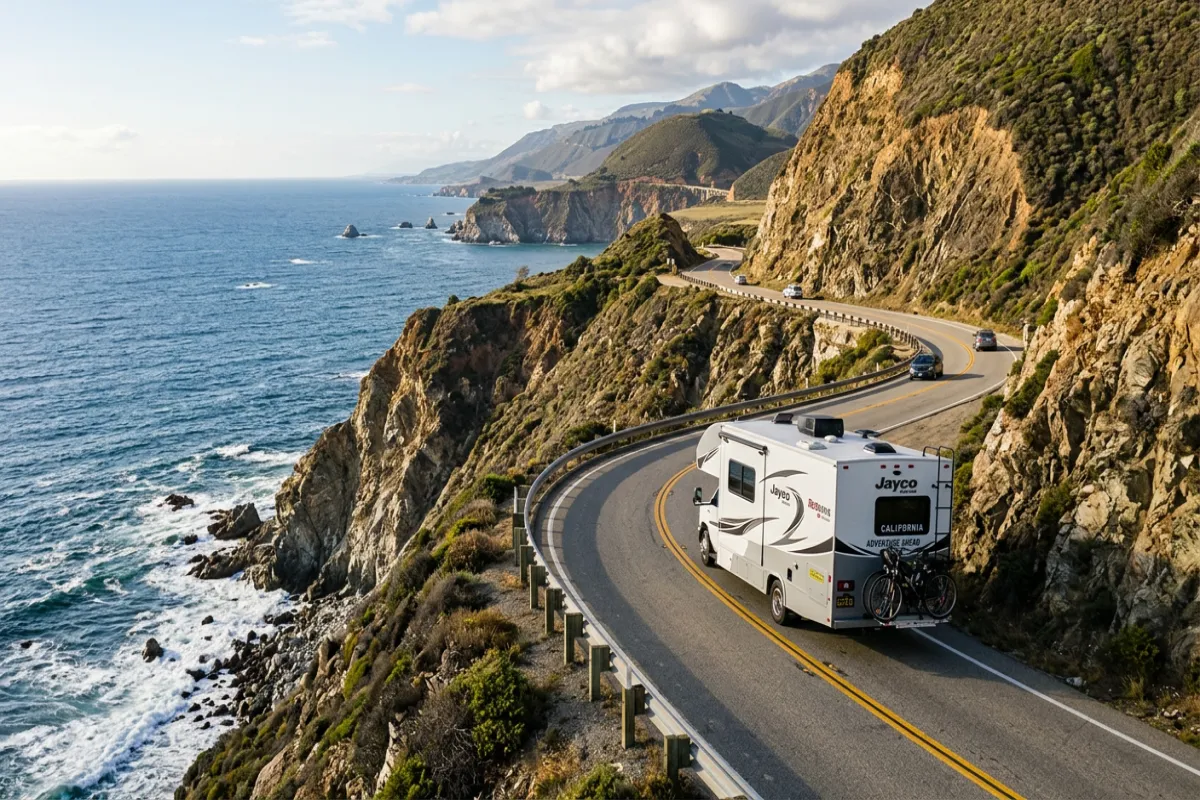
Sample RV Road Trip Planning Timeline
Use this timeline to stay organized. For a comprehensive planning framework, see our complete trip planning guide.
6 Months Before Departure
- Decide on your route and target dates.
- Book campground reservations at national parks and popular destinations.
- Start researching RV types and rental companies.
3 Months Before
- Book your RV rental. Peak summer dates sell out early, especially for newer and well-reviewed vehicles.
- Reserve remaining campgrounds along your route.
- Create a rough daily itinerary with driving distances and campground check-in times.
1 Month Before
- Order or gather essential RV gear (surge protector, leveling blocks, sewer hose kit).
- Plan your first three days of meals and make a grocery list.
- Review your RV rental agreement, insurance coverage, and cancellation policy.
1 Week Before
- Confirm all reservations (RV rental, campgrounds, any guided tours).
- Download offline maps for areas with limited cell service.
- Pack clothes, personal items, and kitchen supplies.
Day of Pickup
- Do a full walkthrough of the RV with the rental company. Document any existing damage.
- Learn how to operate all systems: water heater, furnace, AC, slide-outs, leveling jacks, dump valves.
- Practice driving in the parking lot before hitting the road.
Planning Tools and Resources
These tools make RV trip planning significantly easier:
- RV LIFE Trip Wizard: RV-safe route planning with campground integration.
- Campendium: Campground reviews with photos, cell signal reports, and pricing.
- The Dyrt: Campground discovery with user reviews and a Pro membership for offline access and discounts.
- GasBuddy: Find the cheapest fuel along your route.
- iOverlander: Community-sourced database for boondocking spots and dump stations.
- AllStays: Comprehensive database of campgrounds, rest stops, Walmart parking, and dump stations.
- Yopki AI Travel Planner: AI-powered trip planning that helps build itineraries around your preferences and schedule.
Frequently Asked Questions
How much does an RV road trip cost per day?
A typical RV road trip costs $250 to $450 per day when you factor in rental, fuel, campgrounds, food, and activities. Owning your RV and boondocking can cut that to $75 to $150 per day.
Do I need a special license to drive an RV?
In most US states, a standard driver’s license covers RVs up to 26,000 pounds. A few states (like California for some configurations, and Texas for very large rigs) may require additional endorsements. Check your state’s DMV website before renting.
Can I park an RV at Walmart overnight?
Many Walmart locations allow free overnight RV parking, but it is not a company-wide policy. Each store manager decides independently. Always call ahead or check apps like AllStays for confirmed Walmart overnight parking locations.
What is the best RV for a first-time renter?
A Class C motorhome is the most popular choice for first-timers. It is large enough to sleep a family, has a full kitchen and bathroom, and is easier to drive than a Class A. If you are a couple or solo traveler, a Class B camper van is the easiest to handle.
How far in advance should I book campgrounds?
For national parks and popular destinations during summer, book 6 months ahead. For private RV parks, 1 to 3 months is usually sufficient. Shoulder season travel (spring and fall) gives you more flexibility.
Is RV travel cheaper than flying and staying in hotels?
For a family of four on a two-week trip, an RV road trip typically costs 20 to 40 percent less than flights plus hotel rooms plus restaurant meals. The savings increase when you cook most meals in the RV and use a mix of campground types including some boondocking nights.