A wedding day has dozens of moving parts happening simultaneously: hair and makeup, photographer arrival, ceremony start, cocktail hour, first dance, toasts, cake cutting, send-off. Without a written timeline, the coordinator is guessing, the photographer misses the first look, and the caterer serves dinner 45 minutes late.
This free wedding timeline template gives you a minute-by-minute schedule for the entire wedding day. It’s designed to be shared with your wedding planner, photographer, caterer, DJ, venue coordinator, and wedding party — so everyone is working from the same clock.
What’s in This Template
1. Pre-Ceremony Timeline
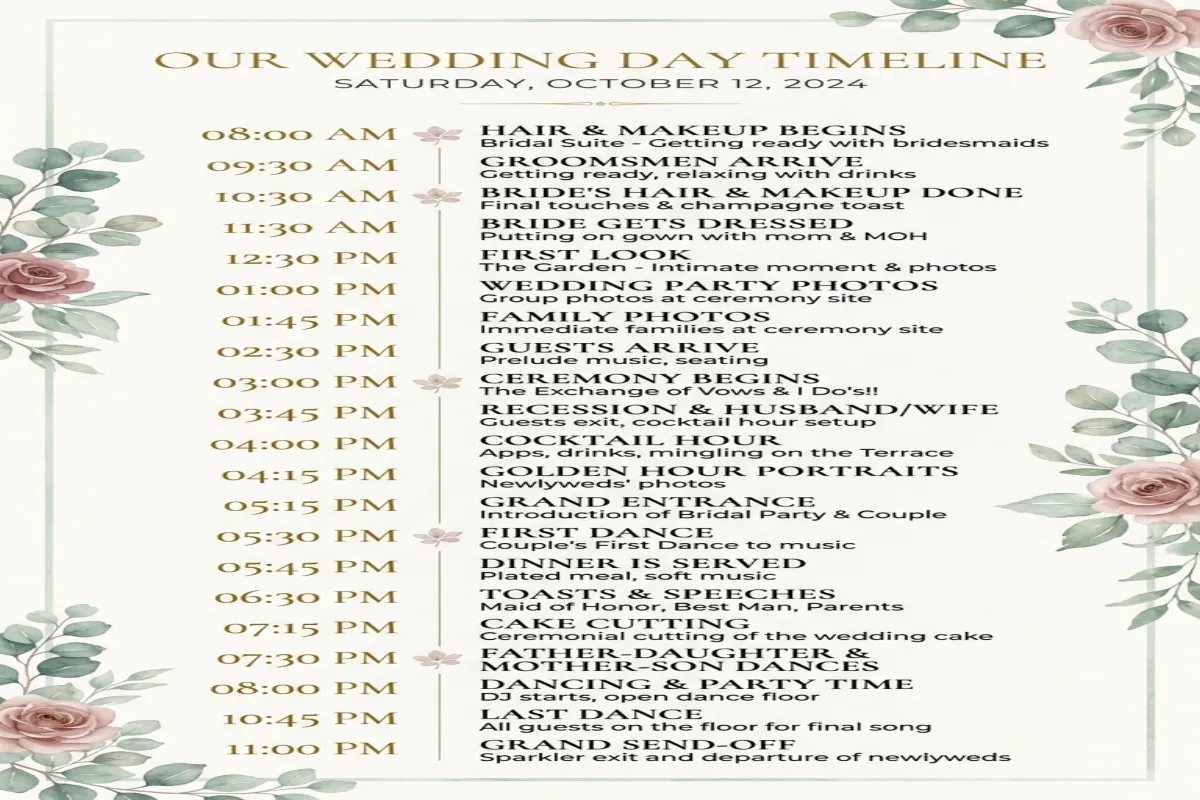
Everything before “here comes the bride”: hair and makeup start times (staggered by person), getting-ready photos, first look (if applicable), bridal party photos, family photos, bouquet and boutonniere distribution, guest arrival window, seating of grandparents and parents, and processional lineup. Each item has an assigned time, location, and person responsible.
2. Ceremony Timeline
Processional order and timing, ceremony start, readings, vows, ring exchange, pronouncement, recessional, and receiving line (if applicable). Includes notes for the officiant on timing and cues. Total ceremony duration estimate. A separate column for music cues — what plays during the processional, during readings, and during the recessional.
3. Cocktail Hour
Start time, location, bar setup, passed appetizers, entertainment (live music, cocktail games), and what’s happening behind the scenes during cocktail hour: room flip from ceremony to reception, couple’s photos, bridal party group shots. This is the buffer that gives your vendor team time to reset — the timeline ensures it’s long enough.
4. Reception Timeline
The main event, minute by minute: grand entrance, first dance, welcome toast, dinner service (course timing), parent dances, speeches and toasts, cake cutting, bouquet and garter toss (if applicable), open dancing, last call, last dance, and send-off. Each milestone has a time, a responsible person (DJ announces, coordinator cues), and notes.
5. Vendor Schedule
Arrival and departure times for every vendor: venue coordinator, caterer and serving staff, bartenders, photographer, videographer, DJ or band, florist, hair and makeup artists, officiant, rental company (setup and teardown), and transportation. Having all vendor times in one table prevents the “I thought the florist was coming at 2” confusion.
6. Contact Directory
Phone numbers for every vendor, every member of the wedding party, family members with responsibilities (uncle who’s reading a poem, cousin who’s managing the guest book), and the venue’s day-of contact. This list goes to the wedding planner or coordinator so they can reach anyone without bothering the couple.
7. Emergency Notes
Rain backup plan (indoor ceremony location, tent details), first aid kit location, extra copies of vows, backup music playlist, sewing kit for wardrobe malfunctions, and a “day-of emergency contact” who handles problems so the couple doesn’t have to.
Plan Your Trip Today!
Get a complete, personalized trip template in seconds.
For more details, see our trip planning guide.
Take full control to customize every detail. Or, skip the template and build your itinerary with AI
Plan My TripHow to Use It
- Start with the ceremony time and work backward. If the ceremony is at 4 PM, hair and makeup might start at 8 AM, first look at 1 PM, bridal party photos at 2 PM. Every pre-ceremony item gets its time from the ceremony anchor.
- Work forward from the ceremony for the reception. Ceremony ends at 4:30, cocktail hour 4:30-5:30, grand entrance 5:45, dinner 6:15. Build the reception timeline in sequence.
- Share with every vendor 2-4 weeks before the wedding. Email the timeline to all vendors and confirm their arrival times. This is when conflicts surface — the florist can’t come at 10 AM, so you adjust now rather than on the wedding day.
- Print copies for the day. The coordinator, photographer, DJ, and caterer each need a printed copy. Phones die, group chats get buried, but a printed timeline on a clipboard works all day. Use the Yopki Travel Document Organizer to merge the timeline with venue maps and vendor contracts into one coordinator packet.
- Build in buffer time. Add 15 minutes of buffer between every major transition (ceremony to cocktail hour, cocktail hour to reception entrance). Things always take longer than planned. Buffer prevents the entire evening from sliding later and later.
Wedding Timeline Tips
Schedule photos during cocktail hour, not between ceremony and reception. Guests don’t want to wait an hour for the couple to finish photos. Have your photographer capture essential couple and family portraits during cocktail hour while guests are entertained and fed.
Give toasts a time limit. Note “5 minutes max” next to each toast on the timeline. Three toasts at 10 minutes each is 30 minutes of speeches — guests start checking their phones. Give your speakers a heads-up on length and tell the DJ to have music ready.
Schedule the last dance, not just the first dance. Knowing when the evening ends helps the DJ manage energy, the bar know when last call is, and the couple know when to change for the send-off. Open-ended receptions drift and fizzle rather than ending on a high note.
Related Templates
- This Wedding Timeline — minute-by-minute day-of schedule. Best for couples, planners, and vendor coordination.
- Destination Wedding Itinerary — multi-day guest schedule with travel logistics. Best when guests are traveling to your wedding.
- Bachelorette Itinerary — group event planning with shared budget. Best for the pre-wedding celebration.
- Travel Planner — for guests planning their travel to and from the wedding.
FAQ
How do you create a wedding timeline?
Start with your ceremony time as the anchor. Work backward for pre-ceremony events (hair, photos) and forward for reception events (dinner, dances, toasts). Add vendor arrival times, build in 15-minute buffers between transitions, and share the final timeline with all vendors 2-4 weeks before the wedding.
How long should a wedding timeline be?
A typical wedding day spans 8-12 hours from the start of hair and makeup to the send-off. The ceremony itself is usually 20-30 minutes. Cocktail hour is 60 minutes. The reception is 4-5 hours. Pre-ceremony preparation is 4-6 hours depending on the size of the wedding party.
When should I send the timeline to vendors?
Send the timeline 2-4 weeks before the wedding and ask vendors to confirm their arrival times. This gives you time to resolve any scheduling conflicts. Send a final updated version 3-5 days before the wedding with any last-minute changes.
Do I need a separate timeline for the rehearsal dinner?
If your rehearsal dinner involves multiple venues, activities, or transportation logistics, yes. Use the Destination Wedding Itinerary to plan the full multi-day wedding weekend including the rehearsal dinner.