
Timing Is Everything When Booking Travel
There is a moment for every travel booking when the price is right, availability is good, and you are not leaving money on the table. Book too early and you might miss a better deal. Book too late and you are paying a premium for whatever is left.
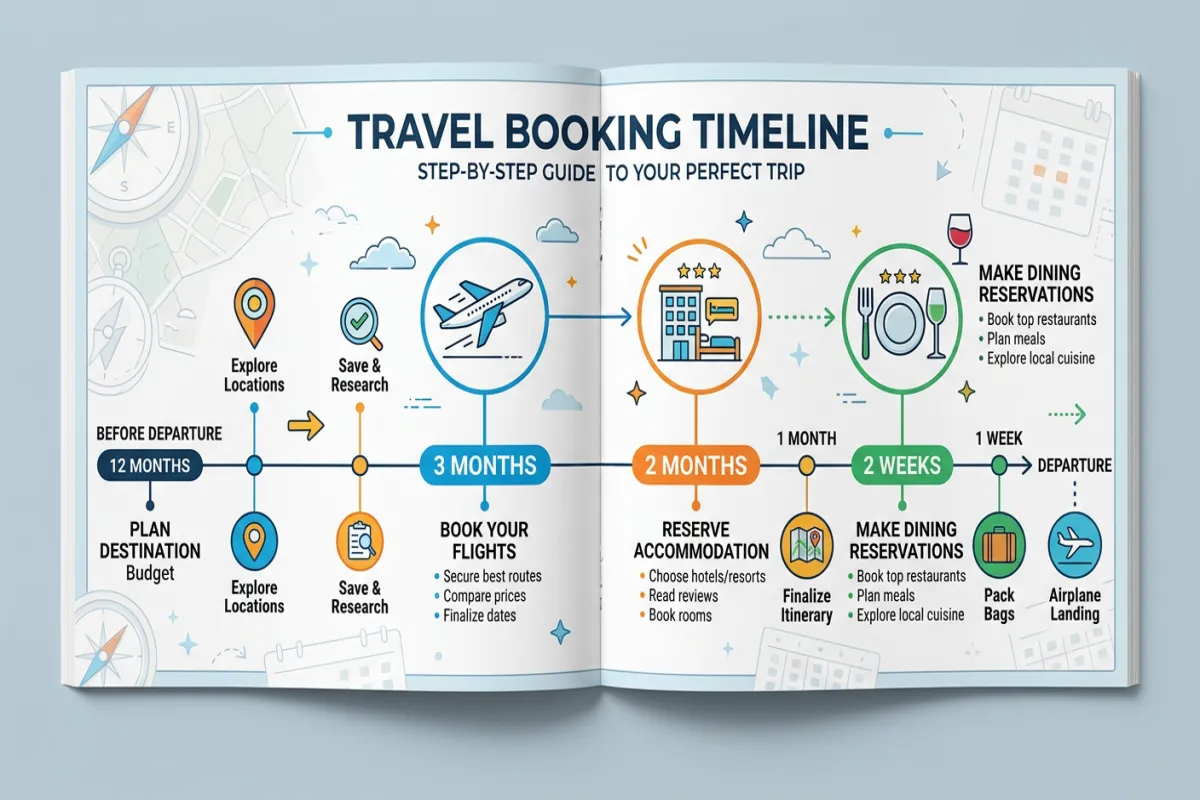
The problem is that “the right time” is different for flights, hotels, car rentals, tours, restaurants, and travel insurance. And it changes depending on whether you are planning a domestic weekend trip or a two-week international adventure.
This guide gives you a clear timeline for every piece of your trip. No vague advice like “book early.” Instead, you get specific windows backed by how airline pricing, hotel availability, and activity bookings actually work.
The Quick Reference: When to Book Everything
Here is the overview. Detailed explanations for each category follow below.
- Domestic flights: 1-3 months before departure
- International flights: 2-8 months before departure
- Hotels (domestic): 2-4 weeks before (with refundable rate booked earlier)
- Hotels (international): 1-3 months before
- Car rentals: 2-4 weeks before, but book a refundable reservation early
- Tours and activities: 2-4 weeks before (popular ones: 1-2 months)
- Restaurant reservations: 2-4 weeks before (fine dining: 1-3 months)
- Travel insurance: Immediately after your first non-refundable booking
- Cruises: 6-12 months for selection, or 60-90 days for deals
When to Book Flights
Flight pricing is the most complicated piece of travel booking because airlines use dynamic pricing algorithms that change fares constantly. But research from Google Flights, Hopper, and CheapAir has identified consistent patterns.
Domestic Flights
Sweet spot: 1-3 months before departure.
Domestic airfare in the US typically follows a predictable curve. Prices start high when a route first opens (about 330 days out), drop gradually, hit their lowest point around 1-3 months before departure, and then spike sharply in the final 2-3 weeks.
- 3+ months out: Prices are available but not at their lowest. Useful for peak travel dates when you need to guarantee a seat.
- 1-3 months out: The pricing sweet spot for most domestic routes. Airlines are filling seats and competition is active.
- 2-4 weeks out: Prices start climbing. Last-minute business travelers drive up fares.
- Under 2 weeks: Premium pricing territory. Avoid booking this late unless you have no choice.
Day of the week matters. Tuesdays and Wednesdays are still slightly cheaper for departures. But the bigger savings come from flexible dates. Shifting your trip by even 1-2 days can save $50-150 per person.
Pro tip: Use Google Flights’ date grid or flexible date search to compare prices across a range of dates. The visual calendar makes it easy to spot the cheapest days.
International Flights
Sweet spot: 2-8 months before departure, depending on the destination.
International flights have a wider booking window because routes are more limited and demand is less predictable.
- Europe: 3-4 months ahead for the best prices. Summer flights (June-August) should be booked by February or March.
- Asia: 4-6 months ahead. Fewer direct routes and higher base costs mean prices are less volatile but availability matters more.
- South America: 2-4 months ahead. Routes from the US are competitive, especially from Miami, Houston, and NYC hubs.
- Australia and New Zealand: 5-8 months ahead. Long-haul routes have limited seats and high demand during US winter months.
- Caribbean and Mexico: 1-3 months ahead. Short flights with heavy competition keep prices reasonable, but holiday weeks sell out fast.
Fare alerts are essential for international flights. Set alerts on Google Flights, Hopper, or Scott’s Cheap Flights for your route. Price drops of $200-400 per ticket are common and happen unpredictably. When you get an alert for a great price, book immediately. Those fares often last only 24-48 hours.
Peak Season vs. Off-Season
All booking windows shift earlier for peak travel seasons:
- Summer (June-August): Book by March for the best international fares.
- Thanksgiving week: Book by September.
- Christmas/New Year: Book by October, or even earlier for popular destinations.
- Spring break: Book by January.
Off-season travel gives you much more flexibility. Booking 4-6 weeks out for an off-season trip often gets you better prices than booking 6 months out for peak season.
When to Book Hotels
Hotel pricing is more forgiving than flights because most hotels offer free cancellation. This creates a useful strategy: book early with a refundable rate, then re-book if prices drop.
The Refundable Rate Strategy
This is the smartest approach to hotel booking:
- Book a refundable rate as soon as you know your dates. This locks in availability and gives you a price floor.
- Set a price alert for the same hotel (Google Hotels and Hopper both offer this).
- Re-book at the lower rate if the price drops. Cancel the original reservation. Free cancellation means no penalty.
- Let the reservation stand if prices rise. You are already locked in at the lower rate.
This approach works because hotel prices fluctuate based on occupancy. A hotel that is 40% booked might drop rates to fill rooms, then raise them as the date approaches and occupancy grows.
Domestic Hotels
Final booking sweet spot: 2-4 weeks before arrival.
- Major cities: Prices stay relatively stable until 1-2 weeks before. Last-minute deals exist but selection narrows.
- Resort destinations: Book 1-2 months ahead during peak season. Off-season has much more flexibility.
- Small towns and rural areas: Limited inventory means booking early is important. A town with three hotels sells out faster than a city with three hundred.
International Hotels
Sweet spot: 1-3 months before arrival.
- European cities: 2-3 months for summer travel, 3-4 weeks for shoulder and off-season.
- Southeast Asia: 2-4 weeks is usually fine, except for boutique properties and overwater villas which sell out months ahead.
- Japan: Book 3-4 months ahead for cherry blossom season (late March to mid-April) and autumn foliage (November). Traditional ryokans have limited rooms.
- Popular islands (Santorini, Bali, Maldives): 3-6 months for peak season. Premium properties with limited rooms require early booking.
Hotel Booking Mistakes to Avoid
- Booking non-refundable rates too early. The savings (usually 5-15%) are not worth the risk unless your plans are completely locked.
- Only checking one booking site. Compare prices on the hotel’s direct site, Booking.com, Hotels.com, and Google Hotels. Direct booking often includes perks like free breakfast or late checkout.
- Ignoring loyalty programs. If you stay at hotels even a few times a year, a loyalty membership gets you better rates, room upgrades, and late checkout for free.
Use Yopki’s travel planner to keep track of all your hotel confirmations alongside your flight bookings and daily itinerary.
When to Book Car Rentals
Sweet spot: 2-4 weeks before, with a refundable reservation booked early.
Car rental pricing works similarly to hotels: book early with free cancellation, then re-book if rates drop.
How Car Rental Pricing Works
- Prices are highest during peak demand: summer, holiday weekends, and spring break in popular destinations.
- Airport locations cost more than off-airport locations due to airport surcharges (often 10-20% extra).
- One-way rentals have drop-off fees that can double the cost. Avoid them when possible.
- Weekly rates are often cheaper per day than daily rates, even if you return the car early.
Booking Strategy
- Book a refundable reservation as soon as you have dates. Most rental companies allow free cancellation.
- Check rates weekly as your trip approaches. Price drops of 20-40% are common.
- Re-book at the lower rate and cancel the original.
- Compare at least 3-4 companies. Rates vary significantly for the same car class on the same dates.
Summer road trips: Book 1-2 months early. Popular destinations like Hawaii, Florida, and national park areas can sell out of mid-size and SUV categories entirely during peak weeks.
When to Book Tours and Activities
Sweet spot: 2-4 weeks before, with popular experiences booked 1-2 months ahead.
Not all activities need advance booking. A self-guided walking tour of a city requires nothing. But any experience with limited capacity needs planning.
Book 1-3 Months Ahead
- Timed-entry museums: The Vatican, Uffizi Gallery, Anne Frank House, Statue of Liberty crown access. These sell out weeks ahead.
- Multi-day tours: Galapagos cruises, safari trips, trekking permits (Inca Trail, Everest Base Camp). These have strict capacity limits and sell out months in advance.
- Seasonal experiences: Northern Lights tours, whale watching, cherry blossom tours. Short seasons and high demand mean early booking.
- Popular cooking classes and food tours: Especially in food destinations like Italy, Thailand, and Japan.
Book 2-4 Weeks Ahead
- Day tours and excursions: City tours, boat trips, snorkeling, wine tastings.
- Outdoor activities: Kayaking, zip-lining, horseback riding, surf lessons.
- Shows and performances: Broadway, West End, Cirque du Soleil, dinner shows.
Book Same-Week or Walk-Up
- Most museums without timed entry.
- Open-air markets and neighborhoods.
- Public beaches and parks.
- Self-guided walks and drives.
Pro tip: Check if attractions offer skip-the-line tickets. Paying an extra $5-10 to avoid a 2-hour queue is almost always worth it.
When to Book Restaurant Reservations
This one catches many travelers off guard. In food-centric cities, the best restaurants book up fast.
Fine Dining and Michelin-Starred Restaurants
Book 1-3 months ahead. Some famous restaurants (French Laundry, Noma, Sukiyabashi Jiro) require reservations 2-3 months in advance or use a lottery system. Research your target restaurants early and note when their booking windows open.
Popular Local Restaurants
Book 2-4 weeks ahead. That highly rated sushi spot in Tokyo, the trattoria everyone recommends in Rome, or the seafood place on the waterfront in Lisbon. These are not Michelin-starred, but they fill up on weekends and during tourist season.
Casual Dining
Walk-in or same-day booking. Most casual restaurants, cafes, and street food spots do not take reservations. Arrive early or at off-peak times to avoid long waits.
Restaurant Booking Tips
- Use Resy, OpenTable, and Google Maps to find and book restaurants at your destination.
- Check the restaurant’s own website. Some restaurants only accept reservations through their own system, not third-party apps.
- Ask your hotel concierge. They often have relationships with local restaurants and can secure reservations that appear sold out online.
- Book for the first seating. The 6 PM slot is easier to get than the 8 PM slot at popular restaurants.
When to Buy Travel Insurance
Buy it immediately after your first non-refundable booking.
Travel insurance is the one booking where there is no advantage to waiting. Policies cost the same whether you buy them 6 months out or 2 weeks out, but buying early gives you more coverage:
- Pre-existing condition coverage requires buying insurance within 14-21 days of your first trip payment (depending on the policy).
- Trip cancellation coverage starts on the purchase date. If you buy insurance the week before your trip, you are only covered for cancellations that week.
- “Cancel for any reason” upgrades must be purchased within 14-21 days of your initial trip deposit.
What to look for in a policy:
- Trip cancellation and interruption coverage
- Medical coverage (at least $100,000 for international trips)
- Emergency evacuation
- Lost or delayed luggage reimbursement
- Travel delay coverage (meals and accommodations)
For a complete breakdown of trip planning steps including insurance, see our full trip planning guide.
When to Book Cruises
Sweet spot: 6-12 months for cabin selection, or 60-90 days for last-minute deals.
Cruise booking has its own rhythm, and the strategies are different from flights and hotels.
Wave Season: January Through March
This is the cruise industry’s biggest promotional period. Cruise lines roll out their best deals of the year:
- Cabin upgrades (book an inside cabin, get a balcony)
- Onboard credits ($100-500 per stateroom)
- Reduced deposits
- Free drink packages, Wi-Fi, or shore excursion credits
- Kids sail free promotions
If you know you want to cruise, Wave Season is the time to lock it in regardless of when you plan to sail.
Early Booking (6-12 Months Out)
- Best cabin selection (location on the ship matters more than most people realize)
- Access to early booking promotions
- First pick of dining times and specialty restaurant reservations
- Lower deposits (some lines offer reduced deposits for early bookings)
Last-Minute Deals (60-90 Days Out)
- Discounted inside and oceanview cabins on sailings that have not sold well
- Less cabin choice, but lower prices
- Works best if you are flexible on dates, ship, and itinerary
- Not reliable for peak season (summer Alaska, Caribbean holidays, Mediterranean summer)
Booking Timelines by Trip Type
Different trips have different urgency levels. Here is how to adjust your timeline.
Domestic Weekend Getaway
- Flights: 3-6 weeks ahead
- Hotel: 2-3 weeks ahead
- Activities: 1-2 weeks ahead
- Restaurants: 1 week ahead for popular spots
- Total planning time: 3-6 weeks
Domestic Week-Long Vacation
- Flights: 1-3 months ahead
- Hotel/rental: 1-2 months ahead
- Car rental: 3-4 weeks ahead
- Activities: 2-4 weeks ahead
- Restaurants: 2-3 weeks ahead
- Total planning time: 1-3 months
International Trip (1-2 Weeks)
- Flights: 2-6 months ahead
- Hotels: 1-3 months ahead
- Visa/passport: 3-6 months ahead
- Tours and activities: 1-2 months ahead for popular ones
- Restaurants: 1-3 months for fine dining, 2-4 weeks for popular spots
- Travel insurance: Immediately after first booking
- Total planning time: 3-6 months
Peak Season Travel (Summer, Holidays)
Add 2-4 weeks to every timeline above. Peak season means:
- Flights fill up faster and prices are higher
- Hotels in popular destinations sell out
- Car rentals run out of popular vehicle classes
- Activities and tours sell out weeks earlier than off-season
If you are traveling during peak season, treat your booking timeline as non-negotiable. Procrastination during off-season costs money. Procrastination during peak season costs availability.
Tools That Make Timing Easier
You do not need to manually track every booking window. These tools do the heavy lifting:
- Google Flights: Price tracking, date grids, and fare alerts for flights.
- Hopper: Predicts whether flight and hotel prices will rise or fall, with buy/wait recommendations.
- Google Hotels: Price comparison across booking sites with price tracking.
- Yopki: Keeps your entire trip organized. Once you start booking, store all confirmations, build your itinerary, and manage documents in one place.
- AwardWallet or TripIt: Tracks loyalty points and organizes confirmation emails automatically.
For more strategies on getting the best value from your travel budget, check out our guide on saving money on travel in the USA.
The Bottom Line: Book Strategically, Not Anxiously
The goal is not to obsess over finding the absolute lowest price. It is to book each piece of your trip within the window where prices are reasonable and availability is good. Outside that window, you are either paying a premium or risking sellouts.
Here is the simplest version of the strategy:
- Buy travel insurance right after your first non-refundable booking.
- Book flights during the sweet spot for your route and season.
- Book hotels with a refundable rate early, then re-book if prices drop.
- Book popular activities and restaurants 2-4 weeks before arrival.
- Book car rentals with free cancellation, then check weekly for better rates.
Stick to those windows and you will get fair prices, good availability, and the peace of mind that comes from having a plan. Start pulling your trip together with our complete trip planning guide.
Frequently Asked Questions
How far in advance should you book hotels?
For domestic trips, the pricing sweet spot is 2-4 weeks before arrival. For international trips, book 1-3 months ahead, especially during peak season. The smartest strategy is booking a refundable rate as early as possible, then re-booking at a lower rate if prices drop. This locks in availability without committing to a price. Resort destinations and popular cities during peak season should be booked 2-3 months early to avoid sellouts.
When is the best time to book a cruise?
Wave Season, which runs from January through March, is when cruise lines offer their best promotions of the year. You will find cabin upgrades, onboard credits, and reduced deposits. For specific sailing dates, book 6-12 months in advance for the best cabin selection and dining options. If you are flexible and do not mind limited cabin choices, last-minute deals 60-90 days before departure can offer significant discounts on sailings that have not sold well.
How early should you book flights for international travel?
Book international flights 2-8 months before departure. The exact timing depends on the destination: 3-4 months for Europe, 4-6 months for Asia, 5-8 months for Australia and New Zealand. During peak travel seasons (summer to Europe, winter holidays), shift your booking window 2-4 weeks earlier. Always set fare alerts for your route so you can jump on price drops, which are common for international routes and often last only 24-48 hours.
Is it cheaper to book flights on certain days of the week?
The day you book matters less than the day you fly. Departing on Tuesdays, Wednesdays, and Saturdays is generally cheaper than Fridays and Sundays. The old advice about “booking on Tuesday” has been debunked by most flight data analyses. Prices change constantly based on demand, not the day of the week. The best strategy is setting a fare alert and booking when you get a good price, regardless of what day it is.
Should I book travel through a travel agent or on my own?
For straightforward trips (flights, hotels, basic activities), booking on your own gives you more control and often better prices through direct bookings and price comparison tools. Travel agents add the most value for complex trips: multi-destination itineraries, luxury travel, group bookings, cruises, and honeymoons. A good agent has relationships with hotel chains and cruise lines that get you perks (upgrades, amenity credits) you cannot get booking direct. For most travelers, a combination works best: use planning tools like Yopki for organization and research, and consult an agent for high-value bookings where their relationships add value.