Cruise ships hand you a daily newsletter with 40 things happening onboard and six hours in a port you’ve never been to. Without a plan, you’ll spend half your port time figuring out what to do and miss the onboard comedy show because you didn’t know it was at 7 PM, not 9.
This free cruise itinerary template — your cruise vacation planner — is built around the two rhythms of a cruise: port days and sea days. Port days get detailed excursion planning. Sea days get onboard activity schedules. Both get dining reservations, evening entertainment, and the practical details (tender times, port addresses, all-aboard deadlines) that keep you from being the person running down the dock as the ship pulls away.
What’s in This Template
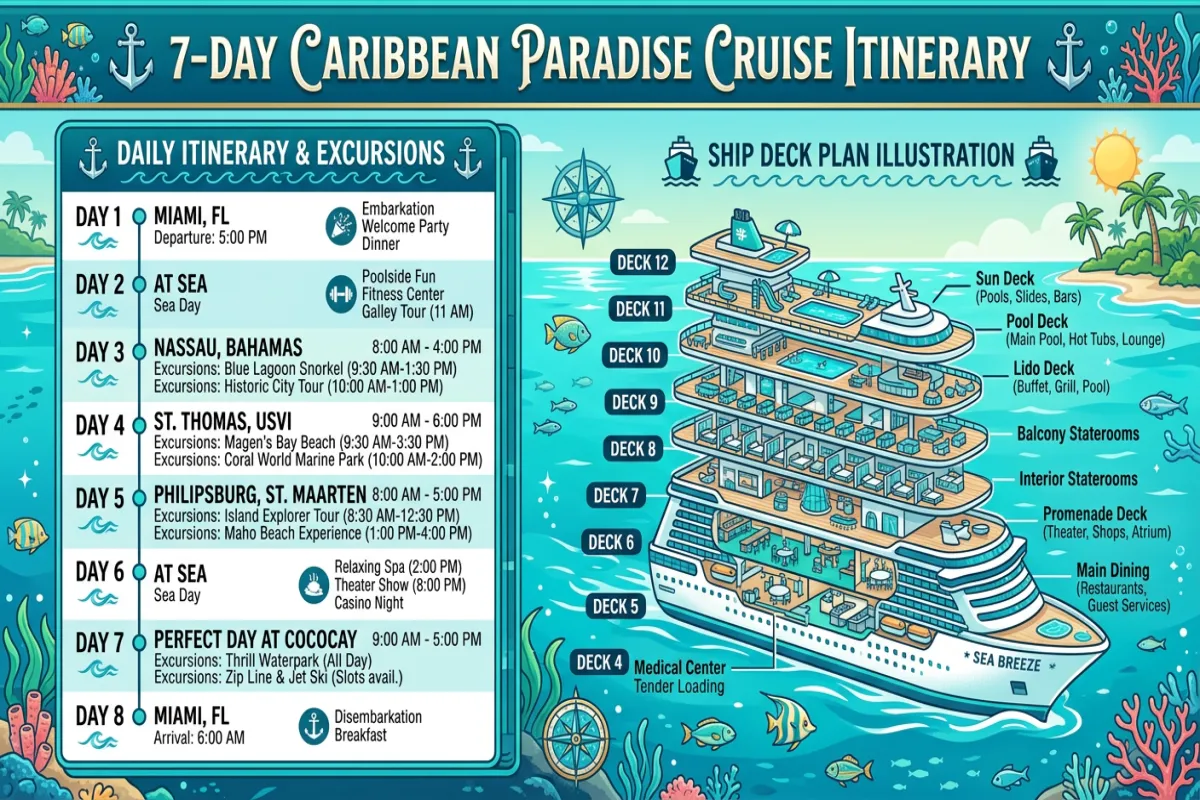
1. Cruise Overview
The top-level details: cruise line, ship name, sailing dates, cabin number, deck, embarkation port, disembarkation port, and your booking confirmation number. Also includes your dining assignment (early or late seating, specialty restaurant reservations), beverage package status, and Wi-Fi package details.
2. Embarkation Day
Embarkation has its own section because it’s different from every other day. Arrival time at the port, parking or transfer details, check-in process notes, boarding time, cabin location, muster drill time, and your plan for the first few hours onboard — explore the ship, grab lunch at the buffet, find the pool, unpack. Sail-away time and where you want to watch it from.
3. Port Day Planner
One section per port of call: port name, country, arrival time, all-aboard time, tender required (yes or no), and dock location. Below that, your shore excursion plan: activity name, booked through the ship or independently, meeting point, departure time, duration, cost, confirmation number, and what to bring (sunscreen, walking shoes, passport, local currency). Space for a backup plan if weather changes or an excursion gets cancelled.
4. Sea Day Planner
Sea days are about onboard activities. This section has a timeline for the day: morning (pool, gym, spa appointment), afternoon (trivia, cooking class, wine tasting, movie), evening (dinner, show, casino, night club). Each activity includes location on the ship (deck and venue name), time, cost (if not included), and reservation status. The daily cruise newsletter fills in the specifics — this template gives you the framework to pick what you actually want to do.
5. Dining Schedule
Cruises revolve around food. This section tracks: main dining room assignment (table number, seating time), specialty restaurant reservations (restaurant name, date, time, cost per person, confirmation), room service orders, and buffet notes (when it’s least crowded, which stations are best). If you’re on a cruise with flexible dining, use this to plan which restaurant each night.
6. Excursion Comparison
Before the cruise, you’ll research excursion options for each port. This section compares options side by side: excursion name, provider (ship vs. independent), price, duration, group size, what’s included, reviews or ratings, and your decision. Comparing ship-sponsored vs. independent excursions can save hundreds of dollars — this table makes the comparison easy.
7. Budget Tracker
Cruise expenses beyond the base fare: excursions, specialty dining, beverage package, spa treatments, Wi-Fi, casino, photos, souvenirs, and tips. Pre-cruise purchases (parking, travel insurance, flights to the port) get their own section. Running total shows your actual all-in cost, which is always more than the sticker price.
8. Disembarkation Day
The last morning: luggage tag color and set-out time, breakfast plan, disembarkation time, customs and immigration process, ground transportation from port to airport or home, and flight details if applicable. If you booked an early flight, note whether express disembarkation is available.
Plan Your Trip Today!
Get a complete, personalized trip template in seconds.
Take full control to customize every detail. Or, skip the template and build your itinerary with AI
Plan My TripHow to Use It
- Start with the Cruise Overview. Fill in your booking details and dining assignments as soon as you book. These are the fixed elements everything else builds around.
- Research excursions early. Popular shore excursions sell out months before sailing. Use the Excursion Comparison section to evaluate options for each port, then book. Independent excursions are often cheaper but require more planning.
- Plan port days in detail, leave sea days flexible. Port days have time pressure — you have 6-10 hours and a hard all-aboard deadline. Sea days have no deadline and can be spontaneous. Plan the former; browse the latter.
- Fill in dining reservations before boarding. Specialty restaurants on popular ships fill up during embarkation day. If your cruise line lets you book dining in advance through their app, do it before you board.
- Print a copy. Ship Wi-Fi is expensive and slow. Download the itinerary as PDF and print it, or keep an offline copy on your phone. The Yopki Travel Document Organizer can merge your cruise itinerary with booking confirmations and excursion tickets into one printable packet.
cruise planning guide Tips
Always note the all-aboard time, not the departure time. The ship departs at 5 PM but all-aboard is 4 PM (or even 3:30 PM). If you’re on an independent excursion, plan to be back at the dock at least 30 minutes before all-aboard. Ship-sponsored excursions guarantee the ship will wait; independent ones don’t. For a deeper dive, check out our trip planning guide
Book the first tender for port days. On tender ports, you take a small boat from ship to shore. The first tenders have the shortest waits. Later in the morning, tender lines can stretch to 30-45 minutes. Sign up early or get in line before breakfast.
Budget for gratuities. Most cruise lines add automatic daily gratuities ($15-20 per person per day). That’s $200+ per person on a 14-day cruise. Factor this into your budget so it doesn’t surprise you on the final bill.
Related Templates
- This Cruise Itinerary — designed for cruise-specific logistics: port days, sea days, embarkation, excursions, and onboard dining. Best for any cruise vacation.
- Vacation Itinerary — simpler day-by-day template. Best for resort or single-destination vacations without the cruise-specific sections.
- Family Vacation Itinerary — includes kid-friendly features. Best if your cruise is a family trip with young children.
- Travel Planner — comprehensive trip planning. Best if your cruise includes significant pre- or post-cruise land travel.
FAQ
How do you plan a cruise itinerary?
Start with your cruise line’s published port schedule and sail times. For each port day, research shore excursion options (both ship-sponsored and independent) and decide which ones to book. For sea days, review the onboard activity schedule from the cruise line’s app. Add specialty dining reservations, spa appointments, and evening entertainment. This template organizes all of it — port days, sea days, dining, excursions, and budget — so you can enjoy the cruise instead of scrambling to figure out what’s happening next.
Should I book excursions through the cruise line or independently?
Ship-sponsored excursions cost more but guarantee the ship won’t leave without you if the excursion runs late. Independent excursions are typically 30-50% cheaper and in smaller groups. For ports where timing is tight or you’re unfamiliar with the area, ship excursions are safer. For ports where you’re comfortable navigating on your own and the ship is docked (not tendered), independent excursions often give a better experience.
How far in advance should I plan my cruise itinerary?
Book specialty dining and popular excursions 3-6 months before sailing. Fill in the day-by-day plan 2-4 weeks before. The cruise line’s app usually publishes the onboard schedule a few days before departure — use it to fill in sea day activities.
Do I need to print this template?
Strongly recommended. Ship Wi-Fi packages range from $10-20 per day and speeds are slow. A printed itinerary or offline PDF on your phone means you’re not paying for Wi-Fi just to check your schedule. Keep a digital copy too, since the printed version can get wet on pool days.