
When Should You Book Your Flight?
Airfare is one of the biggest costs of any trip, and the price you pay depends heavily on when you book. Buy too early and you might overpay before sales kick in. Buy too late and you will watch prices climb as seats fill up.
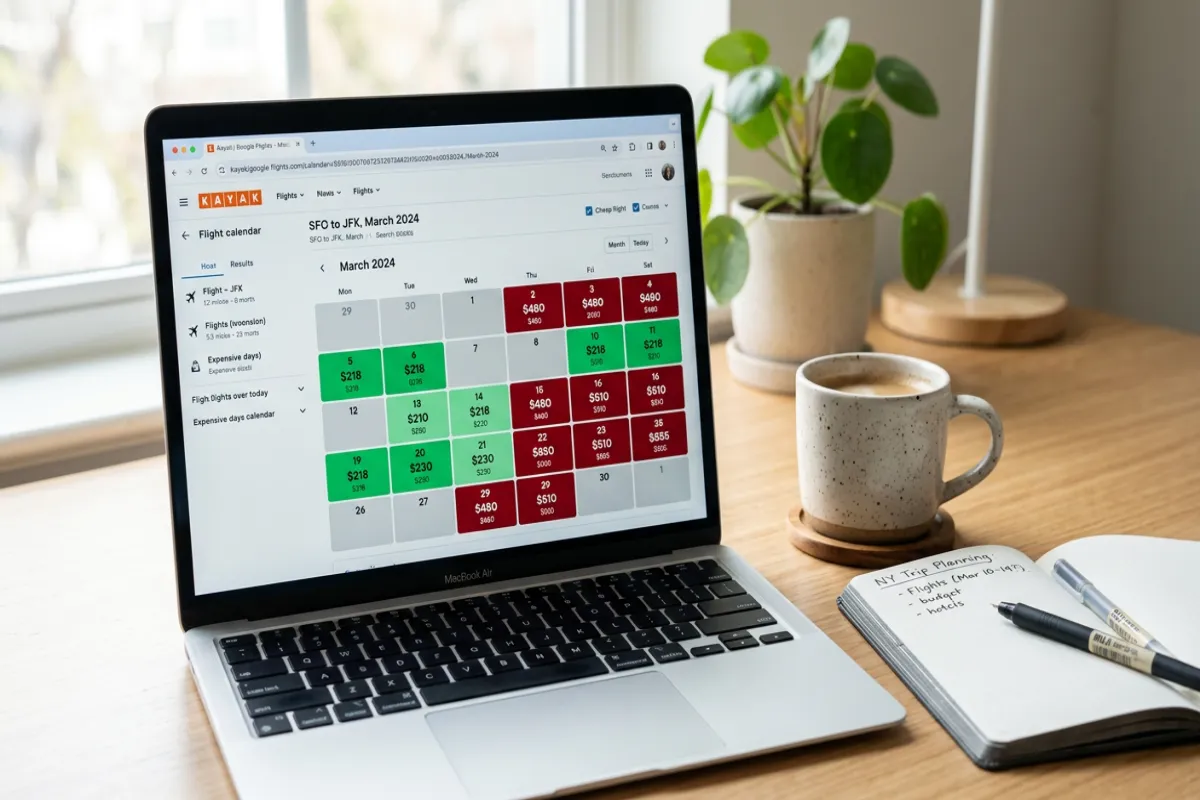
The good news is that years of fare data reveal clear patterns. There are predictable windows when prices drop, specific days when flights cost less, and seasons when airlines practically give seats away.
This guide breaks down the real numbers behind flight pricing in 2026. No vague advice, just data-backed booking strategies you can use right now.
The Optimal Booking Window for Domestic Flights
For flights within the United States, the cheapest fares consistently appear 1-3 months before departure. Here is how the pricing curve typically looks:
- 6+ months out: Airlines have just loaded fares. Prices are moderate but not at their lowest. Limited fare sales.
- 3-6 months out: Prices start dropping as airlines compete for bookings. Sales begin appearing.
- 1-3 months out: The sweet spot. The widest selection of fares at the lowest average prices. This is when airlines run the most promotions to fill remaining seats.
- 2-4 weeks out: Prices start rising. Cheap fare classes sell out. Business travelers start booking, pushing prices up.
- Under 2 weeks: Expensive. Last-minute fares can cost 50-100% more than the same seat booked two months earlier.
- Under 7 days: Very expensive. Only worth it for emergencies or if you spot a rare error fare.
Specific Booking Windows by Season
The optimal window shifts depending on when you are flying:
- Summer (June-August): Book 2-4 months ahead (February-April). Summer is peak season and fares climb quickly.
- Fall (September-November): Book 1-2 months ahead. Fall is shoulder season with more fare competition.
- Winter holidays (December): Book 2-3 months ahead (September-October). Holiday fares spike dramatically inside 6 weeks.
- Winter (January-March): Book 3-6 weeks ahead. This is the cheapest flying season, and deals appear even at shorter notice.
- Spring break (March-April): Book 2-3 months ahead. Treat it like a mini peak season.
The Optimal Booking Window for International Flights
International flights follow a different pattern because there are fewer competing routes and the fare classes are more complex.
- The sweet spot: 2-8 months before departure for most destinations.
- Transatlantic (US to Europe): Book 3-6 months ahead for the best economy fares. January through March is the cheapest time to fly to Europe.
- Transpacific (US to Asia): Book 3-5 months ahead. Shoulder seasons (March-May and September-November) offer the lowest fares.
- US to Caribbean/Mexico: Book 1-3 months ahead. These routes behave more like domestic flights due to high frequency and competition.
- US to South America: Book 2-4 months ahead. Airlines run frequent sales on these routes, so set fare alerts early.
Why International Fares Behave Differently
Domestic routes often have 5-10 daily flights between major cities, giving airlines lots of seats to fill and plenty of reason to drop prices. International routes might have just 1-2 daily flights, giving airlines less incentive to discount aggressively.
Also, international flights have more fare classes, which means the price jumps between tiers are larger. When the cheapest fare class sells out, the next one up might cost $200-400 more.
Best Days of the Week to Buy Flights
You have probably heard that Tuesday is the best day to buy flights. Here is what the data actually shows:
Does It Matter When You Search?
The short answer: not as much as it used to. Airlines now use dynamic pricing algorithms that update fares continuously, sometimes multiple times per day. The old pattern of “airlines post sales on Tuesday night” has largely faded.
That said, fare sales are still slightly more common on Tuesdays and Wednesdays. If you are flexible, check prices on those days. But the difference between searching on Tuesday versus Thursday is usually only $5-15 for domestic flights.
The much bigger factor is your booking window (how far in advance you buy), not the day of the week you search.
The Real Savings: Which Day You Fly
The day you depart and return matters far more than the day you book. Here is how departure days compare:
- Cheapest days to depart: Tuesday, Wednesday, Saturday
- Most expensive days to depart: Friday, Sunday
- Average savings for midweek flights: 15-25% compared to weekend departures on the same route
The reason is straightforward. Business travelers fly Monday mornings and Friday evenings. Leisure travelers depart on Fridays and return on Sundays. Airlines price these high-demand departure times accordingly.
If you can fly out on a Tuesday and return on a Wednesday, you will often find fares 20% or more below the Friday-Sunday price for the same route.
How Airline Pricing Actually Works
Understanding the mechanics behind airfare helps you spot deals and avoid overpaying.
Fare Classes
Every flight has multiple fare classes, each with a set number of seats at a set price. On a single plane, there might be 8-12 different price points for the same economy seat.
The cheapest fare class (often labeled Y, B, or similar letters in the booking system) sells out first. Once those seats are gone, the next tier opens at a higher price. This is why early bookers often pay less, and why a flight that costs $199 today might cost $349 next week even though plenty of seats remain.
Dynamic Pricing
Airlines use revenue management systems that adjust prices based on:
- Demand: How many people are searching for and booking this route
- Capacity: How many seats are left on this flight
- Competition: What other airlines are charging for the same route
- Time to departure: Prices generally rise as the departure date approaches
- Historical data: How this route performed in previous years
- Day and time: Peak departure times cost more
This is why the same seat can cost $189 on Monday morning and $237 on Monday evening. The algorithm is constantly recalculating.
Does Searching for Flights Make Prices Go Up?
This is one of the most persistent travel myths. Many people believe that airlines track your searches and raise prices to pressure you into booking. The evidence does not support this.
What actually happens is that fare classes sell out naturally. If you search for a $199 fare on Monday and see $249 on Wednesday, it is almost certainly because the $199 fare class sold out, not because the airline is targeting you specifically.
That said, using incognito mode costs you nothing, so there is no harm in searching privately if it gives you peace of mind.
Seasonal Pricing Patterns
Airfare follows predictable seasonal cycles. Knowing these patterns helps you plan trips during the cheapest windows.
Cheapest Months to Fly (Domestic US)
- January (after the 7th): The cheapest month of the year. Holiday travel is over, and demand drops off a cliff.
- February (excluding Presidents’ Day weekend): Still very cheap. Airlines run Valentine’s Day sales that extend to general travel.
- September (after Labor Day): Kids are back in school. Demand plummets. Great deals on almost every route.
- October-November (before Thanksgiving): Shoulder season pricing. Fall foliage destinations are the exception, as fares to New England spike.
Most Expensive Months to Fly
- Late December (Dec 18-Jan 2): The most expensive window of the year. Holiday demand peaks.
- June-August: Summer peak. Family travel drives prices up on virtually every route.
- March (spring break weeks): Varies by school district, but any route to Florida, Mexico, or the Caribbean gets expensive during spring break.
- Thanksgiving week: The Wednesday before and Sunday after Thanksgiving are two of the most expensive flying days of the year.
The Shoulder Season Advantage
The cheapest and best time to fly is during shoulder seasons, the weeks between peak and off-peak periods. For most destinations, that means:
- Late April to mid-May: After spring break, before summer. Great weather in most places.
- September to mid-October: After summer, before holiday season. Often the best weather of the year in Europe and the Mediterranean.
Shoulder season fares are typically 20-40% less than peak season on the same routes. You also get smaller crowds and better weather. For tips on timing your trips perfectly, see our guide on the best time to travel in the USA.
Best Tools for Tracking Flight Prices
Manually checking airline websites every day is tedious. These tools automate the process.
Google Flights
The best all-around flight search tool. Free, fast, and packed with useful features.
- Price tracking: Toggle “Track prices” on any search and Google emails you when fares change.
- Explore map: Enter your departure city and see the cheapest flights to destinations worldwide on an interactive map.
- Date grid: View prices across a range of dates to find the cheapest departure and return combination.
- Price graph: Shows fare trends over the past several months so you can see if prices are rising or falling.
- Filters: Filter by stops, airlines, times, duration, and price. The “Best flights” sort balances price with travel time.
Pro tip: Use Google Flights to find the route and dates, then book directly on the airline’s website. Direct bookings give you better customer service and are easier to change or cancel.
Hopper
Hopper is a mobile app that predicts whether flight prices will go up or down.
- Price prediction: Color-coded calendar shows green (buy now), yellow (could go lower), and red (expensive) dates.
- Buy or wait recommendation: Hopper tells you whether to book now or wait for a price drop, with a confidence percentage.
- Price freeze: Pay a small fee ($15-60) to lock in a fare for up to 14 days while you decide.
Limitation: Hopper wants you to book through their app, where they add service fees. Use Hopper for its predictions, then compare the price to booking directly with the airline.
Skyscanner
Skyscanner excels at flexible searches and finding budget airlines that other search engines miss.
- “Everywhere” search: Enter your departure city and select “Everywhere” as the destination. Skyscanner shows the cheapest flights to every possible destination.
- “Cheapest month” view: Search with flexible dates to see the lowest fare in each month.
- Budget airline coverage: Skyscanner includes airlines like Frontier, Spirit, Ryanair, and AirAsia that Google Flights sometimes underrepresents.
- Price alerts: Set alerts for specific routes and get notified when prices drop.
Other Useful Tools
- Kayak: Strong fare comparison with a useful “Explore” feature for flexible travelers.
- Scott’s Cheap Flights (Going): Email newsletter that alerts you to mistake fares and unusually low prices. The free tier covers domestic deals; premium ($49/year) adds international.
- AwardHacker: If you have airline miles, this tool shows the best redemption options across loyalty programs.
- Secret Flying: Website and social media accounts that post error fares and flash sales in real time.
Holiday Booking Strategies
Holiday travel is the most expensive, but smart timing can still save you hundreds.
Thanksgiving
- Book by: Late September to mid-October.
- Cheapest travel days: Fly out Monday or Tuesday before Thanksgiving. Return Tuesday or Wednesday after. Avoid the Wednesday before (most expensive departure day of the year) and the Sunday after.
- Alternative strategy: Fly on Thanksgiving Day itself. Fares drop significantly because most travelers are already at their destination. Morning flights on Thanksgiving are often 30-50% cheaper than the Wednesday evening flight.
Christmas and New Year’s
- Book by: October. The earlier, the better for holiday flights.
- Cheapest travel days: December 24 and December 25 for outbound. January 2 or 3 for return.
- Most expensive: December 21-23 outbound, December 26-27 and January 1-2 return.
- The gap strategy: If you can travel December 26 through December 30, fares drop sharply in the gap between Christmas and New Year’s.
Spring Break
- Book by: January for March/April travel.
- Price tip: Prices to warm destinations (Cancun, Florida, Hawaii) peak during the specific weeks that major school districts have off. If your schedule is flexible, check when neighboring states have their break and travel on different weeks.
Summer Vacation
- Book by: February-April for June-August travel.
- The June sweet spot: The first two weeks of June are often cheaper than the rest of summer because many schools are still in session. Similarly, late August sees prices start to drop as families begin heading home.
- Consider alternative airports: A flight from Newark instead of JFK, or Oakland instead of SFO, can save $50-150 during summer peak.
Common Booking Mistakes to Avoid
Even experienced travelers make these errors:
1. Only Checking One Airline
Loyalty is expensive. Always compare across airlines before booking. The price difference between airlines on the same route can be $100-300 for the exact same departure time.
2. Ignoring Nearby Airports
Flying out of a secondary airport can save 20-40%. Examples:
- Fort Lauderdale instead of Miami
- Oakland or San Jose instead of San Francisco
- Providence instead of Boston
- Burbank instead of LAX
- Baltimore instead of Washington Dulles
3. Not Setting Fare Alerts
Set up price alerts on Google Flights, Hopper, and Skyscanner for your route. Fares fluctuate daily, and a 10-second alert setup can notify you of a $50-200 price drop you would have otherwise missed.
4. Booking Too Early for Domestic Flights
Booking a domestic flight 6 months out feels responsible, but it often results in paying more. Airlines do not post their best domestic fares until 1-3 months before departure.
5. Ignoring Budget Airlines
Carriers like Southwest, Frontier, Spirit, and JetBlue frequently undercut legacy carriers by 30-50%. Yes, you might pay extra for bags and seat selection, but even with add-ons, the total is often cheaper.
Important note on budget airlines: Always check the final price including bags before comparing. A Spirit flight at $79 plus $69 in bag fees costs more than a Delta flight at $139 with free carry-on.
6. Not Using the Airline’s Own Website for Complex Bookings
Third-party booking sites (Expedia, Orbitz) sometimes offer slightly lower prices, but changes and cancellations become a nightmare. Book directly with the airline whenever the price difference is less than $20. Your future self will thank you.
How to Use Fare Data When Planning a Trip
The cheapest time to fly should influence when and where you travel, not just when you buy tickets.
When you are planning a trip, start by checking fare prices to several possible destinations. You might discover that your dream trip to Portugal is $400 cheaper in October than July, which could shift your entire vacation schedule.
Yopki’s AI trip planner can help here. Tell it your travel dates and budget, and it suggests destinations and builds itineraries that work within your constraints. It takes the fare data you find and turns it into a concrete, day-by-day plan.
Domestic vs. International: A Quick Comparison
| Factor | Domestic (US) | International |
|---|---|---|
| Best booking window | 1-3 months ahead | 2-8 months ahead |
| Cheapest days to fly | Tue, Wed, Sat | Tue, Wed |
| Cheapest months | Jan, Feb, Sep | Jan-Mar (to Europe), varies by region |
| Average savings (off-peak vs peak) | 20-35% | 25-45% |
| Last-minute penalty | 20-50% higher | 30-80% higher |
| Budget airline options | Many (Southwest, Spirit, Frontier) | Growing (Play, Norse, LEVEL) |
The 2026 Outlook: What Is Different This Year
A few trends are shaping airfare in 2026:
- Fuel prices are stable. Jet fuel costs have leveled off after the volatility of 2022-2024, keeping base fares relatively predictable.
- Capacity is up. Airlines have added back nearly all pre-pandemic routes and are expanding into new markets. More capacity means more competition and lower fares.
- Budget airlines are expanding international routes. New low-cost transatlantic options from carriers like Play and LEVEL are pushing legacy carrier prices down on routes to Europe.
- Dynamic pricing is more sophisticated. Airlines are getting better at filling every seat at the maximum price each passenger will pay. The best defense is flexibility and fare alerts.
For travelers looking to save money on travel, 2026 is a good year. Competition is high, capacity is strong, and the tools for finding deals have never been better.
Frequently Asked Questions
Is it cheaper to book a round trip or two one-way tickets?
For most domestic flights, there is no difference. Airlines like Southwest, United, and Delta price one-way tickets at exactly half the round-trip fare. For international flights, round trips are usually cheaper, sometimes significantly so. Always check both options.
Do flight prices drop on certain days?
Airlines occasionally post sales on Tuesday and Wednesday, but with dynamic pricing, fare drops can happen any day. The most reliable way to catch a price drop is to set a fare alert rather than checking manually on specific days.
How much can I save by being flexible with dates?
Shifting your travel dates by just 1-2 days can save 10-30% on the same route. The Google Flights date grid is the fastest way to see this. A Wednesday departure instead of a Friday on the same route often saves $50-150.
Should I book a connecting flight to save money?
Connecting flights average 15-40% less than nonstops on the same route. The trade-off is 2-5 extra hours of travel time and the risk of missed connections. For short trips (under 5 days), the time cost usually is not worth the savings. For longer trips, a connecting flight can free up hundreds of dollars for the trip itself.
Are mistake fares real?
Yes. Airlines occasionally post fares at dramatically wrong prices due to system errors, currency conversion mistakes, or fare filing errors. These can save 50-80% off normal prices. Follow accounts like Secret Flying or subscribe to Scott’s Cheap Flights to catch them. Most mistake fares are honored if you book before the airline fixes the error, but there is no guarantee.
Your Flight Booking Checklist
Here is a quick action plan:
- Set fare alerts now. Use Google Flights and Hopper for your target routes.
- Check the booking window. Domestic: 1-3 months out. International: 2-8 months out.
- Be flexible on days. Midweek flights (Tuesday-Wednesday) save 15-25%.
- Compare airports. Check secondary airports within driving distance.
- Compare airlines. Include budget carriers in your search.
- Book directly. Use search tools to find the fare, then book on the airline’s website.
- Plan the rest of your trip. Use Yopki to build your full itinerary once flights are booked.
The difference between a well-timed flight purchase and a last-minute scramble can easily be $200-500 per person. Spend 15 minutes setting up fare alerts today, and let the tools do the work.