
The Real Difference Between U.S. Coastlines (And Why It Matters for Your Budget)
Not all beach vacations cost the same, and a lot of that comes down to which coastline you pick. Here’s how the three major U.S. coastlines compare when you factor in accommodation, food, and overall vibe.
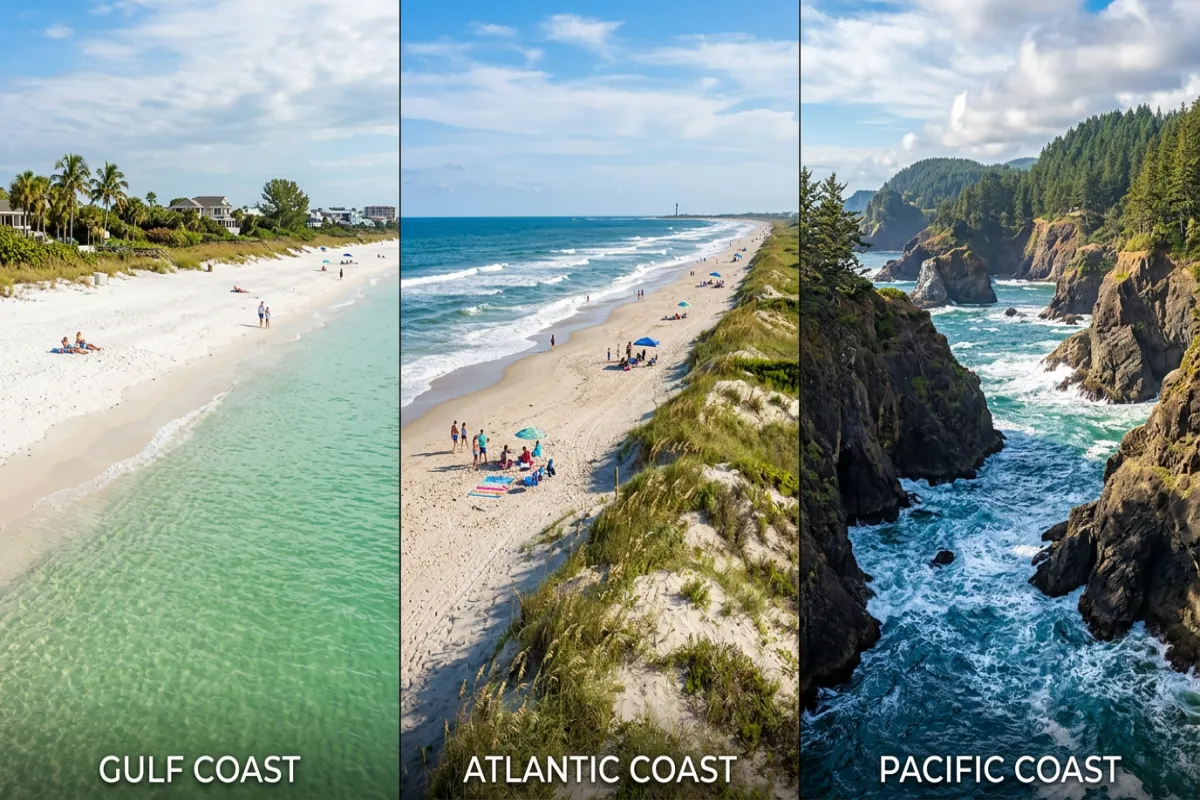
Gulf Coast (Texas, Louisiana, Mississippi, Alabama, Florida Panhandle)
The Gulf Coast is where you go when you want warm water, calm waves, and lower prices. The water temperature hovers between 80-85F in summer, and the gentle surf makes it ideal for families with small kids.
- Budget range: $800-$1,500/week for a family of four (accommodation + food + activities)
- Best value spots: Gulf Shores, AL; Port Aransas, TX; Pensacola Beach, FL
- Accommodation: Beach condos start around $120/night in shoulder season, $180-$250 in peak summer
- Vibe: Laid-back, family-oriented, seafood shacks over fine dining
The trade-off? Gulf beaches tend to have murkier water than the Atlantic or Pacific, and hurricane season (June through November) is a real factor. More on that below.
Atlantic Coast (Florida East Coast Through Maine)
The Atlantic side gives you the most variety. You can do a boardwalk beach town in New Jersey, a surf trip in the Outer Banks, old-money charm in Charleston, or tropical vibes in South Florida. Prices vary wildly depending on where you go.
- Budget range: $1,200-$3,000/week for a family of four
- Best value spots: Myrtle Beach, SC; St. Augustine, FL; Virginia Beach, VA
- Splurge spots: Miami Beach, Hamptons, Cape Cod (expect $300-$500+/night in summer)
- Vibe: Everything from party beach to quiet fishing village, depending on your pick
Water temperatures range from frigid in New England (55-65F) to bathtub-warm in South Florida (82-86F). The Atlantic also has stronger surf, which is great for older kids and adults but requires more supervision for little ones.
Pacific Coast (California, Oregon, Washington, Hawaii)
Pacific beaches are the most dramatic, with cliffs, tide pools, and sea stacks. They are also the coldest (55-65F in California, 50-58F in Oregon and Washington) and the most expensive on the mainland.
- Budget range: $1,800-$4,000/week for a family of four (mainland), $2,500-$5,000+ for Hawaii
- Best value spots: Pismo Beach, CA; Cannon Beach, OR (off-season); San Diego (relative to LA)
- Vibe: Scenic hikes, tide pool exploring, wine country nearby, fewer “lay on the beach all day” spots
If you want swimmable warm water on the Pacific side, you’re looking at Hawaii, which bumps the budget significantly once you add flights.
Not sure which coastline fits your trip? Yopki’s AI travel planner can suggest destinations based on your budget, travel dates, and what your group actually wants to do.
When to Go: Timing Your Beach Trip Around Weather, Crowds, and Prices
The “best” time for a beach trip depends on what you’re optimizing for. Here’s what to watch.
Hurricane Season (June 1 – November 30)
This affects the entire Gulf Coast and Atlantic Coast south of the Carolinas. The peak risk months are August through October. That does not mean you should never go during these months. It means you should:
- Book refundable rates or purchase trip insurance with hurricane coverage
- Monitor weather starting two weeks before departure
- Have a backup plan (can you pivot to an inland city if a storm threatens?)
Many travelers specifically target early June or late November for the “hurricane season” discount. The statistical risk is low at the edges, and prices drop 20-30%.
Jellyfish Season
Nobody warns you about this until you’re standing on the beach watching your kid scream. Jellyfish blooms are most common in late summer (August and September) along the Gulf and Southeast Atlantic coasts. Portuguese man-of-war season in South Florida and Hawaii runs from October through March.
Check local beach reports before booking. Lifeguard stations post jellyfish warnings, and many beaches fly purple flags when jellyfish are present.
Spring Break Crowds (Mid-March to Mid-April)
If you have flexibility, avoid the three weeks centered around Easter. Popular beaches like Destin, South Padre Island, Myrtle Beach, and Panama City Beach see prices spike 40-60% and crowds that make parking impossible before 9 AM.
The Sweet Spot: Shoulder Season
For the best combination of good weather, manageable crowds, and fair prices:
- Gulf Coast: Late April to May, or late September to October
- Atlantic (South): May or October
- Atlantic (North): Early June or September
- Pacific: September and October (“second summer” in California)
- Hawaii: April to May or September to November
For a deeper dive on seasonal timing across the country, see our guide on the best time to travel in the USA.
Beach House vs. Hotel: A Real Cost Comparison
This is one of the biggest decisions that affects your total trip cost, and the answer changes based on your group size.
Hotels
- Best for: Couples, solo travelers, or families of 3-4 who want zero hassle
- Typical cost: $150-$350/night for a beachfront room (varies hugely by location)
- Pros: Daily housekeeping, pool, on-site restaurants, easier cancellation
- Cons: Small rooms, no kitchen (eating out every meal adds $50-$100/day for a family), resort fees ($25-$50/night at many beach hotels)
Beach House or Condo Rental
- Best for: Families of 4+, multi-family trips, groups of friends
- Typical cost: $200-$500/night for a 3-bedroom (splits to $50-$125/person/night with a group)
- Pros: Full kitchen (saves $40-$80/day on meals), multiple bedrooms, private outdoor space, washer/dryer, often more square footage than two hotel rooms combined
- Cons: Cleaning fees ($150-$300 flat), minimum night stays (often 3-7 nights in peak season), no daily housekeeping, check-in/check-out logistics
The Math
For a family of four doing five nights:
- Hotel route: $250/night x 5 = $1,250 + $35/night resort fee ($175) + eating out ($75/day x 5 = $375) = $1,800
- Beach house route: $300/night x 5 = $1,500 + $200 cleaning fee + groceries ($40/day x 5 = $200) + 2 restaurant meals ($150) = $2,050
Close to a wash for a single family. But add a second family splitting that beach house, and the rental drops to about $1,175 per family. That is where rentals win big.
The Beach Trip Packing List (By Category)
Skip the generic “don’t forget your toothbrush” lists. Here’s what is specific to beach trips, organized so you can pack methodically. For a broader travel packing guide, see our complete travel essentials list.
Sun Protection
- Reef-safe sunscreen, SPF 50+ (required by law in Hawaii and parts of the Florida Keys)
- SPF lip balm
- Wide-brim hat that won’t blow off in wind (chin strap matters)
- UV-protective sunglasses with a retainer strap
- Lightweight long-sleeve cover-up or sun hoodie
- After-sun aloe gel
Beach Gear
- Pop-up beach tent or umbrella with a sand anchor (the screw-in kind, not the spike)
- Sand-resistant beach blanket (mesh-backed ones actually work)
- Waterproof phone pouch (the $8 ones on Amazon work fine, test it in the sink first)
- Dry bag for wallet, keys, electronics
- Portable Bluetooth speaker (waterproof)
- Reusable water bottles, at least 32oz each
- Cooler bag for drinks and snacks
Clothing
- 2-3 swimsuits (so one can dry while you wear another)
- Quick-dry shorts and shirts
- Water shoes or reef walkers (essential for rocky beaches, helpful everywhere)
- Flip-flops for the sand, one pair of real shoes for restaurants
- Light rain jacket (afternoon storms are common on the Gulf and South Atlantic)
First Aid and Safety
- Sting relief spray or cream (for jellyfish)
- Waterproof bandages
- Anti-chafing balm (sand + saltwater + walking = trouble)
- Motion sickness remedy if you plan any boat trips
- Insect repellent (sand gnats and no-see-ums are real, especially at dawn and dusk)
Beach Trips with Kids: What Actually Matters
Traveling with kids changes the planning calculus. Here’s what experienced beach-trip parents will tell you.
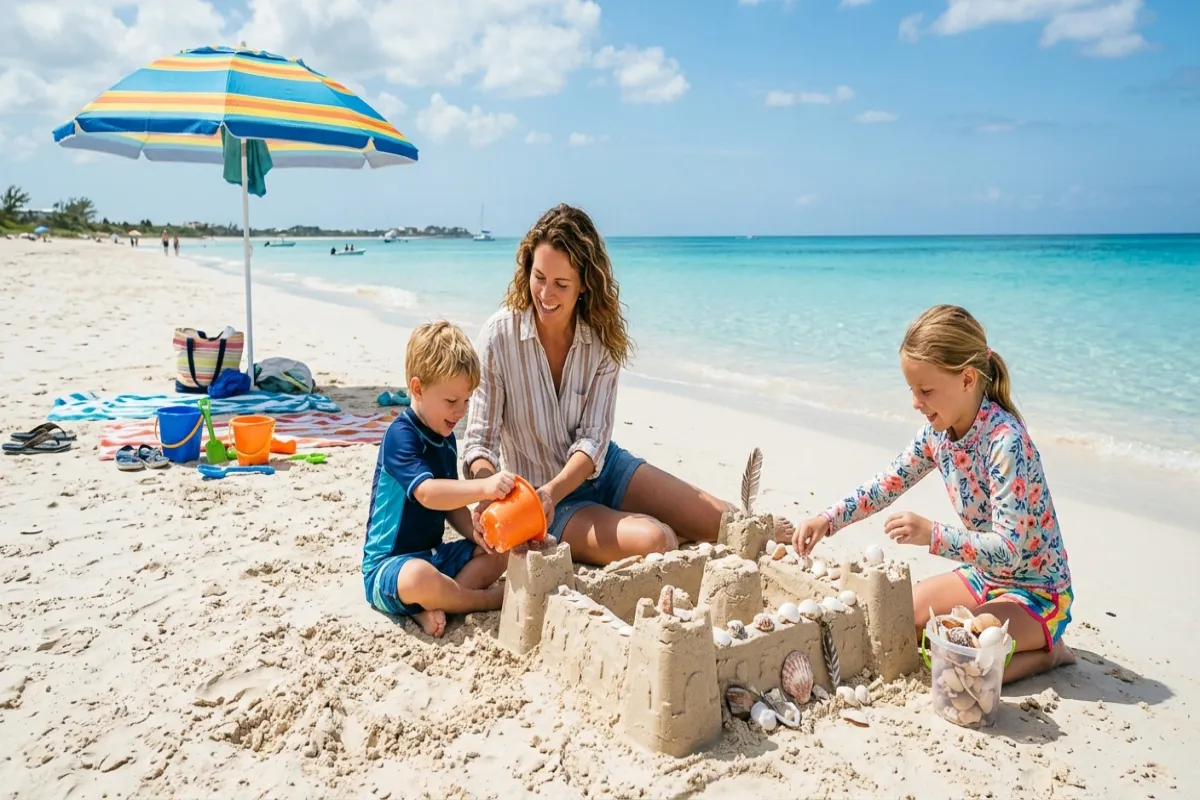
Before you go, discover things to do with kids at your beach destination beyond the sand and surf.
Pick Calm Water
For kids under 8, prioritize calm, shallow water over scenic coastline. The Gulf Coast and bay-side beaches win here. Specific picks: Destin, FL (emerald water, gentle slope), Siesta Key, FL (powder sand, shallow entry), Gulf Shores, AL (calm and affordable).
Stay Close to the Beach
With kids, the walk from accommodation to sand should be under 5 minutes. Hauling a wagon of beach gear, a cooler, and a toddler a quarter mile is a misery multiplier. Pay the extra for proximity.
Kid-Specific Packing Adds
- Rash guards (easier than reapplying sunscreen every hour on a squirming child)
- Sand toys and a mesh bag to carry them
- Puddle jumper life vest (Coast Guard approved, better than water wings)
- Portable rinse-off shower (a $15 pressurized sprayer saves your car interior)
- Waterproof swim diapers if applicable
- Snacks. More snacks than you think. Then double that number.
Plan Around Nap Time
Morning beach session (8 AM to 11 AM), lunch and nap back at the room, then a late afternoon return (3:30 PM to sunset). Fighting nap time on the beach is a losing battle, and the midday sun is the most dangerous anyway.
Beach Safety: Rip Currents, Flag Systems, and Heat
About 100 people drown in rip currents in the U.S. every year. Most of them were strong swimmers who panicked. This section is worth reading before every beach trip.
How to Spot a Rip Current
- A channel of choppy, discolored water extending from shore
- A gap in the breaking waves (the rip is pulling water out, so waves don’t break there)
- Foam, seaweed, or debris moving steadily seaward
What to Do If Caught in a Rip Current
- Do not fight it. Do not swim toward shore against the current.
- Swim parallel to the beach until you are out of the current’s pull (usually 50-100 feet wide).
- Once free, swim at an angle back toward shore.
- If you cannot escape, float and wave for help. Rip currents do not pull you under, just away from shore.
Beach Flag Warning System
Most guarded beaches use a standard flag system:
- Green flag: Low hazard, calm conditions
- Yellow flag: Medium hazard, moderate surf and/or currents
- Single red flag: High hazard, strong currents. Stay in knee-deep water or less.
- Double red flag: Water closed to swimming
- Purple flag: Marine pests present (jellyfish, stingrays, sharks spotted)
Check the flag when you arrive AND after lunch. Conditions can change fast, especially with afternoon thunderstorms.
Heat Safety
The beach creates a double threat: direct sun plus reflected UV off water and sand. Even on overcast days, you’re getting significant UV exposure. Reapply sunscreen every 90 minutes (every 60 if swimming), take shade breaks, and watch for signs of heat exhaustion: heavy sweating followed by no sweating, dizziness, nausea, and rapid pulse.
Beach Vacation Budget Breakdown by Tier
Here’s what a 7-night beach trip actually costs for a family of four at three different spending levels. All figures are estimates based on popular U.S. beach destinations.
Budget Tier ($1,500-$2,500 Total)
- Destination: Gulf Shores, AL or Port Aransas, TX
- Accommodation: $120-$160/night condo or vacation rental ($840-$1,120)
- Food: Grocery runs + 2-3 restaurant meals ($300-$450)
- Gas/transport: Driving distance ($100-$300)
- Activities: Free beach + 1-2 paid excursions like a dolphin tour ($100-$200)
- Miscellaneous: Sunscreen, parking, tips ($100-$150)
Mid-Range Tier ($3,000-$5,000 Total)
- Destination: Destin, FL or Outer Banks, NC
- Accommodation: $200-$350/night beachfront rental or hotel ($1,400-$2,450)
- Food: Mix of cooking in and dining out ($500-$800)
- Flights: If applicable ($400-$800 for a family)
- Activities: Kayak rental, snorkeling tour, mini golf, aquarium ($200-$400)
- Miscellaneous: Beach gear rental, parking, tips ($150-$250)
Splurge Tier ($6,000-$10,000+ Total)
- Destination: Maui, HI or Rosemary Beach, FL or San Diego, CA
- Accommodation: $350-$600+/night resort or luxury rental ($2,450-$4,200+)
- Flights: $800-$2,000+ for a family (especially Hawaii)
- Food: Mostly dining out ($800-$1,500)
- Activities: Surf lessons, boat charter, luau, snorkel excursion ($500-$1,000)
- Miscellaneous: Resort fees, cabana rental, tips ($300-$500)
For help building a detailed budget for your specific trip, check out our guide to saving money on U.S. travel. Small tweaks, like shifting your dates by one week or choosing a Tuesday departure, can save hundreds.
Putting Your Beach Trip Together
Here’s the planning sequence that works best:
- 6+ months out: Pick your coastline and destination. Book accommodation (beach houses in peak season go fast).
- 3-4 months out: Book flights if applicable. Research activities and make reservations for popular ones (boat tours, fishing charters).
- 1 month out: Build your day-by-day itinerary. Check that all confirmations are saved somewhere accessible.
- 1 week out: Check the weather forecast. Pack using the list above. Download offline maps for your beach area.
- Day before: Check beach conditions, rip current forecasts, and flag status for your first day.
The Yopki trip planner lets you lay out all of this on a visual calendar with map pins, so you can see how your beach days, restaurant reservations, and excursions fit together without overlap. It also keeps all your confirmation emails and booking details in one place, so you are not scrolling through your inbox at the rental check-in desk.
Frequently Asked Questions
How do you plan a beach trip?
Start by picking a coastline that matches your budget and travel style. Gulf Coast for warm, calm water and lower prices. Atlantic for boardwalk towns and surf. Pacific for dramatic scenery and cooler temps. Then lock in your dates around weather patterns and crowd levels, book accommodation early (beach houses fill up 6+ months out for peak summer), pack beach-specific essentials like reef-safe sunscreen and sand-resistant bags, and build a loose daily itinerary so you balance beach days with local exploration.
What do you need for a beach vacation?
Beyond the obvious swimsuit and sunscreen, you need reef-safe SPF 50+ (required by law in Hawaii and parts of the Florida Keys), a sand-resistant beach bag, waterproof phone pouch, portable shade (pop-up tent or umbrella with sand anchor), reusable water bottles, after-sun aloe gel, water shoes for rocky beaches, and a dry bag for electronics. For kids, add rash guards, sand toys, puddle jumper life vests, and a portable rinse-off shower.
What is the cheapest beach to visit in the US?
The Gulf Coast consistently offers the lowest beach vacation costs. Pensacola Beach, FL and Gulf Shores, AL have nightly rates starting around $120 for a beachfront condo in shoulder season. Myrtle Beach, SC on the Atlantic side is another budget pick, with hotels starting under $100/night outside of summer and most attractions catering to families on a budget. Port Aransas, TX is the budget sleeper: fewer crowds, affordable vacation rentals, and free beach access with no parking fees.