
How We Chose These 25 Attractions
Every “must-see USA” list recycles the same ten places: Grand Canyon, Statue of Liberty, Golden Gate Bridge. You already know about those.
This list is different. We mixed iconic landmarks with places that are equally stunning but see a fraction of the visitors. Every attraction earned its spot based on three criteria: it has to be genuinely worth a detour, it has to offer something you can’t get anywhere else, and it has to be practical to visit (no 3-day helicopter-only access situations).
We organized them by region so you can plan a road trip through several in one go. For each, you’ll get: why it’s worth visiting, when to go, how long to spend, an insider tip, and a nearby pairing to extend the trip.
Northeast (5 Attractions)
1. Acadia National Park, Maine
Why visit: Acadia is where the mountains meet the Atlantic Ocean. Cadillac Mountain is the first place in the continental U.S. to see sunrise from October through March. The park packs coastal cliffs, pine forests, carriage roads, and tidal pools into a compact area you can explore in two to three days.
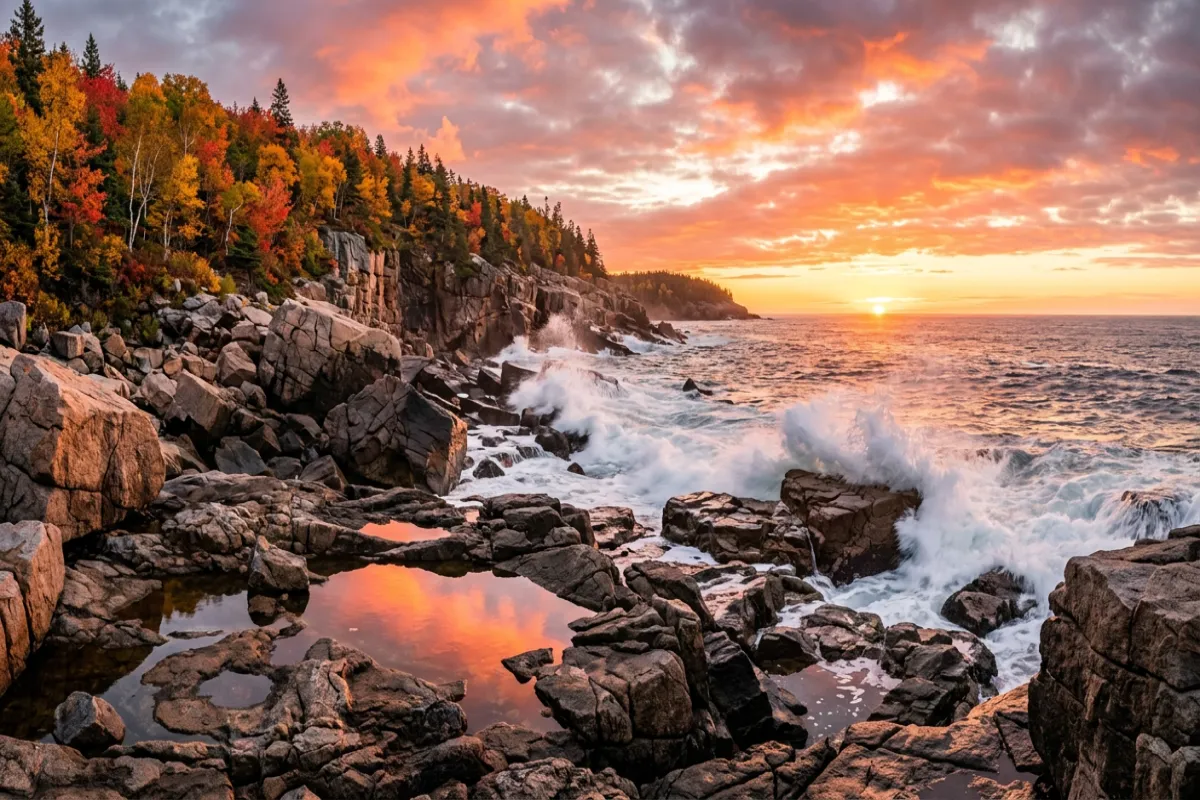
Best time: Late September through mid-October. Fall foliage against the ocean backdrop is extraordinary, and summer crowds have cleared out.
How long: 2-3 days. One day for the Park Loop Road and Cadillac Mountain, one for hiking (Precipice Trail for a challenge, Jordan Pond Path for a casual loop), and one for Bar Harbor and a lobster roll.
Insider tip: Reserve your Cadillac Mountain sunrise vehicle reservation at least 2 months ahead. They sell out. If you miss it, hike up instead. The Cadillac North Ridge Trail (4.4 miles round trip) gets you there in about 90 minutes.
Nearby pairing: Portland, Maine (3 hours south). One of the best food cities in the country, with a walkable Old Port district.
2. The Hudson Valley, New York
Why visit: Less than two hours from Manhattan, the Hudson Valley feels like a different world. Rolling farmland, historic estates, world-class art installations (Dia:Beacon, Storm King Art Center), farm-to-table restaurants, and charming river towns. It’s the countryside escape New Yorkers have relied on for a century.
Best time: May through October. Fall is peak for foliage and apple picking. Spring brings wildflowers and fewer crowds.
How long: 2-3 days to cover the highlights. One day for art (Dia:Beacon in the morning, Storm King in the afternoon), one day for a river town like Cold Spring or Beacon, and one for hiking and food.
Insider tip: Storm King Art Center is a 500-acre outdoor sculpture park. Go on a weekday morning and you’ll practically have it to yourself. The scale of the pieces against the mountain backdrop has to be seen in person.
Nearby pairing: Walkway Over the Hudson in Poughkeepsie. A 1.28-mile elevated pedestrian bridge with panoramic valley views. Free.
3. Smithsonian Museums, Washington D.C.
Why visit: Nineteen museums and galleries, all free. The Air and Space Museum, Natural History Museum, and National Gallery of Art alone could fill three days. The fact that admission is $0 makes D.C. one of the best value destinations in the country.
Best time: Late September through November, or April (post-cherry blossom peak). Summer is hot, humid, and packed with school groups.
How long: 3-5 days for D.C. as a whole. Budget at least a half day per major Smithsonian museum. The National Museum of African American History and Culture deserves a full day.
Insider tip: Timed entry passes for the African American History Museum are free but required. Release happens online 30 days in advance. Set a calendar reminder.
Nearby pairing: Alexandria, Virginia (15 minutes by Metro). Historic Old Town with waterfront dining and independent shops.
4. The High Line, New York City
Why visit: A 1.45-mile elevated park built on a former freight rail line on Manhattan’s west side. It weaves through buildings, past public art installations, and over streets with views of the Hudson River. The landscaping changes with the seasons, and the architecture framing the path is some of the most interesting in the city.
Best time: Early morning (before 10 AM) any season. Weekday mornings in April, May, or October are ideal. Avoid weekend afternoons in summer, when it becomes shoulder-to-shoulder.
How long: 1-2 hours for the walk itself. Add time for Chelsea Market (at the south end) and Hudson Yards (north end).
Insider tip: Enter at the 14th Street entrance instead of the crowded Gansevoort Street start. Walk north. You’ll hit the most photogenic section (the curve between 25th and 26th streets) before the crowds.
Nearby pairing: Whitney Museum of American Art, directly adjacent to the southern terminus.
5. Charleston Historic District, South Carolina
Why visit: Rainbow Row, cobblestone streets, 300-year-old churches, and some of the best food in the Southeast. Charleston’s historic district is remarkably well-preserved and entirely walkable. The Gullah Geechee cultural heritage adds a layer of history you won’t find anywhere else.
Best time: March through May or October through November. Summer is hot and humid (regularly 90+ degrees). Spring brings azaleas, wisteria, and the Spoleto Festival.
How long: 2-3 days. One day for the historic district on foot, one for food-focused exploration (City Market, restaurant reservations), one for a day trip to Folly Beach or a plantation tour.
Insider tip: Skip the paid walking tours and download the free NPS Charleston walking tour instead. It covers the same ground. For dinner, make reservations 2-4 weeks ahead at FIG or The Ordinary.
Nearby pairing: Beaufort, SC (1.5 hours south). A quieter, equally historic coastal town with fewer tourists.
Southeast (4 Attractions)
6. Great Smoky Mountains, Tennessee/North Carolina
Why visit: The most visited national park in America, and it’s completely free. Old-growth forests, misty mountain ridges, black bears, waterfalls, and over 800 miles of trails. The biodiversity is staggering: more tree species than in all of northern Europe.
Best time: Mid-October for peak fall color. Late April for wildflowers and lighter crowds. Avoid summer weekends when traffic in Cades Cove backs up for hours.
How long: 2-4 days. A quick visit covers Clingmans Dome and Cades Cove. A longer stay lets you hike to waterfalls (Ramsey Cascades, Rainbow Falls) and explore Cataloochee Valley, where elk roam at dawn.
Insider tip: Cataloochee Valley requires a 45-minute drive on a narrow gravel road, which keeps crowds away. Arrive before 7 AM in October to watch elk grazing in the mist. It’s the most magical scene in the park.
Nearby pairing: Asheville, NC (1 hour east). Craft beer capital of the Southeast, with over 30 breweries and a food scene that punches well above its size.
7. Savannah Historic District, Georgia
Why visit: Savannah’s 22 original squares, draped in Spanish moss and surrounded by antebellum architecture, create one of the most atmospheric cities in America. It’s compact, walkable, and deeply layered with history. The food scene blends traditional Lowcountry cooking with modern Southern fine dining.
Best time: March through May or late October through November. Summers are oppressively humid.
How long: 2 days. One day for the historic squares and house museums (Mercer Williams House is worth the tour). One day for food, River Street, and Bonaventure Cemetery.
Insider tip: Bonaventure Cemetery is the real star of Savannah. It’s a Victorian-era cemetery on a bluff overlooking the Wilmington River, with moss-draped oaks and elaborate monuments. Visit at golden hour.
Nearby pairing: Tybee Island (20 minutes east). A low-key beach town with a historic lighthouse and fresh seafood shacks.
8. Everglades National Park, Florida
Why visit: The only subtropical wilderness in North America. Mangrove forests, sawgrass prairies, and more species of wading birds than you can count. It’s unlike any other landscape in the U.S. Also: alligators. Everywhere.
Best time: December through April (dry season). Water levels drop, which concentrates wildlife around remaining pools. You’ll see more animals in a single afternoon than most parks deliver in a week. Wet season (May-November) brings mosquitoes thick enough to ruin the experience.
How long: 1-2 days. The Anhinga Trail (0.8 miles) is the single best wildlife viewing trail in the park. Shark Valley’s 15-mile tram tour covers the sawgrass prairie. Add a kayak trip through the mangrove tunnels if time allows.
Insider tip: Skip the airboat tours outside the park (they’re loud and touristy). Instead, kayak the Nine Mile Pond loop inside the park for a quiet, immersive experience with wading birds and the occasional manatee.
Nearby pairing: Key Largo (1 hour south). John Pennekamp Coral Reef State Park for snorkeling.
9. Natchez Trace Parkway, Mississippi/Alabama/Tennessee
Why visit: A 444-mile scenic drive following a path originally used by Native Americans, then by settlers and traders. No commercial vehicles allowed, no billboards, no strip malls. Just two lanes winding through forests, past mounds built over 1,000 years ago, alongside waterfalls, and through small Southern towns that time forgot.
Best time: Late October for fall color. April for wildflowers and comfortable driving weather.
How long: 2-3 days to drive the full length (Nashville to Natchez). You could rush it in a day, but stopping at the major sites (Pharr Mounds, Meriwether Lewis Monument, Jackson Falls) is the whole point.
Insider tip: Start in Natchez, Mississippi and drive north toward Nashville. The lesser-known southern half is more scenic and less trafficked. Natchez itself has more antebellum mansions per capita than any city in the U.S.
Nearby pairing: Oxford, Mississippi (1 hour east of the Parkway). Home of Ole Miss, Square Books, and some of the best Southern food in the state. Check our road trip planning guide for routing tips.
Midwest (4 Attractions)
10. Chicago Architecture, Illinois
Why visit: Chicago is the birthplace of the modern skyscraper, and its architecture tells the story of American building from the 1880s to today. The skyline along the Chicago River is one of the most impressive urban vistas in the world. The buildings aren’t just tall. They’re beautiful.
Best time: May through October. Summer is peak, but September offers warm weather without the crowds. Winter architecture tours run but require serious cold tolerance.
How long: 2-3 days for architecture plus the city. The Chicago Architecture Center river cruise (90 minutes) is the must-do. Add the Art Institute, Millennium Park, and a deep-dish pizza debate.
Insider tip: Take the Architecture Center’s river cruise, not the Wendella or Shoreline tours. The CAC docents are trained architects and historians. The first cruise of the morning has the best light and smallest crowds.
Nearby pairing: Frank Lloyd Wright’s Home and Studio in Oak Park (30 minutes by train). The birthplace of Prairie Style architecture.
11. Boundary Waters Canoe Area, Minnesota
Why visit: Over a million acres of interconnected lakes and rivers along the Canadian border, with no motors allowed on most waters. You paddle in, set up camp on a rock ledge overlooking a lake, and hear nothing but loons. It’s the most pristine wilderness experience east of the Rockies.
Best time: Late June through August for warm water and long days. September for fall color and zero mosquitoes (the bugs can be intense in June and July).
How long: 3-7 days. Day trips are possible from entry points near Ely, MN, but the real experience requires at least 2-3 nights in the backcountry.
Insider tip: Entry permits are required May through September and fill up fast. Reserve on recreation.gov starting in late January. Choose a less popular entry point (like Mudro Lake or Snowbank) over the crowded ones near Ely for a more solitary experience.
Nearby pairing: Ely, Minnesota. A small outfitter town with canoe rental shops, the International Wolf Center, and surprisingly good restaurants for a town of 3,500.
12. Badlands National Park, South Dakota
Why visit: Sharply eroded buttes, pinnacles, and spires rising from the prairie like a landscape from another planet. The colors shift dramatically with the light, and the fossil beds here contain some of the richest deposits of ancient mammal remains in the world. The park is also home to one of the largest mixed-grass prairies left in the U.S., with bison herds grazing against a backdrop of otherworldly formations.
Best time: May or September through October. Summer brings temperatures above 100 degrees with almost no shade. Spring and fall offer comfortable hiking weather and dramatic skies.
How long: 1-2 days. The Badlands Loop Road (31 miles) hits the major overlooks. Hike the Notch Trail (1.5 miles) for an elevated perspective, and the Door/Window/Castle Trail complex for easy exploration.
Insider tip: Sleep in the park. The night sky at Badlands is one of the darkest in the country. The Cedar Pass area has a campground and lodge. Stars come out like you’ve never seen.
Nearby pairing: Wall Drug (10 minutes). It’s a tourist trap and it knows it. The free ice water tradition dates to 1936. A quintessentially American roadside stop.
13. Apostle Islands, Wisconsin
Why visit: 21 islands in Lake Superior with sea caves, red sandstone cliffs, historic lighthouses, and water so clear it looks Caribbean (if you ignore the temperature). In winter, the frozen lake caves become an ice formation wonderland. In summer, you kayak through sea caves with sunlight filtering through the sandstone.
Best time: July through September for kayaking and boat tours. February for ice caves (when conditions allow, which varies year to year).
How long: 2-3 days. One day for a sea cave kayak tour (book with a guide if you’re not experienced), one day for a boat cruise to the outer islands and lighthouses, one day for hiking on the mainland.
Insider tip: The Meyers Beach sea cave kayak route is the most famous, but Swallow Point on Sand Island is less crowded and equally stunning. You need to take the island shuttle or have your own boat.
Nearby pairing: Bayfield, Wisconsin. A tiny lakefront town with orchards, galleries, and the best apple cider in the Midwest.
Southwest and Mountain West (5 Attractions)
14. Grand Teton National Park, Wyoming
Why visit: The Teton Range rises 7,000 feet straight from the valley floor with no foothills to soften the approach. It’s the most dramatic mountain view in the lower 48. Add in pristine lakes, world-class hiking, moose sightings, and a fraction of the crowds that neighboring Yellowstone draws.
Best time: Late June through September. July and August for wildflowers and full trail access. Late September for fall color and fewer visitors.
How long: 2-4 days. Must-dos include the Cascade Canyon trail, Jenny Lake, and the sunrise at Schwabacher Landing. Add a float trip on the Snake River for a different perspective.
Insider tip: Schwabacher Landing at sunrise is the most photographed view in the park for good reason, but it’s also crowded. Arrive 45 minutes before sunrise for a spot. The reflection of the Tetons in the beaver ponds is the shot.
Nearby pairing: Yellowstone National Park (direct road connection via the John D. Rockefeller Jr. Memorial Parkway). Most visitors do both parks in a single trip.
15. Glacier National Park, Montana
Why visit: Going-to-the-Sun Road is the most spectacular drive in America. Carved into the side of a mountain with sheer drops and views of glacially carved valleys, it’s engineering and scenery in perfect collision. The park itself holds over 700 miles of trails, pristine alpine lakes, and grizzly bears.
Best time: Late July through mid-September. Going-to-the-Sun Road doesn’t fully open until late June or early July most years, and closes with the first heavy snow in October.
How long: 3-5 days. The road deserves a full day with stops. Hike Highline Trail (11.8 miles) for the park’s signature alpine experience, or Grinnell Glacier Trail (10.6 miles) for an up-close look at one of the remaining glaciers.
Insider tip: Vehicle reservations are now required for Going-to-the-Sun Road during peak hours (6 AM to 3 PM). Book on recreation.gov 60 days in advance. Alternatively, take the free park shuttle, which requires no reservation and lets you focus on the views instead of white-knuckling the road.
Nearby pairing: Whitefish, Montana (30 minutes west). A ski town that transforms into a laid-back summer base with great restaurants and a walkable downtown.
16. Maroon Bells, Colorado
Why visit: Two 14,000-foot peaks reflected in Maroon Lake. It’s the most photographed spot in Colorado and one of the most recognizable mountain landscapes in North America. The 1.5-mile Scenic Trail loop around the lake is accessible to almost anyone, while longer trails climb into the alpine for more solitude.
Best time: Late September through early October for golden aspen groves against the maroon-red peaks. Summer (July-August) is green and accessible but more crowded.
How long: Half day for the lake loop. Full day if you hike to Crater Lake (3.6 miles one way). Pair with a night in Aspen.
Insider tip: A shuttle bus from Aspen Highlands is required during peak season (private vehicles are restricted). Take the first shuttle of the morning for the best light and thinnest crowds. The sunrise reflection on the lake is the iconic shot.
Nearby pairing: Independence Pass (on the way from/to Denver). A high-altitude drive over the Continental Divide at 12,095 feet with staggering views.
17. Carlsbad Caverns, New Mexico
Why visit: A massive underground cave system with rooms the size of cathedrals. The Big Room is the largest single cave chamber in North America, with a 1.25-mile walking trail along a paved path. But the real show is the bat flight: hundreds of thousands of Brazilian free-tailed bats spiraling out of the cave entrance at dusk from May through October.
Best time: May through October for the bat flight program. The cave is a constant 56 degrees year-round, so the underground experience is the same in any season.
How long: 1 day. Walk the Natural Entrance route in the morning (a steep 1.25-mile descent into the cave), explore the Big Room, then return for the bat flight at dusk.
Insider tip: Walk the Natural Entrance instead of taking the elevator. The descent through switchbacks into darkness, with the cave mouth shrinking above you, is the most dramatic part of the experience. Bring a light jacket. 56 degrees feels cold after the desert heat.
Nearby pairing: White Sands National Park (2.5 hours west). Surreal white gypsum dunes stretching to the horizon.
18. Big Bend National Park, Texas
Why visit: Big Bend is the least visited major national park in the lower 48, and that’s exactly what makes it special. The Chisos Mountains rising from the Chihuahuan Desert, the Rio Grande carving through Santa Elena Canyon, and some of the darkest night skies in the country. The isolation is the feature, not a bug.
Best time: November through March. Summer temperatures regularly exceed 105 degrees in the lower elevations. Winter days are in the 60s-70s, perfect for hiking.
How long: 3-4 days. Hike the Window Trail (5.6 miles) for desert views, the Lost Mine Trail (4.8 miles) for mountain panoramas, and paddle or wade into Santa Elena Canyon for the park’s most iconic scene.
Insider tip: The drive into Big Bend from Marathon, TX is over 80 miles with no gas stations. Fill up before you enter. Bring more water than you think you need. Cell service is essentially nonexistent inside the park.
Nearby pairing: Terlingua, Texas. A ghost town turned quirky desert community with a famous chili cookoff, a few great restaurants, and the Starlight Theatre saloon.
Pacific (4 Attractions)
19. Olympic National Park, Washington
Why visit: Three ecosystems in one park. Temperate rainforest (the Hoh, one of the few in the Western Hemisphere), rugged Pacific coastline with sea stacks, and alpine peaks with glaciers. You can hike through moss-draped old growth in the morning and watch waves crash on a driftwood-strewn beach in the afternoon.
Best time: July through September. The rest of the year is extremely wet (the Hoh gets over 140 inches of rain annually). Summer is the dry window.
How long: 3-4 days. One day for the Hoh Rainforest (Hall of Mosses trail, plus the longer Hoh River trail), one for the coast (Rialto Beach to Hole-in-the-Wall), one for Hurricane Ridge (alpine meadows and mountain goats).
Insider tip: The park is shaped like a ring with no roads cutting through the middle. Plan your route carefully because driving between the Hoh Rainforest and Hurricane Ridge takes 3+ hours even though they’re close as the crow flies.
Nearby pairing: Port Townsend, WA. A Victorian seaport town on the northeast tip of the peninsula with great cafes, bookshops, and views across to the San Juan Islands.
20. Crater Lake, Oregon
Why visit: The deepest lake in the United States (1,943 feet), sitting inside a collapsed volcanic caldera. The water is an impossible shade of blue because it’s fed entirely by rain and snowmelt, with no inlets carrying sediment. Wizard Island rises from the center like something from a fantasy novel.
Best time: July through September. Rim Drive doesn’t fully open until around July 1 most years due to snow. August and September have the clearest skies.
How long: 1-2 days. Drive the 33-mile Rim Drive with stops at the major overlooks. Hike the Cleetwood Cove trail (the only trail to the water’s edge, 2.2 miles round trip, steep) if you want to swim or take the boat tour to Wizard Island.
Insider tip: The boat tour to Wizard Island is outstanding but books up weeks in advance. Reserve on recreation.gov as soon as tickets become available. If you miss it, the Watchman Peak Trail (1.6 miles round trip) gives you the best elevated view of the lake and island.
Nearby pairing: Bend, Oregon (2 hours north). A beer and outdoor recreation hub with 30+ breweries and easy access to the Deschutes River.
21. Highway 1, California
Why visit: The 90-mile stretch between San Simeon and Carmel along the Big Sur coast is the most dramatic coastal drive in America. The road hugs cliffs hundreds of feet above the Pacific, passing through redwood groves, over iconic bridges (Bixby Creek), and past waterfalls that drop directly onto the beach (McWay Falls).
Best time: September through November. Summer fog (especially June) can obscure the views entirely. Fall brings clear skies, warm days, and lighter traffic.
How long: 1 day for the drive with stops. 2-3 days if you hike, visit Hearst Castle, and linger in Carmel. Do not attempt to rush it. The road is winding, narrow, and slow.
Insider tip: Drive southbound (Carmel to San Simeon). You’ll be on the ocean side of the road, making pull-overs easier and safer. Stop at Pfeiffer Beach (unmarked turnoff, look for Sycamore Canyon Road) for a keyhole rock formation and purple sand.
Nearby pairing: Monterey and the Monterey Bay Aquarium (just north of Carmel). One of the best aquariums in the world.
22. Antelope Canyon, Arizona
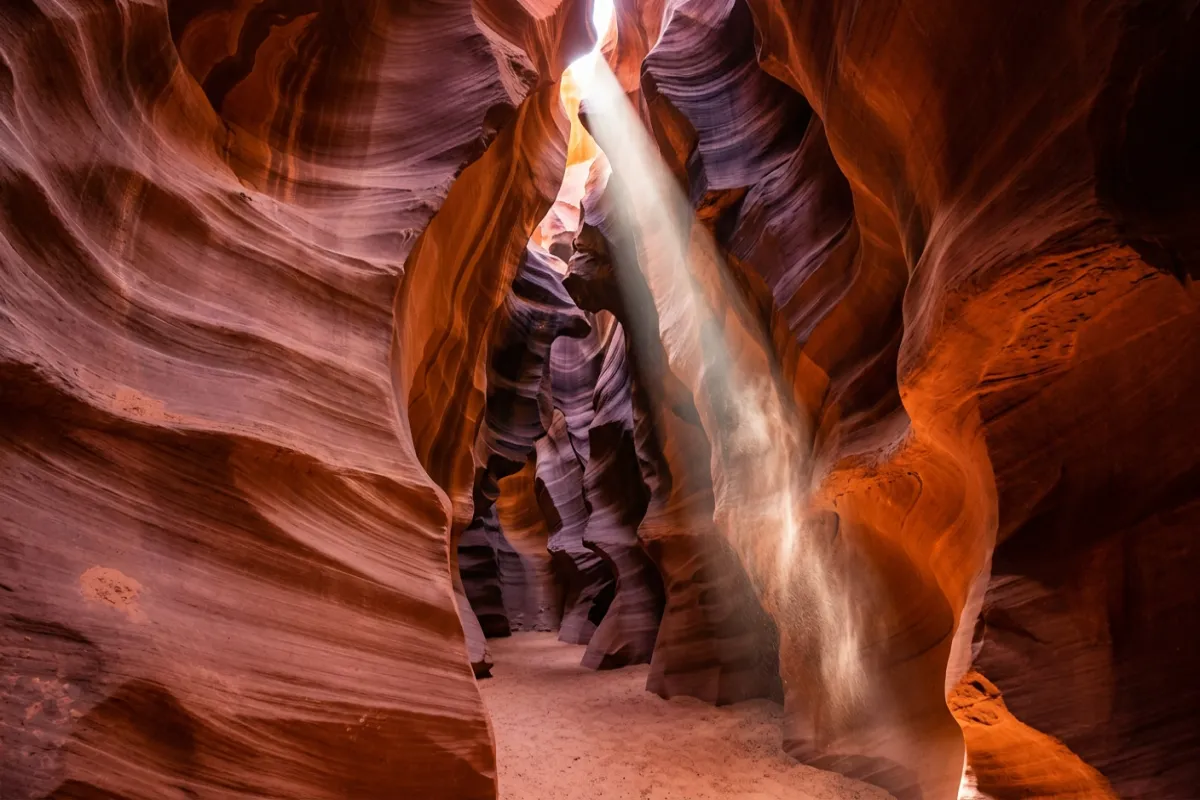
Why visit: Narrow slot canyons carved by flash floods into Navajo sandstone, creating flowing walls of orange, red, and purple. Light beams slice through the openings overhead, especially in Upper Antelope Canyon around midday from March through October. It looks like the inside of a painting.
Best time: Late March through early October for light beams. The midday sun (11 AM to 1 PM) produces the most dramatic shafts of light in Upper Antelope Canyon.
How long: 2-3 hours for a guided tour (required, as the canyon is on Navajo land). A half day including travel from Page, AZ.
Insider tip: Lower Antelope Canyon is less famous but more interesting to photograph. The narrower passages and ladders make it feel more adventurous, and tours are slightly less crowded. Book through a Navajo-owned tour operator.
Nearby pairing: Horseshoe Bend (10 minutes from Page). A 1,000-foot sheer drop to a dramatic bend in the Colorado River. Short walk from the parking lot.
Alaska, Hawaii, and Bonus Picks (3 Attractions)
23. Na Pali Coast, Hawaii
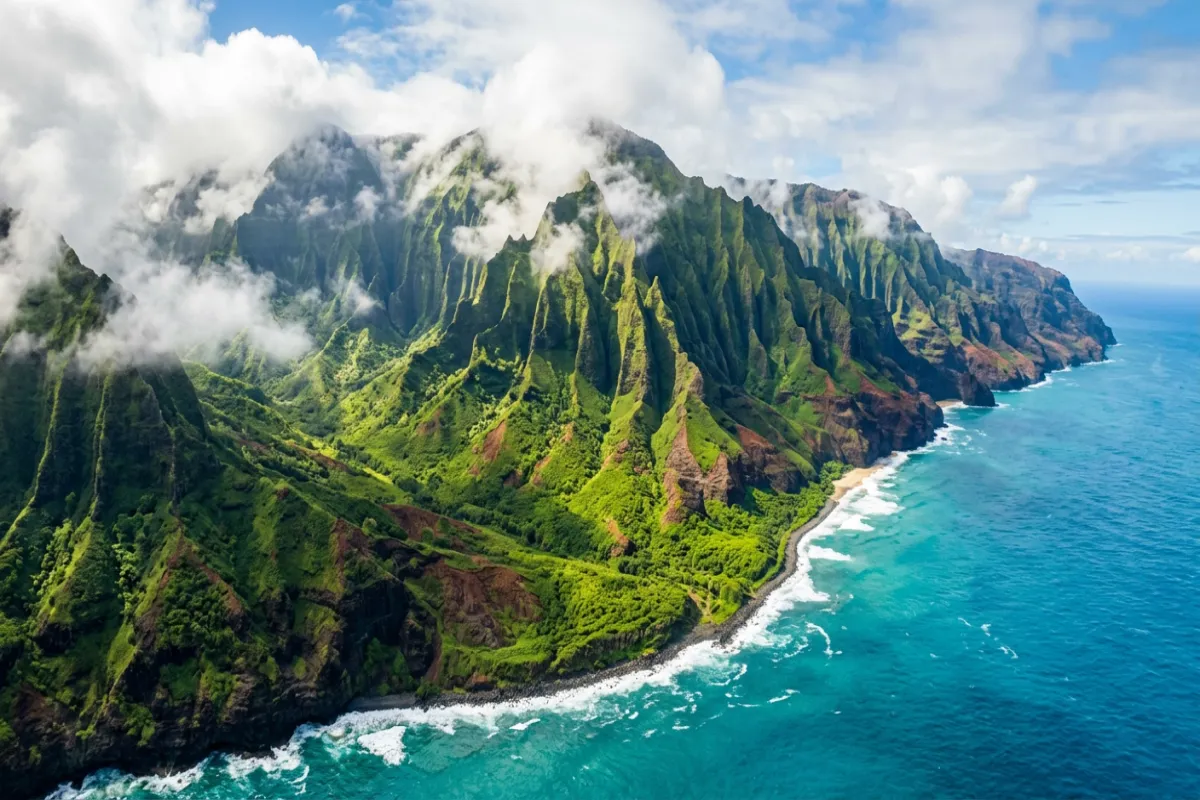
Why visit: Towering emerald cliffs, hidden valleys, and cascading waterfalls along Kauai’s northwest shore. It’s inaccessible by road, which keeps it wild. You can see it by boat, helicopter, or by hiking the Kalalau Trail, an 11-mile trail that’s one of the most beautiful (and challenging) day hikes in the world.
Best time: April through September (dry season). The trail can be closed during winter due to flooding and landslides. Boat tours run year-round but are smoother in summer.
How long: 1 day for a boat tour or helicopter. 2 days for the full Kalalau Trail (requires a camping permit for the overnight).
Insider tip: If the full Kalalau Trail is too ambitious, hike the first 2 miles to Hanakapi’ai Beach, then another 2 miles up Hanakapi’ai Falls. It’s the most rewarding short section of the trail. Bring water shoes for the stream crossings.
Nearby pairing: Waimea Canyon (the “Grand Canyon of the Pacific”). A 14-mile-long canyon with red and green ridges visible from multiple lookout points along the rim drive.
24. Denali National Park, Alaska
Why visit: North America’s tallest peak (20,310 feet) anchors 6 million acres of genuine wilderness. Grizzly bears, wolves, caribou, and moose roam freely. The single road into the park is restricted to buses beyond mile 15, which keeps the backcountry pristine. On a clear day, the mountain dominates the horizon in a way that photos simply cannot capture.
Best time: Mid-June through mid-August. The park road doesn’t fully open until June most years. Clear views of the summit happen roughly 30% of days, so build in multiple days to increase your odds.
How long: 3-5 days. Take the bus to Wonder Lake (11 hours round trip, but the wildlife viewing and mountain views are worth it). Hike the Savage River Loop for an easier day. Build in a rest day to wait for the mountain to emerge from the clouds.
Insider tip: The summit is visible about one in three days. Stay multiple days and keep checking. When it does clear, drop everything and get outside. The Eielson Visitor Center (bus mile 66) has the best close-up views from the road.
Nearby pairing: Talkeetna, Alaska (2 hours south). A tiny, colorful town that serves as base camp for Denali climbers. Great for bush plane flightseeing tours around the mountain.
25. Channel Islands National Park, California
Why visit: Five islands off the Southern California coast that feel more like the Galapagos than Los Angeles. No cars, no stores, no cell service. Just sea caves, island foxes, nesting seabirds, and some of the best kayaking and snorkeling on the West Coast. It’s the least-visited national park in California, and it’s less than 2 hours from L.A. by boat.
Best time: Year-round. Summer (June-August) for warm water and snorkeling. Spring (March-May) for wildflower displays. Fall and winter for whale watching.
How long: 1 day for a day trip to Santa Cruz Island (the most accessible). 2-3 days for camping on the island. The overnight experience with no light pollution is extraordinary.
Insider tip: Book the Island Packers ferry to Scorpion Anchorage on Santa Cruz Island, then kayak to Painted Cave, one of the largest sea caves in the world. Go on a calm day for the best conditions inside the cave.
Nearby pairing: Ventura, California (the departure point). A laid-back beach city with a walkable downtown, excellent tacos, and far fewer tourists than neighboring Santa Barbara.
Multi-Stop Itinerary Ideas
These attractions pair naturally into road trips and regional loops. Here are four itineraries worth considering:
Northeast Fall Foliage Loop (7-10 days)
New York City (The High Line) to Hudson Valley to Acadia National Park. Drive up through Connecticut and Vermont, catching peak fall color in early to mid-October. Return through Portland, Maine for a food stop. For more on timing this trip, see our best time to travel USA guide.
Southeast History and Food Trail (7-10 days)
Washington D.C. (Smithsonian) to Charleston to Savannah, with a day trip to the Everglades if you extend into Florida. This route follows the coast and pairs some of the best food cities in the country with world-class museums and historic districts.
Mountain West Grand Loop (10-14 days)
Grand Teton to Yellowstone (they connect directly) to Glacier National Park, then south through Badlands on the way home. Add Maroon Bells with a stop in Colorado. Best from late June through September.
Pacific Coast and Desert Circuit (10-14 days)
Start in Seattle with Olympic National Park, drive south to Crater Lake, continue to Highway 1 along Big Sur, then cut inland to Antelope Canyon and loop back. Add Channel Islands as a day trip from Ventura.
Use Yopki’s AI trip planner to build any of these routes with drive times, hotel stops, and daily activity plans generated automatically. You can customize the itinerary once it’s built, swapping stops or adding rest days.
For budget strategies across all these regions, check out our guide to saving money on USA travel.
Frequently Asked Questions
What are the most visited places in the US?
The most visited places include the Great Smoky Mountains (over 13 million annual visitors), Times Square, the National Mall in Washington D.C., and the Golden Gate Bridge. However, visitor count doesn’t equal best experience. Many of America’s most rewarding attractions are lesser-visited national parks and historic districts that offer a richer, less crowded experience.
What is the #1 tourist attraction in the US?
By visitor numbers, Great Smoky Mountains National Park is the #1 tourist attraction in the US with over 13 million visitors annually. It’s free to enter and straddles Tennessee and North Carolina, making it accessible from multiple major cities. For a world-famous icon, the Statue of Liberty and Smithsonian museums are top picks.
What is the most beautiful state in the US?
States consistently ranked among the most scenic include Alaska (for raw wilderness), Hawaii (for tropical landscapes), Colorado (for mountain scenery), Utah (for dramatic red rock formations), and Oregon (for coastline and forests). Each offers a dramatically different type of natural beauty.
How many days do you need to see the best of the USA?
To see a meaningful cross-section of the US, plan at least 2-3 weeks for a single region (e.g., the Southwest, Pacific Northwest, or New England). Covering coast to coast in a single trip takes 4-6 weeks minimum. A better strategy is to focus on one region per trip and use a tool like Yopki’s AI trip planner to optimize your route and timing.
What is the best time to visit the USA?
The best time depends on your region. Spring (April-May) is ideal for the Southeast and mid-Atlantic. Summer (June-August) is peak for the mountain west and Alaska. Fall (September-October) brings legendary foliage to New England. Winter (December-February) is best for Florida, Hawaii, and ski resorts. Shoulder seasons often deliver the best combination of weather and smaller crowds.
Start Planning Your Route
The U.S. is too big to see in one trip, and that’s the beauty of it. Pick a region, choose three to five attractions from this list, and build an itinerary around them. The multi-stop suggestions above are a good starting framework.
If you’re traveling with kids, find family-friendly activities near these attractions to round out your itinerary.
Use Yopki’s AI travel planner to generate a complete day-by-day itinerary for your route, including drive times, hotel stops, and activity recommendations. Then customize from there.