Download the Free Checklist
Save it, print it, check items off as you go.
Why You Need a Road Trip Planner
A great road trip starts with a great plan. You can wing it and hope for the best, but winging it usually means missed attractions, overpriced last-minute hotels, and an argument about who forgot to check the gas tank.
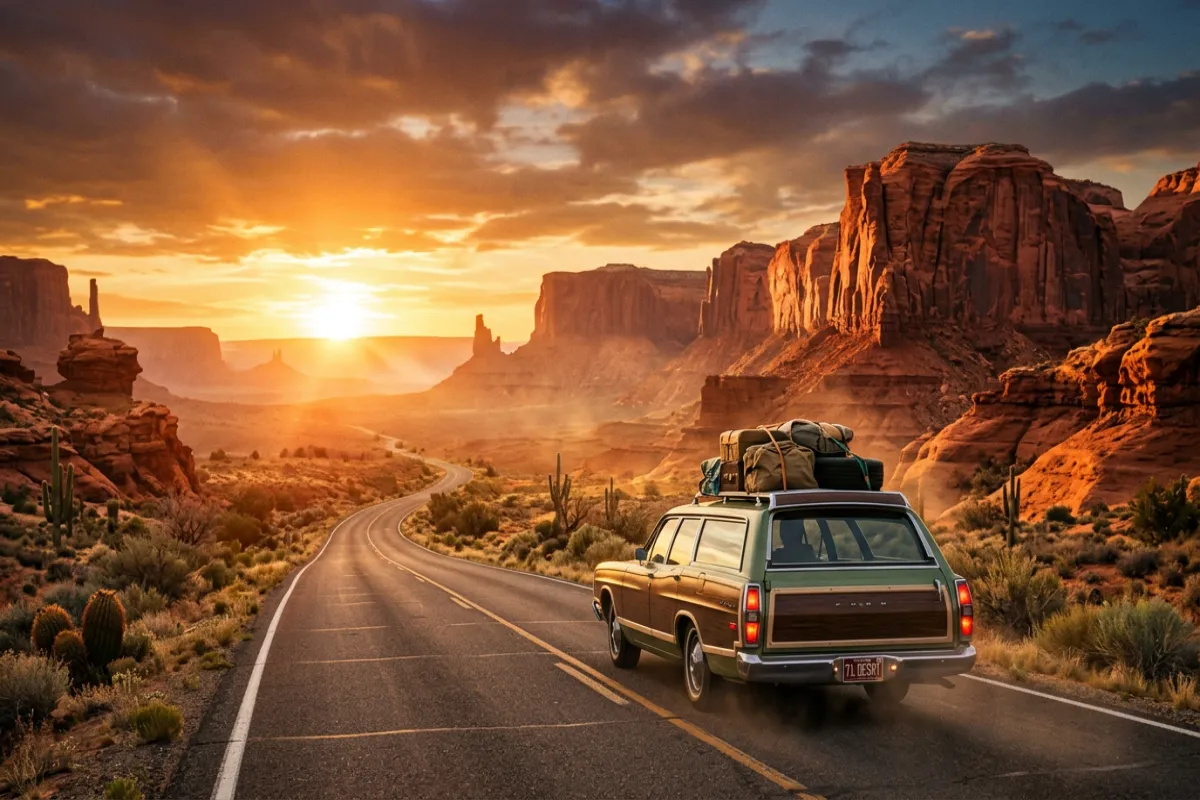
A road trip planner helps you organize your route, estimate costs, and find stops you would never discover on your own. Whether you are driving coast to coast or just heading to the next state for the weekend, the right planning tool saves you time, money, and stress.
This guide walks you through everything you need to plan the perfect road trip route. You will learn how to choose a planner, map your stops, budget for gas and food, prep your vehicle, and pack like a pro.
Step 1: Choose Your Destination and Travel Dates
Before you open any planning tool, answer three questions:
- Where do you want to go? Pick a destination or a general direction. “Pacific Coast Highway” is just as valid as “Grandma’s house in Tucson.”
- How many days do you have? A weekend road trip covers 300-500 miles of driving comfortably. A week-long trip can stretch to 2,000 miles or more.
- Who is coming? Solo trips, couples getaways, and family road trips have very different planning needs. Kids need more frequent stops. Dogs need pet-friendly lodging.
Once you have your answers, you can start mapping.
How Many Miles Per Day Is Realistic?
Most road trip planners default to highway speed limits, but real-world driving takes longer. Here is a realistic breakdown:
- Relaxed pace: 200-300 miles per day (3-5 hours of driving). Best for scenic routes and frequent stops.
- Moderate pace: 300-450 miles per day (5-7 hours of driving). Good balance of driving and sightseeing.
- Aggressive pace: 450-600 miles per day (7-9 hours of driving). Only sustainable for 1-2 days. Not recommended with kids.
A common mistake is planning too many miles on the first day. You are excited and think you can drive 10 hours straight. By day three, you are exhausted. Plan for the moderate pace and treat any extra time as a bonus.
Step 2: Pick the Right Road Trip Planner
The best road trip planner depends on what kind of trip you are taking. Here is how the top free options compare.
Google Maps
Google Maps is the go-to for simple route planning. It is free, it is fast, and almost everyone already has it on their phone.
Pros:
- Real-time traffic and ETA updates
- Street View for previewing stops
- Offline maps for areas without cell service
- Gas station and restaurant search along your route
Cons:
- Limited to 10 stops per trip
- No built-in lodging or activity planning
- Cannot save a multi-day itinerary
- No cost estimation tools
Best for: Short trips with fewer than 10 stops. Day trips and weekend getaways.
Yopki
Yopki is an AI-powered trip planner that handles road trips as part of its full travel planning suite. You tell it where you want to go, how many days you have, and what you like to do. It builds a day-by-day itinerary with an interactive map, calendar view, and suggested stops.
Pros:
- AI generates a complete road trip itinerary in minutes
- Interactive map shows your full route with all stops
- Day-by-day calendar with drag-and-drop editing
- Unlimited stops, no 10-stop cap
- Collaborative sharing so travel partners can edit the plan
- Free to start
Cons:
- Newer platform, smaller community than Google Maps
- No gas price integration yet
Best for: Multi-day road trips where you want a full itinerary with lodging, activities, and a visual map. Especially useful when you are not sure what to see along the way and want AI suggestions.
Roadtrippers
Roadtrippers is built specifically for road trips. It excels at finding quirky roadside attractions, scenic overlooks, and hidden gems along your route.
Pros:
- Huge database of roadside attractions and local gems
- Trip cost estimator (gas, food, lodging)
- Route optimization for multi-stop trips
- Community reviews and photos
Cons:
- Free version limited to 5 stops (Plus required for more)
- Plus plan costs $49.99/year
- No collaborative editing
Best for: Discovery-focused road trips where finding unique stops matters more than detailed day-by-day scheduling.
Other Tools Worth Mentioning
- Furkot: Good for planning multi-day routes with automatic lodging suggestions at your stopping points.
- GasBuddy: Not a route planner, but essential for finding the cheapest gas along your route.
- iOverlander: The best option for campervan and overlanding trips with campsite and boondocking spot data.
Step 3: Map Your Route and Add Stops
Now that you have picked your tool, it is time to map the route. Here is the process:
Plot Your Start and End Points
Enter your starting location and final destination. If you are doing a loop (starting and ending at home), set both to the same address.
Choose the Right Type of Route
Most planners default to the fastest route, which sticks to interstates. That is fine for getting somewhere quickly, but road trips are about the journey. Consider these options:
- Fastest route: Mostly interstate highways. Best when you just need to cover distance.
- Scenic route: State highways and back roads. Slower but far more interesting. Look for routes marked as “scenic byways” or “heritage corridors.”
- Avoid highways: Forces your planner off the interstate entirely. Use this for true backroad adventures.
In Google Maps, you can drag the blue route line to redirect through specific roads. In Yopki, the AI suggests scenic alternatives when you tell it you prefer a slower, more interesting drive.
Add Stops Every 2-3 Hours
Plan a stop every 100-150 miles or every 2-3 hours of driving, whichever comes first. Your stops should include a mix of:
- Rest stops: Stretch your legs, use the restroom, grab coffee. Even 15 minutes helps.
- Meal stops: Plan lunch at a local restaurant instead of a drive-through. It is part of the experience.
- Activity stops: State parks, viewpoints, museums, historic sites. These are the memories you will actually keep.
- Photo stops: That roadside overlook or quirky statue. Budget 15-20 minutes for quick photo ops.
Build in Buffer Time
Add 30-60 minutes of buffer time per day. Traffic happens. Construction happens. That “quick stop” at the antique shop turns into an hour. Buffer time keeps you relaxed instead of stressed about falling behind schedule.
Step 4: Estimate Drive Times and Gas Costs
Accurate cost estimates prevent budget surprises on the road.
Drive Time Estimates
Your road trip planner will show estimated drive times, but add 15-20% to whatever it says. A route that shows 4 hours will realistically take 4 hours and 45 minutes once you account for bathroom breaks, gas fill-ups, slow traffic through small towns, and that one stretch of construction you did not expect.
Gas Cost Formula
Here is the simple formula:
Total miles / Your car’s MPG x Price per gallon = Gas cost
Example: A 2,000-mile road trip in a car that gets 28 MPG, with gas at $3.50/gallon:
2,000 / 28 x $3.50 = $250 in gas
Check your car’s real-world MPG on fueleconomy.gov, not the sticker number. Highway driving usually gets better mileage than city driving, but mountain roads and headwinds can drop it significantly.
Gas Prices by Region
Gas prices vary dramatically by state. As of 2026:
- Cheapest states: Mississippi, Oklahoma, Texas, Arkansas, Louisiana – often $0.50-0.80/gallon below the national average.
- Most expensive states: California, Hawaii, Washington, Nevada – often $0.80-1.50/gallon above the national average.
- Pro tip: Fill up before crossing into an expensive state. A full tank in Arizona before entering California can save you $15-20.
Full Budget Breakdown
Gas is just one piece of the road trip budget. Here is what a typical week-long road trip costs for two people:
- Gas: $200-400 (depending on distance and vehicle)
- Lodging: $500-1,200 (hotels average $100-180/night, motels $60-90, camping $20-40)
- Food: $300-600 ($40-80/day for two people eating a mix of restaurants and grocery stops)
- Activities: $100-300 (national park passes, museum tickets, tours)
- Tolls: $0-150 (varies wildly by route – the Northeast is toll-heavy, the West is mostly toll-free)
- Miscellaneous: $50-100 (parking, souvenirs, unexpected expenses)
Total for a week-long road trip for two: $1,150-2,750
If you are looking to save money on travel across the USA, road trips are one of the most budget-friendly vacation options. Camping and cooking your own meals can cut the total cost in half.
Step 5: Book Lodging Along Your Route
Where you sleep shapes your entire road trip experience. Here are your main options:
Hotels and Motels
Book in advance for any stop that falls on a Friday or Saturday night, during holidays, or near popular attractions. Weeknight rates are usually 20-40% cheaper than weekend rates.
Chains like Best Western, La Quinta, and Holiday Inn Express are reliable road trip picks. They are located near highway exits, offer free parking, and usually include breakfast.
Airbnb and Vacation Rentals
Vacation rentals shine for stays of two nights or more. You get a kitchen (saving on restaurant meals), more space, and a more local feel. For one-night stops, the cleaning fees often make them more expensive than a hotel.
Camping
National and state park campgrounds run $20-40/night and put you in some of the most beautiful locations in the country. Reserve through Recreation.gov for federal campgrounds. Popular sites (Yosemite, Zion, Glacier) book up 6 months in advance.
For last-minute camping, check first-come-first-served campgrounds or use apps like Dyrt and Hipcamp for private campground options.
Free and Cheap Overnight Parking
If you are sleeping in a campervan or car, these options work in a pinch:
- Walmart parking lots: Many locations allow overnight parking. Call ahead to confirm.
- BLM land: Bureau of Land Management areas in the western US allow free dispersed camping.
- Cracker Barrel: Known for allowing overnight RV and campervan parking.
- Rest areas: Legal for overnight stops in most states, though some limit stays to 8 hours.
Step 6: Plan Your Road Trip on Google Maps (Step-by-Step)
Since Google Maps is the most common starting point, here is exactly how to plan a road trip route with it:
- Open Google Maps on your computer (the desktop version is much easier for planning than the mobile app).
- Click the blue “Directions” button.
- Enter your starting point in the “A” field.
- Enter your first major stop in the “B” field.
- Click “Add destination” to insert additional stops. You can add up to 10 total waypoints.
- Drag and drop stops to reorder them.
- Click on the blue route line and drag it to reroute through a specific road or town.
- Toggle between “Fastest” and “Avoid highways” using the route options.
- Click “Send to your phone” to transfer the route to the Google Maps app for navigation.
Limitation: Google Maps maxes out at 10 stops. For longer road trips, you will need to break the route into segments or use a tool like Yopki’s road trip itinerary template that handles unlimited stops in a single plan.
Step 7: Vehicle Prep and Safety Checklist
A breakdown 200 miles from the nearest town will ruin even the best-planned road trip. Take care of these items before you leave.
Vehicle Maintenance Checklist
- Oil change: Get one if you are within 500 miles of your next scheduled change.
- Tire pressure: Check all four tires plus the spare. The correct PSI is printed on a sticker inside the driver’s door.
- Tire tread: Use the penny test. Insert a penny into the tread with Lincoln’s head facing down. If you can see the top of his head, your tires need replacing.
- Brakes: Listen for squealing or grinding. Have them inspected if you are unsure.
- Fluids: Check and top off coolant, brake fluid, windshield washer fluid, and transmission fluid.
- Wipers: Replace them if they streak. New wipers cost $15-25 and take 5 minutes to install.
- Lights: Check headlights, brake lights, turn signals, and hazard lights.
- Battery: If your battery is more than 3 years old, have it tested. A dead battery in the desert is no fun.
- Air conditioning: Test it before you leave, especially for summer road trips.
Emergency Kit
Keep these in your trunk:
- Jumper cables or a portable jump starter
- Spare tire, jack, and lug wrench (make sure you know how to use them)
- Flashlight with extra batteries
- Basic first aid kit
- Phone charger and a car charger cable
- 2-3 gallons of water
- Blanket (useful in cold weather or as a picnic blanket)
- Reflective triangles or flares
- Duct tape (fixes more problems than you would expect)
Roadside Assistance
AAA membership ($60-120/year) covers towing, flat tire changes, lockout service, and battery jumps. If you do not want a membership, check whether your car insurance or credit card includes roadside assistance. Many do.
Step 8: Packing for a Road Trip
The beauty of a road trip is that you are not limited to airline baggage restrictions. That said, overpacking a car makes it uncomfortable and reduces fuel efficiency. Pack smart.
Essentials
- Navigation: Phone mount, car charger, and downloaded offline maps for your route.
- Comfort: Pillow, blanket, sunglasses, and a neck pillow for the passenger.
- Entertainment: Downloaded podcasts, audiobooks, and playlists. Cell service is spotty on many scenic routes.
- Snacks: A cooler with drinks, fruit, and sandwiches saves money and time.
- Trash bags: Clip a small trash bag to the back of the headrest. Keeps the car clean for the whole trip.
What NOT to Pack
- Too many clothes: You do not need 14 outfits for a 7-day trip. Pack 4-5 outfits and plan on doing laundry once.
- Hard suitcases: Soft bags and duffel bags fit into car trunks much more efficiently.
- Bulky pillows from home: A compact travel pillow works better in a car.
Road Trip Safety Tips
Driving long distances is statistically safe, but fatigue is a real risk. Follow these rules:
- Switch drivers every 2-3 hours. If you are driving solo, take a 15-minute break every 2 hours.
- Never drive drowsy. Pull over and nap for 20 minutes. It is far safer than pushing through.
- Share your itinerary. Send your route and expected arrival times to someone not on the trip.
- Keep your gas tank above a quarter. In rural areas, gas stations can be 50-100 miles apart.
- Check weather and road conditions. Use state DOT websites or apps like Waze for real-time road condition alerts.
- Lock your car at every stop. Do not leave valuables visible. Trailhead parking lots are common targets for break-ins.
Popular Road Trip Routes to Get You Started
Need inspiration? These classic American road trips are popular for a reason.
Pacific Coast Highway (California)
San Francisco to Los Angeles along Highway 1. About 380 miles and best done over 3-5 days. Stop at Big Sur, Hearst Castle, Morro Bay, and Santa Barbara. Late spring (April-June) offers the best weather with fewer crowds than summer.
Route 66 (Chicago to Los Angeles)
The classic cross-country route. Nearly 2,400 miles across eight states. Plan 10-14 days for the full route. Highlights include the Cadillac Ranch in Amarillo, the Petrified Forest in Arizona, and the Santa Monica Pier at the finish line.
Blue Ridge Parkway (Virginia to North Carolina)
469 miles of mountain scenery with no commercial vehicles allowed. October delivers peak fall foliage. The speed limit is 45 MPH, so plan 3-4 days to enjoy it without rushing.
Utah’s Mighty Five (Utah)
A loop connecting Zion, Bryce Canyon, Capitol Reef, Arches, and Canyonlands national parks. About 900 miles over 7-10 days. Spring and fall are the sweet spot – summer temperatures in the desert can exceed 110 degrees.
Great River Road (Minnesota to Louisiana)
Follow the Mississippi River for 2,000+ miles from its headwaters in Lake Itasca to the Gulf of Mexico. Takes 10-14 days. Small-town America at its best, with BBQ in Memphis, live music in New Orleans, and endless river views.
For more ideas on what to see across the country, check out must-see attractions in the USA.
How to Use Yopki as Your Road Trip Planner
If you want a tool that handles the entire planning process in one place, here is how to plan a road trip with Yopki’s AI trip planner:
- Start a new trip. Enter your starting city, destination, and travel dates.
- Tell the AI what you want. Say something like “Plan a 5-day road trip from Denver to Yellowstone with stops at scenic overlooks and family-friendly hikes.”
- Review the generated itinerary. Yopki creates a day-by-day plan with mapped stops, drive times between each point, and suggested activities.
- Customize. Drag and drop activities to different days. Add your own stops. Remove suggestions that do not interest you.
- Share with your travel group. Send a link so everyone can view and edit the plan.
The interactive map view is especially useful for road trips because you can see your entire route at a glance and spot detour opportunities you might have missed.
Road Trip Planning Timeline
Here is when to do what:
4-6 Weeks Before
- Choose your destination and route
- Book lodging for popular stops (national parks, holiday weekends)
- Schedule vehicle maintenance
- Start a shared planning document or Yopki trip for your group
2 Weeks Before
- Finalize your route and stops
- Book any remaining lodging
- Reserve activity tickets (popular tours and parks sell out)
- Check for road closures and construction on your route
3 Days Before
- Check the weather forecast for your entire route
- Download offline maps for areas with poor cell coverage
- Make a packing list and start packing
- Prep snacks and fill the cooler
Day of Departure
- Check tire pressure
- Fill the gas tank
- Share your itinerary with someone not on the trip
- Load up the car, put on your road trip playlist, and go
Frequently Asked Questions
How much does a road trip cost per day?
A budget road trip costs $75-125 per person per day, covering gas, food, and basic lodging. A mid-range road trip runs $125-200 per person per day with nicer hotels and sit-down restaurants. Luxury road trips with boutique hotels and fine dining can top $300+ per person per day.
Is it cheaper to fly or drive?
For solo travelers going more than 500 miles, flying is often cheaper once you factor in gas, lodging, food, and tolls. For two or more people, driving becomes more cost-effective because you split the gas cost but would buy separate plane tickets. The break-even point is usually around 500-700 miles for two people.
How do I plan a road trip with multiple stops?
Use a road trip planner that supports multiple waypoints. Google Maps allows up to 10 stops. Yopki and Roadtrippers support unlimited stops. Enter your stops in order, then rearrange them to minimize backtracking. Most planners will show you the total drive time and distance for your complete route.
What is the best road trip app?
For navigation, Google Maps or Waze. For trip planning and itinerary building, Yopki or Roadtrippers. For finding cheap gas, GasBuddy. For camping, The Dyrt or Hipcamp. Most road trippers use a combination of 2-3 apps.
How do I plan a road trip on a budget?
Camp instead of staying in hotels (saves $80-150/night). Cook meals with a cooler and portable stove instead of eating out (saves $30-50/day). Travel in the shoulder season when lodging is cheaper. Use GasBuddy to find the cheapest gas. Visit free attractions like national forests, state parks with free days, and scenic overlooks.
Start Planning Your Road Trip
The best road trips combine a solid plan with room for spontaneity. Use a planner to handle the logistics, but leave gaps in your schedule for the unexpected diner, scenic overlook, or roadside attraction that catches your eye.
Whether you use Google Maps for a quick weekend drive or Yopki’s AI planner for a multi-week cross-country adventure, the important thing is to start. Pick a direction, map your first few stops, and go from there.
The road is waiting.